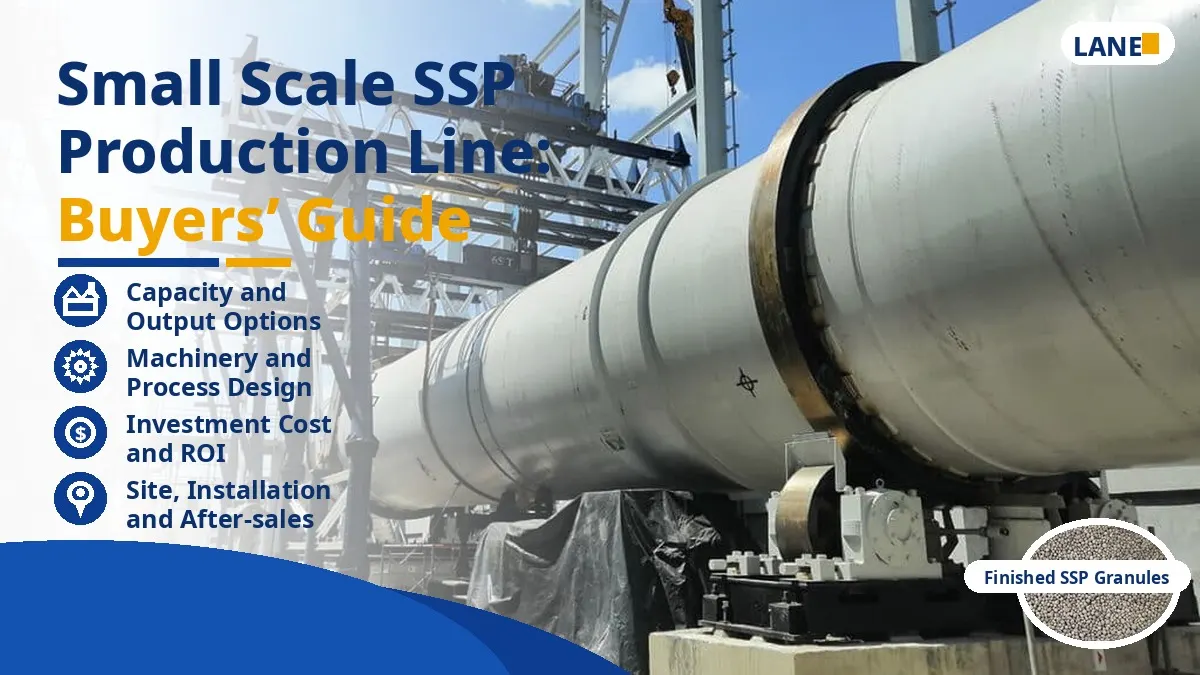
SSP Production Line Capacity: How to Size Your Plant
- 2026-11-26
SSP production line capacity should be calculated from the finished product the plant can consistently deliver, not simply from the rated output of its largest machine. A supplier may quote a line at 10 TPH, but that figure means little unless the phosphate rock quality, sulfuric acid concentration, curing arrangement, product form, and operating conditions are clearly defined.
For fertilizer manufacturers and project investors, the real concern is whether the plant can maintain its target output without overloading the grinding section, running short of curing capacity, or creating a bottleneck in granulation and screening. A properly sized SSP production line capacity plan connects every process section to one production target and establishes how much saleable fertilizer the plant can actually deliver.
The right SSP production line capacity should be determined by the expected market demand, available raw materials, plant operating schedule, and the required finished product quality.
This guide explains how to evaluate capacity figures, calculate annual production, match equipment, and check a supplier’s technical proposal before placing an order.
1. What Does SSP Production Line Capacity Actually Mean?
Before comparing quotations, buyers need to establish what the stated capacity represents. In SSP manufacturing, several different tonnage figures may appear in a technical proposal:
- Raw material feed capacity: The amount of phosphate rock entering the preparation section per hour.
- Acidulation throughput: The quantity of material processed through the mixer and reaction system.
- Curing throughput: The amount of reacted material that can be handled by the curing and storage arrangement.
- Granulation feed capacity: The material entering the granulator, including any recycled fines where applicable.
- Finished-product output: The quantity of qualified SSP fertilizer available for storage, packing, or dispatch.
These figures are not interchangeable.
For example, a granulation circuit may handle a large circulating load because fines and oversized particles return to the process. Its total internal throughput can therefore be higher than the amount of fresh material entering the line. Neither figure should automatically be reported as saleable product output.
When evaluating an SSP production line capacity quotation, ask the supplier to identify the measurement point behind every capacity number.
The most useful commercial basis is metric tons of finished product per operating hour, with the product grade, moisture, particle-size distribution, and other acceptance conditions stated separately.
2. What Production Capacity Range Can an SSP Plant Achieve?
LANE’s published SSP production-line information gives a configurable line capacity range of 5–50 TPH. Its project showcase also includes a 10 TPH SSP plant in Malaysia and a 20 TPH SSP plant in Brazil. These figures provide useful references when discussing project scale, but they are not automatic performance guarantees for a new installation.
The selected SSP production line capacity depends on the raw material, product specification, process route, and equipment configuration.
| Capacity reference | Published information | How buyers should interpret it |
|---|---|---|
| SSP production line | 5–50 TPH | Published configurable line range; confirm the exact project scope |
| Malaysia SSP project | 10 TPH | A project reference, not a guaranteed output for another site |
| Brazil SSP project | 20 TPH | A project reference requiring comparison of product and operating conditions |
| Disc granulation route | Around 3–8 TPH in the published process guide | Indicative route-selection reference; verify the selected model |
| Rotary drum granulation route | Commonly considered for 10+ TPH projects in the published process guide | A preliminary selection guide, not a universal machine limit |
One important distinction: the capacity of a granulator is not the same as the capacity of the complete SSP plant. A drum granulator may have sufficient nominal throughput, but the dryer, cooler, screen, and recycle conveyors must also handle the required material flow.
For a project-specific assessment, buyers can start with LANE’s SSP fertilizer production line and request the equipment configuration corresponding to their target output.
3. Which Factors Determine the Actual Output of an SSP Line?
A realistic SSP production line capacity calculation begins with the materials and product specification. Equipment dimensions alone cannot establish the final production rate.
Phosphate rock quality and grinding fineness
Phosphate rock varies in P₂O₅ content, hardness, moisture, and impurity composition. These characteristics affect both material consumption and equipment performance.
Harder rock can reduce grinding throughput or increase wear on crushing components. If the required fineness is too demanding for the selected mill, the preparation section may become the first bottleneck.
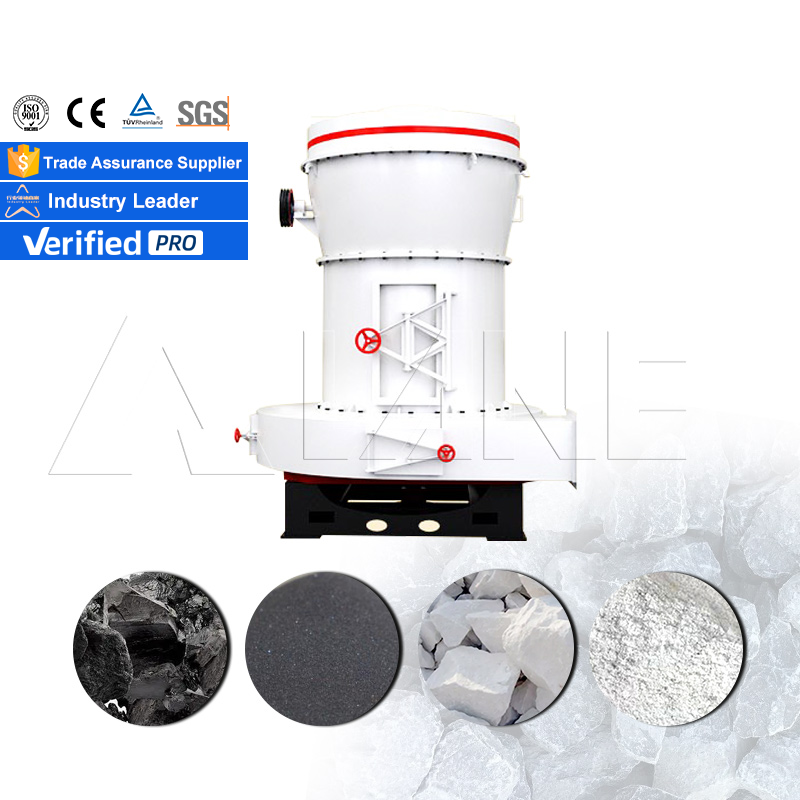
LANE’s SSP equipment range includes a dedicated Phosphate Rock Grinding Mill. Buyers should ask for the expected throughput at the specified feed size and discharge fineness, rather than accepting a capacity figure without material conditions.
Sulfuric acid supply and acidulation
The acid system must deliver a stable flow at the specified concentration. Variations in acid strength, metering accuracy, or phosphate rock composition can affect reaction conditions and product quality.
A mixer rated for a particular throughput does not prove that the entire reaction section can maintain the same output under changing feed conditions.
The supplier should identify the acid concentration, consumption basis, dosing arrangement, and expected operating range in the process proposal.
Curing time and storage capacity
Curing is often overlooked when investors estimate plant size. The reaction does not end when material leaves the mixer. The plant needs enough space and handling capacity for the material to complete the required curing period.
LANE’s published granular SSP production technology guide indicates that curing may take roughly two weeks to one month, depending on rock quality, acid ratio, and process conditions. This is a planning reference, not a fixed curing time for every raw material.
A plant with sufficient mixer capacity but inadequate curing inventory cannot maintain the intended production schedule.
Product form: powder or granules
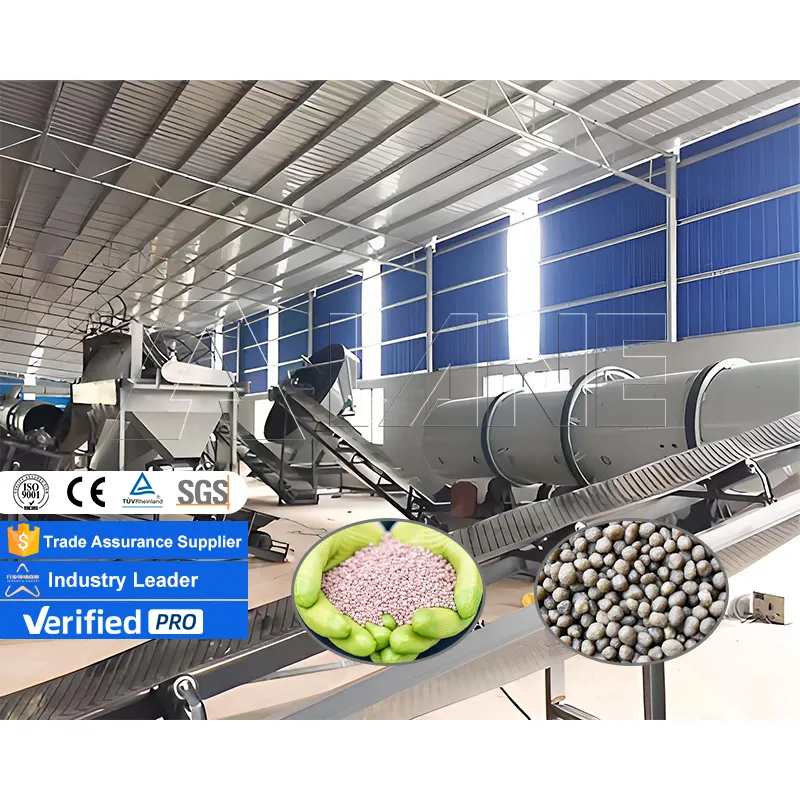
Powder SSP has a shorter equipment route after curing. Granular SSP adds a granulator and, depending on the selected technology, drying, cooling, screening, and recycle equipment.
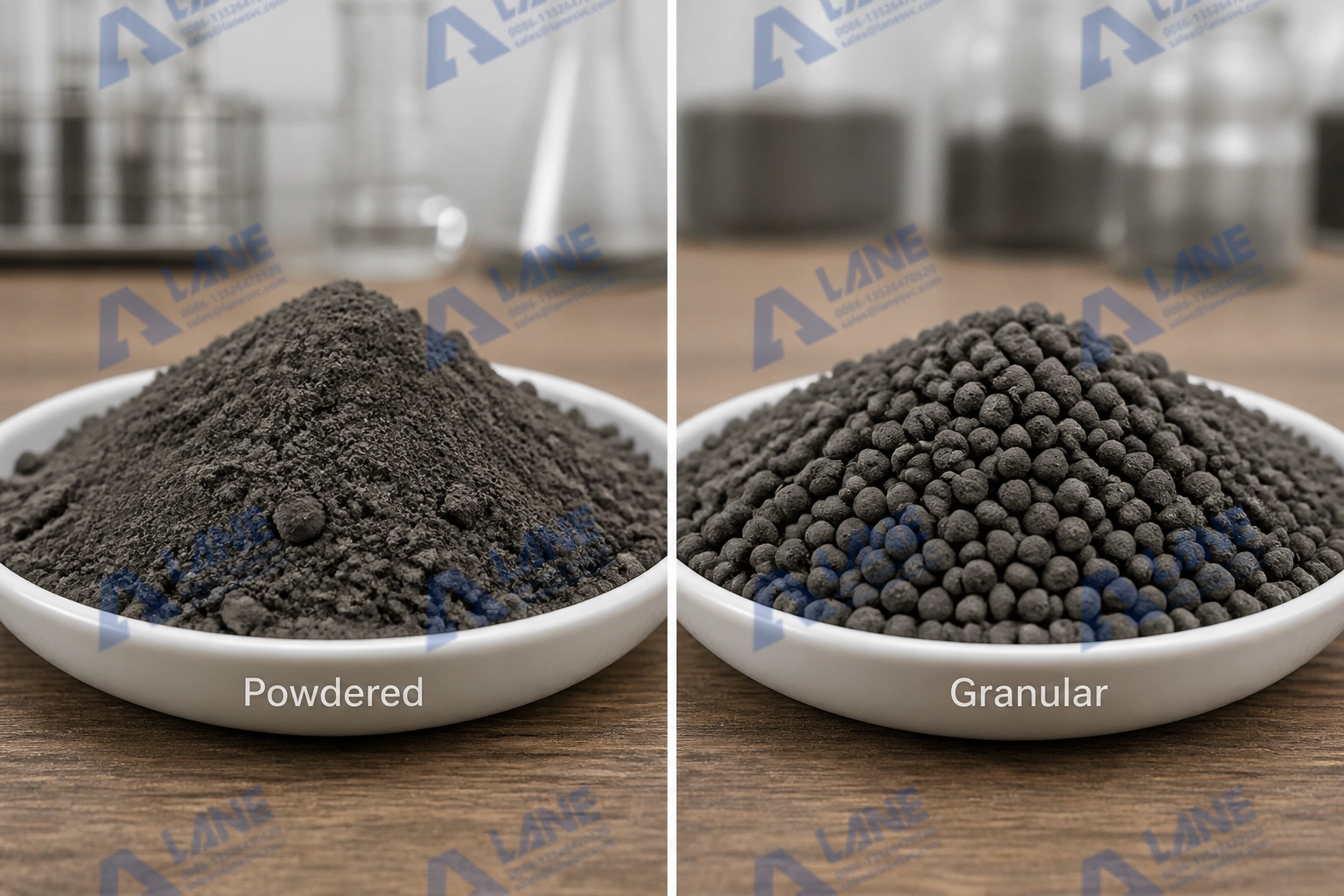
The additional stages change the equipment balance, utility demand, and operating workload. Therefore, buyers should decide the intended product form before finalizing the SSP production line capacity and equipment list.
4. How Should Equipment Be Matched to the Target Capacity?
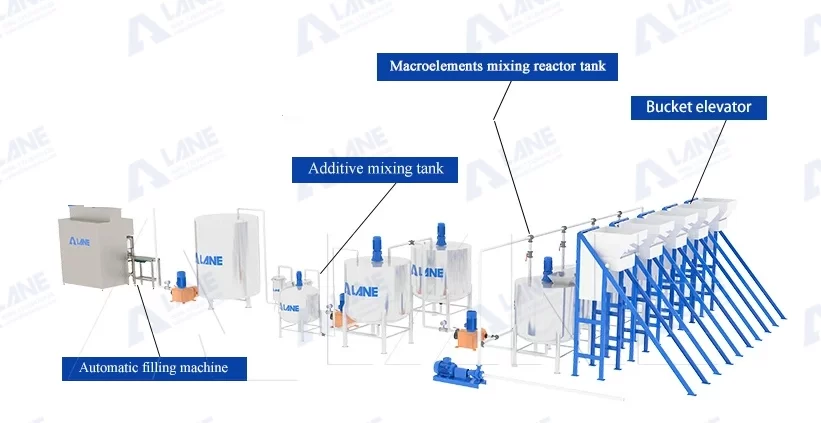
The complete line should be designed around a common production basis. Selecting each machine independently can create a line in which one section repeatedly limits the others.
| Process section | Equipment to consider | Main capacity check |
|---|---|---|
| Rock preparation | Crusher, grinding mill, feeder, conveyors | Throughput at specified feed size and grinding fineness |
| Acid handling | Storage tank, pump, metering system | Required acid flow, concentration, and dosing stability |
| Acidulation | Mixer or reactor, den conveyor | Working volume, reaction conditions, and residence time |
| Curing | Curing area, storage and reclaim equipment | Required inventory, curing duration, and material handling rate |
| Conditioning | Crusher, lump breaker, screening equipment | Stable feed preparation for downstream processing |
| Granulation | Disc or rotary drum granulator | Fresh feed rate, recycle load, and target granule size |
| Drying and cooling | Rotary dryer, cooler, fans | Inlet and outlet moisture, temperature, and heat duty |
| Final screening | Vibrating or rotary screen, recycle conveyors | Qualified product rate and recycle circulation |
| Packaging | Automatic packing machine | Bag weight, weighing accuracy, and bags per hour |
The weakest section determines the practical output of the plant. If the grinding mill supplies less material than the acidulation section requires, the mixer cannot operate at its intended rate. If the dryer cannot handle the granulator discharge, the production rate must be reduced or intermediate material will accumulate.
For granular projects, compare the Rotary Drum Granulator for SSP and Disc Granulator for SSP Powder according to throughput, product-size requirements, and the selected process route. A granulator should never be selected by diameter or motor power alone.
5. How Can Buyers Calculate Annual SSP Production?
Hourly capacity and annual production are different commercial figures. A line rated at 10 TPH does not automatically produce 87,600 metric tons per year. That calculation assumes uninterrupted operation every hour of the year, with no maintenance, shutdowns, or product losses.
A more useful planning formula is:
Annual saleable output = Fresh feed rate × Scheduled operating hours × Availability × Saleable yield
Consider an illustrative project with the following assumptions:
- Fresh feed rate: 10 metric tons per hour.
- Scheduled operation: 24 hours per day.
- Operating schedule: 300 days per year.
- Mechanical availability: 85%.
- Saleable yield: 95%.
The calculation is:
10 × 24 × 300 × 85% × 95% = 58,140 metric tons per year
This is a planning example, not a guaranteed output for a 10 TPH SSP plant. The actual result depends on whether the 10 TPH figure represents fresh feed or finished product, as well as the project’s operating and quality conditions.
The distinction is important when comparing supplier quotations. If one supplier quotes fresh feed capacity and another quotes finished-product output, their numbers cannot be compared directly.
For the same reason, the SSP production line capacity specification should state the measurement point, operating schedule, and product acceptance criteria.
6. Should You Choose One Large SSP Line or Several Smaller Lines?
A larger line may reduce the number of motors, conveyors, control points, and operators required per ton of output. It can also simplify material handling and reduce some fixed equipment costs.
However, a single large line concentrates production risk. If a critical crusher, mixer, or dryer stops, the entire production train may be affected.
Two smaller lines require more equipment and potentially more floor space, but they allow one line to continue operating while the other undergoes maintenance, depending on the plant layout and shared utilities.
The choice should be based on more than the initial equipment price.
A single larger line may suit a project when:
- Local demand can absorb the planned production volume.
- Phosphate rock and sulfuric acid supply are stable.
- The plant has adequate curing and finished-product storage.
- The maintenance team can support the larger equipment.
- The site has sufficient space for the complete process route.
Multiple smaller lines may be worth considering when:
- Demand is seasonal or uncertain.
- Production needs to continue during equipment maintenance.
- Different product specifications require separate operating arrangements.
- The investor wants to expand in stages.
The correct SSP production line capacity is the one the business can keep supplied, operate, maintain, and sell from—not simply the largest number a supplier can put on a quotation.
7. What Should Be Included in a Capacity Guarantee?
A capacity guarantee should be written around measurable operating conditions. A statement such as “10 TPH production capacity” is not sufficient for contract acceptance.
Before signing, ask the supplier to define:
- Raw material basis: Phosphate rock P₂O₅ content, moisture, hardness, and relevant impurities.
- Acid conditions: Sulfuric acid concentration, temperature, and dosing basis.
- Product specification: Finished-product grade, moisture, particle-size distribution, and free-acid limits where applicable.
- Measurement point: Fresh feed, process throughput, granulator feed, or saleable finished product.
- Operating conditions: Agreed test duration, stable operating period, and measurement method.
- Utility conditions: Power, fuel, water, and other required operating inputs.
- Environmental provisions: Dust collection, gas treatment, and other systems included in the contracted scope.
Environmental performance should also be included in the plant design basis, especially for phosphate rock handling, acidulation, and gas treatment. The IFC Environmental, Health, and Safety Guidelines for Phosphate Fertilizer Manufacturing specifically cover SSP, TSP, phosphoric acid, and compound fertilizer facilities. Buyers can use this document as an industry reference when reviewing dust collection, process gas treatment, chemical handling, and occupational safety provisions in an SSP project.
For a granular SSP line, the acceptance test should also define the target granule size and the percentage of finished product within the specified range. The recycle ratio and handling of off-size material should be stated so that internal circulating load is not confused with final output.
LANE’s SSP plant engineering and installation information provides a useful reference for understanding how design basis, installation, and commissioning affect plant performance.
8. FAQ: SSP Production Line Capacity
Q1: What is the typical capacity range of an SSP production line?
LANE publishes a configurable range of 5–50 TPH for its SSP production-line offering. The suitable capacity for an individual project depends on phosphate rock properties, product form, curing arrangements, and the capacity of each process section.
Q2: Can a 10 TPH SSP line produce 10 tons of finished fertilizer every hour?
Yes, if the 10 TPH rating is explicitly defined as finished-product output and the plant meets the specified raw material, operating, and product-quality conditions. If 10 TPH refers to fresh feed, the saleable output will be different.
Q3: Does granular SSP require more equipment than powder SSP?
Yes. Granular SSP normally requires a granulator and may also need a dryer, cooler, screening equipment, and recycle conveyors. The exact configuration depends on whether the selected process uses wet granulation, disc granulation, or dry extrusion.
Q4: How does curing time affect SSP plant capacity?
Curing time affects the amount of material that must remain in the curing system before downstream handling. A longer curing period requires more available inventory space and a suitable reclaim arrangement. Buyers should confirm the curing basis using their actual phosphate rock and process conditions.
Q5: Can LANE customize an SSP production line for a specific output target?
Yes. LANE’s SSP equipment offering covers different production-line configurations. Buyers should provide the target hourly output, annual production plan, phosphate rock analysis, sulfuric acid conditions, product form, and site information so the engineering team can evaluate the required equipment scope.
9. Final Checklist Before Confirming Your SSP Line Capacity
Before approving an equipment proposal, check three points:
- Capacity definition: Does the quoted TPH figure refer to fresh feed or qualified finished SSP?
- Process balance: Can grinding, acidulation, curing, granulation, drying, screening, and packaging support the same production target?
- Acceptance conditions: Are raw materials, product specifications, operating hours, availability, and performance-test procedures written into the contract?
A reliable SSP production line capacity plan is built from material data and process calculations, not from a single headline number. Buyers who define these conditions before ordering are in a much stronger position to compare suppliers and avoid expensive capacity shortfalls after installation.
If you are planning a new SSP plant or expanding an existing facility, LANE can evaluate the required equipment configuration according to your raw materials, target output, and product specification. Share your project details with the engineering team to discuss a suitable production layout and quotation.
For more details, please feel free to contact us.
Henan Lane Heavy Industry Machinery Technology Co., Ltd.
Email: sales@lanesvc.com
Contact number: +86 13526470520
Whatsapp: +86 13526470520