SSP plant engineering and installation: decisions that set your plant’s output
- 2026-10-15
Most SSP plants that miss rated output were set up to miss it before the first bag was filled: the reactor sized from a round number instead of an ore analysis, the curing bay built to fit the land rather than the reaction time, the acid route drawn after the foundations were marked out. Getting SSP plant engineering and installation right means settling those questions in the design basis and holding erection and start-up to what the design says.
It is written for the people who approve that scope: fertilizer manufacturers adding capacity, plant investors, process engineers reviewing drawings, and procurement managers comparing offers.
Fix the product, the rock, and the acid first
Three inputs decide the equipment list, and none of them comes from a quotation sheet.
The product you intend to sell comes first. Powdered SSP and granulated SSP are different plants, since granulation adds a granulator, dryer, cooler, recycle loop, and dust control. If your market may want granules in three years, reserve the space and structural capacity now, because a granulated SSP production process costs far less to plan early than to retrofit.
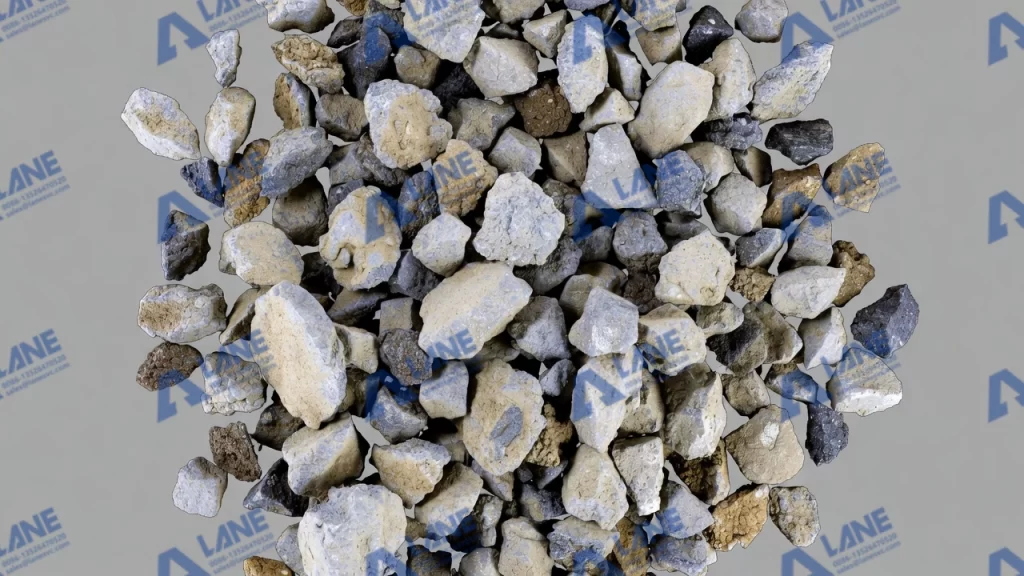
The rock comes second. Grade, hardness, and grindability set the mill size, the circulating load, and how much acid the reaction consumes. Fineness is not a detail: coarse particles react slowly and leave unreacted phosphate in the cured product, which lowers available P2O5 at the bagging station.
The acid comes third. Whether sulfuric acid arrives by tanker or is made on site changes the plot plan, storage volume, bunding, and the safety case, and concentration at the mixer sets reaction temperature and the water carried into curing.
Put all three into one design basis document: capacity in tonnes per hour, declared P2O5 grade, moisture and free acid limits, available power, climate, and the expansion plan. Every drawing that follows, and every phase of SSP plant engineering and installation, should trace back to it.
What an SSP plant engineering and installation contract should cover
Scope boundaries cause more disputes than technical faults, because buyers and vendors use the same words for different work.
| Phase | Deliverables | Who normally holds it |
|---|---|---|
| Basic engineering | Design basis, process flow diagram, mass and energy balance, equipment list | Vendor process team |
| Detail engineering | P&IDs, general arrangement drawings, foundation loads, anchor bolt layouts | Vendor plus partner |
| Civil and structural | Foundations, acid-proof floors, drains, bunds, steel structure | Owner or local contractor |
| Mechanical erection | Equipment placement, alignment, drives, guarding, conveyors | Erection contractor, supervised by vendor |
| Piping and ducting | Acid lines, slurry lines, process water, vent ducts, corrosion protection | Erection contractor |
| Electrical and instrumentation | MCC, VFDs, cabling, control loops, interlocks, calibration | Electrical contractor |
| Pre-commissioning and commissioning | No-load runs, water trials, acid trial, performance test, training | Vendor team and owner |
Ask for a responsibility matrix with a name against each line.

Engineering deliverables to demand before erection starts
Concrete poured against incomplete drawings is expensive to undo. Before site work begins, the package should include the process flow diagram and P&IDs, a mass and energy balance, equipment datasheets with materials of construction, foundation load drawings, an electrical single line diagram, cable and instrument schedules, and a layout that shows maintenance access.
Two documents get skipped most often: the scrubbing and dust control design, down to duct routing and fan selection, and the commissioning plan, which is written as part of SSP plant engineering and installation rather than after it.
The erection sequence, step by step
SSP plant engineering and installation follows a fixed order, and compressing it usually moves cost rather than removing it.
- Civil works. Foundations, anchor bolt templates, grouting, and acid-resistant floors with falls toward collection points.
- Steel and equipment placement. Mill, mixer, den, scrubber, granulator, dryer, cooler, screens, and bagging equipment, with clearance for cranes.
- Alignment. Mill girth gear and pinion, dryer and cooler tyres, drive train runout, coupling alignment.
- Piping and ducting. Acid lines, process water, slurry handling, vent ducts, lining, and corrosion protection.
- Electrical and instrumentation. Panels, cable trays, earthing, motor connections, interlock wiring, calibration.
Mechanical completion and the punch list
Mechanical completion means the plant is built and safe to test, not that it works. Walk it against the drawings, record every deviation, and separate punch items from commissioning prerequisites. Hold retention against punch items with a written closure date, and confirm spares and calibration records are on site before the vendor’s team leaves.
From mechanical completion to first saleable ton
During fertilizer plant commissioning, the order of tests protects the equipment. No-load runs come first: rotation direction, vibration, temperature, and lube systems on every machine. Interlock and emergency stop testing follows, before any material is fed, because a fault found with the plant empty costs hours instead of weeks.
Cold commissioning then proves the mechanical side with rock, water, and air: conveyors run loaded, the mill grinds, the scrubber circuit circulates, the den turns, and the granulation loop recycles material without blockage. Acid enters the mixer only after that, at a reduced rate, with reaction temperature and scrubber performance watched closely.
A fertilizer plant commissioning plan should name the acceptance criteria in numbers, because that test decides whether the plant is accepted: rated output at the declared P2O5 grade, conversion efficiency as available P2O5, moisture, free acid, and, for granulated product, granule size distribution. Curing time comes from laboratory analysis of your own rock and acid, since it sizes the curing bay.
Cost and schedule drivers buyers underestimate
Most of the budget sits outside the machine list, and engineering decisions size those items.
The curing bay is usually the largest covered floor area in a powder SSP plant, and undersizing it caps output no matter how well the mixer performs. Corrosion-resistant construction, including acid-proof floors, drains, bunds, lined vessels, and ducting, cannot be value-engineered after the concrete hardens. Fume and dust control need floor space, structural support, and power. Electrical scope is a common gap: VFDs, MCC capacity, transformer sizing, and control room space belong in the original design.
Schedule risk comes from five places: incomplete engineering before civil works start, late delivery of long-lead items such as the mill and dryer, erection crews without vendor supervision, a fertilizer plant commissioning schedule that assumes first-time success, and permits that arrive after the equipment. Add float around start-up rather than around design. In a single-contract model, a fertilizer plant EPC contractor carries the design and supply schedule risk, which is part of what that model costs. For a breakdown of how these items move the total number, see this guide to phosphate fertilizer plant cost.
Safety, environment, and permits that shape the build
An SSP plant handles concentrated sulfuric acid and releases fluoride-bearing gas during acidulation. Both belong in the layout, not in an appendix, and both have to be resolved before fertilizer plant commissioning begins.
Acid storage needs secondary containment, impact protection, dedicated drainage, and a route to the mixer that does not cross walkways. The reaction and den area needs mechanical ventilation routed to a scrubbing system, plus monitoring tied into the control system. Grinding and transfer points need dust collection, with collected material returned to process.
The International Finance Corporation’s Environmental, Health, and Safety Guidelines for Phosphate Fertilizer Manufacturing is the reference most international lenders and insurers apply, and it covers fluoride emissions, wastewater, and occupational exposure. The IFC General EHS Guidelines cover construction-phase hazards.
Product specification is a permit question as much as a chemistry question. National fertilizer control regulations set minimum P2O5, moisture, and free acid values, and those limits become design inputs for acid rate, curing time, and drying.
Choosing a fertilizer plant EPC contractor or an equipment supplier
Two models work. A single fertilizer plant EPC contractor carries design, supply, erection, and start-up under one contract, which reduces interface risk and usually costs more. An equipment supplier working with your own civil and electrical contractors is often cheaper, but you take on the coordination.
Either model works if the process engineering is real. A fertilizer plant EPC contractor should be able to show the mass and energy balance, the P&IDs, the materials of construction for the mixer and den, and the performance guarantee wording. Ask which reference plants run on similar rock, and ask to speak to their owners.
Offers that will cost you later look alike: capacity quoted in tonnes per day with no declared grade, a price with no scope boundary for civil works or acid storage, no commissioning team named, no acceptance criteria. A fertilizer plant EPC contractor who has commissioned similar plants in your region answers these questions with documents instead of promises. For a wider view of that role in full project delivery, see this guide to the turnkey mineral fertilizer plant.
Maintenance planning that belongs in the installation phase
Decisions made during SSP plant engineering and installation set maintenance cost for the next decade. Wear parts need room to be removed: mill liners, mixer blades, den and granulator scrapers, screen decks, and belts need access space and lifting points.
Insist on a spares list split into commissioning spares, wear spares, and insurance spares, and confirm lubrication schedules and vibration measurement points. If you plan condition monitoring, pull the wiring during construction, when it costs almost nothing. A maintenance plan for SSP granulation equipment built on those decisions costs less than one improvised shutdown.
What a reference installation looks like
The choices in this guide are easier to judge against a plant that exists. LANE’s published case study covers the process engineering behind a 20 t/h SSP production line in Southeast Asia, including the raw material basis and the equipment train. Read it beside a vendor’s offer and the gaps become easier to see. Buyers still comparing routes can start with SSP, DSP, and TSP compared.
Frequently asked questions
What does SSP plant engineering and installation include?
Basic and detail engineering, equipment supply, civil and structural work, mechanical erection, piping, electrical and instrumentation, pre-commissioning, commissioning, and handover documentation. Boundaries vary by contract, so the responsibility matrix matters as much as the equipment list.
How is plant capacity defined in a contract?
As finished product per hour at a declared available P2O5 grade, moisture, and free acid limit, on a named rock and acid basis. A tonnage figure without those conditions is not a guarantee.
What is the difference between mechanical completion and commissioning?
Mechanical completion means the plant is built and ready to test. Fertilizer plant commissioning proves it works: no-load runs, interlock checks, cold trials with rock and water, and a performance test against agreed numbers.
Do I need a granulation line, or can I sell powder SSP?
Powder SSP needs a smaller building and less equipment. Granulation adds a granulator, dryer, cooler, screens, and a recycle loop.
Should I hire a fertilizer plant EPC contractor or buy equipment separately?
One fertilizer plant EPC contractor simplifies interfaces and accountability at a higher price. Separate supply is cheaper and gives you more control over local civil and electrical work, but you own the coordination risk.
What should be ready on site before the erection crew arrives?
Foundations cured to the drawings, anchor bolt templates set, access roads and laydown areas prepared, construction power on site, storage for acid-resistant materials, and a named owner-side counterpart for each discipline, all before fertilizer plant commissioning starts.