Phosphate Rock Grinding Mill for SSP Production Line
- 2026-10-24
Grinding is the upstream stage that decides whether an SSP plant turns out on-spec fertilizer or quietly burns money.
Most manufacturers pour their attention into the acidulation reaction, yet it is the rock grinding stage that largely controls available P2O5 content and overall conversion.Choose the wrong mill, and you face higher energy bills, inconsistent particle size and a finished product that underperforms in the field.
This guide walks through the phosphate rock grinding mill options for SSP production and helps you match the right machine to your raw material and scale.
Key Advantages of a Phosphate Rock Grinding Mill
A well-selected rock grinding system delivers three things at once: reliable fineness, controlled energy use and stable operation day after day.
Precise fineness control.
Most efficient SSP plants target 90–95% passing 75 microns (200 mesh). At this level the rock exposes enough surface area to react fully with sulfuric acid, lifting available P2O5 without wasting energy on over-grinding.
Energy efficiency.
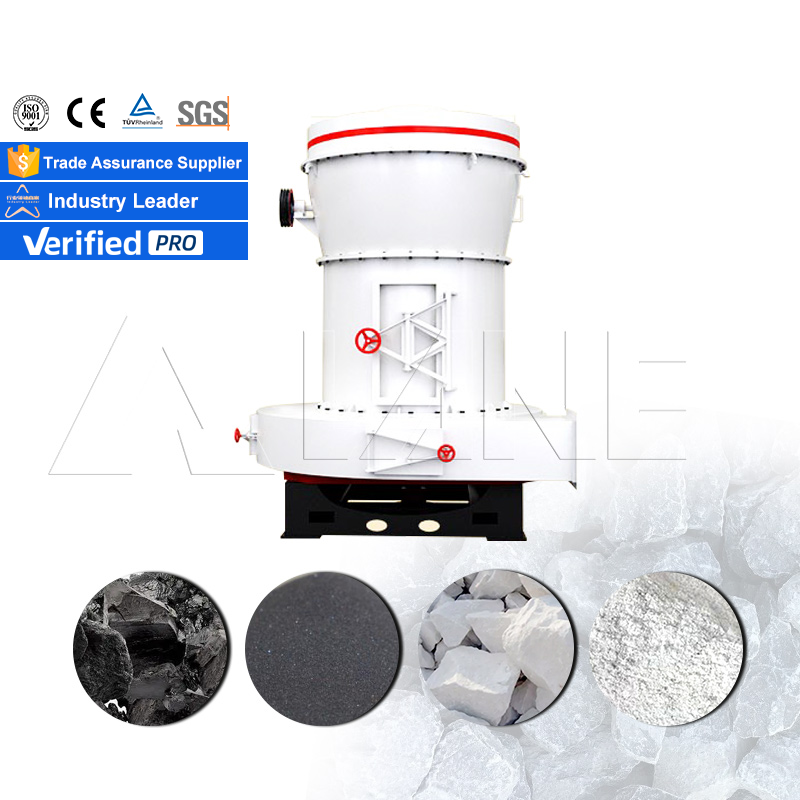
A vertical roller mill typically consumes 30–40% less power than a comparable ball mill, while a Raymond mill offers a practical middle ground for medium-scale lines.
Mechanical reliability.
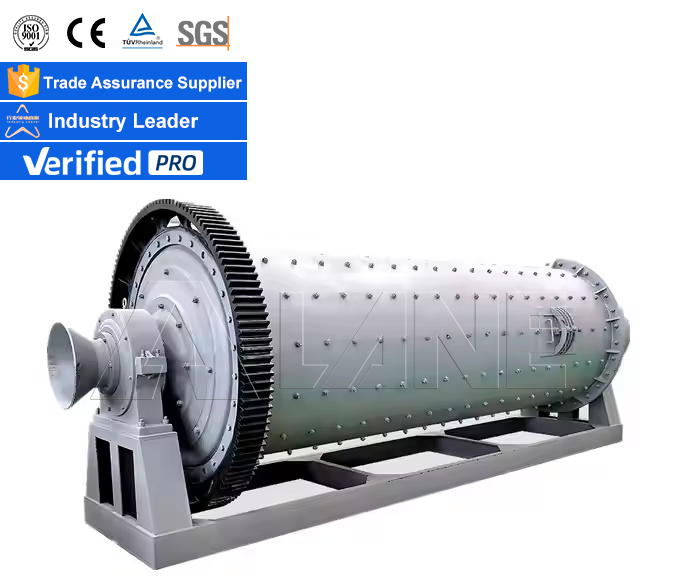
A ball mill runs continuously and handles hard, abrasive rock with ease; paired with a dynamic air classifier in a closed circuit, it gives operators tight control over particle size distribution.
Custom engineered circuits.
LANE designs the complete phosphate rock grinding mill circuit around your actual rock hardness, moisture profile and target throughput — the configuration that works for one plant rarely maps cleanly onto another.
Phosphate Rock Grinding Mill Parameters
Understanding the key parameters helps you compare quotes and avoid oversizing or undersizing your grinding section.
Fineness: 90–95% passing 75 microns (200 mesh) for dry SSP; 90–93% passing 100 mesh (147 μm) for wet grinding at 26–28% moisture.
Throughput: around 5–8 metric tons per hour per unit for a mid-size line; high-capacity plants commonly run from 50 to 200 TPH.
Mill types: Raymond mill (80–325 mesh, medium scale), ball mill (high capacity, hard rock), vertical roller mill (energy efficient, combined drying and classification), and air classifier mill (ultra-fine particle targets).
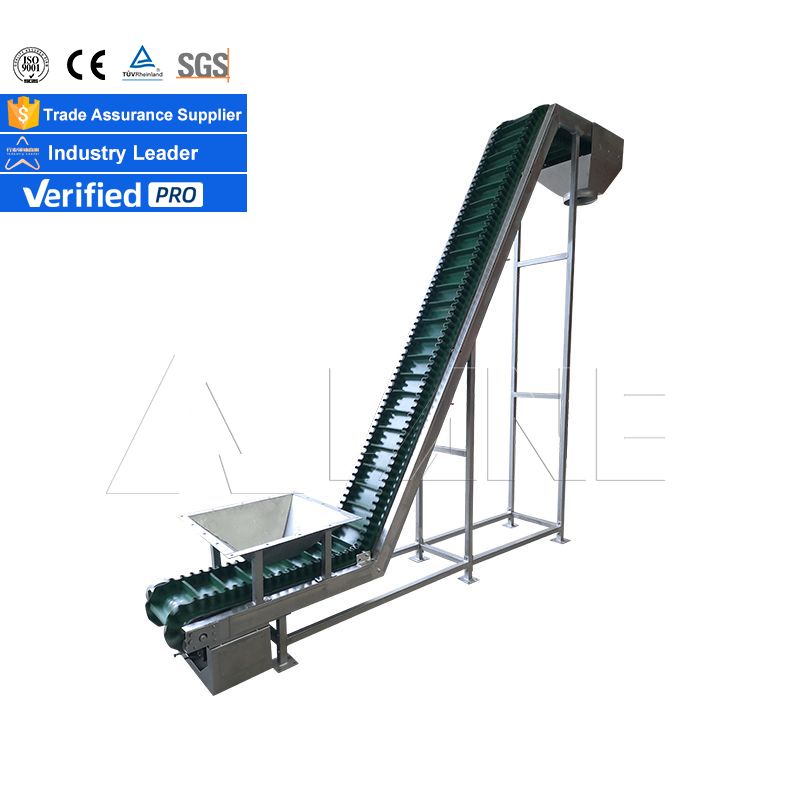
Feeding:a vibrating feeder and belt conveyor keep feed rate consistent — irregular feeding is a common hidden cause of uneven particle size coming out of the mill.
Buffer:a ground rock hopper with 30–40 MT capacity prevents the mixer from waiting on the mill.
Application Scenarios for a Phosphate Rock Grinding Mill
The right phosphate rock grinding mill depends on your process route and raw material.
Dry process SSP: grind rock to a fine dry powder (90% passing 147 μm) before reacting with dilute sulfuric acid; dust containment and collection are essential.
Wet process SSP: mill the rock with a controlled water feed into a pumpable paste at 26–28% moisture, then react with concentrated acid — near-zero dust and lower environmental compliance cost.
Different rock grades: high-hardness rock (high Bond Work Index) favors a ball mill; lower-grade or moisture-heavy rock often benefits from a vertical roller mill with integrated drying.
Scaling up: from small 5 TPH lines to 200 TPH plants, the mill, classifier and feeding system must be sized together so downstream stages never wait on the grind.
FAQ: Phosphate Rock Grinding Mill
Q: What is the ideal fineness for SSP grinding?
A: Most producers target 90–95% passing 75 microns (200 mesh) — enough surface area for efficient acid reaction without pushing energy to the point of diminishing returns.
Q: Which mill is most energy-efficient?
A: For large plants the vertical roller mill is generally most efficient, consuming 30–40% less energy than a ball mill; a Raymond mill offers a middle ground for smaller lines.
Q: Can I use the same mill for different rock sources?
A: In principle yes, but separator speed, grinding pressure and classifier settings usually need adjustment when switching sources, so characterize a new rock before committing to full production.
Q: How does grinding affect P2O5 content?
A: Directly. Coarse particles leave unreacted phosphate in the product, lowering available P2O5 and agronomic performance. Consistent, controlled grinding is one of the most reliable levers for product quality.
Choosing the right phosphate rock grinding mill is the highest-value decision in your SSP plant design — it shapes conversion, energy cost and product quality for years.
Whether you build a greenfield line or upgrade an existing one, a clear understanding of fineness, throughput and mill type, combined with a tailored engineering plan, makes the difference.
Contact LANE’s engineering team for a free assessment of your rock sample and production scale, and get a phosphate rock grinding circuit designed around your actual operating conditions.