SSP Fertilizer Equipment Manufacturer: Buyer’s Guide
- 2026-11-25
Choosing an SSP fertilizer equipment manufacturer is not simply a matter of comparing machine prices. Single superphosphate production involves abrasive phosphate rock, sulfuric acid, acidulation, curing, and, when granular product is required, a separate finishing section. A supplier must understand how these operations interact. Otherwise, individually capable machines can still form a line with unstable output, excessive maintenance, or poor product consistency.
For fertilizer plant owners, project investors, and procurement managers, the important question is whether the manufacturer can translate the characteristics of the raw materials and the target product into a workable equipment package. This guide explains what to inspect before requesting a quotation, how to compare technical proposals, and which details should be written into the purchase contract.
1. What Does an SSP Fertilizer Equipment Manufacturer Actually Supply?
A qualified SSP fertilizer equipment manufacturer should be able to explain the complete process boundary, not just offer a crusher, mixer, or granulator. The equipment scope normally begins with phosphate rock receiving and preparation, continues through sulfuric acid handling and acidulation, and ends with curing, product conditioning, storage, and packaging.
For a powder SSP plant, the main equipment package generally includes:
- Phosphate rock crusher and grinding mill.
- Raw material bins, weighing feeders, and conveyors.
- Sulfuric acid storage, dilution, transfer, and metering system.
- Acidulation mixer or reactor.
- Den conveyor, cutting equipment, and curing facilities.
- Cured-material crusher, lump breaker, and screen.
- Dust extraction and gas scrubbing equipment.
- Finished-product storage and bagging equipment.
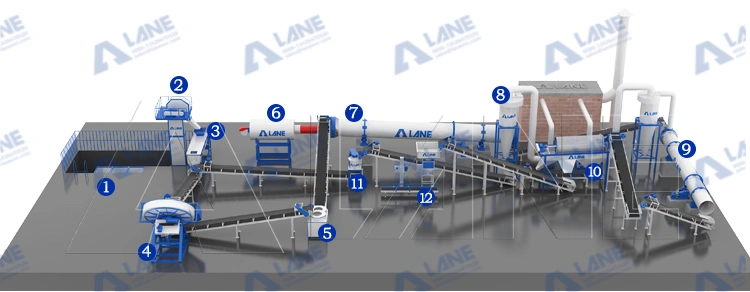
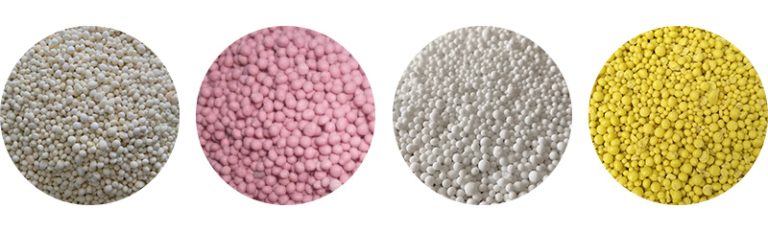
A granular SSP project requires additional equipment, depending on the selected granulation route. This may include a disc or rotary drum granulator, dryer, cooler, final screening machine, oversize crusher, and recycle conveyors.
The distinction matters commercially. A powder line and a granular line do not have the same equipment scope, energy demand, maintenance workload, or installed cost. A quotation that does not state the product form is not yet a reliable basis for comparison.
Planning a fertilizer project? Contact LANE engineering team to get a free 3D plant layout drawing, motor power calculation, and factory-direct quote within 4 hours. Request 3D Layout & Budget Estimate →
2. Which Equipment Specifications Should Buyers Compare?
When comparing an SSP fertilizer equipment manufacturer, start with the duty of each machine. A capacity number without a feed-material basis is not enough. A crusher rated for a certain throughput on soft limestone, for example, cannot automatically be expected to achieve the same output on abrasive phosphate rock.
The following table provides a practical inspection framework. Published values should be treated as preliminary references; final specifications must be confirmed for the selected model and project conditions.
| Equipment section | Main specification to review | What the buyer should verify |
|---|---|---|
| Rock crusher | Feed size, discharge size, capacity, motor power | Phosphate rock hardness, abrasiveness and stable feed rate |
| Grinding mill | Output fineness, throughput, power consumption | Required reaction fineness and actual rock characteristics |
| Acid system | Tank capacity, pump flow, acid concentration, wetted materials | Corrosion resistance, containment, metering accuracy and safety |
| Acidulation mixer | Working volume, agitator arrangement, lining and residence time | Mixing uniformity, reaction conditions and maintainability |
| Den and curing system | Conveyor capacity, holding volume, curing arrangement | Required residence time, ventilation and reclaim method |
| Granulator | Type, capacity, granule size and recycle ratio | Product specification, moisture and granulation stability |
| Dryer and cooler | Feed moisture, discharge moisture, temperature and fuel demand | Heat balance, product temperature and actual operating cost |
| Screener | Screen layers, mesh or aperture, screening capacity | Product-size distribution and recycle load |
| Dust and gas control | Gas flow, fan duty, pressure drop and collection points | Dust capture, acid mist and fluoride-bearing gas treatment |
| Packing machine | Bag weight, weighing accuracy and bags per hour | Actual packaging rate and dust control at the filling point |
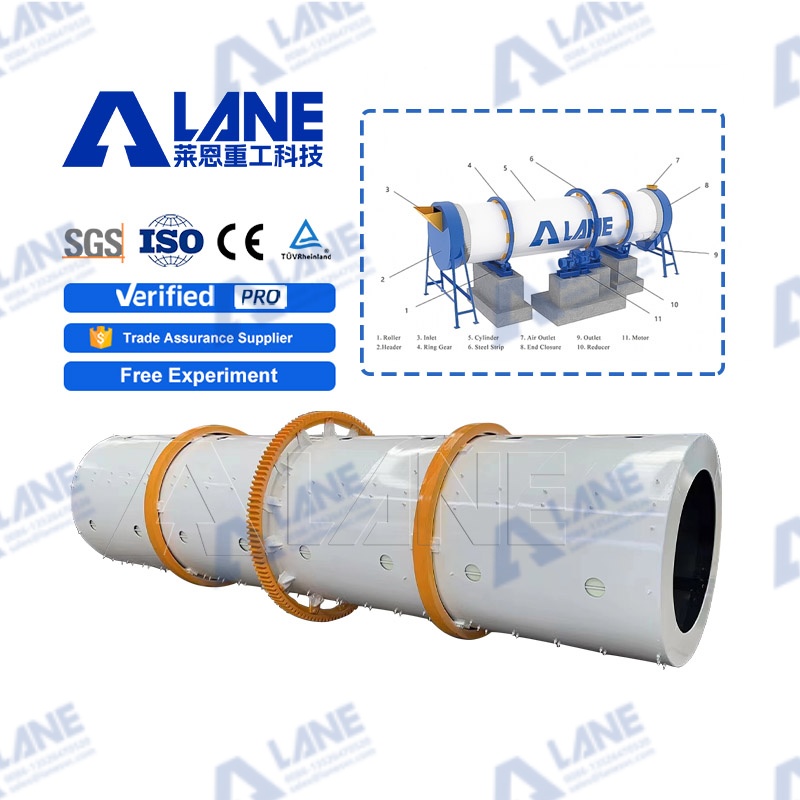
For more detailed equipment information, buyers can review the SSP Production Line Equipment List. Individual machine selection should then be checked against the actual process duty. For example, the Phosphate Rock Grinding Mill determines the feed fineness entering acidulation, while the Rotary Drum Granulator for Phosphate Fertilizer serves the downstream granulation section.
3. How Can You Check the Manufacturer’s Material and Fabrication Capability?
Material selection is one of the most important differences between a general machinery supplier and an experienced SSP fertilizer equipment manufacturer.
SSP production exposes equipment to different forms of wear and corrosion. Phosphate rock is abrasive during crushing and grinding. Sulfuric acid and acidic process gas create corrosion risks in storage, transfer, mixing, and ventilation systems. Cured material can also accumulate on poorly designed transfer surfaces.
Buyers should request a material schedule rather than accept a general statement such as “all equipment is made of high-quality steel.”
Pay particular attention to:
Acid-contact components: Confirm the materials used for tanks, pumps, valves, pipelines, mixer internals, seals, and gaskets. Rubber-lined steel, suitable stainless steel grades, FRP, or other corrosion-resistant materials may be considered according to acid concentration, temperature, and operating conditions. No single material should be assumed suitable for every acid service.
Wear-resistant components: Crusher hammers, mill liners, conveyor screws, and screen panels need to be selected according to rock abrasiveness and replacement access. Ask for material grades, replaceable-part drawings, and spare-part prices.
Structural fabrication: Check welding procedures, plate thickness, support design, access platforms, and inspection records. A heavy machine still needs correct alignment, bearing support, and maintainable access.
A supplier should also explain how it prevents cross-contamination between carbon steel fabrication work and corrosion-sensitive components. These details are more useful than broad claims about manufacturing quality.
4. Can the Manufacturer Design the Entire SSP Process as One System?
An SSP fertilizer equipment manufacturer should size equipment around the process flow, not treat every machine as an independent purchase.
The grinding mill must provide a suitable and stable feed for acidulation. The acid system must meter the required quantity consistently. The mixer and den must handle the reaction mass without creating excessive buildup or uncontrolled residence time. Curing capacity must match the production rate and process requirements.
If the plant produces granular SSP, the downstream equipment needs its own capacity check. The granulator, dryer, cooler, screen, and recycle conveyors operate as a connected circuit. If the screen or recycle conveyor is undersized, the granulator may be forced to reduce its feed rate even when its own motor and drum are large enough.
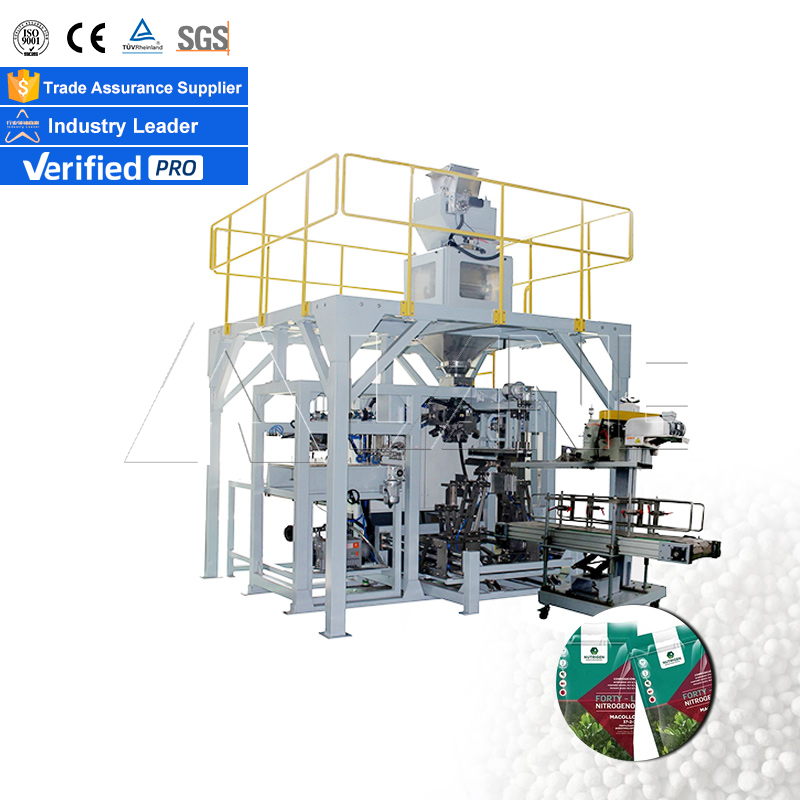
LANE’s SSP equipment range includes equipment for rock preparation, acidulation, curing, granulation, drying, cooling, screening, and packaging. Buyers can also compare the Drum Cooling Dryer and Automatic Packing Machine when checking the finishing and dispatch sections.
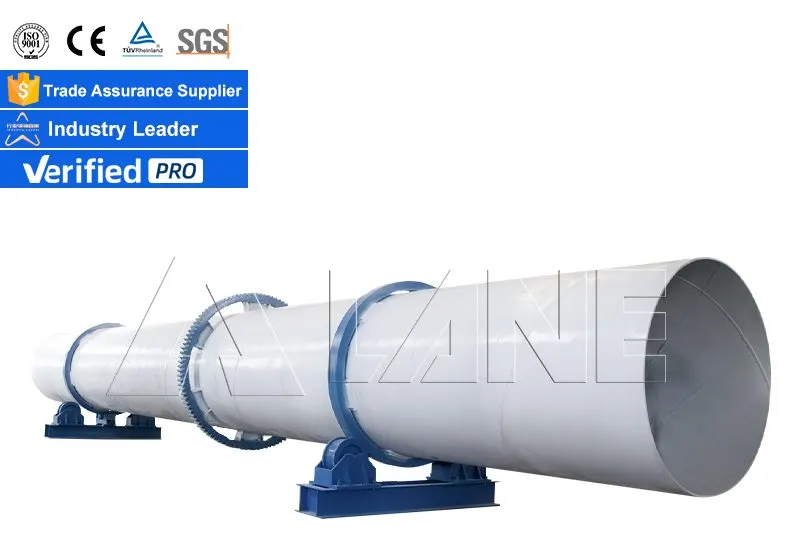
The key question is whether the supplier can provide a process flow diagram, equipment layout, material balance, utility list, and equipment duty schedule that agree with one another.
5. What Environmental and Safety Provisions Should a Supplier Include?
A phosphate fertilizer plant handles sulfuric acid and may generate dust, acid mist, and fluoride-bearing gas. Environmental equipment must therefore be included in the engineering scope from the beginning.
A practical proposal should identify:
- Dust collection points at rock receiving, crushing, grinding, screening, and packing.
- Local exhaust ventilation around acidulation and other relevant process vents.
- Wet scrubbing equipment selected for the expected gas composition and flow.
- Induced-draft fans, ducts, access ports, and stack arrangements.
- Acid-resistant floors, bunds, drainage, and spill containment.
- Safe access, emergency washing facilities, and operator protection measures.
The IFC Environmental, Health, and Safety Guidelines for Phosphate Fertilizer Manufacturing cover facilities producing SSP, TSP, phosphoric acid, and compound fertilizers. They provide a useful industry reference for environmental and occupational risk management, although local permits and emission limits still govern the final project design.
An experienced SSP fertilizer equipment manufacturer should be able to explain the design basis of its scrubber and dust collection system. Ask for the assumed gas flow, inlet conditions, pressure drop, collection points, and expected operating requirements. A quotation that only says “scrubber included” does not provide enough information for technical evaluation.
6. How Should Buyers Evaluate Quality Control and Factory Inspection?
A factory visit should focus on evidence that relates to the equipment being purchased.
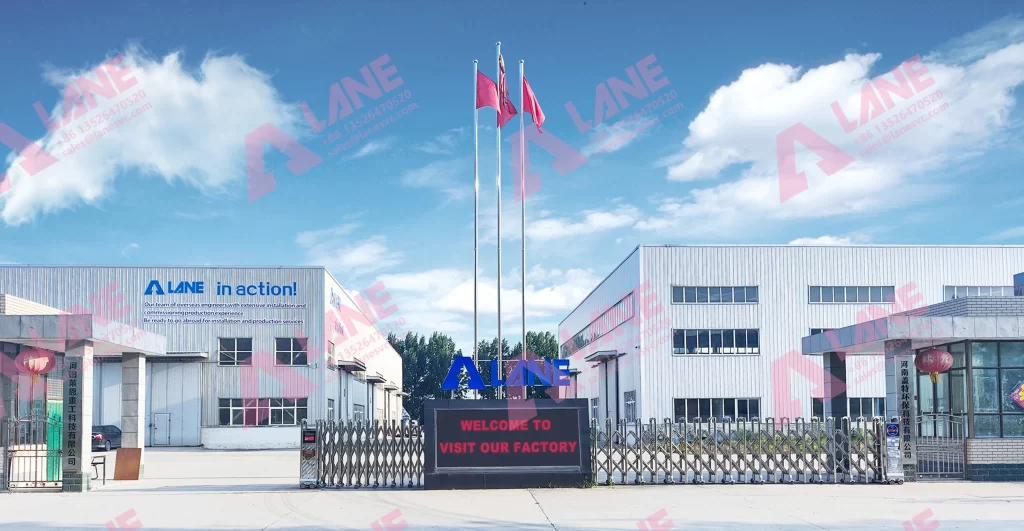
For a large project, inspect the fabrication and assembly areas where possible. Review welding quality, machining accuracy, surface treatment, motor and gearbox sourcing, and the way finished equipment is protected before shipment.
Ask the supplier to provide:
- General arrangement drawings and equipment manufacturing drawings.
- Material certificates for specified corrosion-resistant components.
- Welding and inspection records where applicable.
- Motor and gearbox nameplates and technical data.
- Factory inspection records and test reports.
- Spare-parts lists and maintenance instructions.
- Packing lists, lifting points, and shipping dimensions.
ISO 9001 can be a useful part of supplier qualification, but buyers should understand what it proves. It is a quality management system standard, not a certificate that an individual crusher, reactor, or production line will meet a particular performance target. ISO explains this distinction in its official certification guidance.
For this reason, an SSP fertilizer equipment manufacturer should be evaluated through both its management documentation and the technical evidence for the actual equipment package.
7. What Should Be Included in the Quotation and Purchase Contract?
A complete quotation should separate the equipment supply scope from engineering and site services. This makes it easier to compare suppliers and prevents important work from being left outside the contract.
The quotation should state:
- Equipment name, model, quantity, and design capacity.
- Main dimensions, motor power, and material of construction.
- Included feeders, conveyors, ducts, platforms, and electrical controls.
- Utility consumption and connection requirements.
- Dust collection and gas treatment scope.
- Recommended spare parts and wear parts.
- Manufacturing lead time and shipment terms.
- Installation supervision, commissioning, and operator training.
- Warranty period, exclusions, and after-sales response arrangements.
The contract should also define the performance test. For example, the agreed test should identify the phosphate rock analysis, feed fineness, sulfuric acid concentration, product form, operating hours, and the quality parameters to be checked.
A capacity guarantee without agreed feed conditions is difficult to evaluate. The same applies to a granulation-rate guarantee if the contract does not define whether the figure refers to material entering the granulator or finished on-size product after screening.
8. FAQ: Choosing an SSP Fertilizer Equipment Manufacturer
Q1: Can one manufacturer supply equipment for both powder and granular SSP?
Yes, a suitably equipped supplier can provide both configurations, but the equipment scope is different. Powder SSP generally needs rock preparation, acidulation, curing, conditioning, screening, and packaging. Granular SSP adds a granulation and finishing section, which may include drying, cooling, and recycle equipment.
Q2: What production capacity can an SSP equipment manufacturer provide?
LANE’s published SSP production-line information lists a configurable range of 5–50 TPH. The actual capacity must be confirmed for each project according to rock properties, product form, operating hours, and the capacity of every process section.
Q3: How can buyers check whether acid-contact equipment is corrosion-resistant?
Request a component-by-component material schedule and supporting material documentation. The review should cover tanks, pumps, valves, pipelines, seals, mixer internals, and any surfaces exposed to acidic gas. Material suitability must be checked against the actual acid concentration and temperature.
Q4: Does ISO 9001 certification guarantee that the SSP equipment will meet the required capacity?
No, ISO 9001 concerns the manufacturer’s quality management system rather than the performance of an individual machine. Capacity, product quality, and energy consumption need separate technical specifications and agreed acceptance tests.
Q5: Can the manufacturer provide overseas installation and commissioning support?
Yes, if these services are included in the project contract. Confirm the number of engineers, site working days, travel responsibilities, operator training, commissioning scope, and remote support arrangements before placing the order.
9. Final Checklist Before Selecting Your Supplier
Before making a final decision, compare each SSP fertilizer equipment manufacturer against three practical requirements:
- Manufacturing evidence: Can the supplier provide drawings, material schedules, fabrication records, and equipment-specific inspection documents?
- Process integration: Does the proposed equipment package cover the full process route, including acid handling, curing, environmental control, and product finishing?
- Contract accountability: Are capacity, product quality, utility consumption, commissioning, warranty, and acceptance conditions clearly defined?
The supplier with the lowest machine price is not automatically the lowest-risk choice. A better proposal is one that explains how the equipment will handle your phosphate rock, acid supply, product specification, and site conditions—and provides documentation to support those design decisions.
If you are comparing an SSP fertilizer equipment manufacturer for a new plant or an existing-line upgrade, prepare your phosphate rock analysis, target capacity, sulfuric acid supply condition, preferred product form, and destination country. These details allow the engineering team to prepare a more useful equipment configuration and project quotation.
For more details, please feel free to contact us.
Henan Lane Heavy Industry Machinery Technology Co., Ltd.
Email: sales@lanesvc.com
Contact number: +86 13526470520
Whatsapp: +86 13526470520