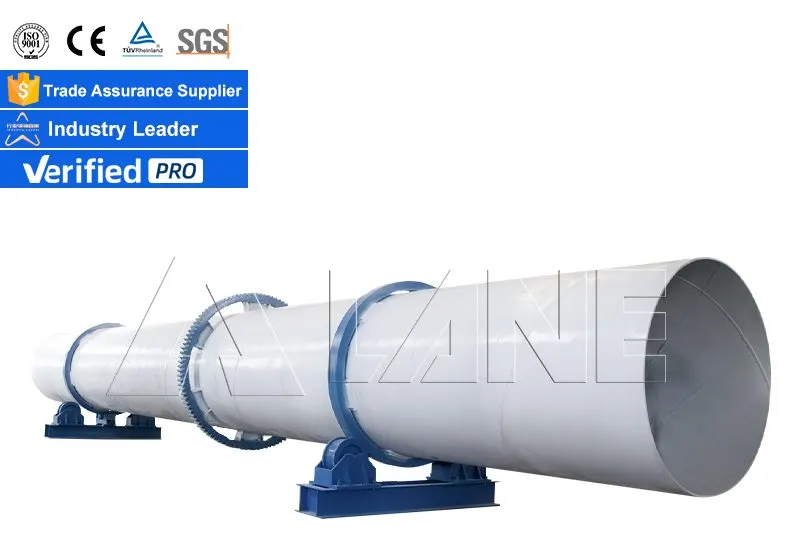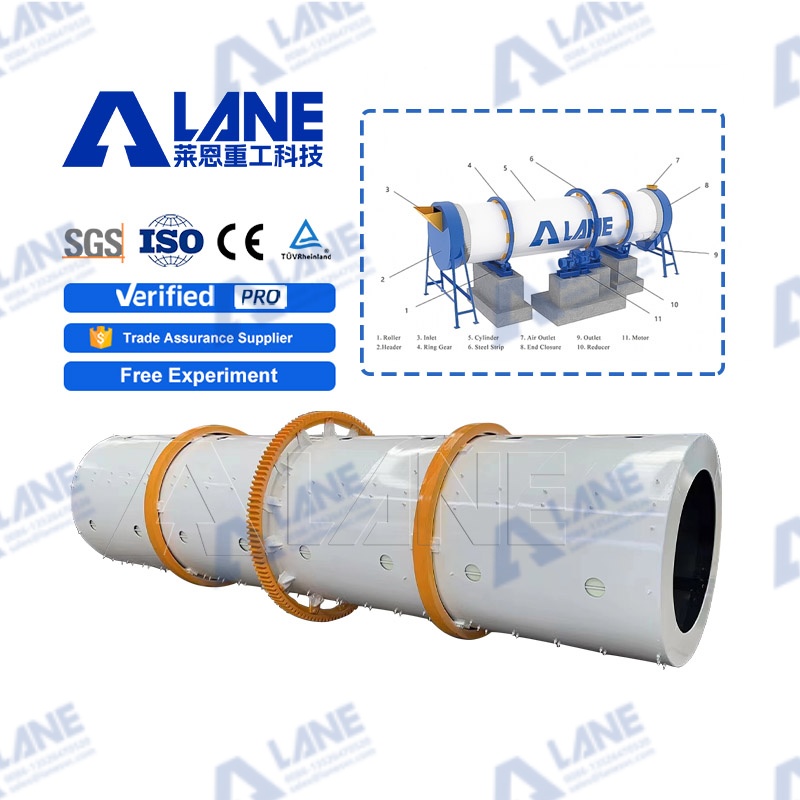
Rotary Drum Cooler for Fertilizer Granules: Buying Guide
- 2026-11-23
Why Does a Rotary Drum Cooler for Fertilizer Granules Matter?
A Rotary drum cooler for fertilizer granules reduces the temperature of hot fertilizer leaving the dryer before the material enters screening, coating, conveying and packaging. This stage directly affects product handling. Granules packed while still too hot may cake in bags, develop condensation problems during storage, or lose free-flowing characteristics.
For plant managers, the important question is not simply how quickly a cooler lowers temperature. The equipment must handle the actual dryer discharge rate and deliver granules at a temperature suitable for the next operation. A Rotary drum cooler for fertilizer granules that is undersized can become a bottleneck even when the dryer and granulator have spare capacity.
Cooling also needs to be distinguished from drying. The dryer removes moisture through heat input and exhaust airflow. The cooler mainly removes sensible heat from the dried product, normally through contact with cooling air. It should not be expected to correct an unstable drying process or compensate for excessive product moisture.
How Does a Rotary Drum Cooler for Fertilizer Granules Work?
A Rotary drum cooler for fertilizer granules uses a rotating cylindrical shell to move hot granules through a controlled cooling zone. The drum is slightly inclined, allowing material to travel gradually from the feed end toward the discharge end.
Inside the drum, lifting plates pick up the granules and release them as the cylinder rotates. This repeated lifting and cascading action exposes more particle surface to the cooling air. Heat transfers from the hot granules to the air, which is then discharged from the system.
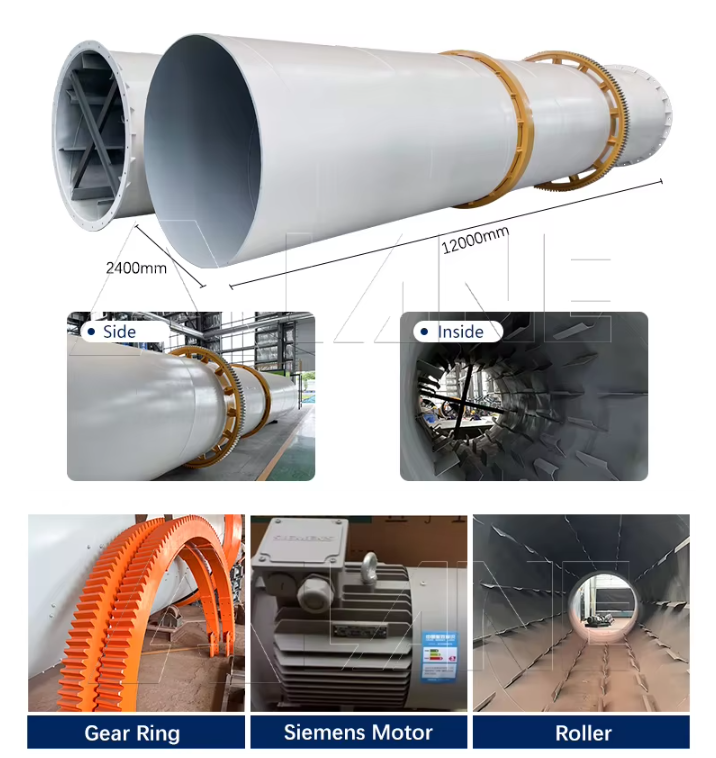
The cooling process depends on several operating conditions:
- Airflow volume: insufficient air reduces heat removal; excessive airflow may increase dust carryover.
- Drum speed: rotation affects how material is lifted, dispersed and exposed to air.
- Drum inclination: the slope influences material travel and residence time.
- Lifting plate arrangement: plate geometry affects the material curtain and air-to-solid contact.
- Feed temperature and throughput: both determine the heat load the cooler must remove.
LANE’s Drum Cooler page describes hot granules entering from the dryer, being lifted by internal flights and contacting cooling air. It also identifies concurrent and counter-current airflow as possible arrangements. The actual airflow configuration should be confirmed in the project design rather than assumed from the product name.
Planning a fertilizer project? Contact LANE engineering team to get a free 3D plant layout drawing, motor power calculation, and factory-direct quote within 4 hours. Request 3D Layout & Budget Estimate →
What Capacity and Specifications Should Buyers Compare?
When selecting a Rotary drum cooler for fertilizer granules, buyers should compare the rated throughput with the actual dryer discharge, not just the nominal output of the granulation line. The cooler receives the dried material continuously, so its design must account for production rate, product temperature, granule size, bulk density and required discharge temperature.
LANE’s general rotary cooler page publishes the following LARC model data. These figures are useful for preliminary comparison, but the final selection still requires confirmation against the fertilizer type and cooling duty.
| Model | Capacity (TPH) | Drum size (mm) | Speed (r/min) | Shell thickness (mm) | Lifting plate thickness (mm) | Power (kW) |
|---|---|---|---|---|---|---|
| LARC0808 | 1–2 | Φ800 × 8000 | 5 | 8 | 4 | 5.5 |
| LARC1010 | 2–3 | Φ1000 × 10000 | 5 | 10 | 6 | 5.5 |
| LARC1212 | 3–5 | Φ1200 × 12000 | 5 | 10 | 6 | 7.5 |
| LARC1515 | 5–8 | Φ1500 × 15000 | 5 | 12 | 6 | 15 |
| LARC1616 | 8–12 | Φ1600 × 16000 | 5 | 12 | 6 | 18.5 |
| LARC1818 | 12–15 | Φ1800 × 18000 | 4 | 14 | 6 | 22 |
| LARC2020 | 20–25 | Φ2000 × 20000 | 4 | 14 | 6 | 37 |
| LARC2222 | 25–30 | Φ2200 × 22000 | 4 | 16 | 6 | 37 |
| LARC2424 | 30–35 | Φ2400 × 24000 | 4 | 16 | 6 | 45 |
| LARC2626 | 35–40 | Φ2600 × 26000 | 3 | 18 | 6 | 55 |
| LARC2828 | 40–45 | Φ2800 × 28000 | 3 | 18 | 6 | 75 |
| LARC3028 | 45–50 | Φ3000 × 28500 | 3 | 18 | 6 | 90 |
The published model range covers 1–50 TPH. However, a buyer should not select a model from throughput alone. Two fertilizers running at the same tonnage may have different inlet temperatures, bulk densities, particle sizes and cooling requirements. Ask the supplier to calculate the heat load and confirm the expected outlet temperature under the stated operating conditions.
How Should the Cooler Match the Dryer and Screening System?
A Rotary drum cooler for fertilizer granules should be selected as part of the post-drying section, not as an isolated machine. The dryer outlet temperature, moisture content and hourly discharge rate determine the cooling duty. If the dryer sends material at a higher temperature than expected, the cooler may not achieve the target outlet temperature at the quoted throughput.
The normal arrangement is:
- Wet granules leave the granulator and enter the rotary dryer.
- The dryer reduces moisture to the agreed process target.
- Hot dried granules enter the rotary cooler.
- Cooled granules move to the vibrating screen.
- On-size product proceeds to coating or packaging; oversize and fines follow the designed recycle route.
For an SSP project, the SSP production process shows the relationship between drying, cooling, screening and recycle. The SSP fertilizer manufacturing equipment guide also identifies the rotary drum cooler as the equipment used to reduce product temperature before screening.
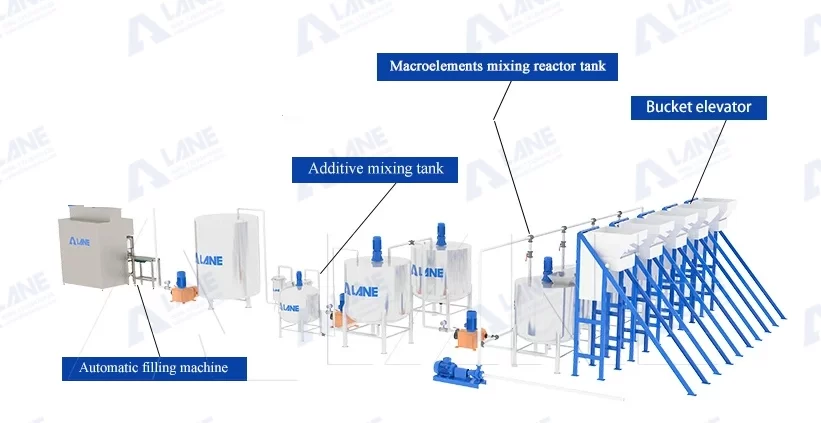
This sequence matters because hot granules can affect screening and downstream handling. If material reaches the screen while still too hot or with an unstable moisture condition, the plant may experience sticking, caking or inconsistent product flow. A Rotary drum cooler for fertilizer granules therefore needs to be matched to the dryer and screen capacities, including the actual operating hours and expected production fluctuations.
Which Fertilizer Materials Can the Cooler Handle?
LANE’s general product information identifies organic, inorganic and compound fertilizers as applications for its drum cooler, including mineral-based phosphate and potash fertilizers. This makes the equipment relevant to different fertilizer production lines, but it does not mean every formulation can use the same configuration without checking the process conditions.
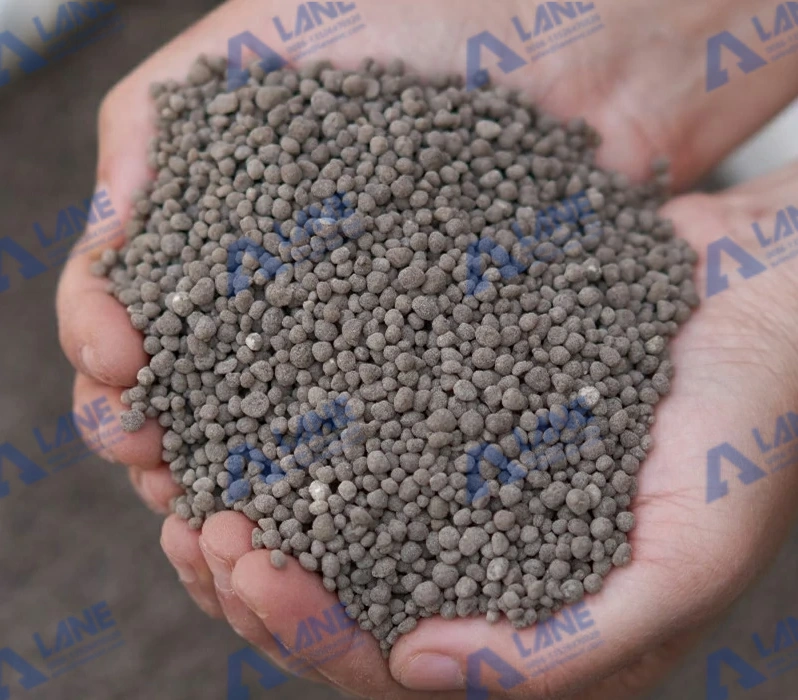
For SSP and other phosphate fertilizers, buyers should pay particular attention to:
- Product temperature at the dryer discharge.
- Residual moisture and the risk of condensation.
- Granule strength and the possibility of attrition during tumbling.
- Dust generation and the need for suitable exhaust collection.
- Corrosion or abrasion conditions associated with the material.
A Rotary drum cooler for fertilizer granules used after SSP drying should be specified with the actual material and operating environment in mind. If the feed contains residual acidity or the process has corrosive dust, ask the supplier to confirm the material and coating selection for the cooler, support components and connected ductwork. Do not assume that a standard carbon-steel specification is suitable for every point in an SSP plant.
What Maintenance and Acceptance Checks Should Be Included?
A rotary cooler is a rotating machine with a large shell, support rollers, riding rings, drive components and internal lifting plates. Its reliability depends on alignment, lubrication and regular inspection. A Rotary drum cooler for fertilizer granules should be supplied with clear maintenance access and a documented inspection schedule.
Before commissioning, check:
- Drum alignment: confirm the shell runs correctly on the support rollers without abnormal axial movement.
- Drive system: inspect motor, reducer, coupling or belt drive, pinion and gear ring.
- Support components: check roller contact, bearing temperature and lubrication.
- Internal lifting plates: inspect welds, fasteners and signs of deformation or wear.
- Air system: verify fan rotation, airflow direction, duct connections and dust-control arrangements.
- Discharge transition: confirm that cooled material can transfer to the screen without blockage or excessive drop height.
For a Rotary drum cooler for fertilizer granules, acceptance should include a loaded test rather than a no-load rotation check alone. Record inlet material temperature, feed rate, outlet material temperature, ambient air temperature and operating conditions. Take samples from the discharge at stable operation, not just during startup.
The contract should define the test duration, measurement points and acceptable temperature difference. If the supplier guarantees a particular outlet temperature, the guarantee should state the inlet temperature, throughput, ambient conditions and fertilizer properties used as the design basis.
For general machinery risk assessment and safe access, buyers can refer to ISO 12100:2010. This standard covers machinery safety principles; it does not certify cooling capacity or product quality.
FAQ: What Should Buyers Ask Before Ordering a Fertilizer Cooler?
Can one rotary cooler handle different fertilizer granules?
Yes, a rotary cooler can be used for different fertilizer materials, but the configuration must be checked against each product’s temperature, moisture, bulk density, particle size and cooling duty. Do not assume one operating setting will suit every formulation.
What capacity range is available?
LANE’s published LARC model table lists capacities from 1–2 TPH to 45–50 TPH. The correct model depends on actual feed conditions and the required cooling result, not only the nominal production-line capacity.
What outlet temperature can the cooler achieve?
There is no single outlet temperature that can be guaranteed for every project from the published model table. Buyers should provide the inlet temperature, ambient conditions, material properties and required outlet temperature so the supplier can confirm the cooling design.
Does the cooler require a separate cooling-air system?
Yes, the general rotary cooler design uses a cold-air system to remove heat from the granules. Confirm the fan capacity, airflow direction, ductwork, dust collection and whether the project requires additional air-treatment equipment.
How long does installation and commissioning take?
The exact schedule depends on the model, foundation readiness, site access and the scope of connected equipment. Before ordering, request the installation drawing, foundation loads, lifting requirements, commissioning scope and operator training plan. The supplier should confirm the project schedule in the quotation rather than offer an unsupported standard delivery time.
Final Buying Checklist: What Should Be Confirmed in the Quotation?
Before purchasing a Rotary drum cooler for fertilizer granules, confirm three technical points.
First, verify the cooling duty. The quotation should state the inlet temperature, required outlet temperature, material throughput, ambient conditions and product properties used for selection.
Second, check the mechanical configuration. Confirm drum dimensions, rotation speed, shell and lifting plate thickness, motor power, support rollers, drive arrangement and cooling-air system.
Third, define the acceptance test. Agree on the test duration, measurement locations, stable feed rate and temperature criteria. A cooler that rotates correctly without material has not yet demonstrated its cooling performance.
LANE provides rotary cooling equipment and fertilizer production-line solutions. If you are planning a new plant or upgrading an existing cooling section, share your material type, dryer discharge temperature, target capacity and required outlet temperature. The engineering team can then assess the suitable model and connected equipment.
For more details, please feel free to contact us.
Henan Lane Heavy Industry Machinery Technology Co., Ltd.
Email: sales@lanesvc.com
Contact number: +86 13526470520
Whatsapp: +86 13526470520