SSP Fertilizer Market Demand Analysis: Key Trends Driving Plant Investment Decisions
- 2026-05-15
Global fertilizer markets don’t sit still. And if you’ve been watching the SSP segment over the past few years, you already know that SSP fertilizer demand has shifted in ways that are genuinely reshaping how producers think about capacity, geography, and long-term capital allocation. For anyone running a serious SSP fertilizer market demand analysis right now, the signals are hard to ignore. This piece breaks down what’s actually driving those shifts — and what plant investors need to understand before committing to a new production line.
Why SSP Is Gaining Ground Again
Single phosphates are nothing new. This game has existed for more than 100 years. however, its cost profile, Sulphur content, and compatibility with a wide range of soil types make it surprisingly competitive in today’s input cost environment.
In markets where DAP and TSP prices have surged, SSP has quietly become the pragmatic choice. Smallholder farmers across sub-Saharan Africa, South Asia, and parts of Latin America have been increasing uptake not because SSP is trendy, but because it works and it’s affordable. That’s a durable SSP fertilizer demand driver, not a cyclical blip.
From what I’ve seen on the ground, producers who dismissed SSPs as “legacy products” 10 years ago are now in a hurry to increase capacity. In this industry, timing is of paramount importance.
Key Trends Shaping SSP Fertilizer Market Demand Analysis
Any honest SSP fertilizer market demand analysis has to grapple with several intersecting forces right now.
1. Agricultural Expansion in Emerging Economies
Sub-Saharan Africa alone is projected to require significantly higher phosphate fertilizer volumes through 2030 to meet food security targets. Governments are subsidizing domestic fertilizer production, which is directly stimulating SSP plant investment. India continues to consume enormous quantities, driven by paddy and wheat cultivation cycles. These aren’t speculative trends — procurement pipelines in these regions are active and growing, and SSP fertilizer demand projections for these corridors remain consistently upward.
2. Sulfur Dual-Function Advantage
SSP contains around 11–12% sulfur alongside its phosphorus content. Sulfur-deficient soils — increasingly common after decades of high-analysis fertilizer dominance — respond well to SSP application. Agronomists are recommending it more frequently. That recommendation cycle feeds directly into regional SSP fertilizer demand, particularly in areas transitioning away from purely high-analysis products.
3. Raw Material Accessibility
Phosphate rock deposits are geographically concentrated but not inaccessible. Countries like Morocco, China, and Algeria hold dominant reserves, but smaller regional deposits in Africa and Southeast Asia are being developed. Access to affordable phosphate rock is one of the primary site-selection criteria for new SSP plants — and investors conducting their own SSP fertilizer market demand analysis are factoring this in early.
4. Policy and Subsidy Environments
Fertilizer subsidy reforms, import tariff adjustments, and domestic production incentives across India, Brazil, and several African nations are actively influencing where new SSP capacity gets built. Regulatory environments can accelerate or kill a project. Any rigorous SSP fertilizer market demand analysis needs to map policy risk as carefully as agronomic demand.
Core Equipment for an SSP Production Line
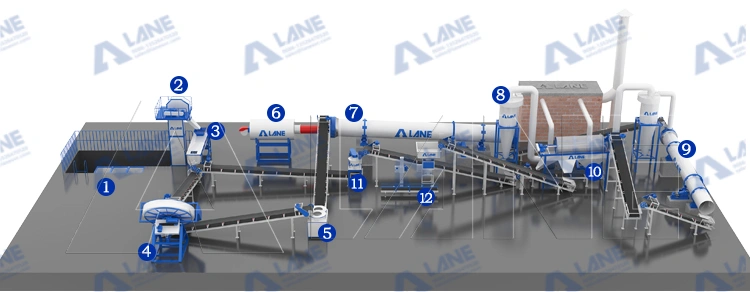
Understanding SSP fertilizer demand at the market level is one thing. Translating it into an investable plant configuration is another. Here’s the equipment backbone of a standard SSP production line — these are the components that will anchor your procurement and engineering conversations:
- Acidulation reactor— Where phosphate rock reacts with sulfuric acid; residence time and mixing efficiency are critical quality controls
- Raymond mill— For grinding phosphate rock to the required particle fineness before acidulation
- Belt conveyor system— Material transfer throughout the production process; often underestimated in plant layout planning
- Rotary drum granulator— Used when granular SSP product is required rather than powdered; significantly affects product marketability
- Rotary drum dryer cooler— Controls moisture for storage stability and cools the product to prevent downstream issues common in lower-quality plant designs.
- Dust collection system— Fluorine and dust management; non-negotiable for environmental compliance and operator safety
- Automatic packaging machine — Final stage for commercial dispatch; throughput here directly affects plant economics
in my experience, investors have consistently underestimated the importance of acid reactor design and dust management systems. These two factors cause the greatest operational headaches on routes with inadequate design.
What Experienced Producers Are Doing Differently
let’s teach you the difference between a producer who is successfully expanding and a producer who is building a factory and now suffering from profitability.
First of all, they are not pursuing the cheapest equipment available. They procure from manufacturers whose process experiences have been documented. Suppliers like LANE, which specialize in complete fertilizer production lines including SSP configurations, offer integrated engineering support that a one-off equipment vendor cannot replicate. This is crucial when commissioning plants in markets where there is limited technical expertise available.
Next, we have incorporated flexibility into the granulation stage. Markets change. Plants that can produce both powder and granular SSPs, or switch to NPK blends, have a fundamentally different risk profile than a single format line.
Thirdly, they have been investing in operator training since day one. even if the equipment is excellent, if the operation is rushed or training is delayed, the performance of the power plant will still be low.
Summary and Strategic Takeaway
The fundamentals behind SSP fertilizer demand are solid and getting stronger. Emerging market agricultural growth, sulfur nutrition awareness, and competitive cost positioning are all working in SSP’s favor. But investment decisions still need to be grounded in disciplined, location-specific SSP fertilizer market demand analysis — not just macro-optimism.
When evaluating a new SSP plant or expanding an existing capacity, you should first perform an accurate market analysis. Then, we adjust the equipment configuration to match the product format that the target market truly demands.

Frequently Asked Questions
Q1: What is driving the increase in SSP fertilizer demand in developing markets?
Rising SSP fertilizer demand in developing regions is primarily driven by affordability relative to high-analysis alternatives, the dual phosphorus-sulfur nutrition benefit, and active government support for domestic fertilizer production in food-insecure regions. Smallholder adoption is growing steadily across Africa and South Asia.
Q2: How does a proper SSP fertilizer market demand analysis differ from general fertilizer market research?
A focused SSP fertilizer market demand analysis goes beyond broad phosphate trends. It requires mapping regional soil sulfur deficiencies, local subsidy structures, phosphate rock sourcing logistics, and the competitive positioning of SSP against DAP and TSP at farm-gate price levels. Generic fertilizer research rarely captures these SSP-specific dynamics with sufficient precision.
Q3: What phosphate rock quality is needed for SSP production?
Generally, phosphate rock with P₂O₅ content above 28–30% is preferred for efficient SSP production. Lower-grade rock can be processed but affects acid consumption rates and final product quality. Rock fineness after milling is also a critical process variable.
Q4: How large an investment is required for a commercial SSP plant?
Scale varies significantly. Small-scale lines (5–10 tons per hour) can be commissioned for considerably less than large continuous-process plants running 30+ tons per hour. Equipment quality, site infrastructure, and regional labor costs all affect the final number. A detailed feasibility study is essential before committing capital.
Q5: What environmental compliance requirements should SSP plant investors anticipate?
Fluorine gas emissions from the acidulation reaction are the primary regulatory concern. Effective scrubbing and bag filter systems are mandatory in virtually all jurisdictions. Wastewater handling from acid contact and dust suppression systems also require careful design and permitting.
Q6: Can an SSP plant be reconfigured to produce other fertilizer types?
Yes, with planning. Plants designed with modular granulation and drying stages can often be adapted for NPK blending or organic-mineral compound production. Producers entering uncertain markets sometimes build this flexibility in deliberately as a hedge against SSP fertilizer demand shifts or broader market volatility.
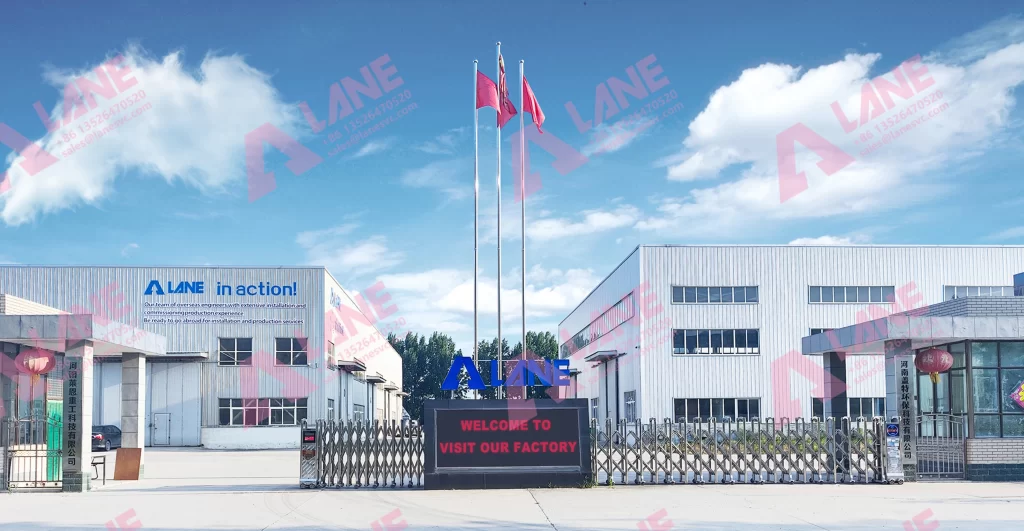
For more details, please feel free to contact us.
Henan Lane Heavy Industry Machinery Technology Co., Ltd.
Email: sales@lanesvc.com
Contact number: +86 13526470520
Whatsapp: +86 13526470520