How to Configure a 50 Ton Per Day SSP Production Line: Costs, Equipment & ROI
- 2026-05-13
Setting up a fertilizer manufacturing operation is never a small decision. But among entry-level industrial fertilizer projects, a 50 ton per day SSP production line consistently stands out as one of the most financially accessible — and genuinely practical — starting points for serious investors. Whether you’re planning your first SSP fertilizer plant or expanding an existing business, this guide breaks down exactly what configuration, cost, and return on investment look like at this scale.
For more than a century, single superphosphate has been a workhorse of global agriculture, providing phosphorus Sulphur and calcium in a single compound, making it particularly valuable in low-phosphorus soils in sub-Saharan Africa. South Asia and Latin America. At 50 TPD, you work on a scale, which is large enough, in order to serve regional markets, without requiring capital for larger investments. This balance is more important during early feasibility studies, as most people recognize.
What Does a 50 TPD Configuration Actually Look Like?
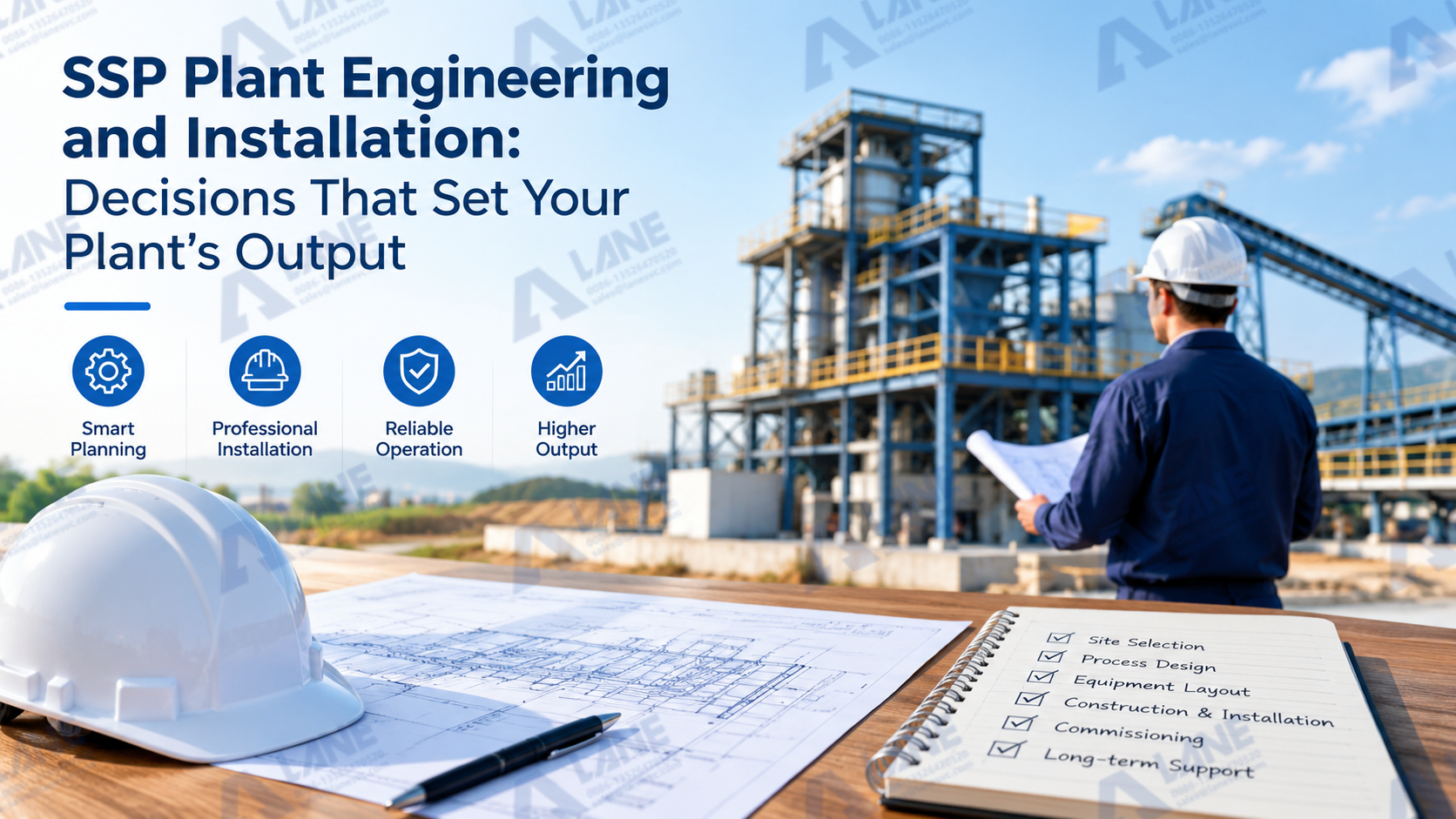
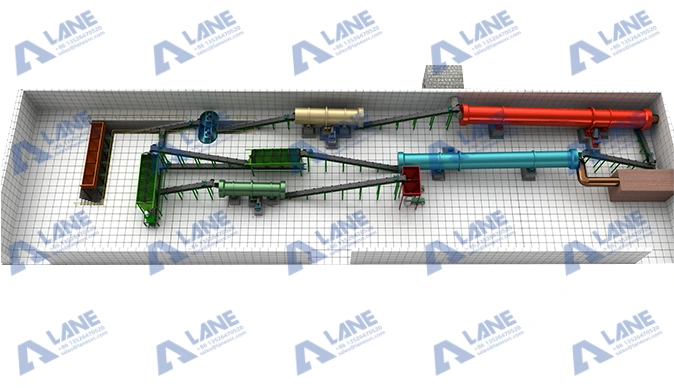
The core of any SSP fertilizer plant at this capacity revolves around a standardized production flow: raw material preparation, acidulation, curing, crushing, optional granulation, drying, screening, and packaging. Every 50 ton per day SSP production line follows this basic sequence — but equipment specification, automation level, and site-specific engineering decisions vary considerably between projects.
Here most developers underestimate the complexity. The process sounds linear on paper. In practice, every unit operation carries variables, the quality of earnings, influence downtime risk and energy consumption. You can’t just buy equipment from a list and expect a clean commissioning.
Core Equipment in a 50 Ton Per Day SSP Production Line
A properly configured plant at this scale typically includes:
- Raymond mill— Grinds raw phosphate rock to the required fineness (typically 80–100 mesh) for efficient acid reaction. Particle size directly controls reaction completeness.
- Acidulation reactor— The chemical core of the operation. Sulfuric acid reacts with ground phosphate rock inside this vessel to produce superphosphate slurry. Retention time and acid ratio are critical parameters.
- Double shaft mixer— Ensures thorough blending of the acidulated material, improving homogeneity before curing.
- Belt conveyor system— Moves material between process stages continuously, reducing manual handling and maintaining throughput consistency.
- Rotary drum dryer cooler— Reduces moisture to below 14% and cools the product to prevent caking during storage and packaging.
- Vibrating screen— Separates on-spec granules from oversized or undersized material; returns off-spec product for regrinding.
- Dust collection system— Captures fluoride-bearing dust and acid mist generated during acidulation and drying. Non-negotiable from a regulatory and worker safety standpoint.
- Automatic Packaging Machine— Completes the line with accurate weighing and bagging, typically in 25 kg or 50 kg formats.
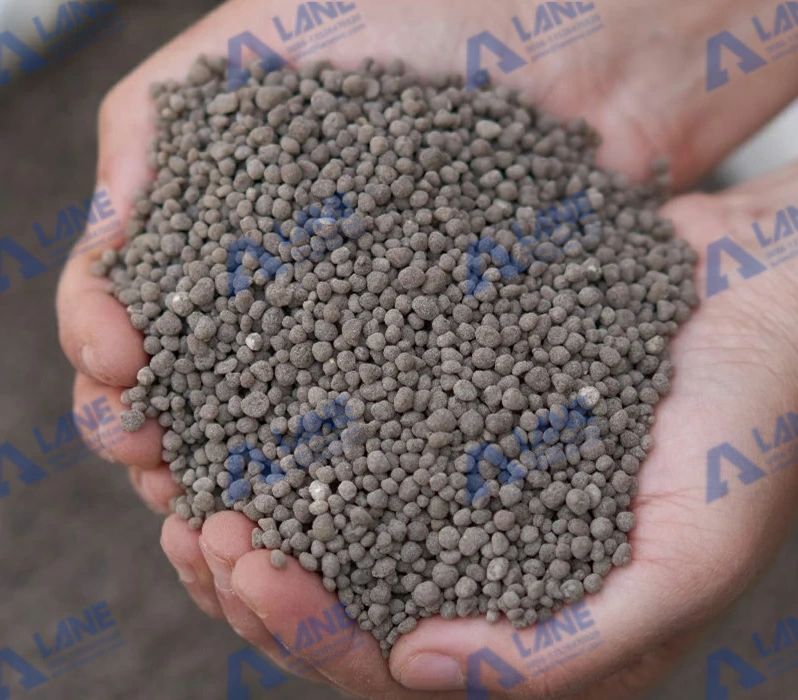
Some configurations include a rotating drum granulator for producing granulated instead of powdered SSP. In markets such as Nigeria or Kenya, granular product achieves a significantly higher price per ton – something that can be used to produce a lot of granular products. This should be incorporated into the product strategy at an early stage.
Cost Breakdown: What Are You Actually Looking At?
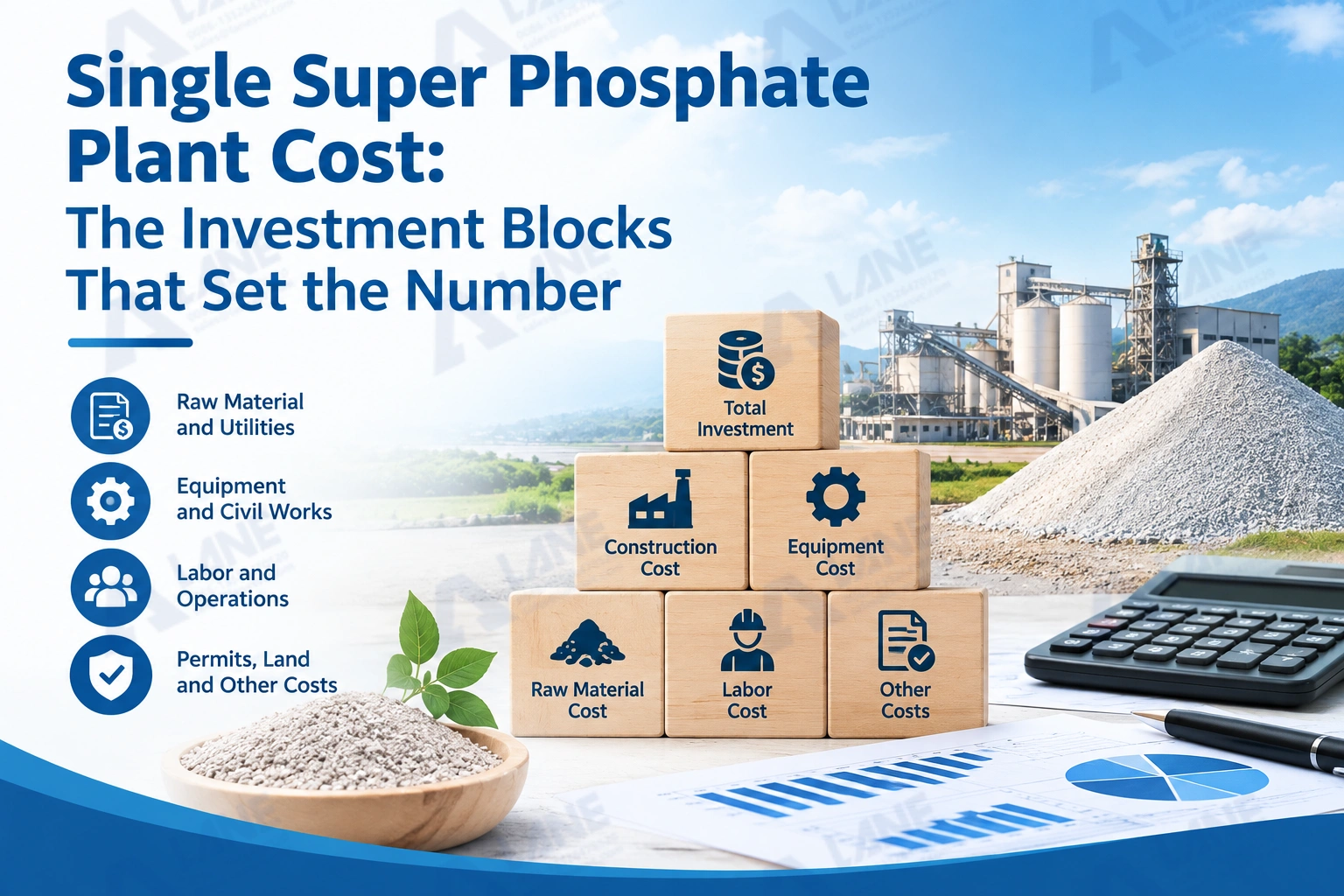
From what I’ve seen working with clients across East Africa and the Middle East, a complete 50 ton per day SSP production line — including equipment, civil works, utilities, and commissioning — typically falls between $280,000 and $480,000 USD depending on automation level and site conditions.
Rough breakdown:
- Equipment (full production line): $180,000–$320,000
- Civil construction and infrastructure: $60,000–$100,000
- Electrical installation and utilities: $25,000–$45,000
- Commissioning, training, and initial operation: $15,000–$30,000
Raw material costs — phosphate rock and sulfuric acid — dominate ongoing operating expenses. Sulfuric acid availability in your target region is one of the first things I’d investigate before committing to this plant type. If you’re sourcing acid domestically, your cost structure looks very different than if you’re importing it.
Manufacturers like LANE supply turnkey equipment packages with full engineering support, which significantly reduces the coordination burden for first-time investors building a new SSP fertilizer plant from scratch.
ROI Expectations: Realistic Numbers
With 50 TPD and 300 production days per year, the annual production is about 15,000 tons. Since SSP sells between 80 and 130 dollars per ton in many emerging markets, The gross revenue potential lies between 1.2 and 1.95 million US dollars annually.
After considering raw materials, Labour force, Energy and maintenance net margins are typically between 18-28% for well-run operations in low-cost environments. that the full investment payout is somewhere in the range of 18 to 36 months. Solid for an industrial property of this type.
A Few Things Most Guides Won’t Tell You
Honestly? The equipment is the easier part. When projects hit a snag, lies in the procurement of phosphate rocks, the logistics of sulfuric acid and the governmental approvals for the handling of corrosive inputs. I have seen well-funded projects, have lost between six and nine months simply because of the approval for acid storage.
Plan your raw material supply, before you finalize your equipment order. That sounds obvious—and yet it rarely happens.
Final Thoughts
A 50 ton per day SSP production line represents a proven, scalable entry point into industrial fertilizer manufacturing — particularly for investors targeting price-sensitive markets in Africa and Asia. The technology is mature, the capital requirements are manageable, and demand is real. Get site-specific engineering input early. The configuration decisions you make at the start define your margins for years.
FAQ
Q1: What raw materials does a 50 ton per day SSP production line require?
The two primary inputs are phosphate rock (typically 28–32% P₂O₅ grade) and sulfuric acid (93–98% concentration). Rock quality directly affects finished product grade and reaction efficiency.
Q2: How much land does a 50 ton per day SSP production line need?
A standard setup typically requires 2,000–4,000 square meters, including production workshop, curing shed, raw material storage, acid tanks, and finished goods warehouse. Exact requirements vary with layout design.
Q3: Is granular or powder SSP more profitable at this scale?
Granular SSP commands a $10–$25 per ton premium in most markets and stores better. For markets with established granular demand, adding granulation to a 50 ton per day SSP production line typically pays back within 18–24 months.
Q4: What environmental compliance is required for an SSP fertilizer plant?
Fluoride-bearing dust and acid mist are the primary concerns. A properly designed bag filter and scrubber system is essential. Most jurisdictions also require secondary containment for sulfuric acid storage at any SSP fertilizer plant handling this volume.
Q5: How long does commissioning take?
For a new greenfield installation, commissioning typically takes 4–8 weeks after equipment installation. This covers testing, parameter calibration, trial runs, and operator training. On-site manufacturer support significantly shortens this window.
Q6: Can this line be scaled up later?
Yes. A well-designed SSP fertilizer plant at 50 TPD can generally reach 80–100 TPD by upgrading the acidulation reactor and grinding capacity while retaining most auxiliary equipment. Discuss expansion pathways with your supplier before finalizing the initial layout — early decisions either enable or complicate future growth.
For more details, please feel free to contact us.
Henan Lane Heavy Industry Machinery Technology Co., Ltd.
Email: sales@lanesvc.com
Contact number: +86 13526470520
Whatsapp: +86 13526470520