How to Use SSP Fertilizer for Wheat Crop Application: Dosage, Timing & ROI
- 2026-05-14
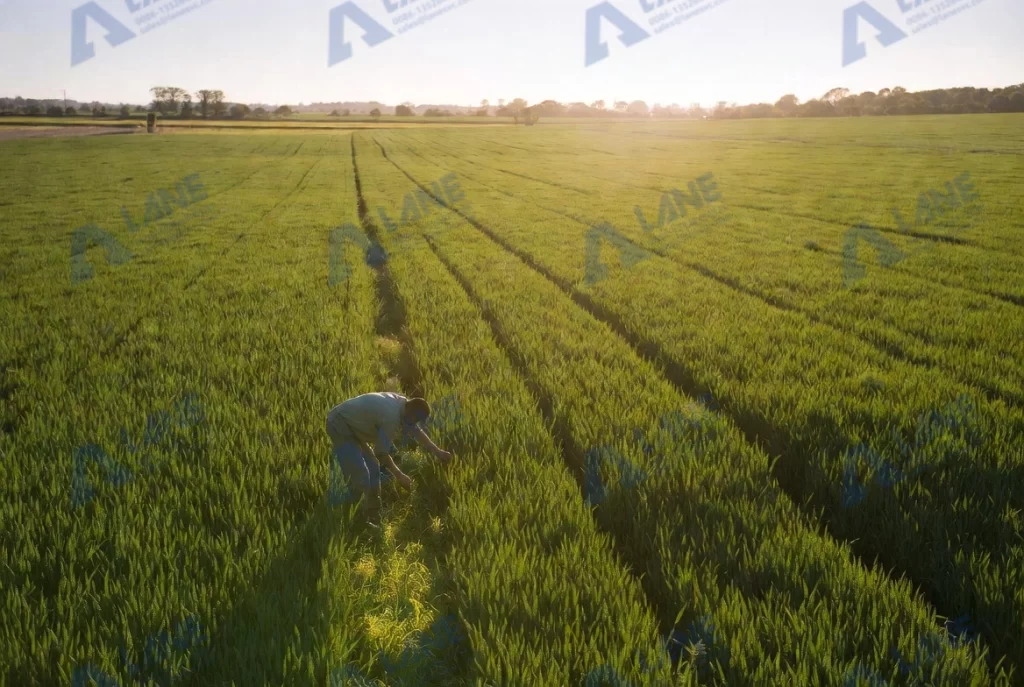
Wheat is unforgiving. Get the phosphorus timing wrong, and you’ll watch a promising crop underperform — no matter how good your seed or how clean your field. That’s why SSP fertilizer for wheat crop application has remained a go-to choice for grain producers across South Asia, Africa, and Eastern Europe for decades. It’s not glamorous. But it works, consistently, when applied correctly.
This guide breaks down exactly how to get the most from SSP fertilizer — dosage calculations, seasonal timing windows, equipment considerations, and the real-world return on investment that makes the economics work at scale.
What Makes SSP a Strong Fit for Wheat
Monoperphosphates contain about 16 to 20% water-soluble phosphates (P2O5) and usually 11 to 12% sulfur but are not found in many competing sources. In wheat growing in sulfur-deficient soils (which is more common than many growers think), a dual nutrient profile is important.
SSP fertilizer also has a lower pH impact compared to diammonium phosphate (DAP), making it particularly suited for alkaline or neutral soils common in wheat-growing belts. The phosphorus becomes plant-available quickly after soil moisture activates it — which means timing your application around rainfall or irrigation windows is critical, not optional.
From what I’ve seen in the field across multiple continents, the biggest mistake wheat producers make with SSP fertilizer isn’t under-application. It’s applying it too late. Phosphorus drives root architecture in the early vegetative stage. If that window closes, you can’t recover it.
Recommended Dosage for Wheat
There’s no single universal number — soil phosphorus levels, target yield, and crop variety all shift the calculation. That said, general field-validated benchmarks exist:
- Basal application: 250–400 kg/ha of SSP fertilizer is standard for medium-fertility soils targeting yields of 4–6 tones/ha.
- Low-phosphorus soils: Dosages up to 500 kg/ha may be warranted, particularly in sub-Saharan Africa and parts of South Asia.
- Split application: In high-rainfall zones, splitting 60/40 between pre-sowing and crown root initiation stage can reduce leaching losses.
Always tie your SSP fertilizer for wheat crop application rates to a current soil test. I’ve seen producers in Pakistan and Ethiopia cut input costs by 20% simply by running annual phosphorus tests rather than defaulting to historical dosage habits.
Application Timing: The Windows That Actually Matter
It is precisely the timing that determines whether ROI will be generated or lost. In the case of wheat, there are three windows that can be defended.
Pressing: the most reliable timing. Apply SSP to the soil two to four weeks prior to planting, ideally at a depth of 10 to 15 centimeters. Since Lin doesn’t move much sideways, the depth of its placement is crucial. Broadcasting Incorporation is permitted. Applying bands near the time of sowing improves efficiency.
During sowing: If spreading is difficult, SSP can be blended into the seedbed at a low concentration of 150–200 kg/ha. Please be careful when allowing seeds to come into contact with fertilizer. SSP is generally safe, but water-activated sulfur can, at high concentrations, stimulate germinating seeds.
Top dressing: Frankly speaking, this is a last resort. When soil surface applications are made without the inclusion of permeable phosphates, the uptake efficiency significantly decreases. Please use this product solely to correct visible deficiency symptoms.
Core Equipment in SSP Production: What’s Behind the Bag
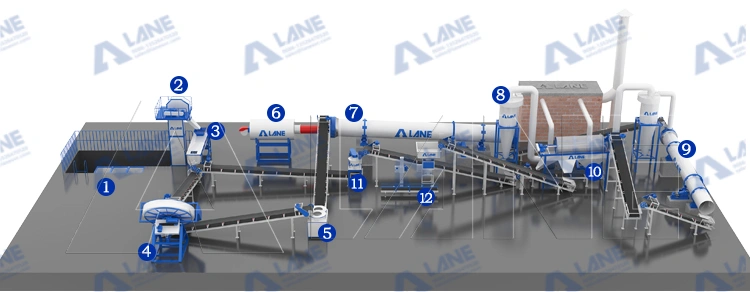
Understanding SSP fertilizer for wheat crop application also means understanding what goes into making a consistent, field-ready product. For large-scale producers and procurement teams sourcing from manufacturers, equipment quality directly affects granule uniformity, solubility, and shelf stability.
Key production equipment in an SSP line includes:
- Acidulation reactor: Where phosphate rock and sulfuric acid react — the core of the process. Residence time and mixing uniformity here determine P₂O₅ availability.
- Raymond mill: Grinds phosphate rock to the required fineness (typically 80–100 mesh) before acidulation. Particle size consistency is non-negotiable.
- Belt conveyor system: Handles material transfer throughout the plant, from raw rock intake to curing pile and bagging — a seemingly simple component that causes significant downtime when undersized.
- Rotary drum granulator: Used in granular SSP lines to convert powdered product into uniform granules for easier field application and reduced dust losses.
- Dust collection unit: Mandatory for environmental compliance and for protecting fluorine-containing fumes generated during the acidulation stage.
Lane, a manufacturer specializing in large-scale fertilizer production facilities, has designed an integrated SSP line that covers all these unit operations, which is important for producers planning to build or upgrade processing capacity in emerging markets.
ROI Breakdown: Does SSP Still Make Sense Economically?
Short answer: yes, but the math is location dependent. SSP fertilizer is typically 30–50% cheaper per unit of phosphorus than DAP in markets where sulfuric acid and phosphate rock are locally available — which describes much of Sub-Saharan Africa, South Asia, and parts of Latin America.
At 300 kg/ha application on a 4-tonne/ha wheat crop, the phosphorus input cost using SSP fertilizer often runs $35–55/ha compared to $60–90/ha with DAP. Multiply that across thousands of hectares, and the cumulative input saving is real.
The sulfur contribution also displaces additional sulfur amendment costs, which matters in increasingly sulfur-deficient soils globally.
To be honest, the ROI case for SSP fertilizer for wheat crop application is strongest in markets where DAP import costs are high and local SSP production is feasible. That’s where producers and governments alike should be looking harder at domestic manufacturing.
Conclusion
SSP isn’t complicated. But it rewards precision — right dosage, right timing, right placement. Wheat growers who treat it as a generic commodity input miss the agronomic edge it can provide. Those who work with SSP fertilizer for wheat crop application systematically, backed by soil data and proper equipment, consistently outperform on both yield and input cost efficiency.
If you are considering evaluating your fertilizer plant’s SSP capacity or expanding your procurement for a large-scale wheat program, contact the LANE technical team for equipment specifications and project planning support.
FAQ
Q1: What is SSP fertilizer and why is it used for wheat?
SSP (single superphosphate) is a phosphate-sulfur compound fertilizer containing 16–20% P₂O₅ and 11–12% sulfur. Wheat requires early phosphorus for root development and tillering, and the sulfur content makes SSP especially effective on sulfur-deficient soils where DAP and other phosphate sources fall short.
Q2: How much SSP fertilizer should I apply per hectare for wheat?
Standard basal rates range from 250–400 kg/ha depending on soil phosphorus index and yield target. Low-fertility soils may require up to 500 kg/ha. Always calibrate against a current soil test — blanket application without testing frequently leads to either deficiency or unnecessary cost.
Q3: When is the best time to apply SSP fertilizer for wheat crop application?
Pre-sowing incorporation, 2–4 weeks before planting at 10–15 cm depth, is the most effective window. At-sowing band application is a viable alternative. Topdress application post-emergence is significantly less efficient and should be reserved for correcting acute deficiencies only.
Q4: Can SSP fertilizer be blended with other fertilizers for wheat?
SSP blends well with urea and potassium chloride (MOP) in dry NPK blends. Avoid direct mixing with ammonium nitrate or calcium ammonium nitrate (CAN) in humid storage conditions — hygroscopic reactions can degrade granule integrity. For wet application systems, always verify compatibility before tank mixing.
Q5: Is SSP fertilizer cost-effective compared to DAP for wheat production?
In most markets, SSP delivers phosphorus at 30–50% lower cost per unit of P₂O₅ than DAP. The additional sulfur value further improves the economics. The total input cost advantage per hectare typically ranges from $20–40/ha, which is significant at commercial scale.
Q6: What equipment is required to manufacture SSP fertilizer at industrial scale?
A standard SSP production line requires a phosphate rock grinding mill (Raymond or roller mill), acidulation reactor, curing conveyor or storage den, belt conveyor system, and optional rotary drum granulator for granular output. Dust collection and fluorine scrubbing systems are required for environmental compliance. Production capacity, raw material quality, and granulation requirements determine the specific equipment configuration.
For more details, please feel free to contact us.
Henan Lane Heavy Industry Machinery Technology Co., Ltd.
Email: sales@lanesvc.com
Contact number: +86 13526470520
Whatsapp: +86 13526470520