Single Super Phosphate Making Machine: Process, Capacity, and Cost Guide for Investors
- 2026-05-08
If you’re seriously looking at building or expanding an SSP fertilizer plant, the equipment question comes up fast — and it’s not a simple one. Investing in a single super phosphate making machine involves a chain of mechanical and chemical steps, and the equipment configuration you choose will define your output quality, your operating costs, and honestly, whether the whole investment makes sense in the first place.
Let me walk you through what actually matters.
How the SSP Manufacturing Process Actually Works
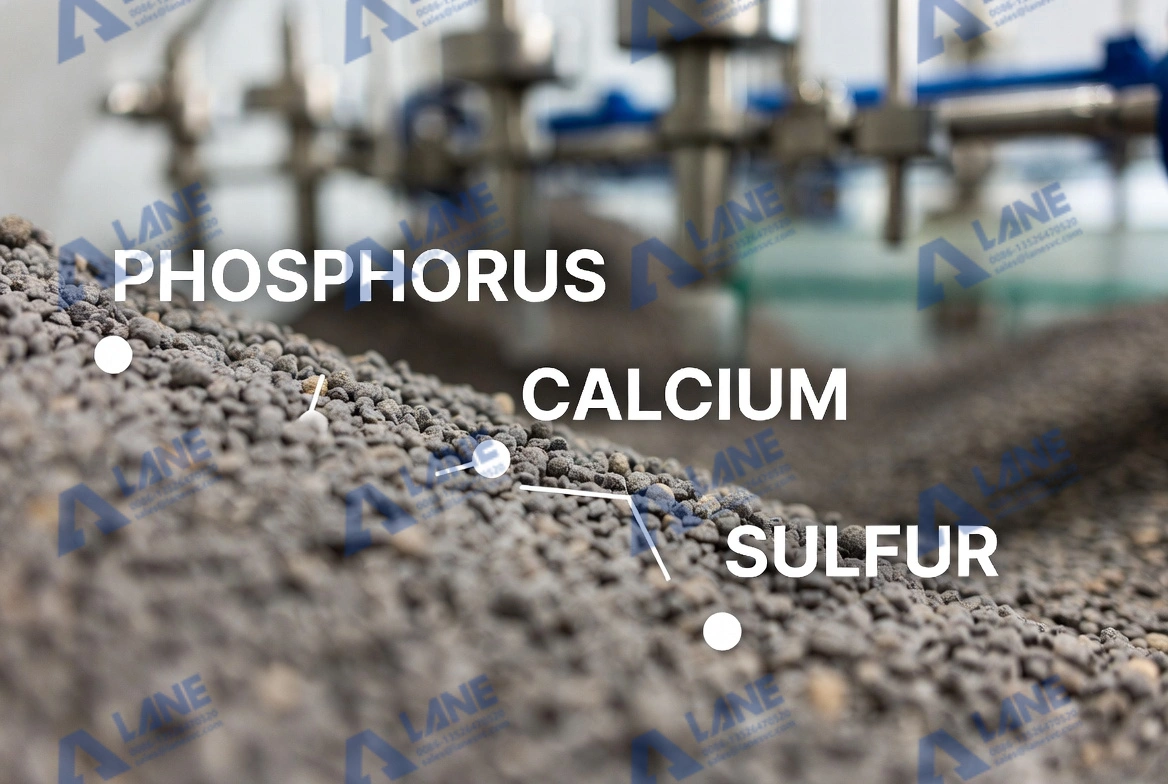
Before specifying any single super phosphate making machine, you need to understand the full production sequence. The chemistry is straightforward: sulfuric acid reacts with phosphate rock to produce single superphosphate. But the mechanical process? That’s where investors often underestimate the complexity.
Phosphate ore (typically between 24% and 32% P₂O₅) is ground into a fine powder, then mixed with sulfuric acid, and then cured, granulated, dried, screened, and packaged. The whole process may not seem complicated, but each stage actually relies on the precise matching of equipment and process parameters, which must be adjusted according to the quality of raw materials and the target capacity.
For example, curing time is an often-underestimated link. I’ve seen many new operators make one of the most common mistakes they make in the early stages of the process of shortening curing time to keep up with schedule. The problem is that once the curing is not in place, the final product is easy to become sticky and have poor stability, which not only affects the quality of the finished product, but also is particularly easy to block the follow-up equipment and cause trouble to the entire production line.
Core Equipment in a Single Super Phosphate Making Machine Line
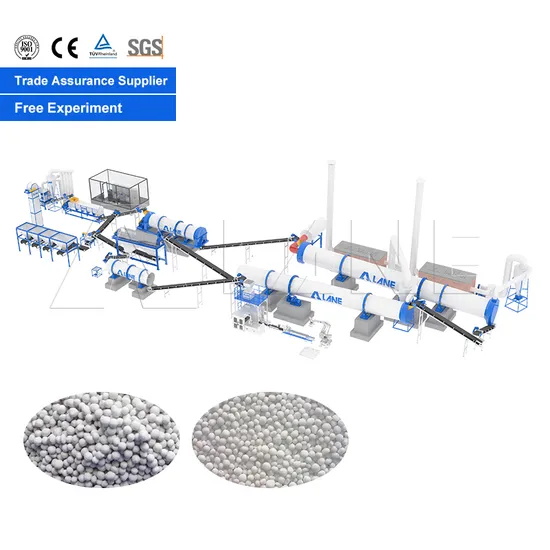
A complete single super phosphate making machine configuration typically includes the following units:
- Phosphate rock crusher— reduces raw rock to processable particle sizes, usually below 1mm for optimal acid reaction
- Ball mill— fine grinding equipment to achieve the target fineness for acid mixing
- SSP reaction mixer— the primary unit where phosphate rock powder and sulfuric acid are combined under controlled temperature conditions
- Double roller granulator— used for dry granulation in smaller SSP lines; produces uniform, dense granules without additional drying
- Rotary drum granulator— preferred for large-capacity SSP fertilizer plant setups; handles high-moisture feed and produces consistent granule sizes
- Rotary drum dryer cooler — Dries the granules for stability and cools them down to safe bagging temperatures.
- Vibrating screen— separates on-spec granules from oversized or undersized material for recycling
- Belt conveyor system— links every unit across the production floor
- Dust collection system— mandatory in SSP production due to fluorine gas and dust emissions during acid reaction
- Auto Packaging Machine— completes the line at the packaging end
The acid-handling infrastructure — storage tanks, metering pumps, pipeline fittings — sits outside the main machine line but represents a significant capital and safety consideration. Don’t underestimate it.
Capacity Planning: What Output Range Should You Target?
From what I’ve seen working with fertilizer projects across Africa and the Middle East, most first-time SSP fertilizer plant investors target somewhere between 5 and 30 tons per hour. That’s the range where equipment costs are manageable, raw material sourcing is realistic, and the local market can actually absorb production.
Small-scale lines (5–10 t/h) are modular, easier to finance, and well-suited for regional distribution. Mid-range lines (15–30 t/h) start delivering real economies of scale — your per-ton production cost drops noticeably once you clear the 15 t/h threshold. Large industrial installations above 50 t/h exist, but they require serious infrastructure investment and consistent acid supply chains that most emerging market operators simply don’t have on day one.
Cost Breakdown: What Does an SSP Fertilizer Plant Actually Cost?
This is the question every investor asks, and the honest answer is: it depends heavily on capacity, automation level, and where the equipment comes from.
A rough guide for complete single super phosphate making machine lines:
- 5 t/h basic line: $80,000–$180,000
- 10–15 t/h semi-automated line: $200,000–$450,000
- 30 t/h fully automated line: $500,000–$900,000+
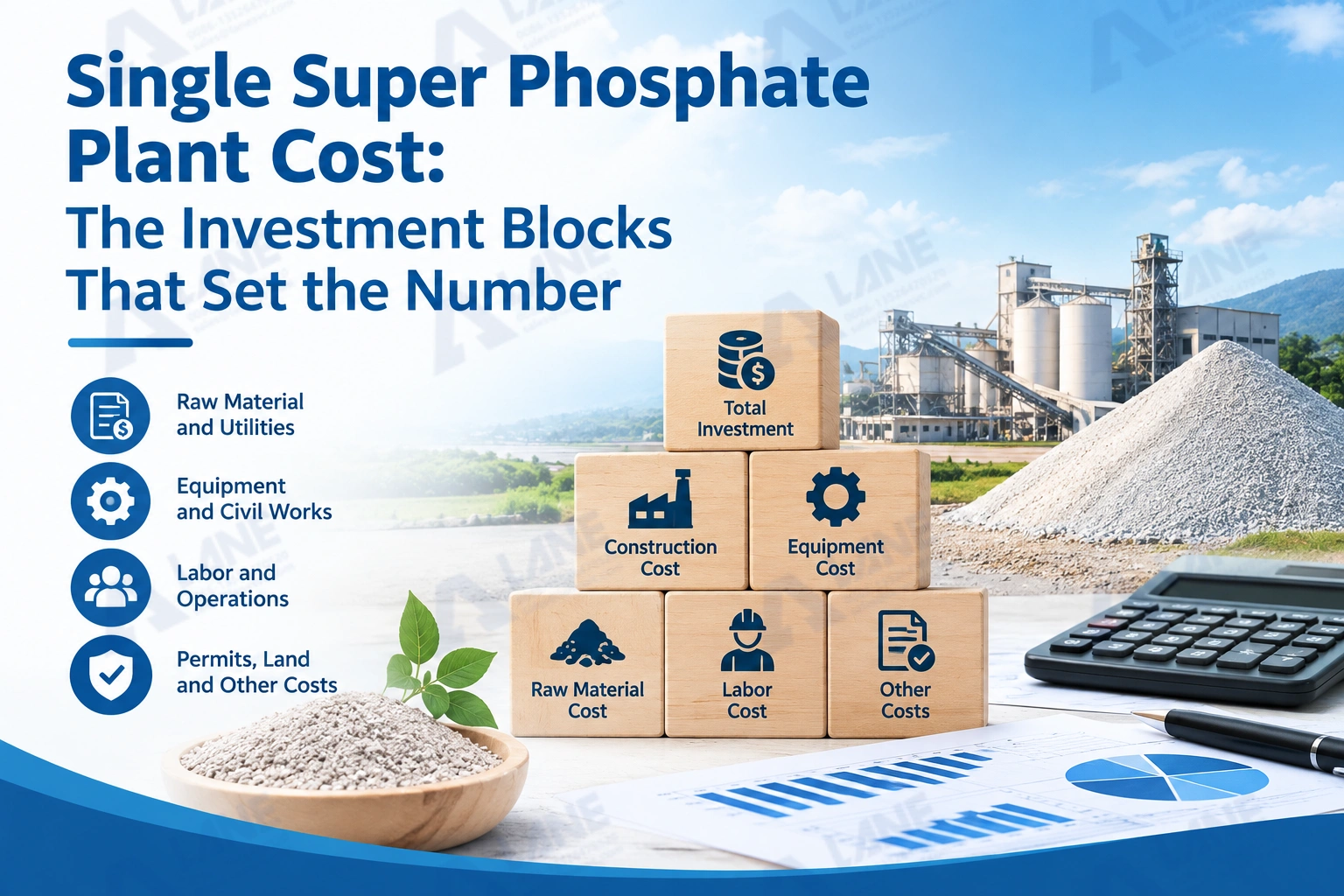
These figures usually only cover the core production equipment itself. But if you’re doing a full project budget, you can’t just look at the equipment quote. Civil construction, acid storage infrastructure, utilities and site preparation typically add an additional 30%–50% to the investment cost in most markets.
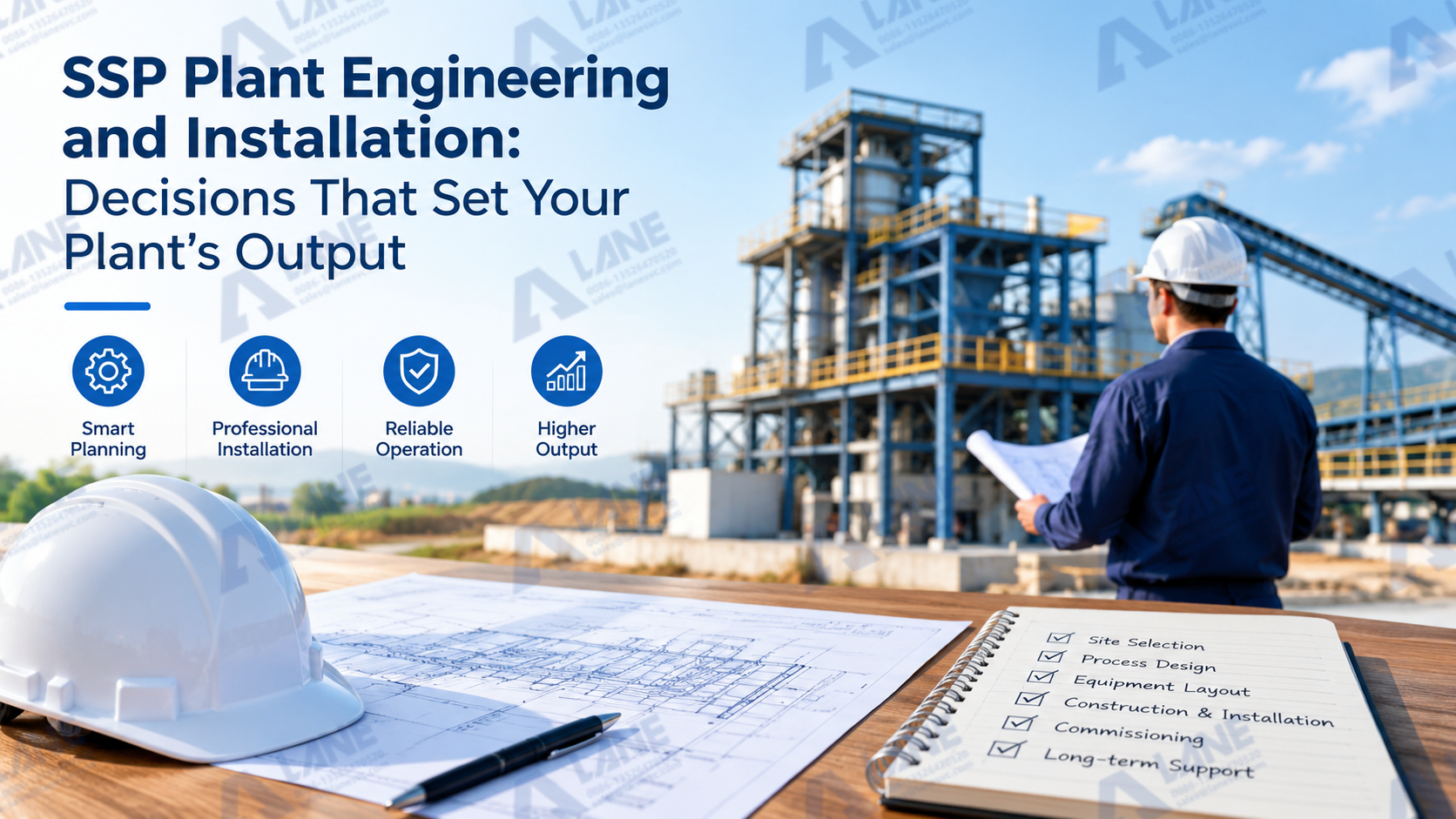
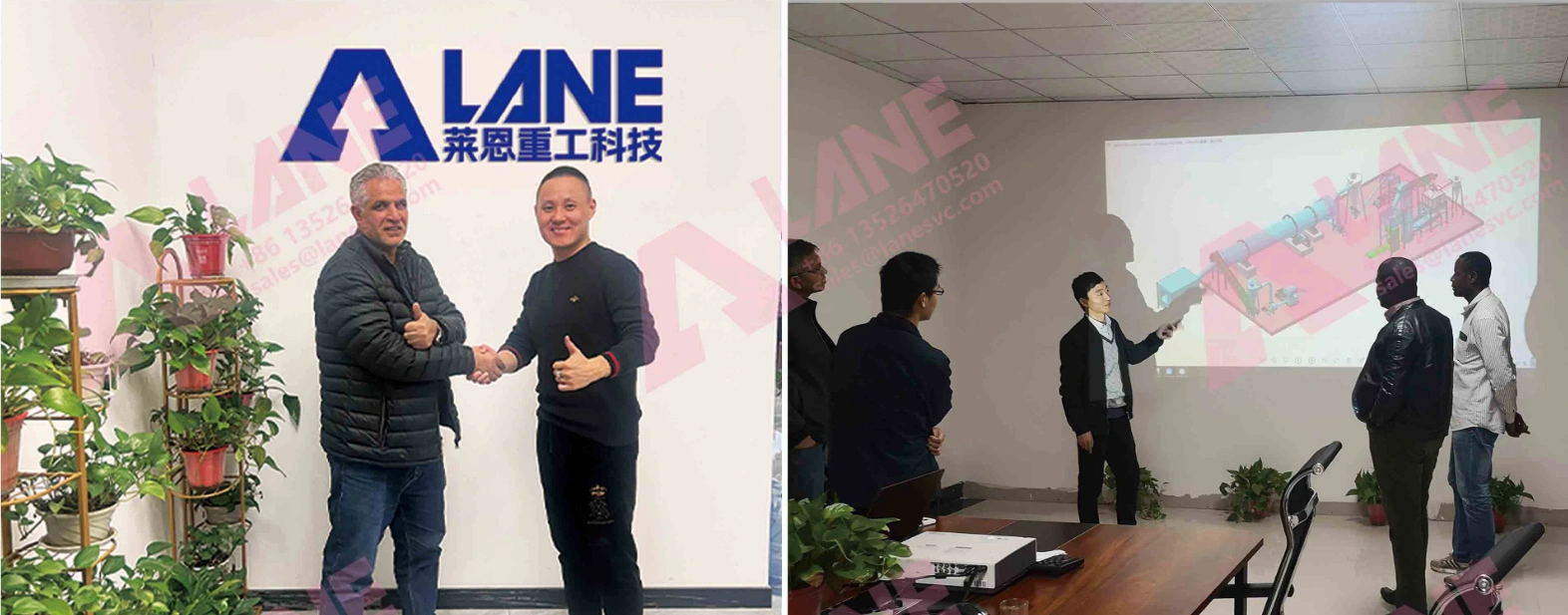
Manufacturers like LANE, which specialize in large-scale fertilizer production equipment, typically offer a more complete turnkey solution that integrates equipment supply, installation guidance, and process commissioning. The benefits are clear: the risk of project integration is significantly reduced, especially for first-time customers building or operating a fertilizer plant, which saves a lot of trial and error costs.
As for subsequent operating costs, it largely depends on the price of sulfuric acid in your area. Because in SSP production, sulfuric acid typically accounts for 40%–55% of raw material expenditure, which is an important variable affecting profits. Therefore, it is best to factor in these factors before finalizing your business model or investment budget, rather than just focusing on the cost of purchasing equipment.

What Experienced Operators Know That Investors Often Don’t
To be honest, the machine line itself is rarely where projects fail. In my experience, the problems come from: underestimating the corrosion rate on acid-contact components, choosing phosphate rock sources without verifying P₂O₅ consistency, and skipping proper operator training before commissioning.
Also — and this matters more than people think — your dust and gas scrubbing system needs to be properly sized from day one. Regulators in most markets are tightening environmental standards on every SSP fertilizer plant that comes online. Building that in later is always more expensive than doing it right up front.
Summary and Next Steps
Building an SSP fertilizer plant is a proven investment in markets with strong agricultural demand and limited domestic fertilizer supply. The single super phosphate making machine configuration you select determines everything downstream — product quality, compliance, scalability, and your eventual return on investment.
Work with a manufacturer that has direct SSP project references. Ask for material balance sheets, not just spec sheets. And if someone gives you a cost estimate without asking about your phosphate rock source — keep looking.
FAQ
Q1: What is a single super phosphate making machine?
It refers to the complete set of industrial equipment used to produce single superphosphate fertilizer — from phosphate rock crushing and acid reaction through granulation, drying, and packaging. It is not a single unit but an integrated production line.
Q2: How much phosphate rock is needed per ton of SSP output?
Typically, 600–750 kg of phosphate rock (at 28–30% P₂O₅ grade) is required per ton of finished SSP, depending on rock quality and target nutrient content.
Q3: What is the minimum viable investment for an SSP fertilizer plant?
For a basic single super phosphate making machine setup, a 5 t/h line can be established for approximately $80,000–$180,000 in equipment costs. Total project cost including civil works and infrastructure usually starts around $130,000–$250,000.
Q4: How long does SSP curing take, and can it be shortened?
Curing typically requires 4–6 hours minimum to complete the acid-rock reaction. Rushing this stage results in free acid residues and product quality issues. Proper curing warehouse sizing is non-negotiable for consistent output.
Q5: What environmental systems are required for an SSP plant?
At minimum, a fluorine gas scrubbing tower and a dust collection system are required. Many markets now mandate continuous emission monitoring. Every SSP fertilizer plant operator should treat these as core infrastructure, not optional add-ons.
Q6: Can the same machine line produce both granular and powder SSP?
Yes, with configuration adjustments. Lines using double roller press granulators or rotary drum granulators produce granular SSP. Powder SSP simply bypasses the granulation and drying stages, though this requires dedicated product handling and storage setup.
For more details, please feel free to contact us.
Henan Lane Heavy Industry Machinery Technology Co., Ltd.
Email: sales@lanesvc.com
Contact number: +86 13526470520
Whatsapp: +86 13526470520