Phosphate Fertilizer Processing Technology Explained: From Raw Material Handling to Finished Granule Production
- 2026-05-07
There are many sayings and “tall” introductions on the Internet about fertilizer manufacturing, but there are not many that really explain the entire production process clearly. This article isn’t that. What follows is a practical, honest breakdown of phosphate fertilizer processing technology, from the moment raw rock arrives at your facility to the point where finished granules roll off the line and into storage. Whether you’re planning a new fertilizer plant or trying to figure out where your existing production line is affecting efficiency, it’s this kind of clear, down-to-earth content that is really useful.
What Makes Phosphate Processing Different from Other Fertilizer Systems
Phosphate fertilizer production starts with a mineral — typically phosphate rock — and ends with a chemically transformed, physically stable product. That gap between raw material and finished granule involves multiple conversion stages, each of which introduces its own set of variables. Temperature sensitivity, moisture content, reaction timing — these aren’t abstract concerns. They’re the things that determine whether your production line runs cleanly or constantly. Selecting the right phosphate fertilizer processing technology from the outset is what separates operations that scale efficiently from those that plateau early.
In my experience working with plant engineers in Southeast Asia and East Africa, the most difficult factories often focus too much on chemical formulation in the early stages but put equipment selection on the back burner. Chemistry is important, but many people underestimate how high the requirements for mechanical precision and equipment stability are to run these processes steadily and on a large scale. Every aspect of phosphate fertilizer processing technology — from crusher selection to granulator configuration — carries consequences that compound over time.
Stage One: Raw Material Handling and Preparation
Before any chemical reaction can occur, the phosphate rock has to be properly prepared. That means crushing, grinding, and in some cases drying — all before a single drop of reagent touches the material. This preparatory phase is foundational to successful phosphate fertilizer production and directly affects downstream reaction efficiency.
Core equipment at this stage includes:
- Jaw Crusher— Primary size reduction of large phosphate rock lumps into manageable feed material
- Raymond Mill— Fine grinding to achieve the particle size distribution required for efficient acid reaction
- Vibrating Screen— Classification of ground material to ensure uniformity; oversized particles are returned for re-grinding
- Belt Conveyor— Continuous material transfer between processing units with minimal spillage or segregation
To be honest, many manufacturers will have a bit of an “almost” mentality in the step of crushing raw materials. However, once it enters the acidification stage, the particle size is uneven, and it is easy to have the problem of insufficient reaction, which not only wastes acid, but also directly lowers the nutrient content of the finished product. If the raw material pretreatment is not done well, the subsequent process will basically be dragged down all the way, and it will be difficult to remedy it in the later stage.
Stage Two: Acidulation and Chemical Reaction
This is the heart of phosphate fertilizer production. Phosphate rock reacts with acid — sulfuric acid for single superphosphate (SSP), or phosphoric acid for triple superphosphate and compound fertilizers — to release plant-available phosphorus. The reaction generates heat and produces a slurry or semi-solid mixture that requires careful handling.
Key equipment at this stage:
- Den Reactor— Primary acidulation vessel where rock and acid are combined under controlled conditions
- Curing Belt or Curing Building— Allows the reacted material to complete its chemical transformation over time; this step is often rushed, which causes quality issues
- Ventilation and Scrubbing System— Manages acidic vapor emissions; non-negotiable from both a safety and regulatory standpoint
Let me tell you — the curing step is consistently undervalued by producers trying to maximize throughput. Cutting curing time to speed up output is one of the most common mistakes I’ve seen, and it almost always shows up as reduced available P₂O₅ in quality testing.
Stage Three: Granulation — Where the Product Takes Shape
Once the acidulated material has cured and been sized, granulation converts it from a powder or irregular cake into uniform, free-flowing granules. This is where phosphate fertilizer processing technology becomes genuinely complex, because granulation behavior depends on moisture content, binder characteristics, temperature, and residence time — all interacting simultaneously.
Essential granulation-stage equipment:
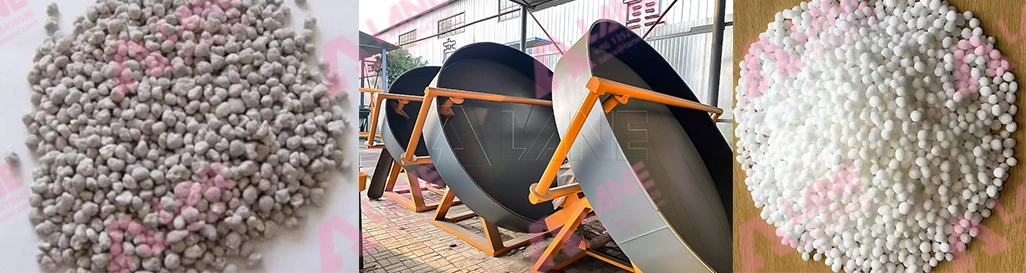
- Rotary Drum Granulator— The industry workhorse for phosphate fertilizer granulation; handles high throughput with consistent granule formation when properly tuned
- Double Roller Granulator— Preferred for compound fertilizer lines requiring precise density and low-moisture processing
- Disc Granulator— Effective for smaller-scale operations; offers good particle size control with simpler mechanical maintenance
- Rotary Drum Dryer and Cooler — Reduces moisture and temperature to improve storage stability and prevent caking.
- Vibrating Screen— Separates on-spec granules from oversized and undersized fractions for recycling
Manufacturers like LANE have developed integrated granulation lines specifically calibrated for phosphate-based materials, where drum parameters are configured around the unique density and moisture behavior of SSP and TSP products rather than generic fertilizer assumptions.
Stage Four: Coating, Screening, and Packaging
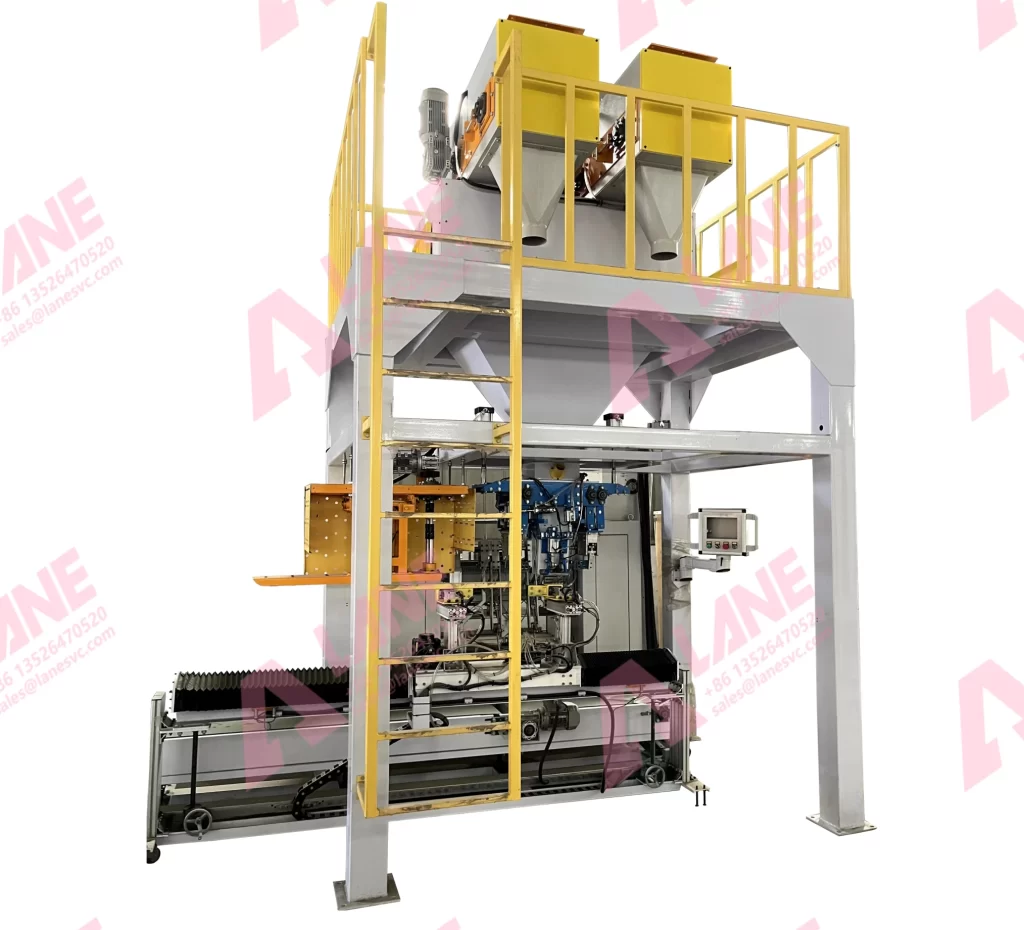
The final stages are about preservation and presentation. Granules are screened to final specification, optionally coated with dust suppressants or release-control compounds, and then conveyed to automatic packaging machine. At this point, the phosphate fertilizer processing technology employed earlier in the line directly determines how uniform and marketable the final product turns out.
Final-stage equipment:
- Rotary Coating Machine— Applies surface treatments to improve flowability and reduce moisture absorption in storage
- Automatic Packaging Machine— High-speed packaging with weight accuracy critical for commercial sale
- Dust Collector— Captures fine particles throughout the processing environment; both a compliance requirement and a yield-recovery tool
To be honest, dust collectors are devices that usually no one pays special attention to at first, and they don’t realize how critical they are until something goes wrong. In fact, if the design and system are integrated from the beginning, a lot of rework and transformation can be saved later.
What Separates Efficient Plants from Struggling Ones
From what I’ve seen in the field, the best-performing phosphate fertilizer production facilities share a few consistent characteristics. They invest in precise instrumentation at the acidulation stage. They don’t compromise curing time for throughput. Their granulation lines are matched to actual material characteristics, not generic specs from a catalog. And they treat the dust collection and vapor scrubbing systems as first-class components, not afterthoughts.
Equipment suppliers like LANE provide not just machinery but also layout consulting and process parameter recommendations tailored to specific raw material profiles — that kind of application-specific support makes a real difference when you’re commissioning a new phosphate fertilizer production line.
Conclusion and Next Steps
Phosphate fertilizer processing technology is not a simple chain of equipment — it’s a tightly coupled system where decisions at one stage propagate consequences through every stage that follows. Understanding that interdependence is what separates operators who consistently hit product specifications from those who spend most of their time troubleshooting. Investing in the right phosphate fertilizer processing technology from day one is not a cost — it’s how you protect your margins long-term.
If you’re planning a new phosphate fertilizer production facility or upgrading an existing line, the most valuable thing you can do is get technical input before you finalize your equipment list — not after.
Frequently Asked Questions
Q1: What is phosphate fertilizer processing technology?
It refers to the complete set of mechanical and chemical processes used to convert raw phosphate rock into commercially viable fertilizer products, including crushing, acidulation, granulation, drying, and packaging.
Q2: What type of acid is used in phosphate fertilizer production?
Sulfuric acid is most commonly used for producing single superphosphate (SSP), while phosphoric acid is used for triple superphosphate (TSP) and certain compound fertilizers. The acid type affects both the equipment design and the final nutrient profile.
Q3: How long does the curing stage take in SSP production?
Typically between 3 and 6 weeks for full chemical maturation, though this varies based on production scale, ambient temperature, and raw material characteristics. Inadequate curing directly reduces available P₂O₅ content.
Q4: What granulation equipment is best for phosphate fertilizer?
The rotary drum granulator is the most widely used option for large-scale phosphate fertilizer production due to its high capacity and operational flexibility. Disc granulators are preferred for smaller outputs requiring tighter particle size control. Matching the right granulator to your phosphate fertilizer processing technology setup is essential for consistent output quality.
Q5: Can the same processing line handle both SSP and compound fertilizers?
With appropriate design flexibility — particularly in the acidulation and granulation stages — a line can be configured to handle multiple product types, though some dedicated equipment adjustments are typically required when switching formulations. Producers investing in scalable phosphate fertilizer production equipment can often accommodate both without a complete line rebuild.
Q6: What are the main environmental control requirements for phosphate processing plants?
Fluoride and sulfur dioxide vapor capture during acidulation is the primary concern, handled through wet scrubbing systems. Dust suppression throughout the granulation and packaging stages is also mandatory in most regulatory jurisdictions. These requirements apply regardless of the scale of your phosphate fertilizer production operation.
For more details, please feel free to contact us.
Henan Lane Heavy Industry Machinery Technology Co., Ltd.
Email: sales@lanesvc.com
Contact number: +86 13526470520
Whatsapp: +86 13526470520