Minerals Used in SSP Fertilizer: A Complete Breakdown of Raw Materials and Their Role in Production
- 2026-05-20
Single superphosphate has been around for well over a century. And yet, a surprising number of producers still don’t fully understand which minerals used in SSP fertilizer production actually drive quality — and why each one matters. Let me walk you through it properly.
What Is SSP and Why Do Raw Materials Define Everything?
SSP, or single superphosphate, is one of the most widely produced phosphatic fertilizers globally. The chemistry is relatively simple, but the SSP raw materials feeding that chemistry is anything but interchangeable. Get the inputs wrong, and no amount of process tuning will fix your output. That’s the reality most operators learn the hard way.
In my years working alongside plant teams across Africa, Southeast Asia, and the Middle East, I’ve watched too many facilities underperform because procurement decisions weren’t made with production chemistry in mind. The minerals used in SSP fertilizer systems aren’t commodities you can swap without consequence. Quality starts at the source.
The Core Minerals Used in SSP Fertilizer Manufacturing
1. Phosphate Rock
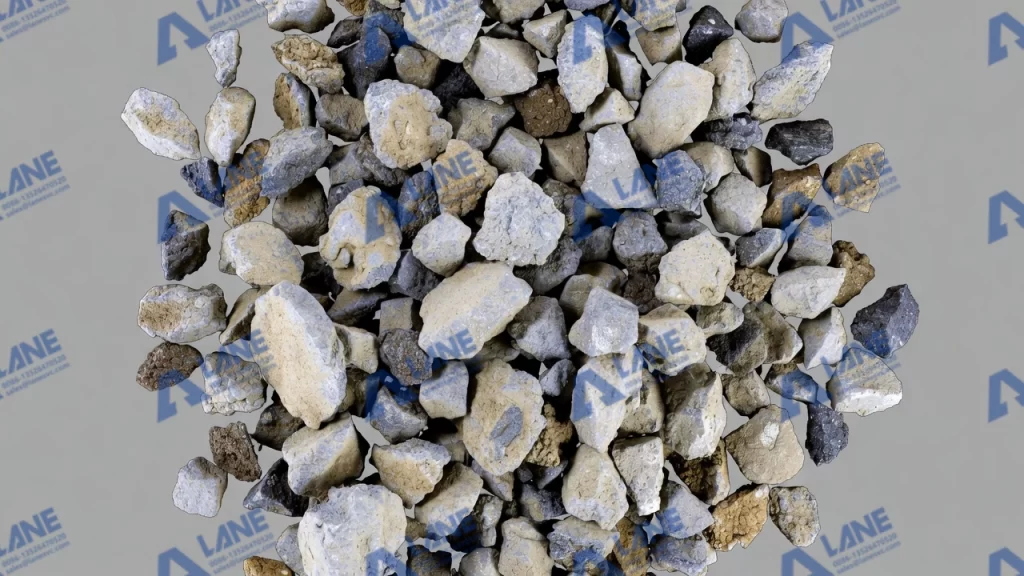
This is the core element. Phosphorus ores (usually fluorine apatite or hydroxyapatite) are the major phosphorus carriers in the reaction. Most commercially viable plants use ores with at least 28-32% P2O5 content. If the content decreases further, the economic viability will deteriorate rapidly.
Origin matters too. Moroccan phosphate behaves differently under sulfuric acid attack than rock from Egypt or Jordan. Producers who don’t account for these reactivity differences consistently struggle with acidulation inconsistency. The minerals used in SSP fertilizer lines must be matched to your specific reactor design — not just sourced by price.
2. Sulfuric Acid
The second essential SSP raw material is sulfuric acid. It reacts with phosphate rock to produce monocalcium phosphate — the plant-available phosphorus compound — with calcium sulfate as a byproduct. Concentration is non-negotiable. Standard production runs at 68–75%. Exceed that range and over-acidulation becomes a real risk. Fall short and the reaction becomes commercially unworkable.
3. Calcium
Calcium is an element that is unique to the substrate of phosphorite ore. In the process of acid treatment, when sulfate calcium gypsum is formed, calcium plays a direct role. by understanding calcium content, it is possible to predict the amount of gypsum production and manage material balance. Operators who downplay this point tend to be caught unawares by the accumulation of materials within the mineral deposit.
4. Fluorine Compounds
The minerals used in SSP fertilizer rock — particularly calcium fluoride — release hydrogen fluoride gas during acid attack. This has direct implications for plant safety, regulatory compliance, and product chemistry. Managing fluorine emissions is not optional. It’s both a legal requirement and a basic duty of care.
5. Moisture and Free Acid in SSP Raw Materials
Moisture functions as a critical variable across all SSP raw materials. Free acid residuals — what remains from incomplete reaction — affect granule stability, caking behavior, and storage life. These are the variables that separate a well-run plant from one that’s constantly firefighting.
Key Equipment in the SSP Production Line
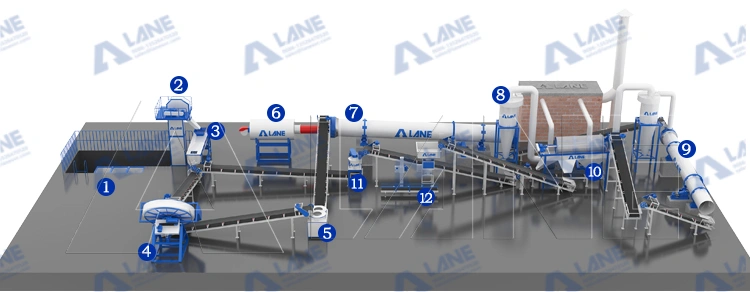
Understanding the minerals used in SSP fertilizer production is only half the picture. The other half is having the right machinery to process them. A standard SSP line includes:
- Phosphate rock crusher— reduces raw rock to particle sizes suitable for efficient acidulation
- Raymond mill— grinds rock to fine powder, maximizing reactive surface area
- Acidulation reactor— where SSP raw materials meet sulfuric acid; residence time and mixing design are critical
- Belt conveyor system— transports cured material between processing stages
- Double roller granulator— used when granulated SSP is required over powder form
- Rotary drum dryer cooler — Removes excess moisture to meet product specifications and cools granules before packaging.
- Vibrating screen— separates product by particle size, returning off-spec material for regrinding
- Dust collection system— captures fluorine-bearing emissions and fines for compliance and recovery
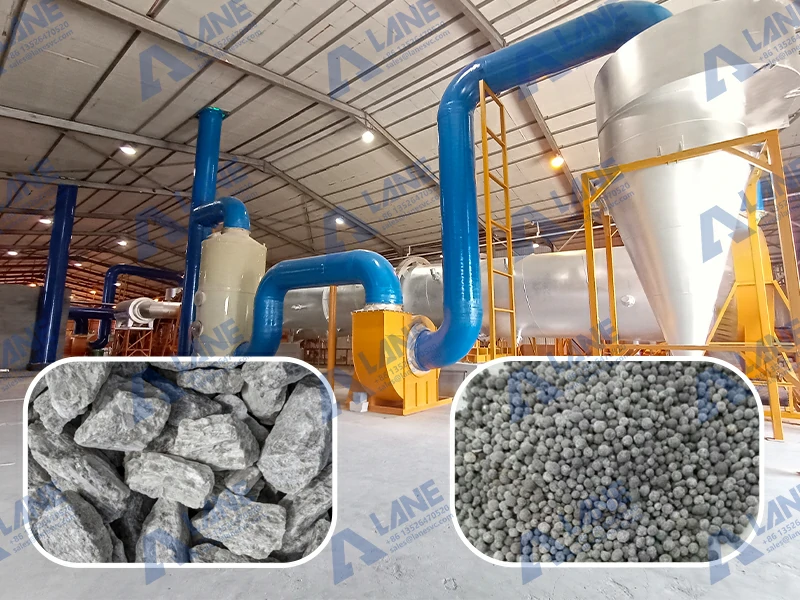
suppliers like LANE have designed integrated SSP production lines that incorporate the interaction between these materials into their system architecture, which has a visible effect in pursuing consistent production quality across shifts.
What a Mineral Input Quality Shapes Final Product Performance
Higher-grade phosphate rock doesn’t just improve P₂O₅ yield — it also reduces sulfuric acid consumption per ton, directly impacting cost. Procurement teams who treat the minerals used in SSP fertilizer sourcing as a pure cost exercise often miss this entirely. Consistent acid concentration means predictable curing times, which means reliable scheduling — and in high-throughput facilities, that reliability has real dollar value.
Conclusion: Start With the Minerals
Every variable in SSP production — yield, quality, cost, compliance — traces back to the minerals used in SSP fertilizer manufacturing. Phosphate rock grade, acid concentration, calcium and fluorine management, moisture control: these aren’t background details. They’re the foundation your entire operation stands on.
Working with suppliers who understand SSP raw materials — not just machinery — is what separates facilities that consistently hit spec from those that don’t. LANE’s engineering teams approach line design from exactly that perspective.
When planning or expanding your SSP (Solid Raw Material Processing) business, start with your raw material profile. please consult our technical team for how to determine the optimal equipment configuration according to the specific type of raw material.
Frequently Asked Questions
Q1: What grade of phosphate rock is best for SSP production?
Most efficient SSP operations use phosphate rock with a minimum P₂O₅ content of 28%. Rock in the 30–32% range is preferred for yield and cost efficiency. Below 26%, the process often becomes economically unviable without significant adjustment.
Q2: Can SSP be produced without sulfuric acid?
No. Sulfuric acid is the acidulating agent that drives the core chemical reaction. There is no viable industrial substitute in standard SSP production.
Q3: What happens if moisture in SSP raw materials is too high?
Excess moisture slows the acidulation reaction and compromises granule integrity. It also promotes caking during storage. Proper drying and controlled storage of input rock is a frequently overlooked operational requirement.
Q4: How are fluorine emissions from SSP production managed?
Hydrogen fluoride released during acidulation is captured through wet scrubbing systems integrated into the production line. In some facilities, recovered fluorine compounds are processed for secondary commercial use.
Q5: Does phosphate rock origin affect SSP product quality?
Yes, significantly. Reactivity, fluorine content, impurity profile, and particle characteristics all vary by source region. Producers sourcing the same P₂O₅ grade from different origins often need to adjust acid ratios and curing times.
Q6: What role does calcium sulfate play as a byproduct in SSP?
Calcium sulfate (gypsum) is produced alongside monocalcium phosphate during SSP manufacturing. It acts as a soil conditioner and supplies sulfur — an essential crop nutrient — making it a marketable benefit, particularly for sulfur-deficient soils.

For more details, please feel free to contact us.
Henan Lane Heavy Industry Machinery Technology Co., Ltd.
Email: sales@lanesvc.com
Contact number: +86 13526470520
Whatsapp: +86 13526470520