Granular Single Superphosphate Plant Setup: Equipment, Process Flow, and Cost Breakdown
- 2026-04-22
Setting up a fertilizer production facility is never a small decision. You’re committing capital, land, labor, and years of operational planning — and that’s before the first bag of product leaves the floor. For manufacturers targeting the phosphate fertilizer segment, granular single superphosphate remains one of the most consistently demanded products across agricultural markets in Asia, Africa, and South America. Let me tell you, from years of watching this industry evolve, the difference between a profitable plant and a costly headache almost always comes down to two things: process understanding and equipment selection.
This article walks through the full picture — what a granular single superphosphate plant actually requires, how the production process flows, and what realistic cost expectations look like in 2026.
What Makes Granular Single Superphosphate Different
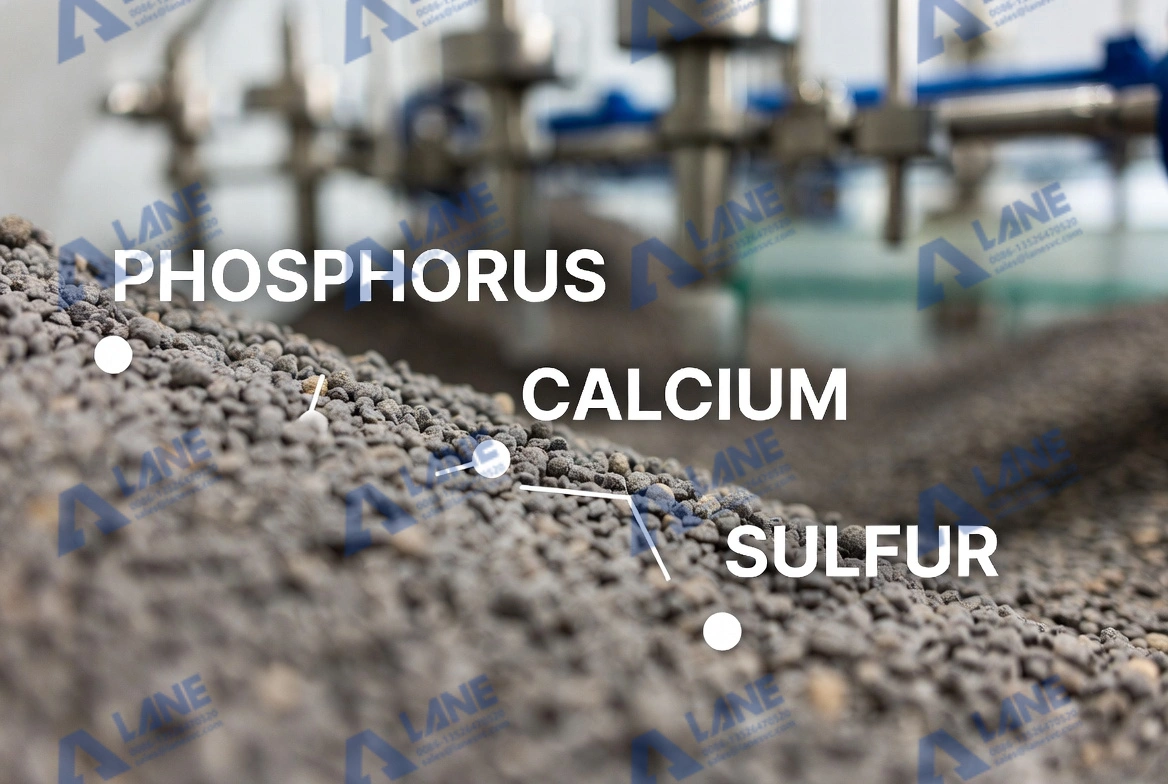
Powdered SSP has been around forever, but the market has shifted. Farmers and distributors increasingly prefer granular formats because they’re easier to store, handle, and apply with mechanical spreaders. Granular single superphosphate delivers the same available phosphorus — typically 16–20% P₂O₅ — but in a more physically stable, consistent form.
The chemistry, of course, starts with the reaction between ground phosphate rock and sulfuric acid. Phosphate and sulfur are the two core inputs, and their quality directly determines your product grade. Low-grade phosphate rock or inconsistent sulfuric acid concentration? You’ll see it immediately in your P₂O₅ assay results, and so will your buyers.
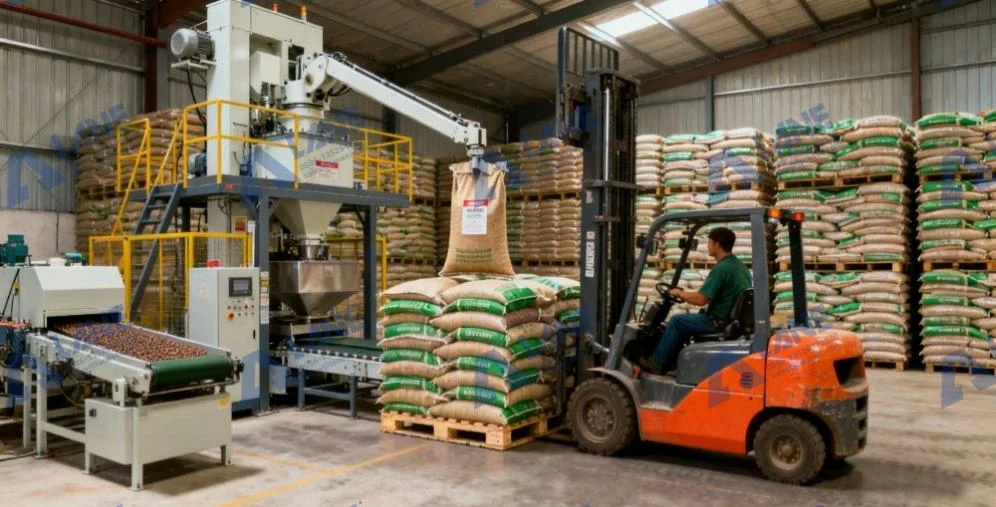
Core Equipment for a Granular SSP Plant
This is where serious producers spend most of their early planning time, and rightly so. The equipment line determines your throughput, your energy costs, and — honestly — your product consistency more than anything else.
A properly configured granular single superphosphate plant typically includes the following:
- Acidulation Reactor — where phosphate rock and sulfuric acid first meet; residence time here is critical
- Double Shaft Mixer — ensures thorough blending of reacted material before curing
- Raymond Mill— reduces cured SSP to a consistent particle size before granulation
- Rotary Drum Granulator — the core granulation unit; drum speed and moisture control are everything here
- Rotary Dryer and Cooler — dries post-granulation moisture and cools product before screening and bagging
- Vibrating Screening Machine — separates on-spec granules from oversized or undersized material
- Belt Conveyor System — connects each stage; a well-designed conveyor layout saves significant labor costs
In my 15 years working with producers across different markets, the most commonly underestimated piece of equipment is the scrubbing system. Plants that cut corners here end up facing regulatory shutdowns or community complaints within two to three operating years. It’s not worth it.
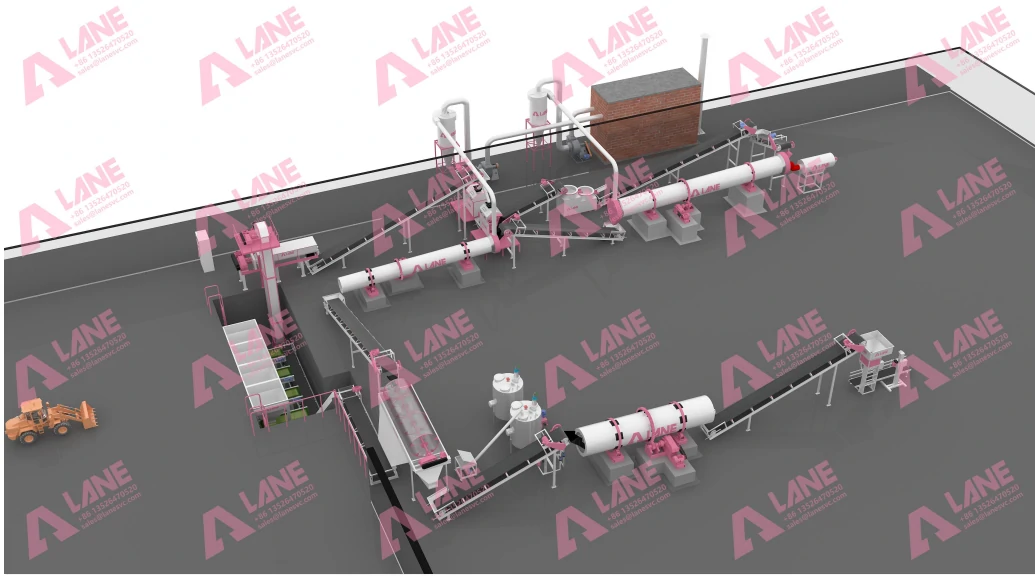
How the Process Actually Flows
The production sequence for granular single superphosphate follows a logical path, though execution requires real attention at each transition point.
Ground phosphate rock enters the acidulation reactor, where it reacts with sulfuric acid. The phosphate and sulfur chemistry here generates heat and fluoride gases — both need to be managed actively. The reacted slurry moves into the double shaft mixer, then into the curing den for 4–6 hours of reaction completion. You can’t rush curing. Producers who end up with unreacted material that causes granulation problems downstream.
After curing, the material is milled, conditioned with moisture, and fed into the rotary drum granulator. Granule formation is controlled by drum inclination, rotation speed, and water spray. From there, granules move through drying, cooling, and screening. Oversized particles are crushed and recycled, undersized material loops back into granulation. On-spec product goes to bagging.
The whole system, when properly tuned, runs with relatively low labor input. A mid-scale plant producing 10–15 tons per hour typically operates with 6–8 workers per shift.
Realistic Cost Breakdown in 2026
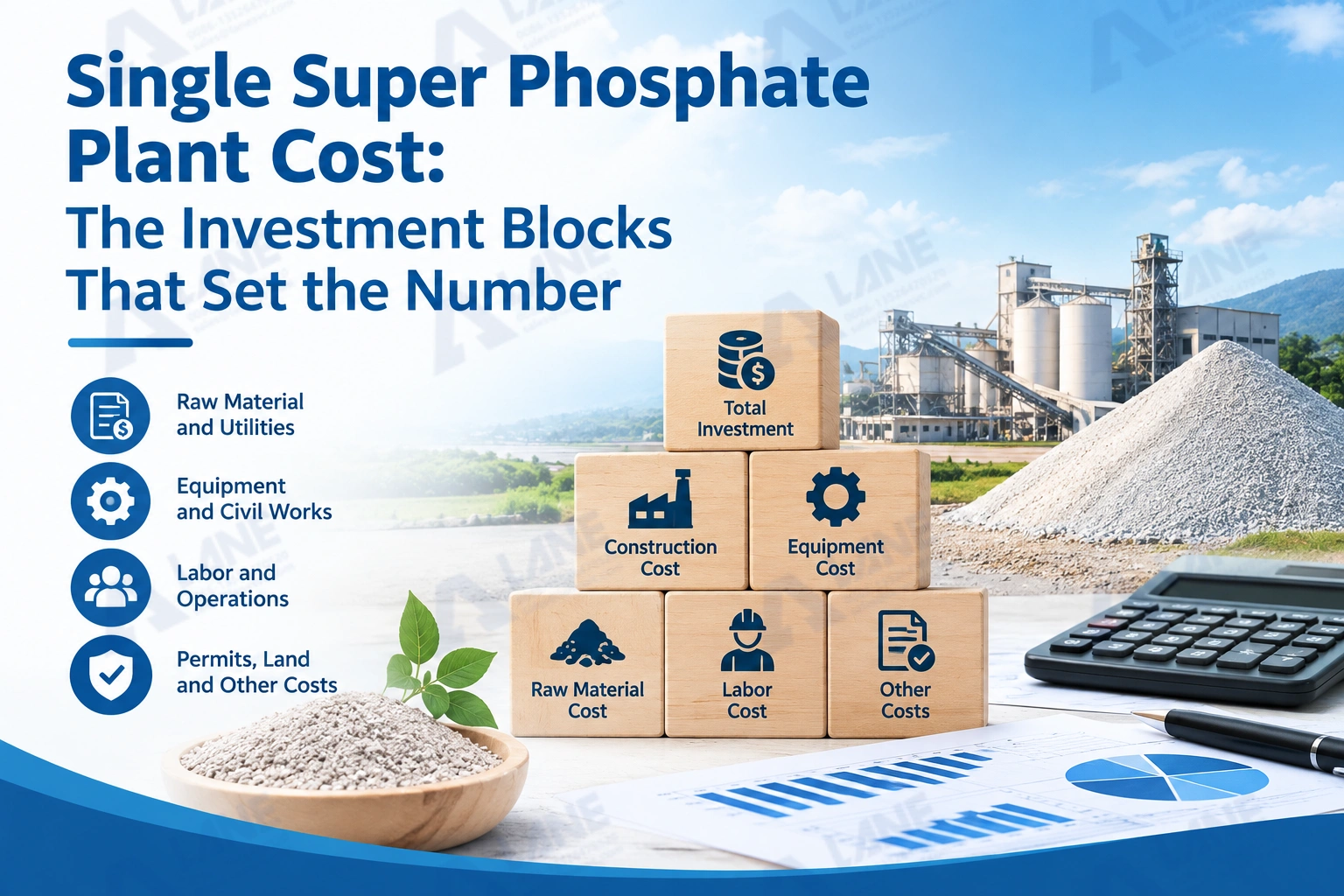
Capital costs vary significantly based on capacity and configuration. Actually, the range is wider than most first-time buyers expect.
For a small-scale plant at 5–8 t/h capacity, total equipment investment typically falls between $180,000 and $350,000 USD. Mid-scale operations at 15–20 t/h run $500,000 to $900,000 USD depending on automation level and scrubbing system complexity. Large-scale configurations above 30 t/h can exceed $1.5 million USD for full turnkey systems.
Manufacturers like LANE supply complete granular single superphosphate production lines with integrated scrubbing and conveyor systems, which simplifies procurement and commissioning considerably for buyers who don’t want to coordinate multiple vendors.
Operating costs — raw materials, energy, labor, maintenance — typically represent 70–80% of total production cost. Sulfuric acid pricing is the single most volatile variable, so producers in markets with local acid supply have a meaningful cost advantage.
Final Thoughts
Getting a granular single superphosphate plant right requires more than a checklist. It requires understanding where the process is sensitive, where corners genuinely cannot be cut, and what realistic numbers look like before you commit. The equipment decisions made at the setup stage follow a plant for its entire operating life. Choose carefully, validate your phosphate and sulfur supply chain early, and work with equipment suppliers who can demonstrate actual commissioning experience — not just catalog specifications.
If you’re in the early planning phase, take the time to build a proper process flow model before issuing any equipment RFQs. It saves months of back-and-forth later.
Frequently Asked Questions
What is granular single superphosphate used for?
It is a phosphate fertilizer primarily used to supply available phosphorus and calcium sulfate to crops, widely applied in cereals, legumes, and cash crops.
What is the typical P₂O₅ content in granular single superphosphate?
Standard product grades range from 16% to 20% available P₂O₅, depending on the quality of the phosphate rock feedstock used.
How does the phosphate and sulfur ratio affect product quality?
The stoichiometric ratio of phosphate rock to sulfuric acid directly controls conversion efficiency. An imbalanced ratio reduces available P₂O₅ content and produces inconsistent granule quality.
What capacity should a new producer start with?
Most market-entry producers begin at 5–10 t/h, which allows manageable capital exposure while building operational experience before scaling.
How long does a granular SSP plant take to commission?
From equipment delivery to stable production, commissioning typically takes 30–60 days for experienced operators, assuming civil works are completed in advance.
Is environmental compliance equipment mandatory?
Yes. Exhaust gas scrubbing for fluoride and acid mist control is required by environmental regulations in virtually all operating jurisdictions and should be budgeted as a core system, not an optional add-on.
For more details, please feel free to contact us.
Henan Lane Heavy Industry Machinery Technology Co., Ltd.
Email: sales@lanesvc.com
Contact number: +86 13526470520
Whatsapp: +86 13526470520