Sulfuric Acid to SSP Production Process Explained: Step-by-Step Method to Improve Yield and Reduce Production Cost
- 2026-04-16
In the phosphate fertilizer sector, the sulfuric acid to SSP production process continues to stand out as one of the most practical and cost-efficient routes for producing single superphosphate. On the surface, it appears straightforward—sulfuric acid reacts with phosphate rock. Simple enough. Yet in real operations, profitability is shaped by the finer details, not the basic equation.
Over time, experienced producers have come to a similar conclusion: optimizing the SSP manufacturing process is rarely about adding complexity. It’s more about refining what’s already there. Small tweaks—sometimes barely noticeable at first—can have a significant impact on output, consistency, and operating costs.
Understanding the Core Reaction
At its foundation, the sulfuric acid to SSP production process is a controlled reaction between finely ground phosphate rock and sulfuric acid, producing monocalcium phosphate along with gypsum.
That said, reaction efficiency is sensitive—more than many expect. Raw material quality, particle size distribution, and acid concentration all play a role. If even one parameter drifts, the entire SSP manufacturing process begins to lose efficiency.
I’ve personally seen facilities struggle with output, not due to major equipment failures, but because grinding fineness wasn’t consistent. It’s a subtle issue. Easy to overlook. But it adds up quickly.
Step-by-Step Breakdown of the Process
1. Raw Material Preparation
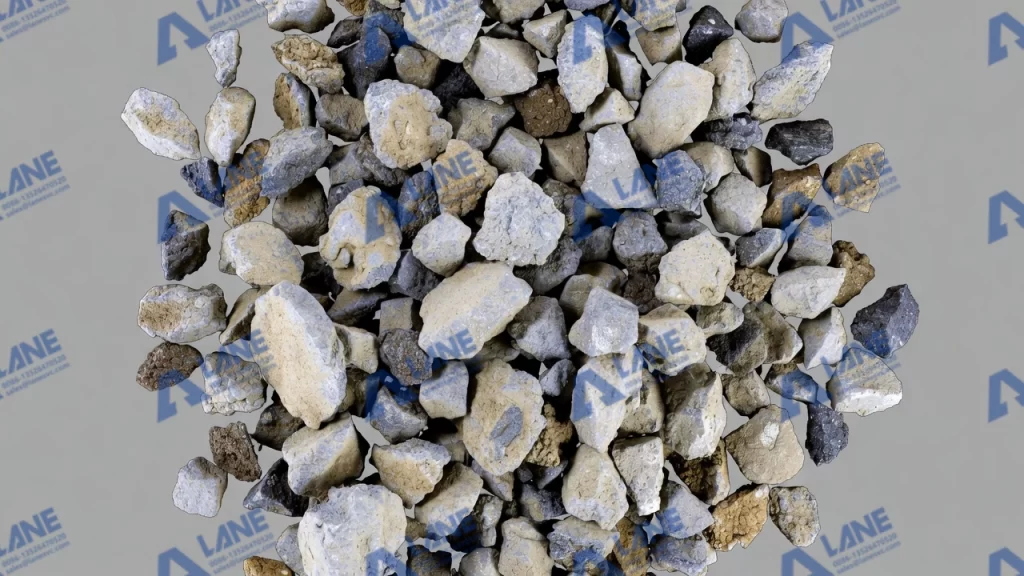
Phosphate rock is first crushed and ground into a fine powder. This step increases surface area, allowing the reaction to proceed more completely and efficiently.
2. Acidulation Stage
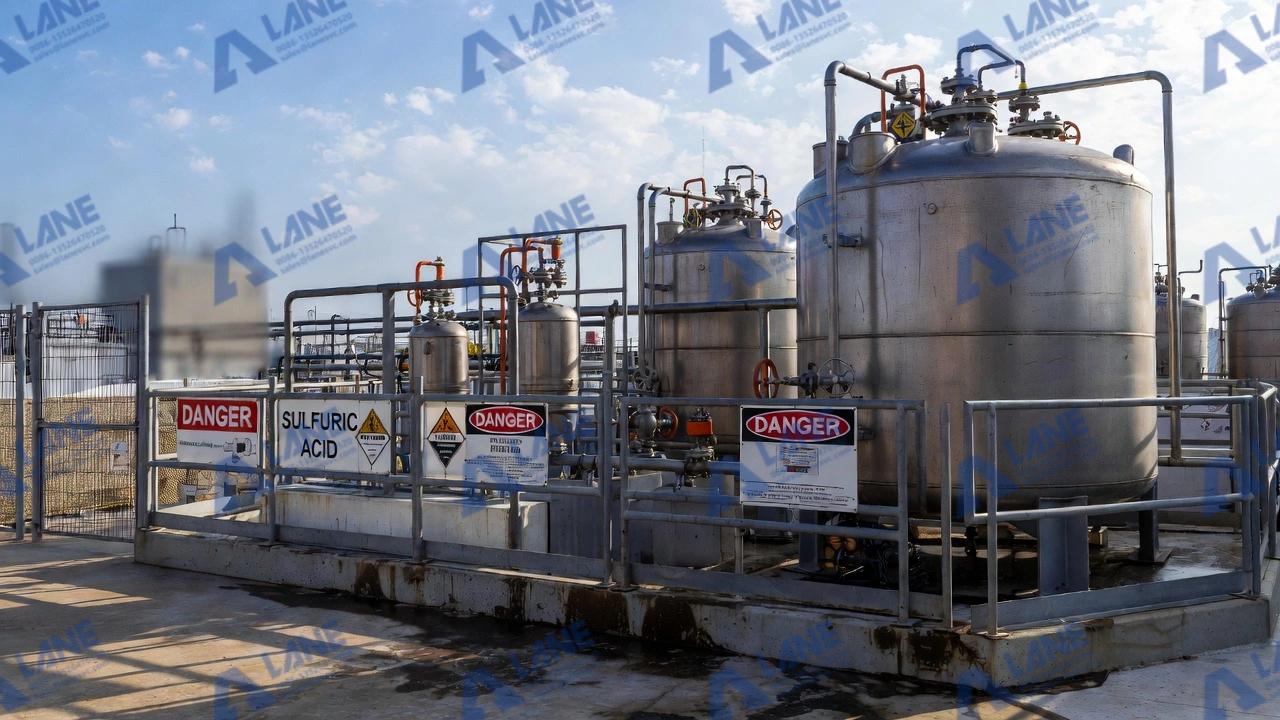
This is where things get critical. Sulfuric acid is introduced to the phosphate rock inside a controlled reactor. The sulfuric acid to SSP production process relies heavily on maintaining an accurate acid-to-rock ratio.
Too much acid? It leads to unnecessary consumption and equipment wear.
Too little? The reaction simply doesn’t go to completion.
There’s not much room for error here.
3. Curing Process
Once acidulation is complete, the material is moved to a curing area. Time becomes the key factor. The reaction continues gradually, stabilizing the product.
This stage is often underestimated. In practice, a poorly managed curing phase can quietly undermine the entire SSP manufacturing process.
4. Granulation and Drying
The cured material is then processed into granules of uniform size, followed by drying to reduce moisture. This step improves both storage stability and handling performance.
5. Screening and Packaging
Finally, the product is screened to ensure consistent particle size before packaging. Oversized and undersized materials are recycled back into the system—an efficiency loop that plays a crucial role in the sulfuric acid to SSP production process.
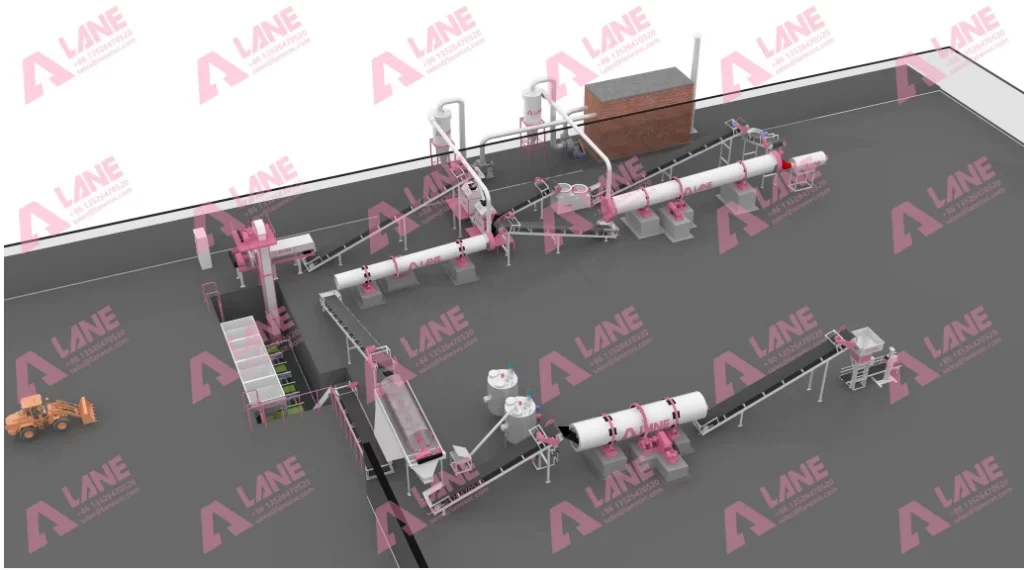
Key Equipment in SSP Production
A stable and efficient SSP manufacturing process depends heavily on equipment selection. The following machines are considered standard in modern production lines:
- Raymond Mill– for fine grinding to the required particle size
- Acidulation Reactor– where sulfuric acid reacts with phosphate rock
- Rotary Drum Granulator– for forming uniform fertilizer granules
- Rotary Dryer and Cooler – Reduces moisture content and stabilizes product temperature after the granulation process.
- Rotary Screening Machine– ensures consistent particle size
- Automatic Packaging Machine– for efficient and accurate bagging
In practice, companies like LANE tend to integrate these components into a unified system. And to be honest, that integration matters more than many people initially think. When each stage communicates smoothly with the next, the entire line becomes easier to manage—and far more stable over time.
How to Improve Yield and Reduce Cost
Enhancing the sulfuric acid to SSP production process doesn’t mean redesigning everything from scratch. More often, it comes down to disciplined execution.
Start with raw materials. Consistency in phosphate rock quality directly influences the SSP manufacturing process.
Then look at acid control. It’s common to see plants either overcompensate or fail to maintain stable concentrations. Neither approach works in the long run.
Granulation is another area worth attention. Uniform particles reduce recycling loads and improve product value in the market.
From what I’ve observed, one of the most overlooked aspects is process awareness. When operators truly understand how the sulfuric acid to SSP production process behaves under different conditions, they can intervene early—before small deviations turn into real problems. That awareness is difficult to quantify, but it’s incredibly valuable.
Practical Industry Insight
In one project I worked on, the client was dealing with persistently low conversion rates. On paper, everything checked out. Equipment was standard. The layout was logical.
But something wasn’t right.
After a closer look, the issue turned out to be inconsistent feeding into the reactor. Not dramatic. Not obvious. Yet once that was stabilized, the SSP manufacturing process improved almost immediately—output increased, and acid consumption dropped noticeably.
It’s a good reminder: optimization often hides in the small details.
Why Process Integration Matters
When systems are fragmented, inefficiencies tend to follow. That’s why more modern facilities are shifting toward integrated setups, where each stage of the sulfuric acid to SSP production process operates in sync.
Manufacturers like LANE emphasize this kind of integration—connecting crushing, reaction, granulation, and packaging into a continuous workflow. The benefits go beyond efficiency. Maintenance becomes simpler, and long-term performance is more predictable.
FAQ
1. What is the most critical stage in the sulfuric acid to SSP production process?
The acidulation stage is the most critical, as it directly affects reaction efficiency and final product quality.
2. How can I improve efficiency in the SSP manufacturing process?
Maintaining consistent raw materials, precise acid dosing, and proper curing time are the most effective ways to improve performance.
3. What equipment is essential for SSP production?
Key equipment includes crushers, grinding mills, acidulation reactors, granulators, dryers, coolers, screening machines, and packaging systems.
4. How does granulation affect product quality?
Granulation improves particle uniformity, minimizes dust, and enhances storage and transportation performance in the sulfuric acid to SSP production process.
5. Is automation necessary in SSP plants?
While not strictly required, automation helps maintain consistency and reduces human error within the SSP manufacturing process.
In the end, the sulfuric acid to SSP production process is more than just a reaction—it functions as a coordinated system. Almost like a living mechanism. Its performance depends, quite simply, on how well each part supports the others.

For more details, please feel free to contact us.
Henan Lane Heavy Industry Machinery Technology Co., Ltd.
Email: sales@lanesvc.com
Contact number: +86 13526470520
Whatsapp: +86 13526470520