SSP Plant Design and Engineering: How to Plan a Single Super Phosphate Plant That Pays Back
- 2026-10-09
A single super phosphate project rarely fails because the chemistry is difficult. It fails because the plant was sized against the wrong market, the rock grade changed after the contract was signed, or a granulation step was added late and the material handling system had to be rebuilt around it. Those are design failures, and they are cheaper to correct on paper than in steel.
This guide is for the people who approve the investment: fertilizer manufacturers adding capacity, investors evaluating a greenfield site, EPC contractors assembling a technical package, and procurement managers comparing offers from suppliers who describe their scope differently. It walks through the single super phosphate production process from rock grinding to bagging, the equipment involved, the factors behind an SSP fertilizer plant cost estimate, and the procurement questions worth asking before you commit.
What SSP Plant Design and Engineering Covers
SSP plant design and engineering is not a single deliverable. It is four decisions that lock each other in place.
Process route
The available P2O5 you target, whether product leaves the plant as powder or granules, and whether curing happens in a shed or is integrated with granulation.
Mass and energy balance
Rock, sulfuric acid, water, steam and fuel consumption per tonne of saleable product, and how those numbers move when rock grade shifts.
Equipment specification and layout
Crusher and mill selection, mixer type, den design, granulator, dryer and screen sizing, and the conveyors that tie the line together.
Civil work, utilities and compliance
Foundations on acidic and reactive ground, acid storage with secondary containment, dust and fluoride control, effluent handling, and local permitting.
A supplier who quotes equipment only has addressed part of the third item. The rest of SSP plant design and engineering decides whether the line holds nameplate capacity two years after handover.
Why SSP Still Holds Its Ground
SSP is made by reacting ground phosphate rock with sulfuric acid. The product typically carries 16 to 20 percent available P2O5 with sulfur and calcium, and three practical points keep it relevant.
It accepts reactive rock grades that are too low or too contaminated for concentrated phosphate routes, which widens your sourcing base, and it suits oilseed, pulse, sugarcane, plantation and pasture systems where phosphate and sulfur are both limiting.
Capital intensity per tonne of P2O5 is lower than for concentrated phosphates. For a domestic market and moderate volumes, that difference is often the deciding variable in the investment case.
The sulfur fraction has become a genuine agronomic argument, because atmospheric sulfur deposition has fallen in many regions as fuel sulfur limits tightened and sulfur deficiency now appears in oilseeds, pulses, cereals and forages.
What SSP is not is a high-analysis product. Where inland logistics costs are high and product travels long distances, the low analysis can erode the cost advantage that made the project attractive. That is a market question, and it should be settled before SSP plant design and engineering begins.
The Single Super Phosphate Production Process, Step by Step
The single super phosphate production process has five main stages, and each one constrains the others.
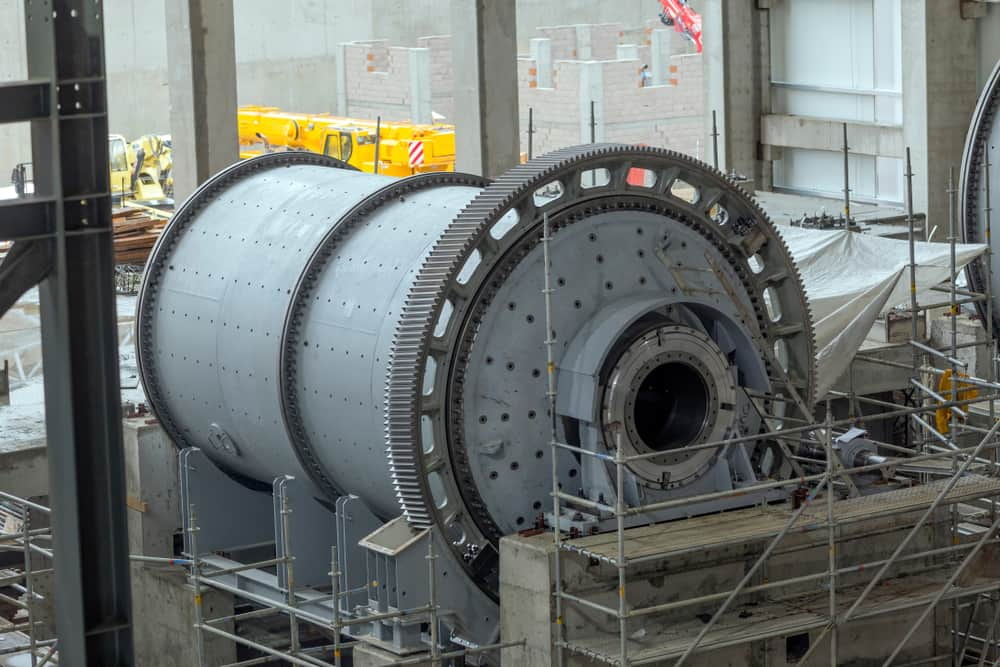
Rock from the mine or port is crushed and then ground, usually in a ball mill or ring-roller mill, to a fineness where 80 to 90 percent passes a 100-mesh screen. Grind fineness controls reaction rate. Coarse rock leaves unreacted phosphate in the product and shows up as a lower available P2O5 figure on your certificate of analysis. Size the mill for the hardest rock you might buy, not the rock in the first shipment.
Acidulation and mixing
Ground rock and sulfuric acid meet in a continuous mixer. The reaction is fast and strongly exothermic. Acid concentration, acid-to-rock ratio, mixer temperature and residence time are the variables the operator controls, and they set the free acid level, the conversion of insoluble phosphate into available form, and the condition of the slurry. Too little acid leaves unreacted rock. Too much leaves free acid that attacks equipment, slows curing and creates handling problems downstream.
Curing
Freshly acidulated material discharges into a den for initial setting, then moves to a curing shed where it rests before bagging. The reaction continues in the pile for weeks. Material bagged too early keeps reacting inside the bag, generating heat and moisture that turn a free-flowing product into a lump the customer has to break with a hammer.
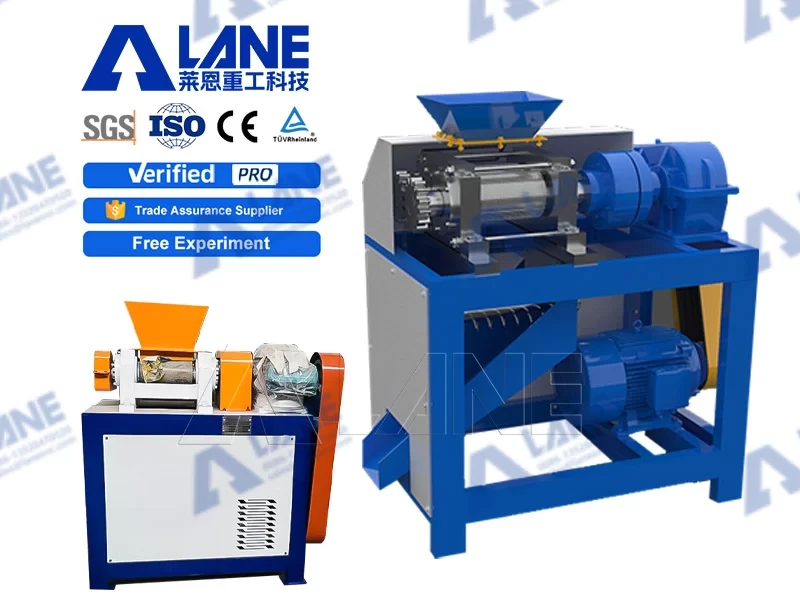
Powder SSP can be granulated in a rotary drum or pan system using steam and water, sometimes with a binder. Granulation improves handling, cuts dust and allows bulk blending, but it adds a granulator, dryer, cooler, screens and recycle load to the flowsheet. That is why the powder-versus-granule decision belongs at the front end of SSP plant design and engineering rather than after the layout is frozen.
Drying, cooling, screening and coating
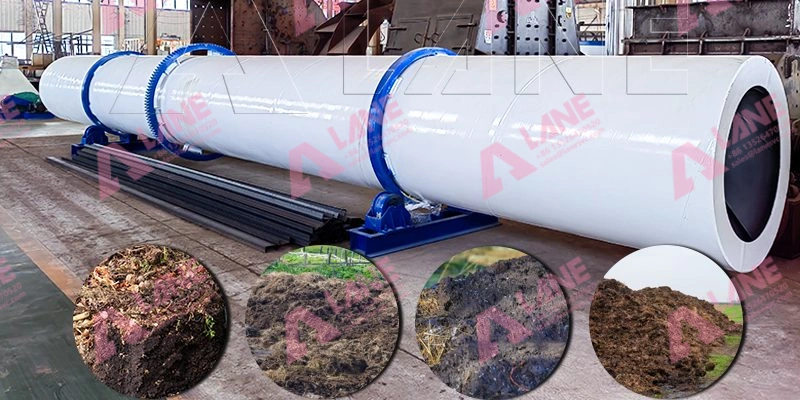
Granules pass through a dryer, a cooler and multi-deck screens. Oversize is crushed and recycled; undersize returns to the granulator. Product within specification goes to a coating drum for anti-caking treatment before storage and bagging.
Core Equipment in a Complete Line
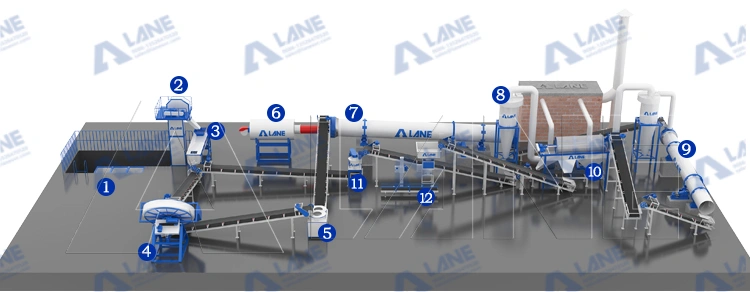
Equipment selection follows the single super phosphate production process you choose; it rarely works the other way around.
| Stage | Typical equipment | What it determines |
|---|---|---|
| Rock preparation | Jaw crusher, hammer mill or ball mill, classifier | Grind fineness, reaction rate |
| Acidulation | Acid dosing and metering, continuous mixer, den | P2O5 conversion, free acid |
| Curing | Curing shed or rotary curing system | Product maturity, caking behavior |
| Granulation | Drum or pan granulator, recycle circuit | Granule size and strength |
| Finishing | Rotary dryer, cooler, screens, crusher, coating drum | Moisture, uniformity, storage life |
| Support | Dust collection, scrubber, acid storage, weighbridge, bagging line | Compliance, logistics |
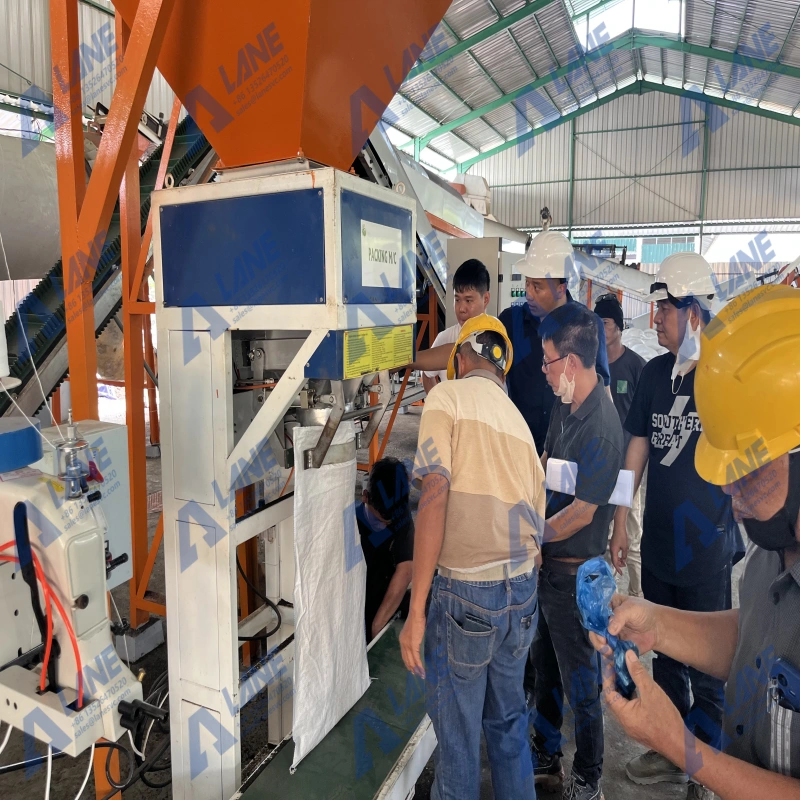
Two points in that table carry more weight than the rest. Dust and fluoride collection is part of the process boundary, not equipment you add later. The bagging and loading section is also where projects quietly lose throughput, because it was sized for average demand rather than peak season.
Design Parameters That Decide Product Quality
Grind fineness and rock consistency, acid-to-rock ratio, acid concentration and temperature, mixing residence time, curing period and pile management, granulation moisture, and dryer exit conditions. Each has a target range rather than one correct number, and the ranges shift with rock source.
That is why SSP plant design and engineering should include a rock testing program and a mass balance, not only a capacity promise. When you receive a quotation, ask which parameter the supplier will guarantee and how it will be measured at performance testing.
What Drives SSP Fertilizer Plant Cost
Most of an SSP fertilizer plant cost falls into five buckets, and four of them are fixed during SSP plant design and engineering.
Capacity and operating hours. Cost rises sub-linearly with capacity, but stepping up a size class changes equipment type, not just dimensions.
Feedstock characteristics. Rock hardness and grindability drive mill size and power. Acid price and local supply reliability drive the largest operating cost line in the plant.
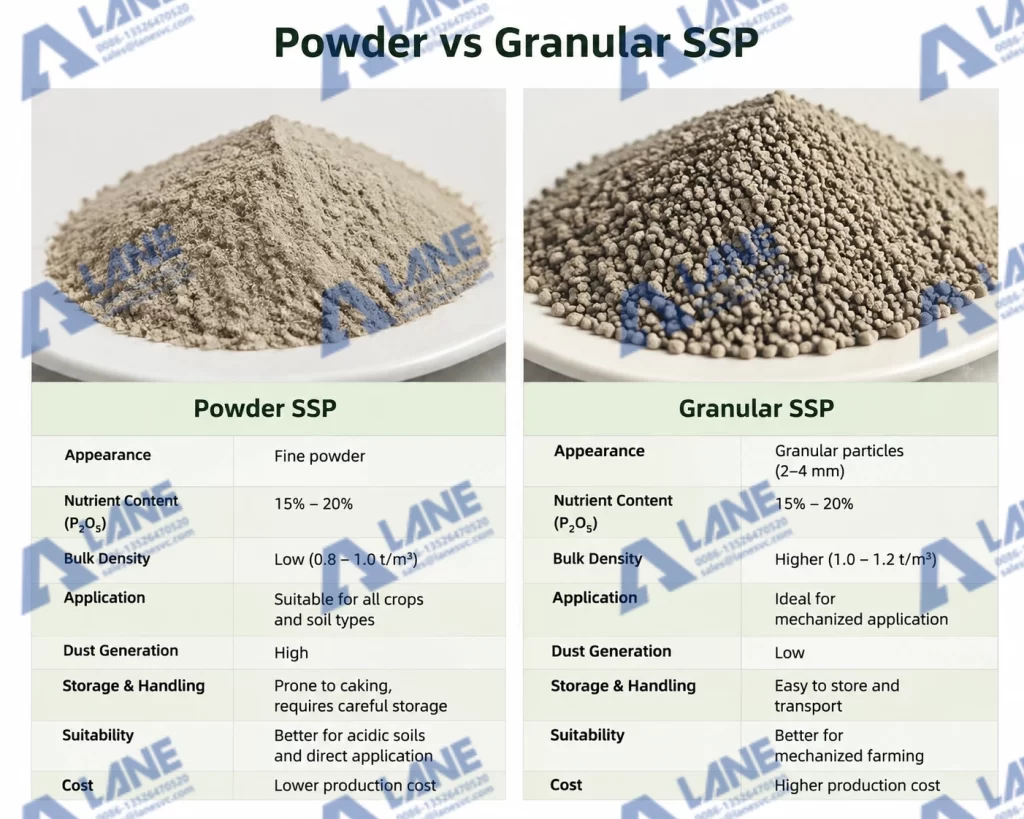
Product form. A powder line is materially cheaper to build. Granulation, drying, cooling, screening and dust control add capital and fuel.
Site and utilities. Land, civil works, acid storage with containment, power quality, fuel choice, water availability and effluent treatment. In some locations acid logistics cost more per year than the reaction section cost to build.
Automation and localization. Full PLC or SCADA control with dosing control raises capex while lowering labor cost and quality variation. Imported versus locally fabricated equipment, and transport of large vessels, can swing the total widely.
Quotations are only comparable when the scope boundary is identical. One supplier prices from the foundation bolts up; another includes civil work and commissioning. Ask for a boundary list with every offer, then normalize it before you compare: the spread in SSP fertilizer plant cost between two suppliers usually shrinks once the scopes match.
Powder or Granulated: Choosing the Product Form
Granulated SSP normally sells at a premium and travels better, but adding the granulation and drying stages to the single super phosphate production process raises capital cost and fuel consumption. The decision belongs to the market study rather than to the equipment supplier. If your buyers are blenders or plantation operators who value uniformity, granulation earns its capital quickly. If they are local dealers selling straight phosphate, the added dryer and cooler may never pay back.
Maintenance and Operating Plan
Plan for wear and corrosion from day one. Mill liners and grinding media, mixer blades, den and conveyor surfaces, dryer flights, screen decks and crusher hammers all consume themselves on a schedule you can predict.
Three operating habits protect the investment more than any single maintenance task. Keep rock feed consistent, because the single super phosphate production process is designed around a rock specification. Monitor free acid and product moisture daily, since both drift before product quality visibly fails. And keep a critical spares stock on site, because a phosphate plant that stops for a $500 part is a plant losing thousands per day.
Choosing an SSP Plant Supplier
Suppliers come in three shapes: equipment only, equipment with process engineering and commissioning, and full turnkey delivery. The right model depends on the engineering capability your team already has. Ask any supplier to show where their scope ends and where the rest of SSP plant design and engineering begins.
Whatever the model, ask for the same five things. A mass and energy balance. A process flow diagram and P&ID. A utility consumption table. A layout drawing showing maintenance access. And a commissioning plan with defined performance tests.
Then ask the harder questions. Who guarantees capacity and P2O5 recovery, and against which rock specification? Who trains your operators, and for how long? What is the spare parts lead time for imported items? Can the supplier give you references running comparable rock in a comparable climate?
Sources and Standards Worth Consulting
Phosphate rock production and reserve data are published annually in the USGS Mineral Commodity Summaries. The International Fertilizer Association (IFA) publishes fertilizer supply and demand outlooks. FAO maintains fertilizer and plant-nutrition resources for crop nutrient guidance. Fertilizer definitions and product tolerances are set nationally, for example by AAPFCO in the United States and the Fertiliser (Control) Order in India. Quality and environmental management systems are typically certified to ISO 9001 and ISO 14001.
Closing: Sequence the Decisions, Then Build
Order matters more than speed. Define the market and product specification first. Confirm rock chemistry and acid supply second. Choose powder or granulated third. Only then move into detailed SSP plant design and engineering, where the mass balance, equipment selection and layout get fixed.
Projects that follow that sequence tend to run uneventfully, reaching design capacity and holding specification through the first season.
FAQ
What is the typical capacity of an SSP plant?
SSP lines range from regional units producing a few tonnes per hour to integrated plants producing several hundred tonnes per day. Capacity should follow confirmed demand and raw material logistics.
How long does an SSP project take?
Basic engineering usually runs a few months once rock data and product specification are fixed; detailed design, fabrication and civil works add most of the schedule.
Is the single super phosphate production process hard to control?
The chemistry is well understood, but it is sensitive to rock variation. Lines that struggle usually do so because feed rock changed without adjusting acid ratio or grind fineness.
Do I need granulation?
Not always. Granulation adds cost and fuel consumption but improves handling, reduces dust and supports blending. If your market pays for uniform granules, it earns back its capital.
How accurate is an early SSP fertilizer plant cost estimate?
Early estimates are useful for feasibility and route comparison, but their accuracy depends on the scope boundary and on local civil and utility costs. Treat a quotation without a boundary list as rough order-of-magnitude.
What rock grade do I need?
SSP tolerates lower-grade reactive rock better than concentrated phosphate routes, which is part of its appeal. Confirm the acceptable range by laboratory testing on the specific rock you intend to buy.
How much sulfuric acid does it consume?
Acid consumption depends on rock grade and target P2O5, and is usually expressed as tonnes of acid per tonne of rock. Acid is the largest operating cost line, so supply security matters as much as equipment selection.
What should I ask for in a supplier quotation?
Ask for the scope boundary, mass and energy balance, utility consumption, equipment list with capacities, layout drawings, commissioning and training scope, and the performance guarantees.