SSP for Horticulture: Uses, Grades & Buyer Guide
- 2026-11-04
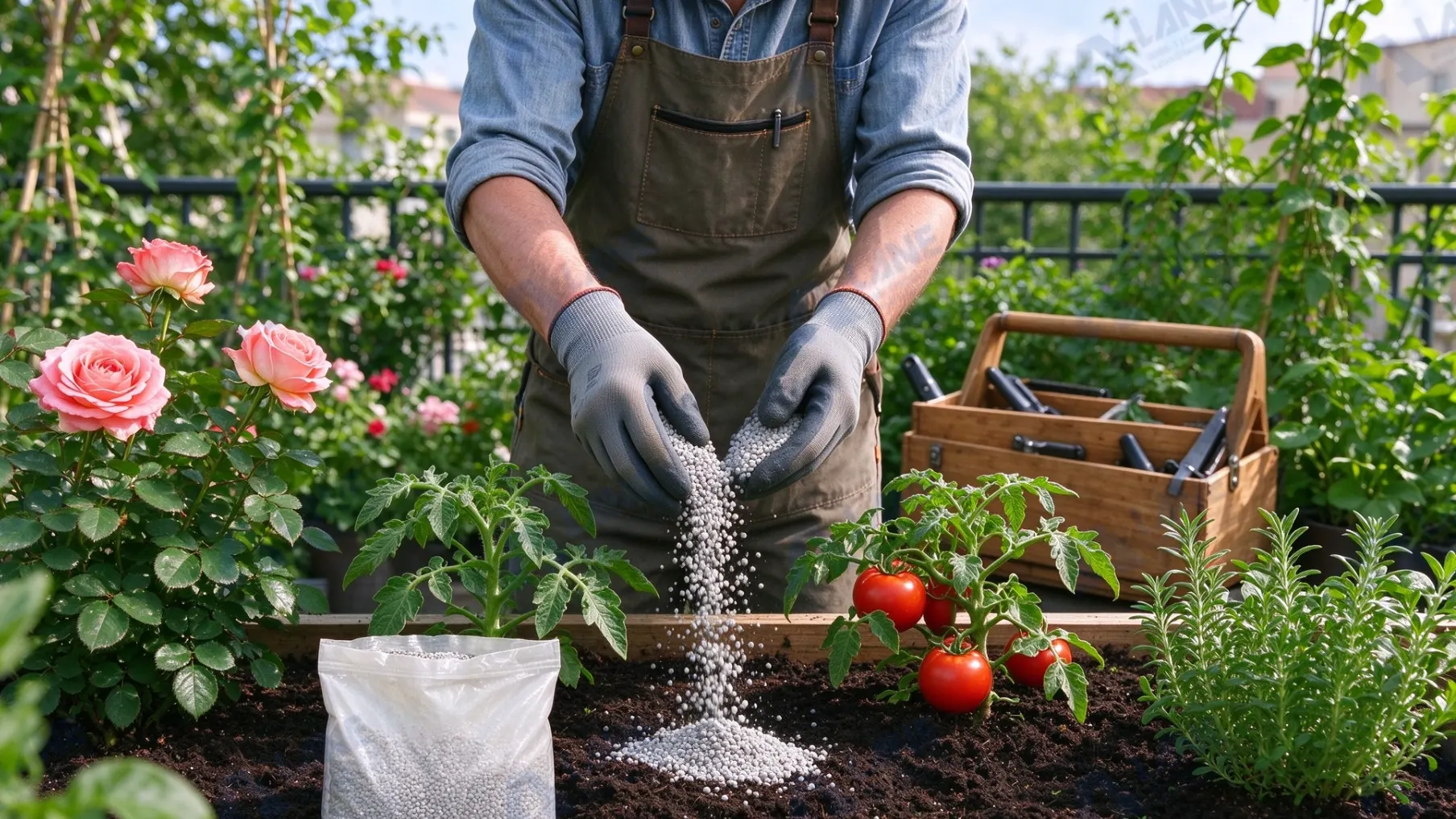
SSP for horticulture is a practical phosphate fertilizer option for growers who need to supply phosphorus, sulfur, and calcium in one application. Unlike highly concentrated phosphate fertilizers, single superphosphate (SSP) contains monocalcium phosphate and gypsum, giving it a combination of water-soluble phosphorus and sulfate sulfur. This makes it worth evaluating for vegetable production, fruit orchards, ornamental plants, and nursery operations where soil tests indicate a need for these nutrients.
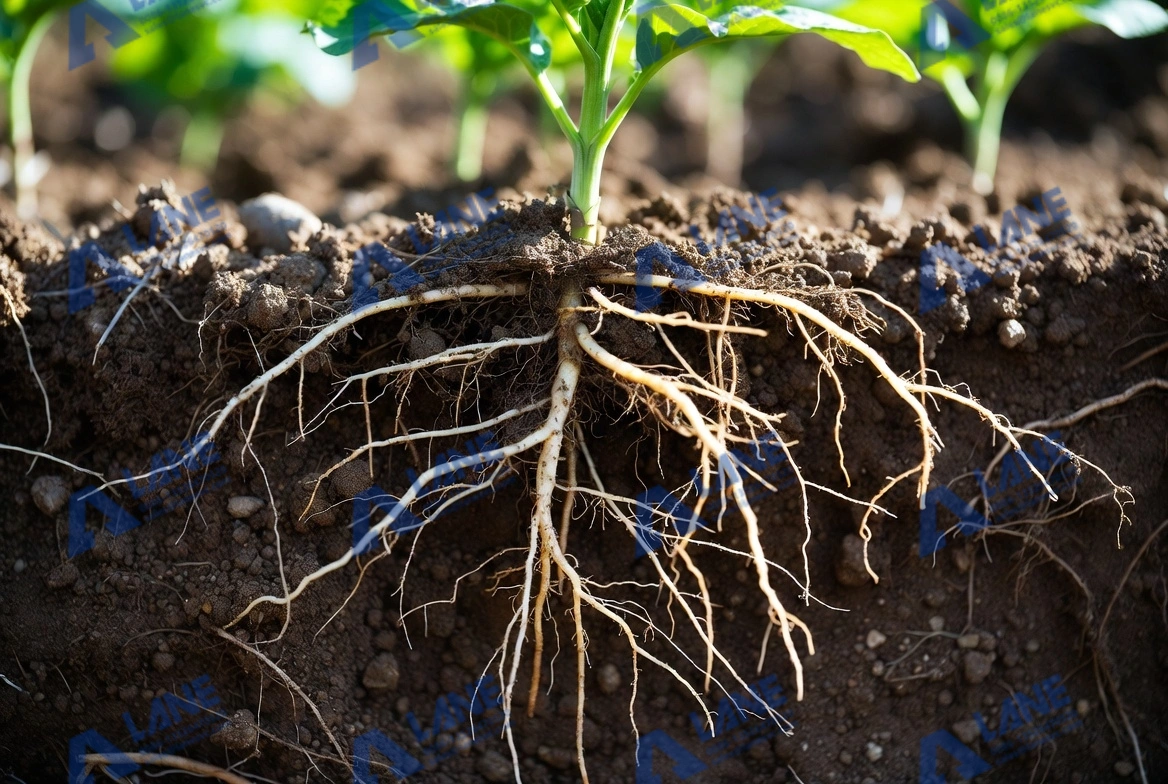
However, SSP is not automatically the right choice for every horticultural crop. Its relatively moderate phosphorus concentration, soil pH effects, and application method all influence its economic value. For fertilizer manufacturers and purchasing managers, the key question is not simply whether SSP sells well, but whether the target market needs a fertilizer with this particular nutrient profile.
This guide explains where SSP fits in horticulture, what product specifications buyers should examine, and what equipment matters when planning an SSP manufacturing project. For commercial growers, SSP for horticulture offers a practical way to supply multiple essential nutrients while keeping phosphate fertilization relatively straightforward.
1. Why Is SSP for Horticulture Worth Considering?
The main advantage of SSP is that it supplies three nutrients rather than phosphorus alone.
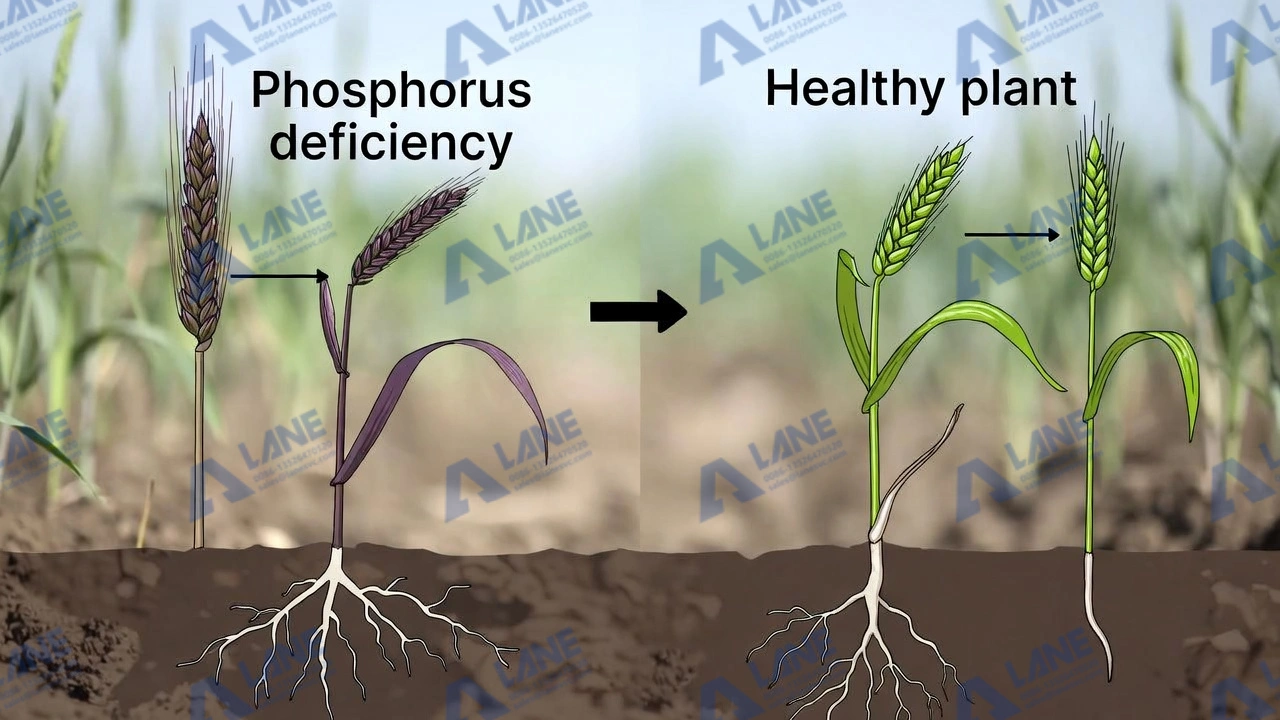
- Phosphorus (P): Supports energy transfer, root development, early plant establishment, flowering, and reproductive growth.
- Sulfur (S): Participates in protein formation and enzyme activity. It is particularly relevant where soil sulfur availability is limited.
- Calcium (Ca): Contributes to cell wall structure and normal plant development.
SSP is produced by reacting ground phosphate rock with sulfuric acid. The reaction forms monocalcium phosphate and calcium sulfate (gypsum), which explains its combined nutrient profile.
For horticultural buyers, this combination can reduce the need to purchase separate phosphorus and sulfur sources. But it does not replace a complete fertilizer program: SSP contains no meaningful nitrogen or potassium, so these nutrients must be supplied separately where required.
My recommendation: Consider SSP for horticulture when the soil or growing medium needs phosphorus alongside sulfur and calcium. Do not select it simply because the price per ton looks attractive.
2. Which Horticultural Crops Can Benefit from SSP?
SSP can be considered for a range of horticultural crops, but the decision should be based on soil conditions, crop nutrient demand, and the production system.
| Horticultural Application | Potential Value of SSP | Important Consideration |
|---|---|---|
| Vegetable Crops | Supplies phosphorus for early root and crop establishment, plus sulfur and calcium | Match application to soil test and crop nutrient removal |
| Fruit Orchards | Can contribute phosphorus and sulfur to orchard soil | Consider root-zone placement and existing soil phosphorus |
| Ornamental Plants | Provides nutrients that support normal growth and establishment | Avoid excessive phosphorus in containers and managed substrates |
| Nursery Production | Can be considered in pre-plant soil preparation | Check substrate pH, soluble salts, and nutrient balance |
| Bulb and Root Crops | Supplies phosphorus and sulfur where deficiencies exist | Crop-specific sulfur demand and soil conditions matter |
For vegetables, SSP may be useful as a basal phosphorus source before planting. In orchards, however, applying fertilizer across the entire surface without considering the active root zone can reduce nutrient-use efficiency. For nursery and container production, the situation is more sensitive: the growing medium has a smaller nutrient buffer, so excessive phosphorus or unsuitable fertilizer placement can create problems.
A common purchasing mistake is treating all horticultural crops as one market. A vegetable grower, an orchard operator, and a nursery producer may need different grades, particle sizes, and application methods.
3. What SSP Grade and Specifications Should Buyers Check?
The term SSP does not guarantee one universal nutrient specification. Buyers should request a product specification sheet and confirm the guaranteed nutrient values before comparing suppliers.
The International Fertilizer Development Center and FAO materials describe SSP as a phosphate fertilizer containing phosphorus, calcium, and sulfur. FAO’s published procurement specifications provide one useful reference point: its powdered SSP specification includes at least 15.8% water-soluble P₂O₅ and 11% sulfur, while its granular SSP specification also sets moisture and particle-size requirements. These are reference specifications, not a universal standard for every market.
| Parameter | Example Reference or Buyer Check | Why It Matters |
|---|---|---|
| Water-Soluble P₂O₅ | FAO reference: minimum 15.8% | Indicates the guaranteed soluble phosphate fraction |
| Sulfur (S) | FAO reference: minimum 11% | Important where sulfur is part of the product positioning |
| Moisture | FAO reference: max. 12% for powdered; max. 5% for granular | Affects storage, flowability, and caking risk |
| Particle Size | Confirm the agreed sieve range for granular SSP | Influences spreading and blending performance |
| Free Phosphoric Acid | FAO reference: maximum 4% as P₂O₅ | A relevant product quality control point |
| Packaging | Confirm bag material, lining, net weight, and sealing | Helps protect product during storage and transport |
Buyer judgment: Do not compare SSP suppliers only by total P₂O₅. Ask for water-soluble phosphate, sulfur, moisture, particle-size distribution, and a batch analysis certificate. These values tell you more about whether the product is suitable for its intended horticultural market.
4. Powdered or Granular SSP: Which Is Better for Horticulture?
Both forms have a place in the market, but their handling characteristics differ.
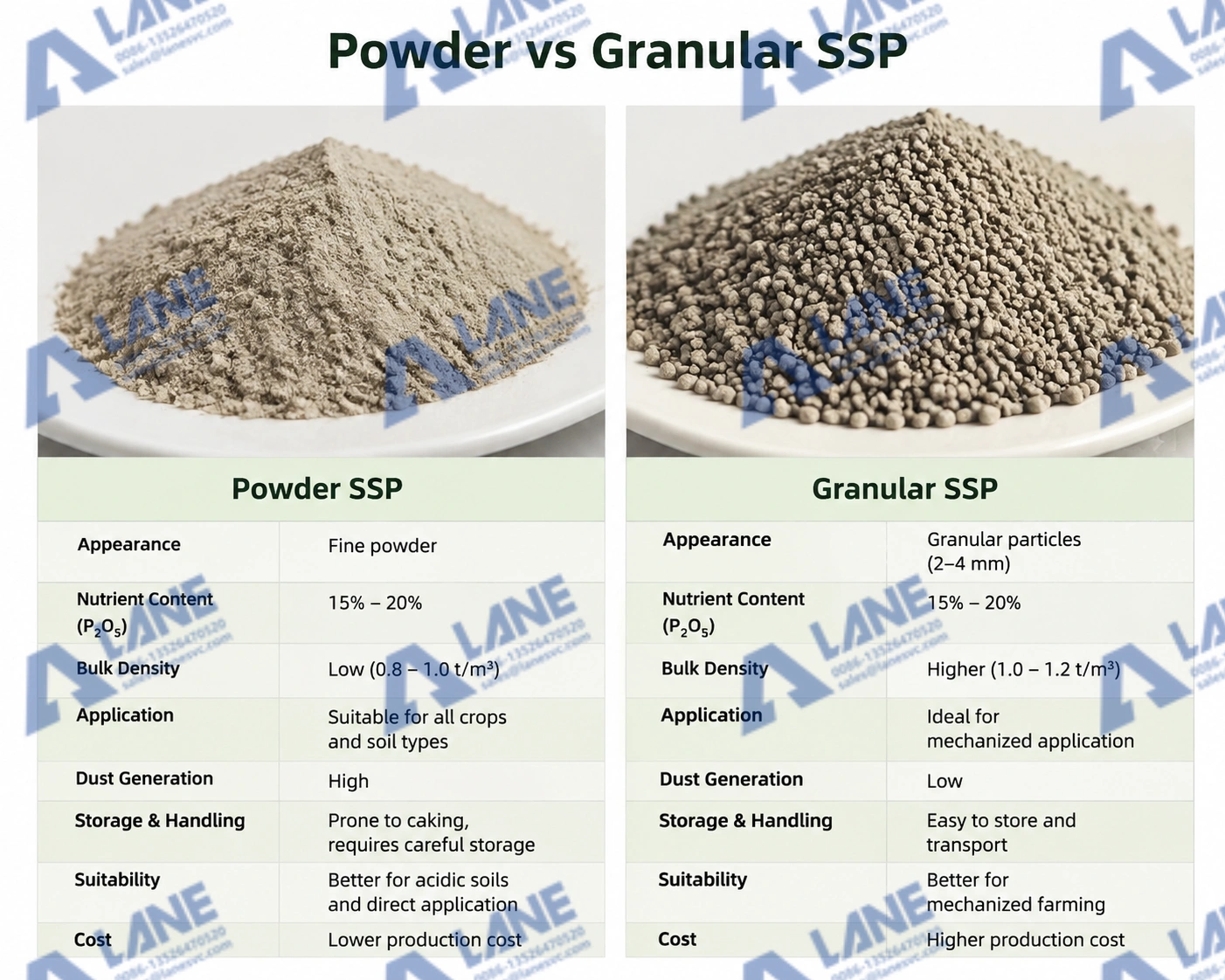
Powdered SSP may be suitable for fertilizer blending or markets where powder handling is already established. Its disadvantages include dust generation, handling losses, and a greater need to manage storage and material flow.
Granular SSP is often easier to handle, transport, store, and apply with conventional fertilizer spreaders. Uniform granule size also matters when SSP is blended with other granular fertilizers. If particle sizes differ significantly, segregation during transportation can affect the nutrient consistency of the final blend.
For commercial horticultural markets, granular SSP may be more convenient where mechanical spreading and bulk distribution are common. However, granulation adds equipment, energy consumption, and process-control requirements. Buyers should evaluate the delivered cost per usable ton rather than assuming granules are always more profitable.
5. How Is SSP Manufactured, and What Equipment Is Required?
An SSP production line converts phosphate rock into a more plant-available phosphate fertilizer through acidulation. The basic process involves preparing the phosphate rock, reacting it with sulfuric acid, allowing the material to cure, and then processing it into the required product form.
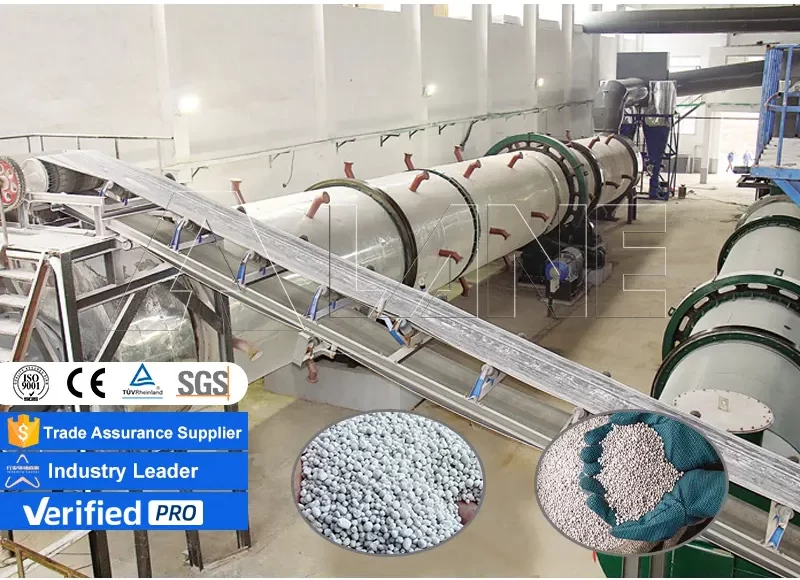
A typical equipment configuration may include:
- Crusher: Reduces phosphate rock to a suitable feed size.
- Grinding mill: Controls raw material fineness and supports consistent reaction.
- Acid mixing and reaction equipment: Provides controlled contact between phosphate rock and sulfuric acid.
- Curing system: Allows the acidulation reaction to continue and the material to mature.
- Granulator: Forms granules when granular SSP is required.
- Dryer and cooler: Adjust product moisture and temperature.
- Screening machine: Separates qualified granules from oversized and undersized material.
- Packing system: Weighs and packages the finished fertilizer.
The equipment supplier’s published SSP line information includes crushers, ball mills, acid mixers/reactors, curing systems, granulators, dryers, coolers, screens, packaging machines, and dust-control equipment.
For a project targeting horticultural markets, the equipment design should be based on the intended product grade and final form. A powder-only plant does not necessarily need the same granulation and finishing configuration as a plant producing commercial granular SSP.
You can review the SSP fertilizer production line for equipment and process information.
6. What Should Buyers Consider Before Investing in an SSP Production Line?
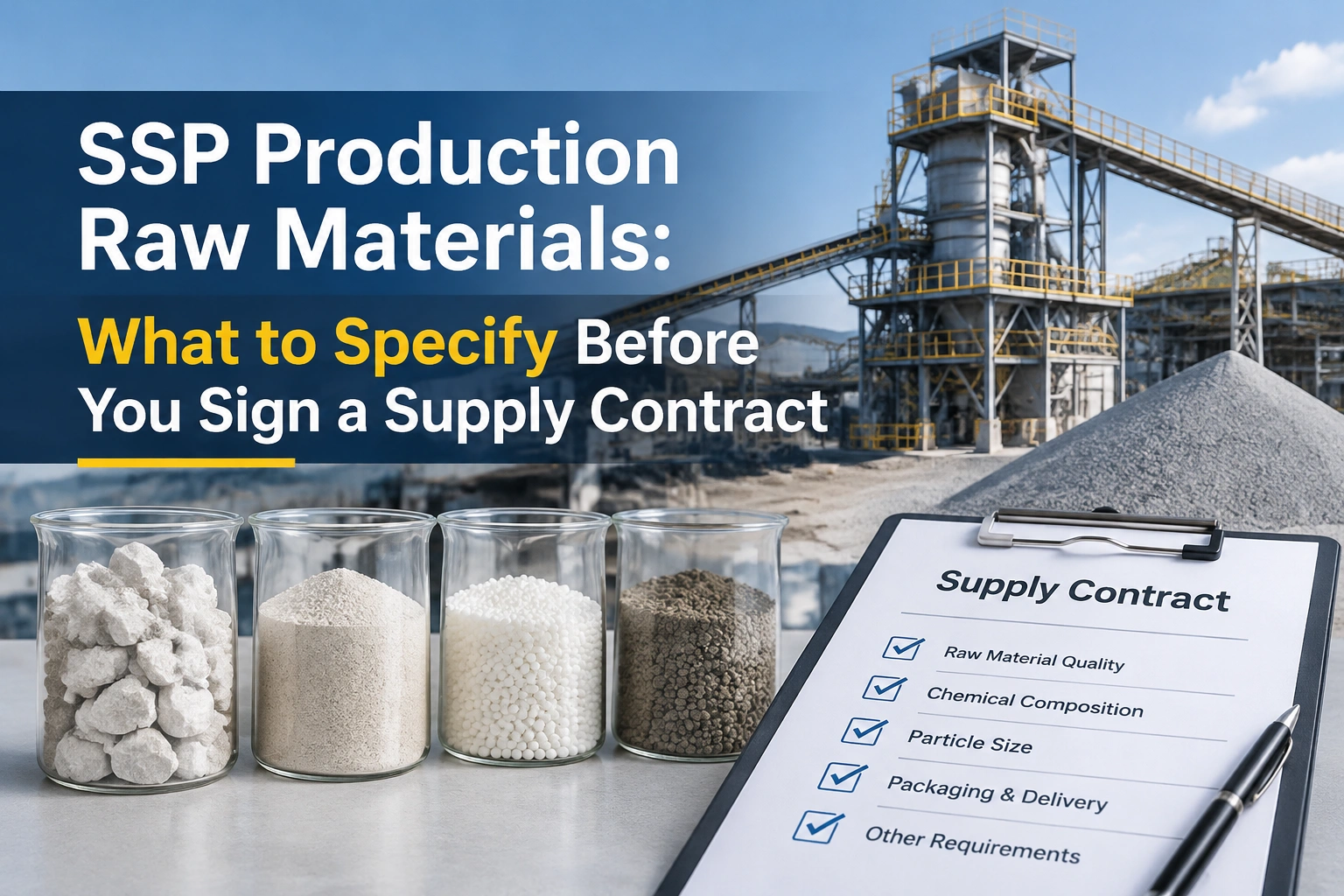
The most expensive mistake in an SSP project is choosing equipment capacity before confirming the product specification and target market.
Before requesting a quotation, buyers should clarify:
- Target product: Powdered SSP, granular SSP, or both?
- Nutrient guarantee: What water-soluble P₂O₅ and sulfur levels must the product meet?
- Raw material: What are the phosphate rock grade, impurities, moisture, and grinding characteristics?
- Production capacity: Is the target output based on finished product or raw material feed?
- Environmental controls: How will acid mist, dust, and process emissions be collected and treated?
- Storage and packaging: What measures are required to control moisture absorption and caking?
Ask suppliers to explain how raw material variation affects acid consumption, reaction performance, curing time, and finished product quality. A quotation that lists machinery without explaining these relationships is not a complete engineering proposal.
For broader fertilizer machinery and plant integration options, buyers can also visit Fertilizer Industry Leader and LANE Machinery.
7. Common Mistakes When Using or Marketing SSP for Horticulture
There are several assumptions that can lead to poor product positioning or disappointing field performance.
Mistake 1: Treating SSP as a complete fertilizer. SSP supplies phosphorus, sulfur, and calcium, but it does not provide a balanced supply of N, P, and K. Other fertilizers may be required.
Mistake 2: Ignoring soil pH. Phosphorus availability is affected by soil chemistry. Soil testing should guide fertilizer selection, particularly in strongly acidic or alkaline conditions. Penn State Extension recommends using soil test results and crop requirements to guide phosphorus management.
Mistake 3: Assuming more phosphorus means better growth. Excess phosphorus can create nutrient imbalances and increase the risk of phosphorus loss through runoff or erosion.
Mistake 4: Comparing products only by price per ton. A lower-priced SSP product may have different nutrient guarantees, moisture levels, or particle-size distribution. Compare cost per unit of guaranteed available nutrient and consider handling losses.
For a more detailed explanation of crop suitability and limitations, see our related guide: Is Single Superphosphate Good for Plants?. This article explains the agronomic benefits, soil conditions, and situations in which SSP may not be the right fertilizer choice.
8. FAQ: What Do Horticultural Fertilizer Buyers Ask About SSP?
1. Is SSP suitable for horticultural crops?
Yes, SSP can be suitable when crops and soil require phosphorus, sulfur, and calcium. Soil testing should determine whether these nutrients are actually needed.
2. Can SSP be used for vegetable production?
Yes, it can be used as a basal phosphorus source for vegetables when the soil test supports its use. Application rate and placement should follow crop requirements.
3. Is granular SSP better than powdered SSP?
Not in every situation. Granular SSP is generally easier to handle and mechanically spread, while powdered SSP may suit certain blending or processing applications.
4. Does SSP provide nitrogen and potassium?
No. SSP is primarily a phosphorus fertilizer that also supplies calcium and sulfur. Nitrogen and potassium must be supplied through other fertilizer sources when required.
5. What is the typical phosphorus content of SSP?
Common commercial SSP grades are often around 16–20% P₂O₅, but actual guarantees vary by product and market. Buyers should verify the water-soluble phosphate content on the supplier’s specification sheet.
6. Can SSP be blended with other fertilizers?
Yes, SSP can be included in fertilizer blends, but compatibility, moisture, particle-size distribution, and storage stability should be checked before commercial production.
7. What equipment is needed to manufacture granular SSP?
A typical line includes raw material crushing and grinding, acid reaction and curing equipment, granulation, drying, cooling, screening, dust collection, and packing equipment. The final configuration depends on capacity and product specifications.
8. How should buyers choose an SSP production line supplier?
Ask for a process flow diagram, equipment list, capacity basis, raw material requirements, utility consumption, emission-control design, and product acceptance criteria. Requesting a clear performance guarantee is more useful than relying on general claims about equipment quality.
Conclusion
SSP for horticulture is worth considering when the target market needs a practical combination of phosphorus, sulfur, and calcium. Its value depends on soil conditions, crop requirements, product grade, and the cost of supplying these nutrients through alternative fertilizers.
For fertilizer manufacturers, the same principle applies to equipment investment: define the target SSP grade and product form first, then select the crushing, reaction, curing, granulation, drying, and screening systems around those requirements.
If you are planning a new SSP plant or upgrading an existing line, share your target capacity, phosphate rock analysis, and required product specification with LANE. The engineering team can then assess a suitable process configuration and equipment quotation.