Phosphorus Deficiency in Plants: Fertilizer Solutions
- 2026-11-03
Phosphorus deficiency in plants is a common nutritional problem that can slow root development, restrict plant growth, delay maturity, and reduce crop productivity. Recognizing the symptoms early is important, but identifying the actual cause is even more critical. A plant may show signs of phosphorus deficiency not only because the soil contains too little phosphorus, but also because environmental conditions prevent its roots from absorbing the nutrient effectively.
For farmers and agricultural businesses, choosing the right phosphorus fertilizer is therefore not simply a matter of buying a product with a high P₂O₅ percentage. Soil pH, temperature, moisture, crop requirements, and fertilizer availability all influence the final result.
For fertilizer manufacturers and project investors, this creates a related commercial opportunity: supplying reliable phosphorus fertilizers that meet different crop and soil requirements. Products such as Single Superphosphate (SSP), Triple Superphosphate (TSP), MAP, and DAP serve different nutritional and market needs.
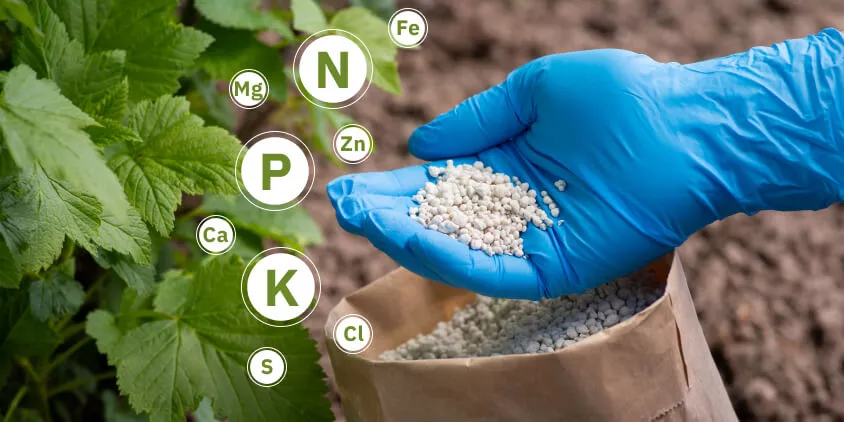
This guide explains how to identify phosphorus deficiency in plants, understand its underlying causes, choose appropriate fertilizer solutions, and evaluate the production equipment needed to manufacture phosphorus fertilizers consistently.
1. What Does Phosphorus Do for Plants?
Phosphorus (P) is one of the three primary macronutrients required for normal plant development, alongside nitrogen (N) and potassium (K).
It plays a central role in energy transfer, cellular development, and several important metabolic processes.
Unlike nitrogen, which is strongly associated with vegetative growth and chlorophyll-related processes, phosphorus is particularly important for energy metabolism and the development of roots, flowers, seeds, and fruits.
Its main functions include:
-
Energy transfer: Phosphorus is a component of ATP (adenosine triphosphate), which transfers energy within plant cells.
-
Root development: It supports early root establishment and the development of a healthy root system.
-
Photosynthesis and metabolism: Phosphorus participates in biochemical processes involved in photosynthesis and carbohydrate metabolism.
-
Flowering and seed formation: Adequate phosphorus supports reproductive development and seed production.
-
Cell structure: Phosphorus is a component of nucleic acids and phospholipids, which are essential for genetic material and cell membranes.
-
Crop maturity: Appropriate phosphorus nutrition supports normal crop development and maturity.
Phosphorus is especially important during early plant establishment. Young plants need a functioning root system to explore the soil and obtain water and other nutrients.
However, applying more phosphorus does not automatically produce stronger roots or higher yields. Once the crop has sufficient phosphorus, additional fertilizer may provide little benefit and can increase nutrient losses and production costs.
For fertilizer suppliers, this distinction matters: customers need products that match actual soil and crop requirements, not simply fertilizers with the highest nutrient concentration.
2. What Are the Main Symptoms of Phosphorus Deficiency in Plants?
The symptoms of phosphorus deficiency in plants can vary according to crop species, plant age, growing conditions, and the severity of the deficiency.
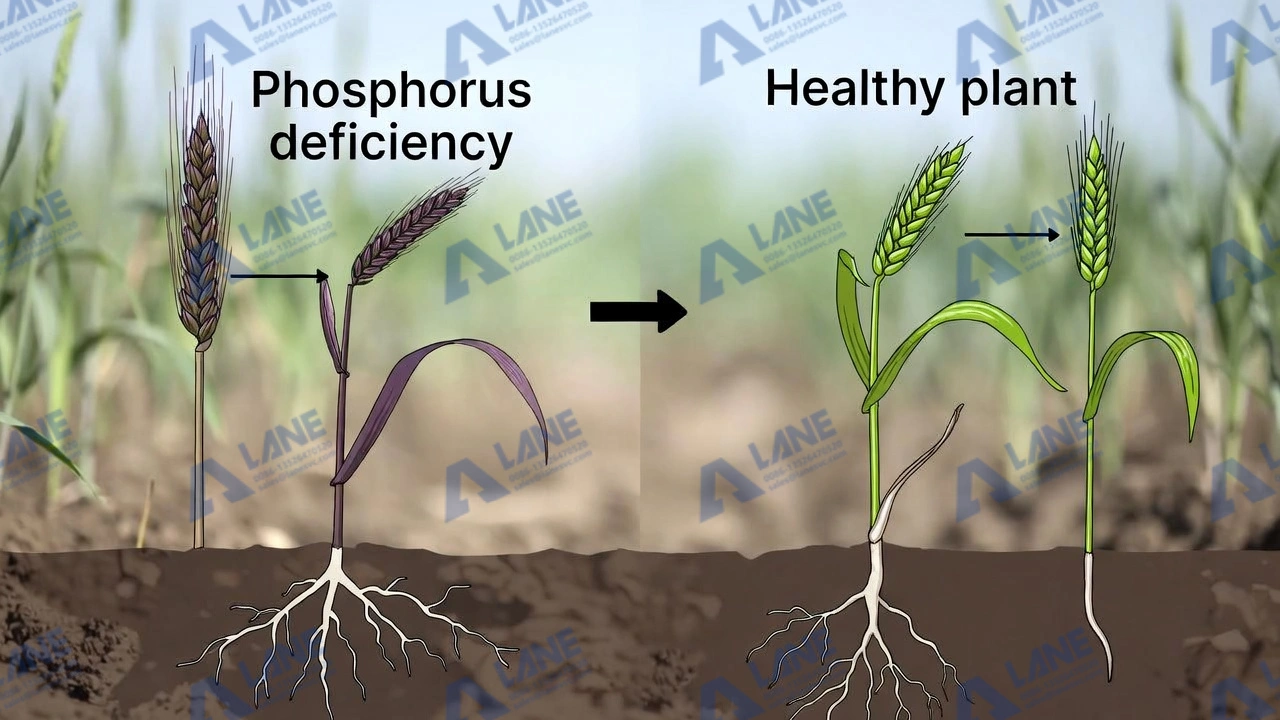
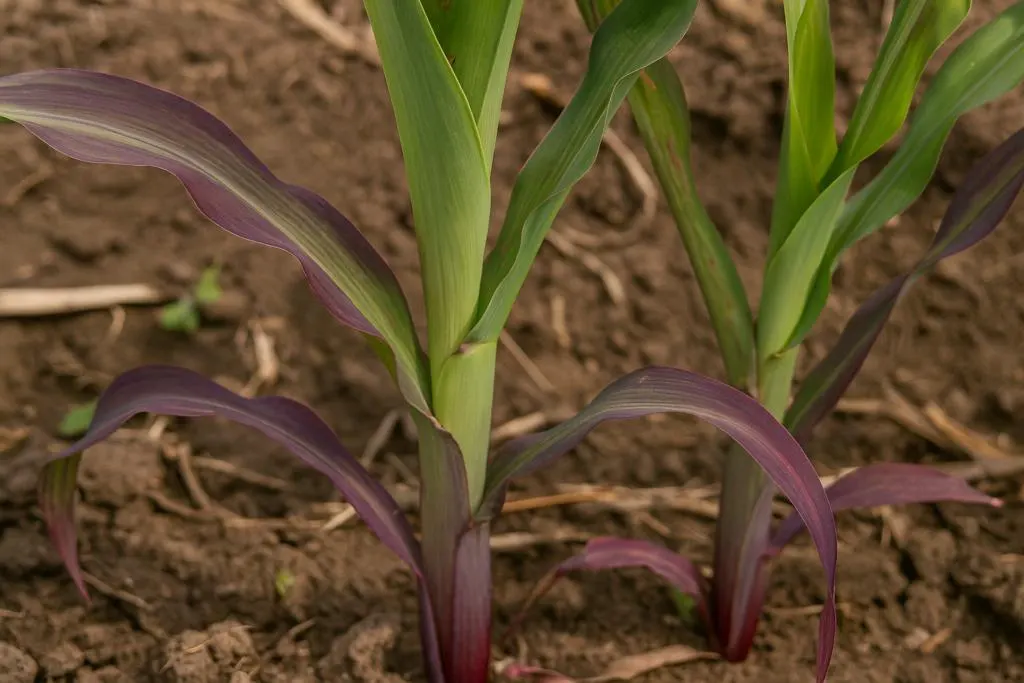
One of the most recognizable signs is a reddish-purple or bronze discoloration on older leaves. Slow growth and poor root development are also common indicators.
Purple or Reddish Leaves
Purple coloration is one of the most frequently reported symptoms.
It is associated with the accumulation of anthocyanin pigments in plant tissues. Depending on the species, discoloration may appear on the underside of leaves, along leaf veins, or around leaf margins.
However, purple leaves alone do not confirm phosphorus deficiency. Cold temperatures, genetic characteristics, and other environmental stresses can produce similar appearances.
Stunted Plant Growth
Plants suffering from insufficient phosphorus often grow more slowly than healthy plants.
Stems may remain short, leaf development may be limited, and the overall plant structure may appear smaller.
This symptom is particularly important in young crops because early growth restrictions can affect later development.
Poor Root Development
Phosphorus deficiency can restrict root establishment and reduce the plant’s ability to explore the surrounding soil.
Affected plants may have smaller root systems, fewer lateral roots, and weaker early establishment.
This creates a difficult cycle: restricted roots reduce nutrient uptake, which can further limit plant growth.
Delayed Flowering and Maturity
Insufficient phosphorus may interfere with reproductive development.
Depending on the crop, flowering, fruit formation, and seed development may be delayed. The severity of the effect depends on the crop’s phosphorus requirements and the timing of the deficiency.
Dark Green or Distorted Leaves
Some phosphorus-deficient plants develop unusually dark green foliage. Leaves may also become smaller, curl, or develop abnormal shapes.
These symptoms are not exclusive to phosphorus deficiency, so visual inspection should be combined with soil or plant tissue testing.
Industry insight: Fertilizer recommendations based only on leaf color are unreliable. A professional diagnosis should consider crop history, soil conditions, root health, and laboratory results before deciding which fertilizer to apply.
3. Why Does Phosphorus Deficiency Occur Even When Soil Contains Phosphorus?
A common misunderstanding is that phosphorus deficiency always means the soil contains insufficient total phosphorus.
In reality, total soil phosphorus and plant-available phosphorus are different measurements.
Phosphorus is relatively immobile in soil. It can react with iron, aluminum, and calcium compounds, forming less soluble compounds that plants cannot readily absorb.
Several conditions can therefore cause phosphorus deficiency even when the soil contains considerable phosphorus reserves.
Low Soil Phosphorus Levels
Continuous crop production removes nutrients from the soil.
If phosphorus removed through harvested crops is not adequately replaced, soil phosphorus reserves may gradually decline.
This is particularly relevant in intensively cultivated areas where fertilizer application has not been adjusted according to soil testing.
Unsuitable Soil pH
Soil pH has a significant influence on phosphorus availability.
-
In strongly acidic soils, phosphorus can become associated with iron and aluminum compounds.
-
In alkaline or calcareous soils, phosphorus can react with calcium compounds and become less soluble.
Consequently, adding more phosphate fertilizer without correcting an unsuitable soil environment may not solve the underlying problem.
Cold Soil Temperatures
Cold conditions slow root growth and reduce phosphorus uptake.
This explains why phosphorus deficiency symptoms sometimes appear during early spring, even in fields where soil phosphorus levels are not particularly low.
As soil temperatures rise and root activity improves, some symptoms may diminish.
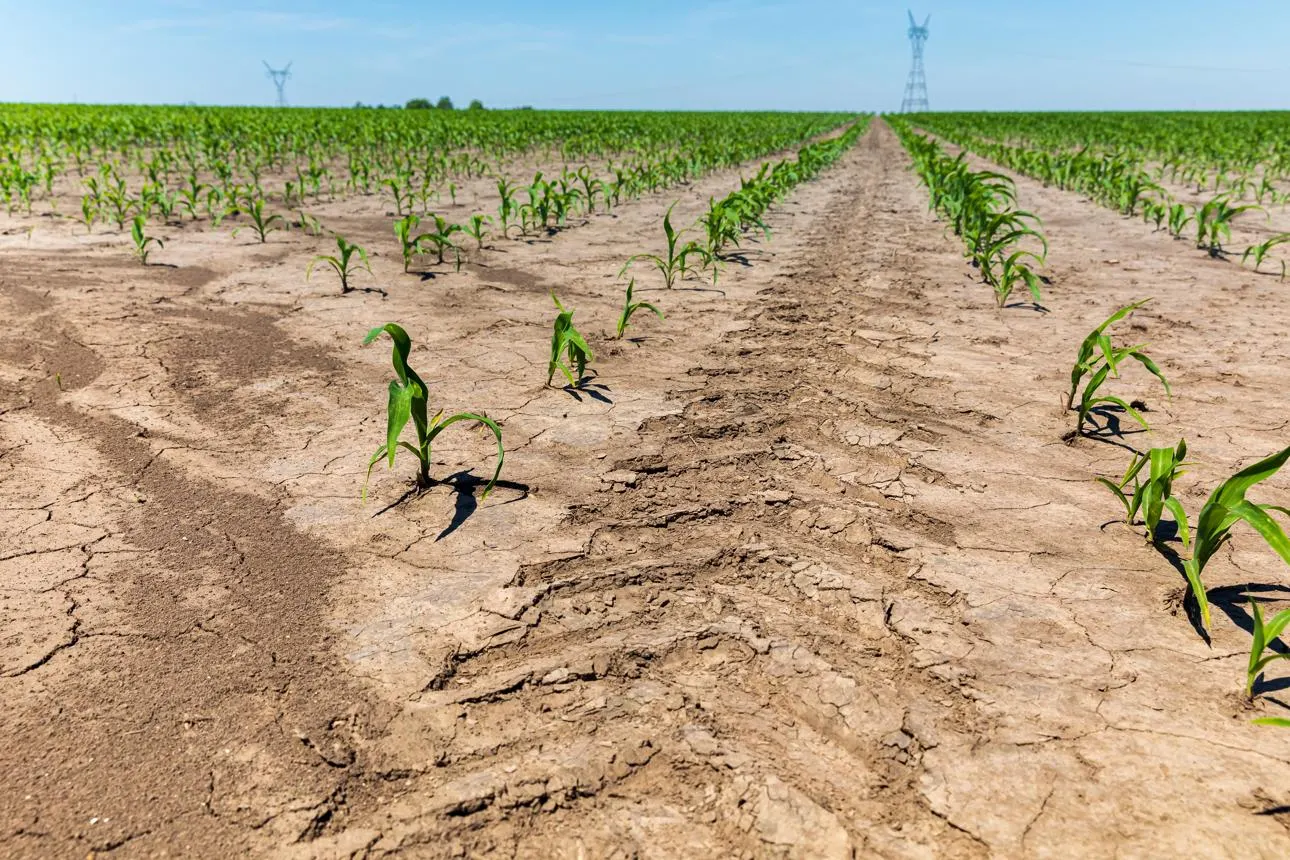
Excessive Soil Moisture or Drought
Both waterlogged and excessively dry soils can interfere with phosphorus uptake.
Waterlogged soil restricts oxygen availability around roots, while dry soil limits nutrient movement toward the root surface.
Maintaining suitable moisture and drainage is therefore part of effective phosphorus management.
Soil Compaction and Root Damage
Compacted soil restricts root penetration and reduces the volume of soil accessible to plants.
Root diseases, physical damage, and certain herbicide injuries may also create symptoms that resemble phosphorus deficiency.
The buyer’s perspective: Fertilizer demand is not determined by crop symptoms alone. Fertilizer manufacturers and distributors should understand the different soil conditions in their target markets because they influence which phosphorus products farmers actually need.
4. How Can You Identify and Confirm Phosphorus Deficiency?
Visual symptoms are useful for initial screening, but laboratory testing is more reliable when making fertilizer recommendations.
A practical diagnostic process involves three steps.
Step 1: Examine the plants.
Check older and younger leaves separately. Look for purple discoloration, abnormal growth, leaf distortion, and weak root development.
Compare affected plants with healthy plants of the same species growing under similar conditions.
Step 2: Conduct soil testing.
A soil test helps determine whether available phosphorus is below the recommended range for the crop and region.
The testing method matters because different soil extraction methods can produce different phosphorus values.
Therefore, fertilizer recommendations should use locally calibrated soil-test interpretation rather than a universal phosphorus threshold.
Step 3: Perform plant tissue analysis when necessary.
Tissue testing measures the phosphorus actually absorbed by the plant.
It is particularly useful when symptoms are visible but soil testing does not clearly explain the problem.
If soil phosphorus is adequate but plant tissue shows insufficient phosphorus, investigate root health, soil temperature, moisture, and pH before increasing fertilizer application.
A common mistake is to respond to every purple-leaf symptom with additional phosphate fertilizer. This can waste money and potentially contribute to excessive phosphorus accumulation in soil.
5. Which Phosphorus Fertilizer Is Best for Correcting Phosphorus Deficiency?
The right phosphorus fertilizer depends on soil conditions, crop requirements, nutrient concentration, application method, and the need for additional nutrients.
For commercial fertilizer buyers, understanding the differences between phosphorus fertilizer products is essential because their nutrient compositions and manufacturing processes are not the same.
The most common options include SSP, TSP, DAP, MAP, and phosphate rock.
Single Superphosphate (SSP)
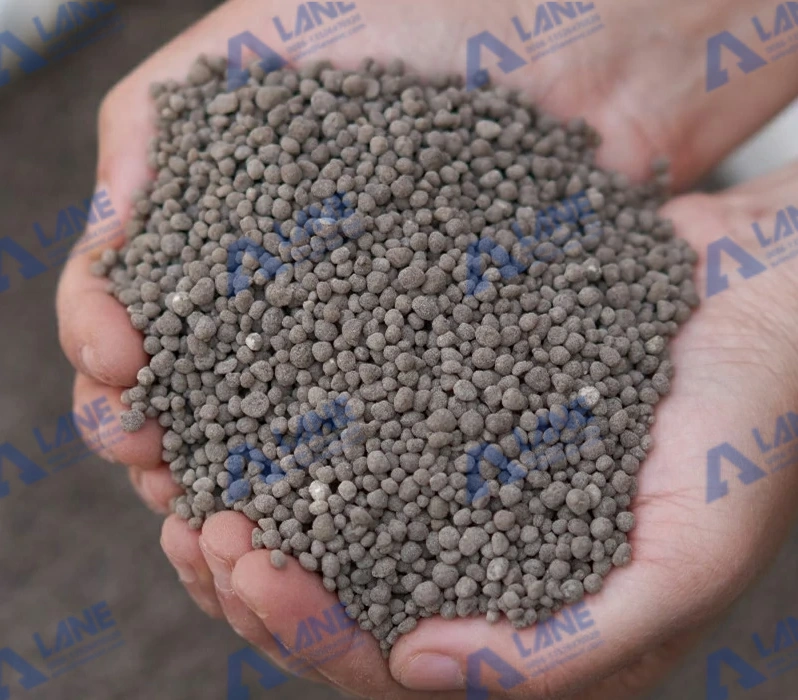
Single Superphosphate is produced by treating phosphate rock with sulfuric acid.
It supplies phosphorus mainly in the form of monocalcium phosphate and also contains calcium sulfate, which provides sulfur and calcium.
Typical commercial SSP grades contain approximately 14–20% P₂O₅, although specifications vary with raw material quality and manufacturing standards.
SSP is particularly relevant when agricultural markets require a fertilizer that supplies both phosphorus and sulfur.
For fertilizer manufacturers, its additional sulfur content can be an important selling point in markets where sulfur deficiencies are also a concern.
However, SSP has a lower phosphorus concentration than TSP, MAP, or DAP. Buyers should therefore consider nutrient concentration, transportation costs, and the value of its additional nutrients when comparing products.
Triple Superphosphate (TSP)
TSP is a concentrated phosphate fertilizer manufactured by treating phosphate rock with phosphoric acid.
It commonly contains approximately 44–46% P₂O₅.
Compared with SSP, TSP delivers more phosphorus per unit of product and does not provide the same sulfur contribution.
It may be suitable for manufacturers and agricultural markets that prioritize concentrated phosphorus fertilizer and lower nutrient transportation volumes.
Diammonium Phosphate (DAP)
DAP is manufactured by reacting phosphoric acid with ammonia.
A typical commercial grade contains approximately 18% nitrogen and 46% P₂O₅.
Its combined nitrogen and phosphorus content makes it a widely used fertilizer for crops requiring both nutrients.
However, its nitrogen contribution must be included when calculating the overall fertilizer program. It is not necessarily the right choice when the crop already receives sufficient nitrogen.
Monoammonium Phosphate (MAP)
MAP generally contains approximately 11–12% nitrogen and 48–52% P₂O₅, depending on the commercial grade.
It is commonly used as a concentrated phosphorus source and in starter fertilizer formulations.
Its nutrient profile makes it useful for fertilizer manufacturers developing products for different crop and soil requirements.
Rock Phosphate
Rock phosphate is a natural phosphorus source with relatively low water solubility.
Its effectiveness depends on mineral composition, particle size, soil acidity, and other environmental conditions.
It is not normally the preferred immediate solution for severe phosphorus deficiency in neutral or alkaline soils.
Comparison of Major Phosphorus Fertilizers
| Fertilizer | Typical Nutrient Content | Main Advantage | Main Consideration |
|---|---|---|---|
| SSP | 14–20% P2O5; sulfur and calcium | Supplies P, S and Ca | Lower P concentration |
| TSP | 44–46% P2O5 | Concentrated phosphorus | No comparable sulfur contribution |
| DAP | 18% N + 46% P2O5 | Nitrogen and phosphorus | Additional nitrogen must be considered |
| MAP | 11–12% N + 48–52% P2O5 | Concentrated P and N | Contains nitrogen |
| Rock Phosphate | Variable P2O5 | Natural phosphorus source | Low solubility in many soils |
Note: Nutrient values are representative commercial grades, not guaranteed specifications. Always check the product label and local fertilizer standards.
The key purchasing decision is not simply which fertilizer contains the most phosphorus. It is which product delivers the required nutrients at an acceptable total cost while matching the target market’s soil and crop conditions.
6. How Does SSP Fertilizer Help Improve Phosphorus Nutrition?
SSP is an important option in phosphorus fertilizer production because it provides plant-available phosphorus together with sulfur and calcium.
Its manufacturing process converts phosphate rock into more soluble phosphate compounds through acid treatment.
The resulting monocalcium phosphate supplies soluble phosphorus, while calcium sulfate contributes sulfur and calcium.
For agricultural users, this combination can be valuable when several nutrient requirements need to be addressed through one fertilizer product.
For fertilizer manufacturers, SSP offers several commercial advantages:
-
It provides a phosphorus fertilizer with an additional sulfur contribution.
-
It can be manufactured as powder or processed into granular products.
-
It can serve markets where traditional superphosphate products remain commercially relevant.
-
Its product specifications can be developed around available phosphate rock and target market requirements.
However, SSP should not be described as a universal treatment for phosphorus deficiency.
If soil pH is unsuitable, roots are damaged, or soil moisture is inadequate, simply applying more SSP may not solve the underlying problem.
My recommendation: Fertilizer suppliers should position SSP according to its complete nutrient profile rather than competing with concentrated phosphate products on P₂O₅ content alone.
7. How Can Phosphorus Deficiency Be Prevented?
Preventing phosphorus deficiency is more efficient than correcting severe nutrient problems after crop growth has already been affected.
A practical phosphorus management program should consider soil testing, crop requirements, application timing, and environmental conditions.
Maintain Suitable Soil pH
Soil pH should be monitored regularly because strongly acidic and alkaline conditions can reduce phosphorus availability.
Lime may be required in acidic soils, while the management of alkaline soils needs to consider their specific chemistry and crop requirements.
Avoid applying soil amendments without first confirming the pH problem.
Apply Fertilizer According to Soil Test Results
Phosphorus application rates should be based on soil-test recommendations and crop requirements.
Excessive phosphorus application does not guarantee higher yields. It may also increase phosphorus accumulation and the risk of runoff into nearby water bodies.
Improve Root Zone Conditions
Good soil structure encourages root growth and improves access to available nutrients.
Appropriate drainage, irrigation, and compaction management can help plants absorb phosphorus more effectively.
Choose the Correct Fertilizer and Application Method
Different phosphorus fertilizers have different nutrient concentrations and physical properties.
SSP may be useful where sulfur is also required, while TSP, MAP, and DAP can serve markets seeking more concentrated phosphorus products.
Application placement also matters because phosphorus is relatively immobile in soil. Incorporation or suitable localized placement can improve access for developing roots, depending on the crop and production system.
Follow the 4R Nutrient Stewardship Principle
A useful framework for professional fertilizer management is the 4R approach:
-
Right Source: Select a fertilizer that matches the nutrient requirement.
-
Right Rate: Apply the amount recommended by soil and crop analysis.
-
Right Time: Match fertilizer application to crop development and nutrient demand.
-
Right Place: Position fertilizer where developing roots can access it.
This approach helps reduce unnecessary fertilizer expenditure while improving nutrient-use efficiency.

8. What Should Fertilizer Manufacturers Consider When Producing SSP?
The agricultural demand for phosphorus fertilizers creates opportunities for manufacturers, but product quality must be consistent if they want to build long-term distribution relationships.
Producing SSP is not simply a matter of mixing phosphate rock and sulfuric acid. The quality of the final fertilizer depends on raw material characteristics, reaction control, curing, and subsequent processing.
Raw Material Quality
Phosphate rock composition directly affects the final product’s phosphorus concentration and manufacturing requirements.
Manufacturers should evaluate:
-
P₂O₅ content.
-
Mineral composition and reactivity.
-
Particle size and grinding requirements.
-
Impurity levels.
-
Sulfuric acid concentration and availability.
A supplier should not calculate a fixed raw material consumption rate without reviewing the actual phosphate rock analysis.
Acidulation and Reaction Control
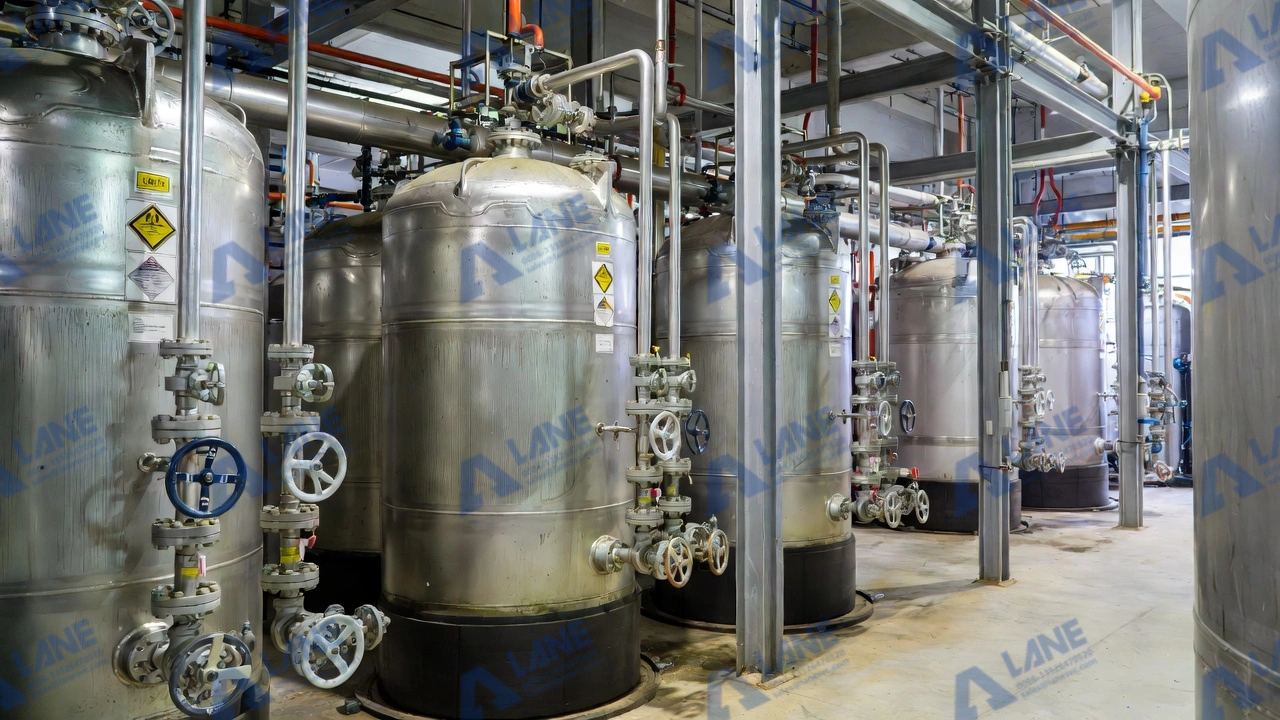
The reaction between phosphate rock and sulfuric acid must be properly controlled.
Uneven mixing, incorrect acid dosing, or unsuitable process conditions may affect available phosphorus and residual free acidity.
The plant configuration should therefore include suitable material feeding, acid metering, mixing, and reaction arrangements.
Curing and Product Maturation
Curing allows the chemical reaction to continue after initial mixing and solidification.
Insufficient curing can affect the chemical characteristics of the finished fertilizer.
For project investors, curing capacity deserves the same attention as mixer and granulator capacity. Otherwise, the curing section may become a bottleneck even when upstream equipment can process more material.
Granulation and Finished Product Quality
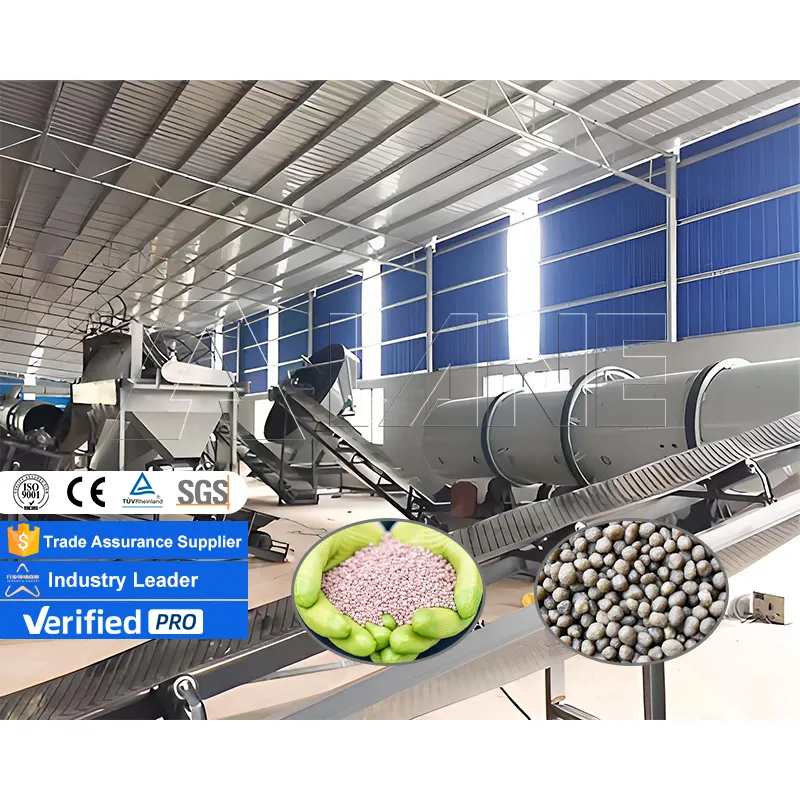
For granular SSP, the granulation system must produce particles with suitable size distribution and physical strength.
Drying and cooling are also important because excessive moisture can cause caking during storage and transportation.
What Equipment Is Needed?
The SSP production configuration may include:
| Equipment | Main Function | Key Considerations |
|---|---|---|
| Ball Mill | Grinds phosphate rock to the required particle size. | Grinding fineness, capacity, and energy consumption. |
| Feeding Conveyor | Transfers raw materials to the processing equipment. | Stable feeding rate and material compatibility. |
| Acidulation Mixer | Mixes phosphate rock with sulfuric acid for the reaction. | Mixing uniformity, corrosion resistance, and acid control. |
| Reaction and Curing System | Provides time and conditions for the chemical reaction to proceed. | Residence time, temperature, and curing space. |
| Crusher | Breaks up hardened or oversized SSP material. | Discharge size, throughput, and wear resistance. |
| Granulator | Forms SSP powder into granules when granular products are required. | Granule size, strength, and production capacity. |
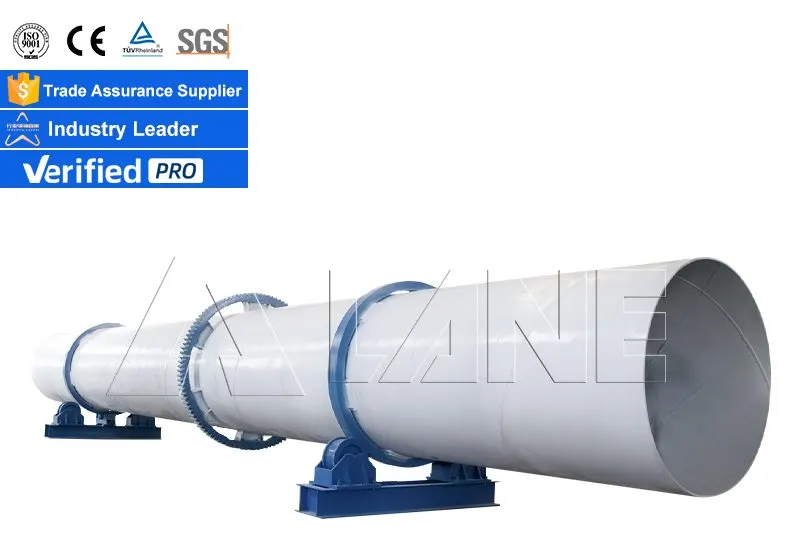
| Dryer and Cooler | Controls product moisture and temperature. | Heat control, moisture target, and energy efficiency. |
| Vibrating Screen | Separates qualified granules from fine and oversized particles. | Screen accuracy and recycling arrangement. |
| Scrubber or Spray Tower | Treats process exhaust gas and helps control emissions. | Gas volume, treatment efficiency, and corrosion resistance. |
| Packing Machine | Weighs and packs finished SSP fertilizer. | Packing accuracy, bag size, and packaging speed. |
The final equipment list depends on whether the plant produces powder SSP or granular SSP, the raw material characteristics, and the selected process technology.
The SSP production process and equipment page provides an overview of two production approaches: the dilute-acid rock powder method and the concentrated-acid slurry method.
The SSP fertilizer equipment catalogue also lists machinery such as ball mills, double roller granulators, drum cooling and drying equipment, conveyors, and screening machines.
For procurement teams, these are useful starting points, but a machine list should never replace a complete process design.
9. What Are the Main Investment Risks When Building a Phosphorus Fertilizer Plant?
For manufacturers considering an SSP project, the investment decision should be based on product demand, raw material economics, process requirements, and operating costs.
Several risks are frequently underestimated.
Raw material variability: Different phosphate rock sources can have different P₂O₅ concentrations, reactivity, and impurity levels. This affects acid consumption and final product quality.
Acid supply costs: Sulfuric acid availability and transportation can significantly influence operating expenses, particularly when the factory depends on external suppliers.
Curing storage requirements: An insufficient curing area can restrict the amount of material that can be processed and sold.
Environmental treatment: SSP manufacturing may generate fluoride-containing process gases and dust. Appropriate extraction and treatment systems should be incorporated into the original engineering design.
Finished-product handling: Granular fertilizer requires suitable drying, cooling, screening, storage, and packaging systems. Omitting these requirements from the initial budget can create additional investment after installation.
Before accepting a supplier’s quotation, buyers should request:
-
A process flow diagram.
-
Equipment specifications and material-of-construction details.
-
Guaranteed production capacity and the conditions behind it.
-
Raw material and utility consumption calculations.
-
Product quality targets.
-
Environmental treatment arrangements.
-
Installation, commissioning, and spare-parts support.
A lower equipment quotation does not necessarily mean a lower-cost project. The more important figure is the total cost of producing a consistent, saleable fertilizer product.
10. FAQ: Common Questions About Phosphorus Deficiency in Plants
1. What are the first signs of phosphorus deficiency in plants?
Purple or reddish discoloration on older leaves and slow plant growth are common signs. However, symptoms vary by plant species, and laboratory testing is recommended before making a fertilizer decision.
2. Which fertilizer is best for phosphorus deficiency?
The best fertilizer depends on soil conditions and crop nutrient requirements. SSP is useful when phosphorus, sulfur, and calcium are needed, while TSP, MAP, and DAP offer more concentrated phosphorus options.
3. Can phosphorus deficiency cause yellow leaves?
Yes, phosphorus deficiency can eventually cause dull or yellowish foliage, although purple or bronze discoloration and stunted growth are more characteristic symptoms. Yellowing alone is not sufficient for diagnosis.
4. Why do plants show phosphorus deficiency in cold weather?
Cold soil temperatures slow root growth and reduce phosphorus uptake. Plants may therefore show deficiency symptoms even when the soil contains adequate phosphorus reserves.
5. Does SSP fertilizer contain enough phosphorus for all crops?
No. SSP commonly contains around 14–20% P₂O₅, but the appropriate fertilizer depends on crop demand, soil-test results, and whether additional sulfur and calcium are required.
6. What is the difference between SSP and TSP fertilizer?
SSP is manufactured using sulfuric acid and contains phosphorus, calcium, and sulfur. TSP is manufactured using phosphoric acid and has a higher P₂O₅ concentration, generally around 44–46%.
7. Can excessive phosphorus fertilizer damage plants?
Excessive phosphorus can contribute to nutrient imbalances, including reduced availability of certain micronutrients such as zinc and iron. It can also increase phosphorus accumulation and environmental runoff risks.
8. What equipment is required to manufacture SSP fertilizer?
A typical SSP plant may require phosphate rock grinding equipment, conveyors, acidulation mixers, reaction and curing systems, crushers, and, for granular production, granulators, dryers, coolers, screens, and packing machines. The exact configuration depends on the required production capacity and product form.
Conclusion: How Should Fertilizer Manufacturers Respond to Phosphorus Deficiency?
Phosphorus deficiency in plants is not always caused by insufficient phosphorus in the soil. Soil pH, temperature, moisture, compaction, and root health can all influence nutrient availability.
For farmers, the priority should be accurate diagnosis, soil testing, and selecting a phosphorus fertilizer that matches crop requirements.
For fertilizer manufacturers and investors, the opportunity lies in producing consistent phosphorus fertilizers with appropriate nutrient concentrations and reliable physical properties.
Before investing in an SSP production line, buyers should prioritize three areas:
-
Product quality: Confirm available P₂O₅, sulfur content, moisture, and particle-size requirements.
-
Production technology: Ensure that raw material preparation, acidulation, curing, and granulation are properly matched.
-
Equipment supplier capability: Evaluate process design, environmental systems, installation support, and long-term maintenance.
At LANE Machinery, we provide fertilizer production equipment and customized production line solutions for different manufacturing requirements.
If you are planning to manufacture Single Superphosphate or expand your existing phosphorus fertilizer production capacity, visit our SSP Fertilizer Production Line to explore equipment and processing solutions.
You can also visit LANE Machinery or ALANE Fertilizer Equipment to learn more about our fertilizer machinery capabilities.
Contact our technical team to discuss your raw materials, target fertilizer grade, production capacity, and equipment configuration before starting your project.