Single Superphosphate Granulator: Selection and Buying Guide
- 2026-11-17
What Does a Single Superphosphate Granulator Actually Do?
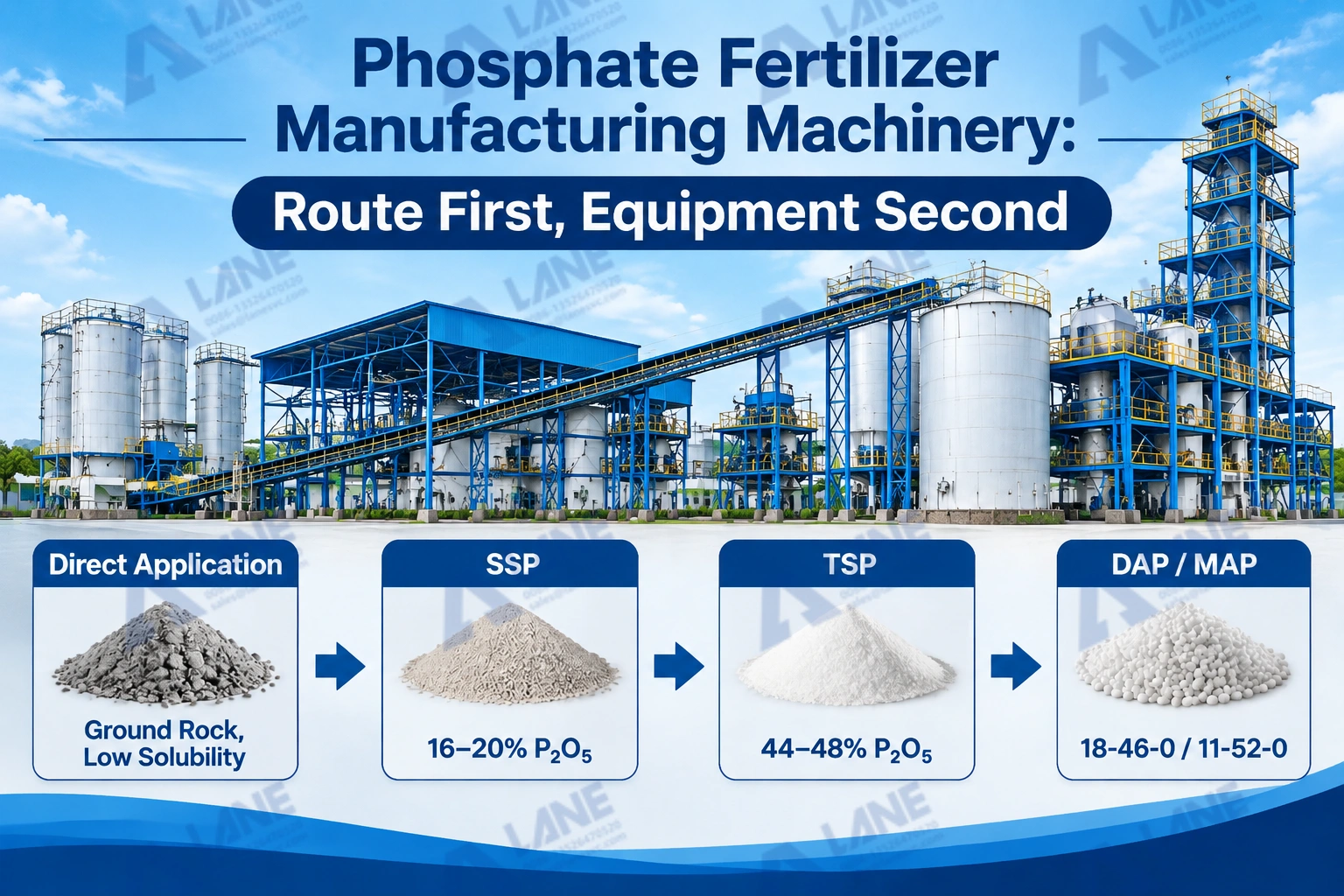
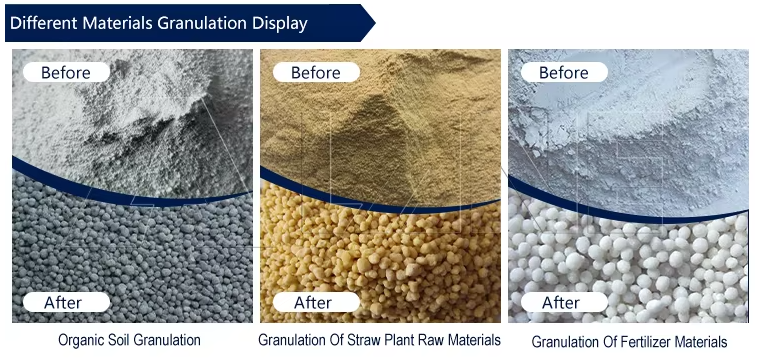
A Single Superphosphate Granulator converts conditioned single superphosphate powder into granular single superphosphate, commonly called GSSP. It is a finishing-stage machine: it does not replace the acidulation mixer, den or curing area that produce SSP in the first place. This distinction matters when comparing quotations. A supplier quoting only a granulator is not necessarily quoting a complete granular SSP section.
For fertilizer plant owners, the commercial reason to granulate is usually handling. Powdered SSP can create dust, cake during storage and behave poorly in bulk blending with other granular fertilizers. Granulation can improve handling only when size, strength and moisture meet the buyer’s specification.
The right Single Superphosphate Granulator is therefore not simply the model with the highest advertised throughput. It is the machine that can process the plant’s actual cured SSP powder and deliver saleable granules at a stable rate. In practical terms, a Single Superphosphate Granulator must be judged by the quality of its finished product, not by its nameplate alone.
Which Granulation Route Should You Compare Before Buying?
There is no single granulation method that suits every SSP powder or every market. The best Single Superphosphate Granulator depends on the physical behavior of the feed and the product specification the buyer needs to meet. The main routes to evaluate are wet agglomeration in a rotary drum or disc, and dry compaction with a double roller press. Their suitability depends on feed properties, product shape, energy availability and the required production scale. These factors should be reviewed before a Single Superphosphate Granulator is selected.
| Granulation route | How particles are formed | When it is worth evaluating | Main trade-off |
|---|---|---|---|
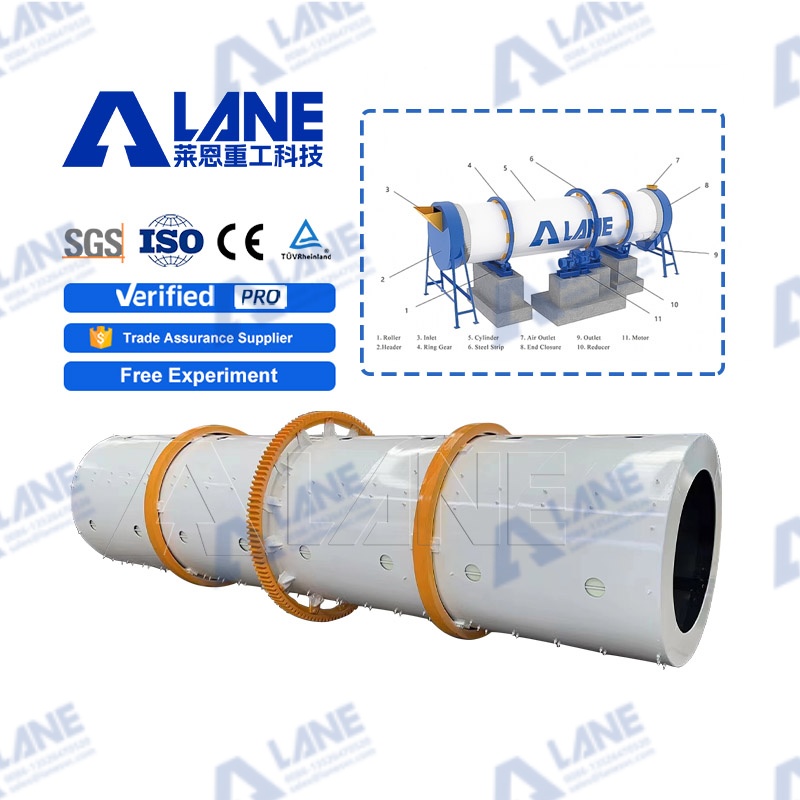
| Rotary drum granulator | Tumbling, controlled liquid addition and particle growth | Continuous production where a drum-based wet process fits the target output | Usually needs drying and cooling; recycle load must be managed |
| Disc granulator | Rolling and layering on an inclined rotating pan | Projects that value visual control and adjustment of granule growth | Feed and liquid distribution need close attention; output is model- and material-dependent |
| Double roller granulator | Mechanical compression between counter-rotating rollers | Dry or low-moisture powder that can be compacted into a stable product | Granules are formed by compaction and may need crushing and screening; roller wear must be considered |
A drum and a disc both use agglomeration but create different operating conditions. A roller press instead compacts powder rather than growing wet nuclei.
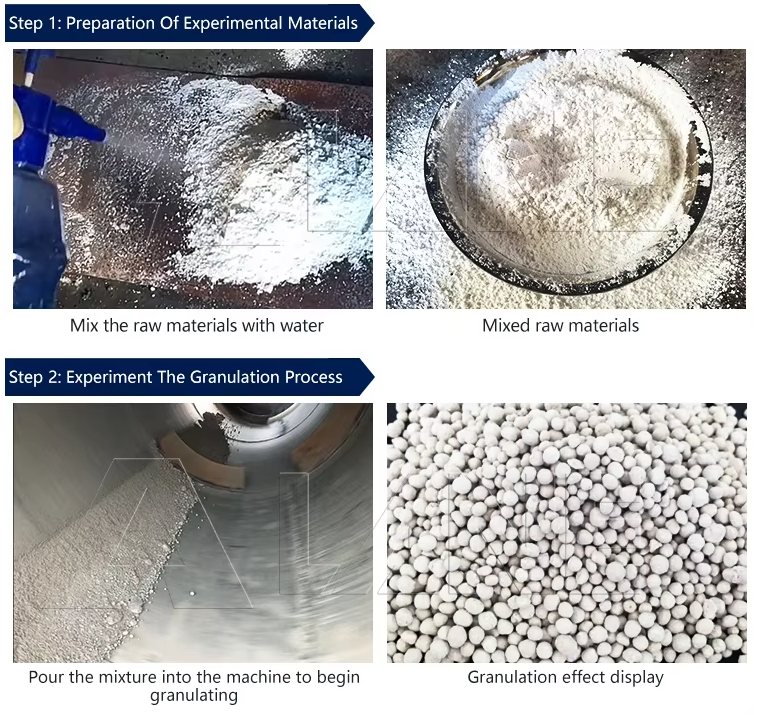
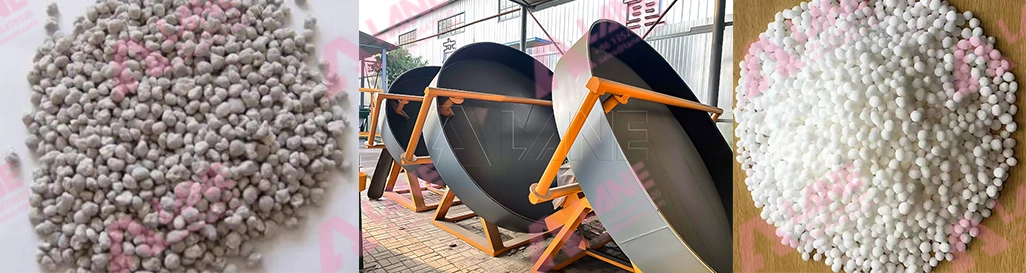
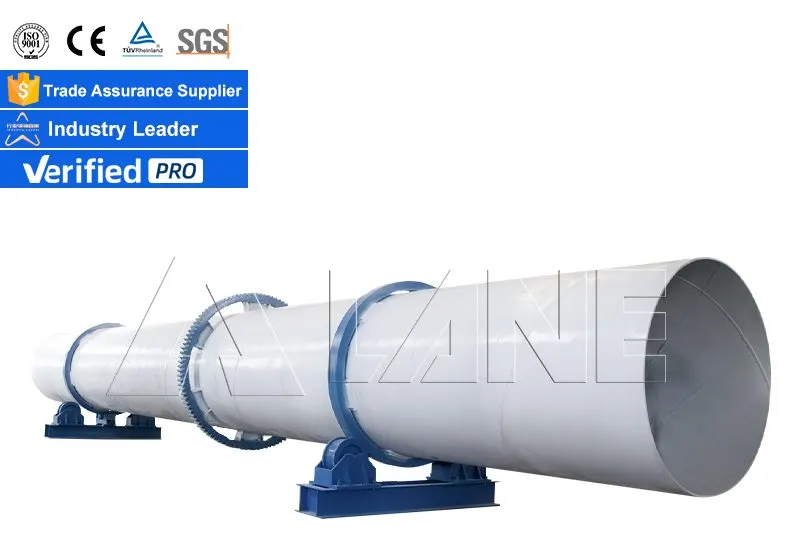
LANE’s product range includes a disc granulator, a rotary drum granulator, and a double roller granulator. Their presence in the catalogue does not mean every model is automatically suitable for SSP. The actual feed must be tested before a process route is confirmed. For a closer look at disc operation, see the existing Disc Granulator for SSP Powder guide. This is particularly important when a Single Superphosphate Granulator is expected to handle powder from a new rock source or an existing plant with variable curing conditions. The same operating settings should not be assumed to suit every batch.

What Feed Information Does the Supplier Need?
Do not send a supplier only the words “SSP powder” and ask for a machine quotation. Cured SSP from different phosphate rocks and production conditions can behave differently. FerTech Inform’s technical overview of SSP notes that phosphate-rock reactivity and composition affect SSP production; the same practical lesson applies when preparing the granulation feed.
Before choosing a Single Superphosphate Granulator, provide:
- Feed chemistry: rock source, available and water-soluble P₂O₅, free acid and known impurities.
- Moisture and temperature: measured values at the granulator feed point.
- Particle size: proportions of fines, coarse particles and lumps.
- Feed consistency: continuous or batch supply and variation between runs.
- Target product: size distribution, final moisture, strength and storage needs.
- Plant conditions: target output, utilities, space and existing auxiliary capacity.
A supplier may recommend a laboratory or pilot granulation trial if feed data is incomplete. The results help determine whether the proposed Single Superphosphate Granulator can form stable particles without creating an excessive recycle load. This evidence is more useful than a generic capacity claim. That is not an unnecessary delay. It is a way to avoid buying a machine around assumptions that have not been tested.
Which Machine Specifications Should Be Written Into the RFQ?
A useful request for quotation should describe the material and the finished product, not just ask for motor power and drum diameter. This gives the supplier a defensible basis for sizing the Single Superphosphate Granulator and its auxiliaries. The table below lists the points buyers should define or ask the supplier to confirm. These are specification fields, not universal SSP operating values. Buyers should use them to compare each proposal on the same basis.
| RFQ item | What the buyer should provide or request | Why it matters |
|---|---|---|
| Feed capacity | State whether the figure means fresh SSP powder or total circulating feed | Recycle material can make machine throughput look higher than saleable output |
| Finished capacity | Require a guaranteed rate of on-spec granules | This is the quantity the plant can actually sell |
| Granule size | State the target size band and permitted undersize/oversize percentages | A nominal size alone does not define product consistency |
| Product strength | Agree on a crush-strength or handling test method | Granules must survive conveying, bagging and transport |
| Moisture | Define the sampling point, test method and acceptance limit | Moisture affects caking and storage stability |
| Drive and adjustment | Request motor rating, speed-control method and available adjustment range | These details help evaluate operating flexibility and maintenance |
| Wear parts | Identify liners, scrapers, rollers, screens and expected replacement procedures | Wear can change product quality and interrupt production |
| Test and guarantee | Define raw material, test duration, sampling method and acceptance criteria | A performance promise is meaningful only when test conditions are clear |
LANE’s general disc-granulator catalogue lists model capacities from 0.05 to 10 t/h. This is a catalogue range, not an SSP-specific performance guarantee; confirm the selected model with a test using the intended feed. Do not insert generic moisture, strength or capacity limits into the RFQ without confirming them against the SSP grade and selected process.
How Should the Granulator Be Matched With the Rest of the Line?
A Single Superphosphate Granulator cannot be evaluated in isolation. Its effective capacity depends on whether upstream feeding and downstream equipment can keep pace with it. The feed system must deliver material steadily; the downstream section must handle the granulator discharge; and the screening circuit must return off-size material without overloading the process.
Wet granulation may need a feeder, granulator, dryer, cooler, screen, oversize crusher and return conveyors. Dry compaction has a different downstream scope and may avoid the same drying duty.
LANE’s SSP site lists supporting equipment such as a drum cooling dryer and a drum screening machine. These links are useful starting points for reviewing the auxiliary equipment, but their inclusion on the site should not be read as a pre-engineered package for every SSP project.
One point deserves special attention: ask the supplier to state both fresh-feed capacity and qualified finished-product capacity. If fines and oversize material are recycled, the granulator may process much more material internally than the tonnage leaving the plant as saleable product. A quote that gives only one capacity figure leaves room for misunderstanding. Every equipment offer should state the same capacity basis.
What Should You Check During a Granulation Trial and Acceptance Test?
A trial should use the customer’s own cured SSP powder wherever possible. It shows how the selected Single Superphosphate Granulator handles the real feed. A test with another fertilizer or a different SSP feed may demonstrate that a machine rotates and forms particles, but it does not prove that the proposed machine will meet the customer’s product specification.
For a Single Superphosphate Granulator, record at least:
- Feed identity, batch details, moisture, temperature and particle-size distribution.
- Fresh feed rate and any liquid or additive rate used during the test.
- Machine settings and the duration of stable operation.
- Granule-size distribution at discharge and after screening.
- Final moisture and the agreed granule-strength result after any required drying and cooling.
- The quantity of fines and oversize material returned to the process.
- The final rate of product that meets the agreed specification.
The 2017 study on SSP drum granulation examined drum speed, liquid-phase ratio, granulation time and drum hold-up. Its key purchasing lesson is that the conditions producing the highest granulation efficiency did not necessarily produce the hardest granules. Buyers should therefore assess yield and strength together rather than treating one as a substitute for the other.
What Costs Are Easy to Miss When Buying a Single Superphosphate Granulator?
The purchase price is only one part of the project cost. A low-priced Single Superphosphate Granulator may need costly auxiliaries or create a high recycle load. Check these items:
- Feed preparation: lump breaking, screening, storage hoppers and metering may be needed to stabilize the feed.
- Drying and cooling: wet granulation can add fuel or power demand, plus fans, ducts and exhaust treatment.
- Recycle handling: high fines or oversize fractions increase internal circulation and can reduce net output.
- Wear and maintenance: screens, liners, scrapers, rollers, bearings and drive components need inspection and replacement planning.
- Dust collection and transfer: conveyors, elevators and screening points may require enclosure and dust extraction.
- Installation and commissioning: foundations, electrical work, access platforms, commissioning materials and operator training should be included in the project scope.
When comparing offers, ask each supplier to list inclusions and exclusions against the same process boundary. Otherwise, a low equipment price may simply reflect a shorter supply scope.
FAQ: What Do Buyers Commonly Ask About a Single Superphosphate Granulator?
1. Can a Single Superphosphate Granulator process all types of SSP powder?
No. Feed moisture, particle size, free acid, temperature and agglomeration behavior can affect the result. These properties determine whether the selected granulator can make granules that survive handling. A test with the actual cured powder is the safest basis for confirming suitability.
2. Is a rotary drum or disc granulator better for SSP?
Neither is universally better. The correct choice is the one that matches the buyer’s capacity, feed and finished-product targets. A second granulation route may be worth testing if the feed or market specification changes. A rotary drum and a disc use different forms of wet agglomeration; the choice depends on the required output, feed behavior, product specification and downstream equipment.
3. Can a double roller granulator be used for SSP?
It may be considered if the cured SSP powder has suitable compaction behavior. Do not assume suitability from the machine category alone; verify the product strength, particle shape, fines generation and roller wear through testing.
4. Does SSP granulation always require a dryer?
No. A dryer is associated with routes that introduce moisture and require it to be removed to meet the finished-product specification. A dry compaction route may have a different equipment requirement.
5. What granule size should buyers specify?
Specify the size range required by the target market or blending customer, together with the permitted percentage outside that range. Do not rely on a single nominal diameter.
6. How is the capacity of a Single Superphosphate Granulator determined?
Capacity depends on the machine, feed characteristics, operating settings and the connected screening and recycle system. The equipment should be guaranteed on saleable output, not just internal throughput. Ask for both fresh-feed rate and on-spec finished-product output under stated test conditions.
7. Can a granulator be installed in an existing SSP powder plant?
Potentially, but the available space, powder transfer route, feed condition, electrical supply and downstream drying, cooling and screening capacity must be checked before the equipment is selected.
8. What should be included in the supplier’s performance guarantee?
The guarantee should identify the tested feed, operating period, on-spec product rate, size distribution, moisture, strength test and recycle conditions. If these are not defined, suppliers and buyers may interpret “capacity” differently.
Choose a Single Superphosphate Granulator Around the Product You Need to Sell
The practical way to select a Single Superphosphate Granulator is to start with cured powder and the finished-product specification, then size the route and auxiliaries around measured performance. A properly specified machine needs measurable acceptance criteria. A catalogue model, motor rating or advertised capacity cannot replace a material trial and a clear acceptance test.
For an existing SSP plant or a new granular SSP project, review LANE’s SSP fertilizer equipment and discuss the required granulator, drying, cooling and screening configuration as one connected section. For broader fertilizer machinery information, visit Fertilizer Industry Leader or LANE Machinery.
For more details, please feel free to contact us.
Henan Lane Heavy Industry Machinery Technology Co., Ltd.
Email: sales@lanesvc.com
Contact number: +86 13526470520
WhatsApp: +86 13526470520