SSP Mixing Machine: Buyer’s Selection Guide
- 2026-11-16
An SSP mixing machine must be selected for the material and process duty, not simply because a quotation contains the word “mixer.” In single superphosphate (SSP) production, mixing can mean two different jobs: blending dry fertilizer powders, or bringing finely ground phosphate rock into controlled contact with sulfuric acid during acidulation. These duties need different designs, materials, and safety systems. For plant owners and purchasing managers, the first decision is to define what must be mixed before comparing prices. A buyer who specifies the wrong SSP mixing machine can end up with a unit that runs well in a factory trial but cannot perform the required process duty.
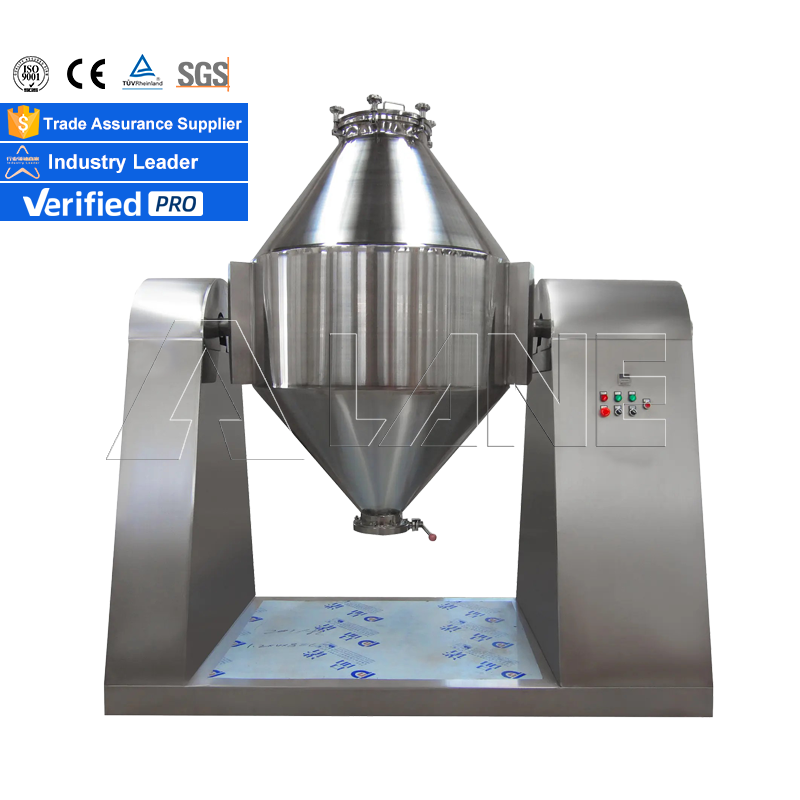
LANE’s SSP website lists a Stainless Steel Double Cone Mixer. It is a product worth reviewing for compatible powder or granule blending, but the published page does not provide enough process data to confirm it as an acidulation reactor. This guide explains the distinction and the checks buyers should complete before ordering an SSP mixing machine.
What Does an SSP Mixing Machine Do in Fertilizer Production?
The term covers more than one operation. In acidulation, ground phosphate rock is mixed with sulfuric acid so the SSP-forming reaction can begin uniformly. In a separate dry-blending duty, a mixer may combine finished SSP powder with compatible dry materials or additives, if the product specification requires it. These jobs are not interchangeable, and a quotation for an SSP mixing machine should state the intended duty in plain technical terms.
An acidulation mixer must distribute acid quickly while handling a hot, reactive slurry and fluoride-bearing process gases. A dry powder blender is designed around solids flow, batch uniformity, filling, discharge, and cleanability. A stainless-steel vessel suitable for powder blending is not automatically suitable for direct sulfuric-acid contact. Buyers searching for an SSP mixing machine should settle this distinction at the start. It is the first filter for every supplier proposal.
Which Mixer Types Are Used in SSP Production?
There is no single mixer design for every SSP plant. Technical references describe batch pan mixers and continuous cone mixers; some continuous processes also use a pugmill for additional mixing after the initial acid-rock contact.
| Mixer Type | Typical Duty | Buyer’s Main Consideration |
|---|---|---|
| Pan mixer | Batch acidulation in some traditional layouts | Batch size, cycle time and slurry containment |
| Cone mixer / acidulator | Batch or continuous acid-rock mixing, depending on design | Acid injection, residence time, heat and corrosion resistance |
| Pugmill / paddle mixer | Additional mixing and conveying of acid-rock slurry | Shaft wear, torque, residence time and cleanout |
| Double cone mixer | Batch blending of compatible dry powders or granules | Batch uniformity, fill ratio, discharge and material compatibility |
UNIDO’s phosphate fertilizer process publication describes phosphate rock mixed with sulfuric acid in a specially designed vessel, including batch pan mixing and continuous TVA cone mixing. FerTech Inform also describes cone mixers and paddle mixers (pugmills) in continuous SSP production. Therefore, the term SSP mixing machine should not be used as if it identifies one universal machine. The equipment name alone is not a design specification.
Is a Stainless Steel Double Cone Mixer Suitable for SSP Acidulation?
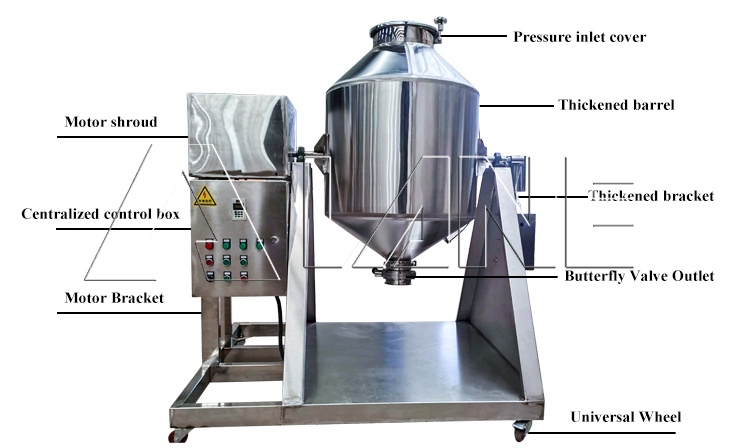
Not automatically. A double cone mixer is generally associated with batch blending of dry powders or granules through the tumbling action of a rotating vessel. SSP acidulation is different: sulfuric acid contacts finely ground phosphate rock, the reaction releases heat, and the mixture quickly becomes a reactive mass.
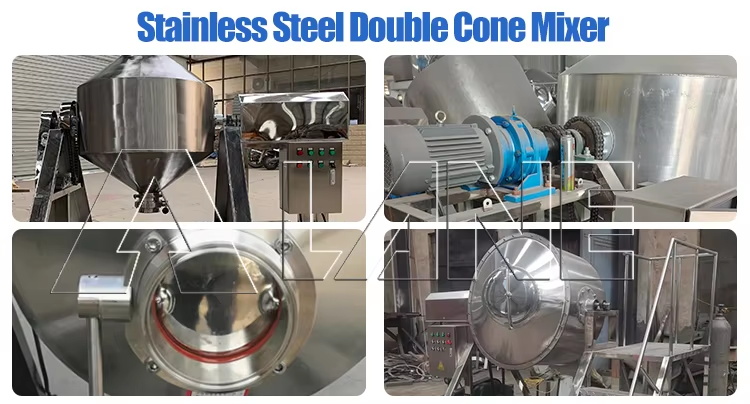
LANE’s Stainless Steel Double Cone Mixer page lists fertilizer among its application industries, but it does not state an SSP acidulation duty, sulfuric-acid concentration, wetted-material specification, operating temperature, or gas-handling arrangement. It should be described as a listed mixing product, not as a proven acidulation reactor. Ask whether the offered SSP mixing machine is intended for dry product blending, additive homogenization, or a different operation.
There is also a detail to clarify before quoting. The page title describes a double-cone vessel, while parts of the description refer to two synchronized spiral shafts and blades. Those are different mixing mechanisms. Ask the supplier for a general arrangement drawing, an internal section drawing, and written confirmation of the actual mixing principle. This is essential when the SSP mixing machine page uses terminology that may describe more than one design.
What Specifications Should Buyers Check Before Ordering?
A useful quotation identifies the material, batch or continuous duty, operating conditions, and acceptance criteria. “Stainless steel” and “uniform mixing” are not complete specifications. The alloy grade, wetted parts, seals, shaft arrangement, and cleaning method all affect whether an SSP mixing machine is suitable.
| Specification to Request | Why It Matters | Evidence to Ask the Supplier For |
|---|---|---|
| Material and product form | Powder, granules, slurry and acid-rock paste behave differently | Material analysis, moisture and sample test |
| Working volume and batch size | Nominal vessel volume is not usable volume | Recommended fill ratio and net batch capacity |
| Mixing mechanism | Determines material circulation and discharge | General arrangement and internal drawings |
| Contact materials | Corrosion and abrasion depend on process chemistry | Grades for vessel, shaft, blades, liner, seals and fasteners |
| Drive and power | Must handle bulk density and mixing resistance | Motor, reducer, torque and speed details |
| Sealing and dust control | Limits leakage, contamination and housekeeping problems | Seal design, dust connection and inspection access |
| Cleaning and discharge | Residue can contaminate batches or cause buildup | Discharge test and cleanout procedure |
| Controls and interlocks | Supports repeatability and safer maintenance | Control sequence, overload protection and emergency stop |
For dry blending, request a trial using the actual SSP powder or granules and intended additives. Define batch size, mixing time, sampling locations, and acceptable blend variation. For acidulation, the supplier must engineer acid feed, corrosion-resistant wetted parts, reaction heat, ventilation, and gas scrubbing as part of the process package. These are core design requirements, not optional extras. They should appear in the technical scope for any SSP mixing machine sold for acidulation service.
How Does Mixer Selection Affect the Complete SSP Production Line?
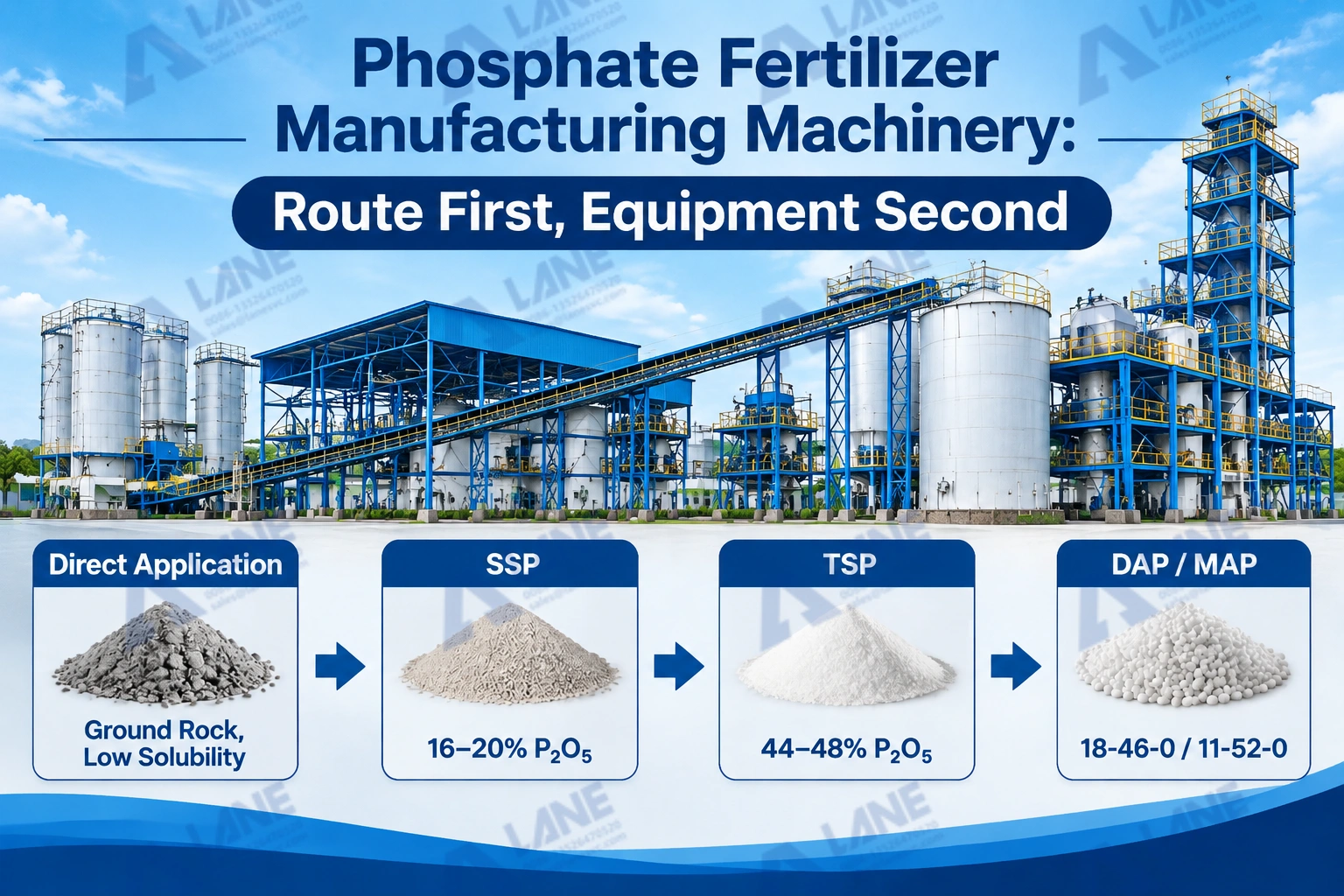
The mixer should be sized as part of the process, not purchased in isolation. LANE’s SSP production line for sale describes a scope from rock grinding and acidulation through curing, granulation, drying, cooling, screening, and packaging. Rock fineness and acid dosing affect the acidulation duty; curing and downstream conditioning determine what material reaches any later blending stage.
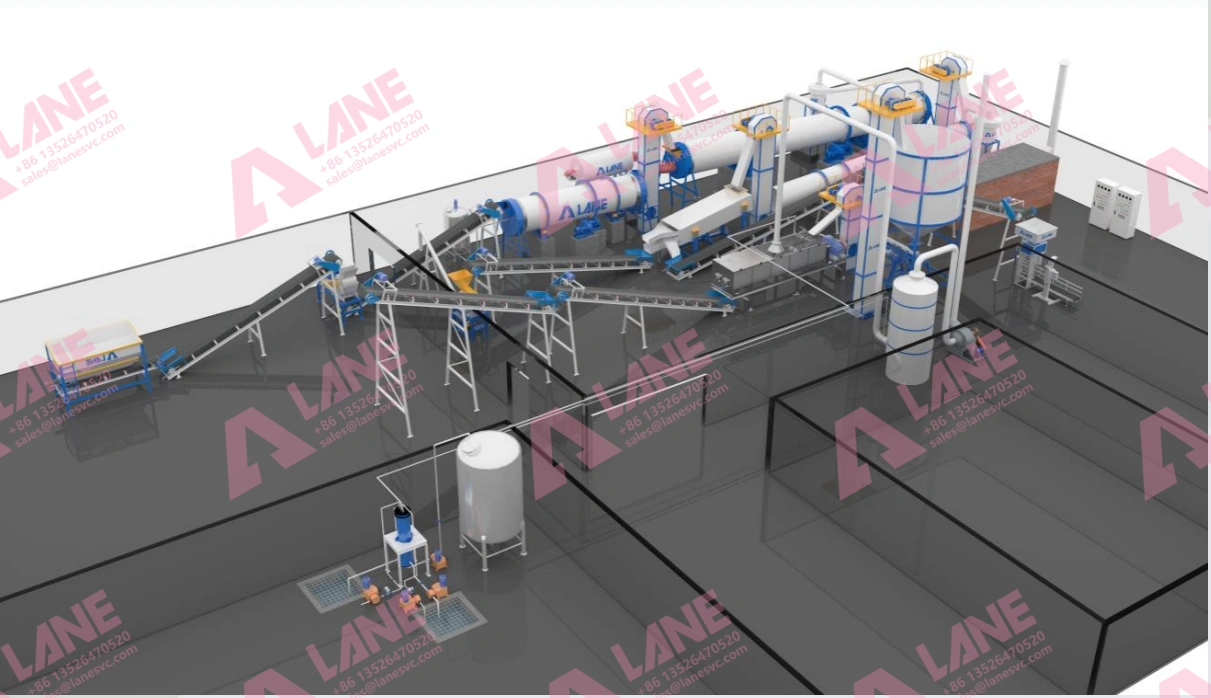
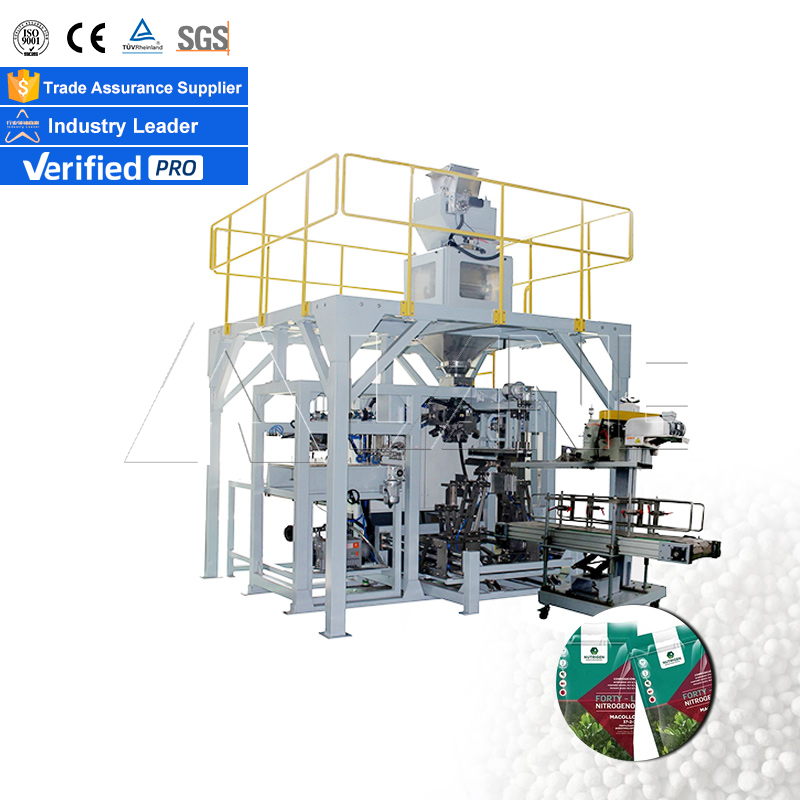
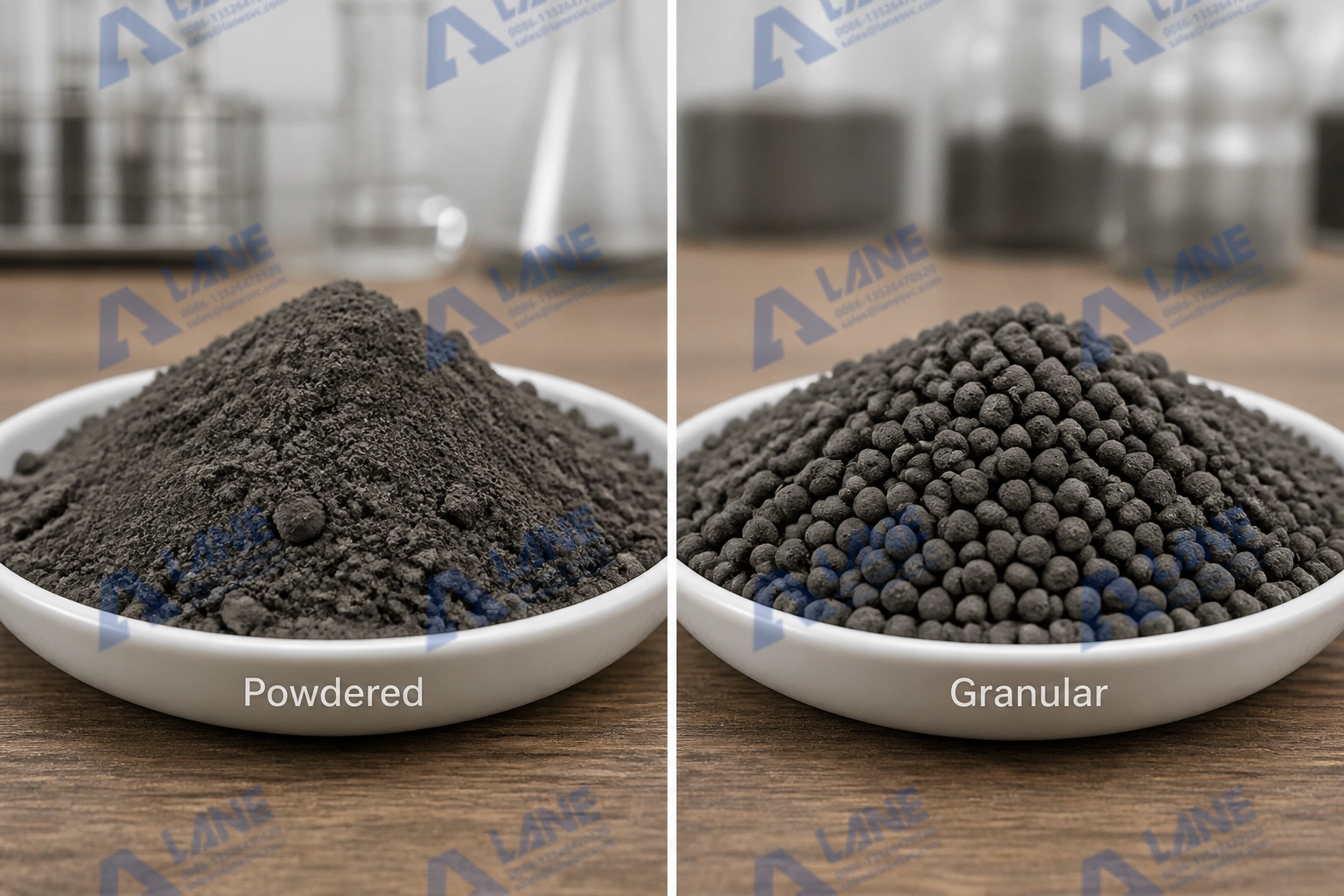
If the plant sells powdered SSP, the finishing arrangement may be simpler. Granular SSP may require crushing or conditioning, granulation, drying, cooling, screening, and recycle equipment. A downstream dry blender must match the actual feed condition and throughput. A poorly sized SSP mixing machine can become a bottleneck between curing, granulation, and packaging. Capacity must be based on actual feed rate and operating hours, not vessel volume alone.
What Are the Common Buying Mistakes?
The most expensive mistake is choosing by machine name rather than duty. “Double cone mixer,” “cone mixer,” and “pugmill” do not describe the same mechanism. In SSP acidulation, a cone mixer may form part of a continuous reaction system; a double-cone blender is commonly a rotating batch vessel for solids. If a product page or quotation uses these terms loosely, ask for drawings and a process description before treating it as an SSP mixing machine suitable for your plant.
Another mistake is treating stainless steel as proof of acid resistance. Obtain the exact alloy grade and confirmation for every wetted component, including nozzles, fasteners, seals, and drains. Acidulation also releases fluoride-bearing gases, so the mixer cannot be evaluated separately from ventilation and scrubbing. The UNIDO phosphate fertilizer process reference and the International Fertiliser Society’s SSP overview explain the process conditions behind this duty.
Do not judge an SSP mixing machine only by motor power or nominal capacity. A larger motor does not guarantee better mixing, and motor power by itself is a poor way to compare one SSP mixing machine with another. Feed characteristics, mixing mechanism, residence time, discharge behavior, and the agreed performance test matter more.
How Should You Test and Accept an SSP Mixing Machine?
For a dry blender, acceptance should use representative material. Agree on batch size, loading sequence, mixing time, sampling plan, discharge time, and cleaning requirements. Take samples from several positions or discharge intervals rather than relying on one sample from the top. The supplier should report the method used to assess uniformity and the result achieved with the buyer’s material.
For an acidulation mixer, define phosphate-rock analysis and fineness, sulfuric-acid concentration and feed rate, target throughput, operating temperature, residence time, discharge condition, and gas-treatment boundary. Performance guarantees must be linked to those feed conditions. A test with an unrelated powder cannot validate an acidulation system or prove that an SSP mixing machine can tolerate the intended acid duty.
Before signing, confirm installation drawings, foundation loads, motor and reducer documentation, spare parts, maintenance access, operator training, and commissioning support. These checks should be included in the purchase specification for the SSP mixing machine. These details determine whether the equipment can be maintained safely over its service life.
FAQ: What Do Buyers Ask About an SSP Mixing Machine?
1. What type of mixer is used for SSP production?
SSP acidulation commonly uses a pan mixer or cone-type mixer, with a pugmill used in some continuous layouts for additional mixing. The choice depends on batch or continuous operation and the process design; not every SSP mixing machine is designed for the acidulation stage.
2. Is a double cone mixer the same as an SSP acidulation mixer?
No. A double cone mixer is generally a batch blender for compatible dry solids, while an acidulation mixer must handle sulfuric acid, reactive slurry, heat, and process fumes.
3. Can stainless steel handle sulfuric acid in SSP production?
It depends on alloy, acid concentration, temperature, impurities, and exposure conditions. Obtain a written materials-compatibility assessment for every wetted component instead of relying on the phrase “stainless steel.”
4. Can one mixer handle SSP powder and granules?
Possibly, but this must be demonstrated with the actual materials. Powder and granules differ in flow, segregation, dust generation, and discharge behavior, so one configuration should not be assumed to suit both.
5. How much capacity should an SSP mixing machine have?
Capacity depends on plant output, batch cycle or residence time, bulk density, and operating schedule. The supplier should size the SSP mixing machine against these operating figures. Ask whether the quoted figure means batch volume, feed rate, or finished-product throughput.
6. What affects the price of an SSP mixer?
The main cost drivers are mixer type, working capacity, material of construction, drive system, sealing, automation, corrosion protection, and installation scope. A low equipment price may exclude essential acid handling or gas treatment.
7. Does the mixer require a dust collector or scrubber?
A dry powder blender may need dust extraction at loading and discharge. An acidulation system requires process ventilation and suitable treatment for fluoride-bearing gases; a simple dust collector is not a substitute for a gas scrubber.
8. What information should I send a supplier for a quotation?
Provide the intended duty, raw-material analysis, particle size, moisture, bulk density, acid concentration if applicable, required output, batch size, operating hours, site conditions, and automation level. State clearly whether the machine is for acidulation or dry blending.
Choose the Mixer by Process Duty, Not by Name
The right SSP mixing machine is designed around the material it handles and the stage it serves. That is the basis for a technically sound purchase. For acidulation, prioritize controlled acid-rock contact, compatible wetted materials, heat and gas management, and a proven process arrangement. For dry blending, focus on batch uniformity, working volume, discharge, cleanability, and repeatable operation.
LANE’s Stainless Steel Double Cone Mixer is the product page to review for the listed double-cone model. For a complete project, compare it with the wider SSP production line solution so the mixer duty is integrated correctly with grinding, acidulation, curing, and finishing equipment.
For more details, please feel free to contact us.
Henan Lane Heavy Industry Machinery Technology Co., Ltd.
Email: sales@lanesvc.com
Contact number: +86 13526470520
WhatsApp: +86 13526470520