How to Budget for a Single Super Phosphate Plant Setup Cost: Equipment, Labor & ROI Guide
- 2026-04-24
Getting into SSP production isn’t a decision you make lightly. The capital involved, the variables in play, the regional differences in raw material costs — it adds up fast. And yet, in my experience working alongside fertilizer producers across Africa, South Asia, and the Middle East, the biggest financial mistakes almost never come from bad equipment choices. They come from incomplete budgets. Producers underestimate one line item, and suddenly the whole project is stalled six months in. I’ve seen it happen repeatedly — someone locks in a single super phosphate plant setup cost figure from a brochure, and then reality hits.
So, let’s talk about what a real single super phosphate plant setup cost actually looks like — not the optimistic brochure number, but the honest, operational breakdown. Whether you’re evaluating a greenfield facility or expanding an existing SSP fertilizer production line, the cost structure follows the same fundamental logic.
Breaking Down the Core Capital Expenditure
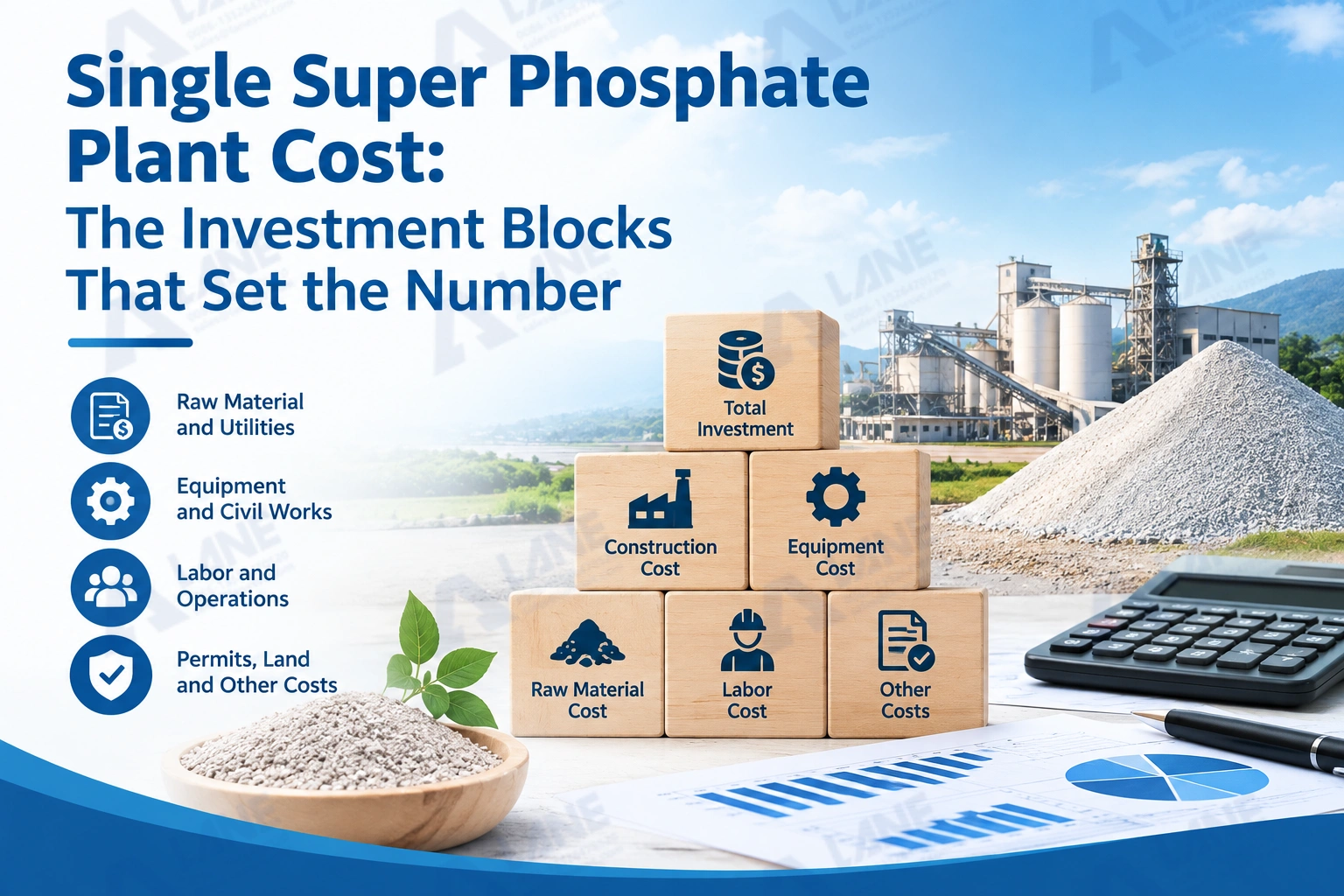
The first thing to understand is that the single super phosphate plant setup cost isn’t one number. It’s a stack of interdependent costs that shift depending on your production capacity, your location, and your existing infrastructure.
For a small-to-mid-scale operation targeting 5–20 tons per hour output, total investment typically falls in the range of $500,000 to $2.5 million USD. Larger continuous-production facilities can push well beyond that. Here’s how that budget usually breaks down.
Major Equipment Costs
This is where the bulk of your capital goes — and rightfully so. The SSP fertilizer production line relies on a specific sequence of machinery, and cutting corners here creates downstream problems that cost far more to fix than they saved upfront.
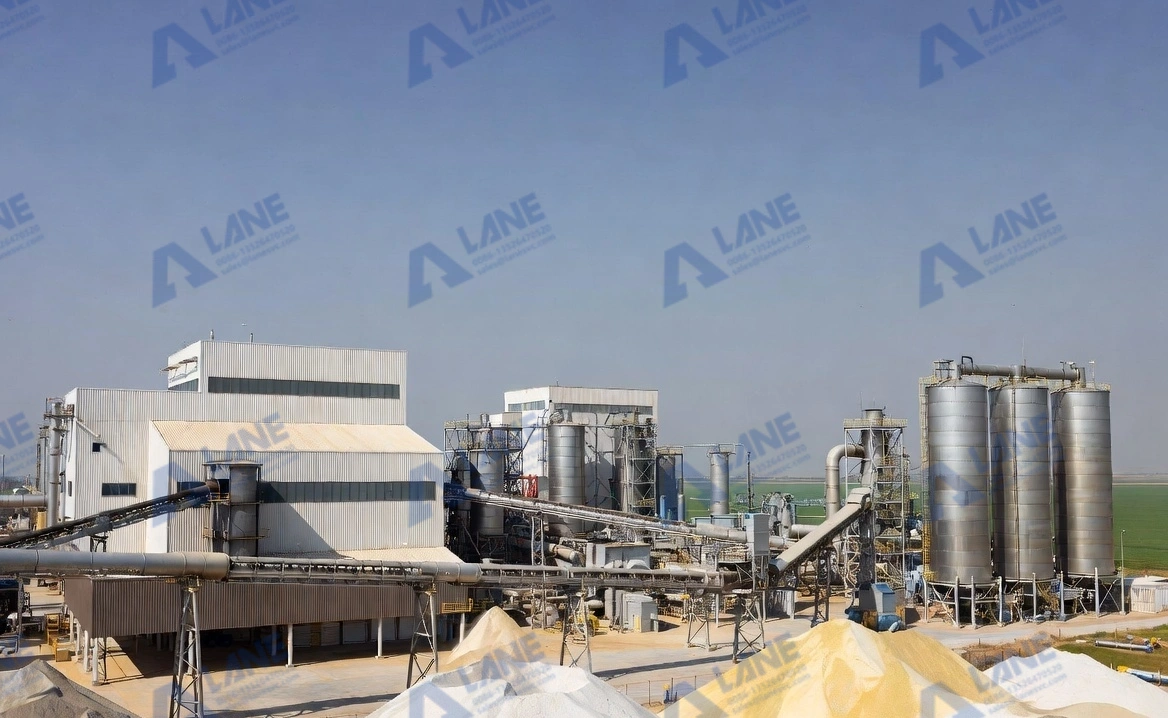
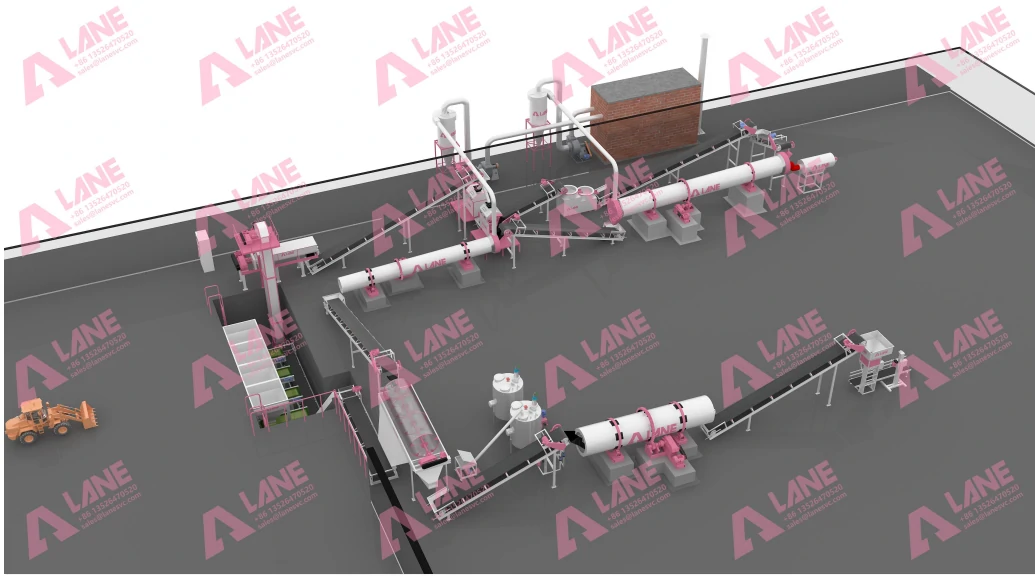
Core equipment in a standard SSP fertilizer production line includes:
- Phosphate rock grinding mill— reduces raw phosphate rock to the particle size required for efficient acidulation, typically a ball mill or Raymond mill
- Acidulation reactor— where phosphoric acid reacts with ground phosphate rock to form the SSP slurry, the heart of the chemical process
- Belt conveyor system— transports material between processing stages; often underestimated in cost planning
- Rotary drum granulator— converts the cured SSP powder into uniform, marketable granules, critical for bulk handling and retail packaging
- Rotary dryer and cooler — reduce moisture content post-granulation to meet storage and bagging specifications and bring product temperature down before final screening and packaging.
- Vibrating screen— separates on-spec granules from oversized or undersized material for recycling
- Dust collector system— essential for regulatory compliance and worker safety; frequently overlooked in initial budget projections
- Packaging machine— automated bagging for 25kg or 50kg bags depending on target market
From what I’ve seen in the field, equipment procurement often accounts for 45–60% of total project cost. That said, sourcing matters enormously. Manufacturers like LANE, who specialize in large-scale fertilizer production equipment, can offer integrated SSP fertilizer production line packages that reduce procurement complexity and often lower total equipment cost compared to piecing together machines from multiple vendors.
Civil Works, Installation, and Site Preparation
People routinely underestimate this category. You need a proper acidulation chamber, adequate acid storage, fume extraction infrastructure, chemical-resistant flooring — none of which comes cheap. In regions where construction labor is inexpensive, civil works might run 15–20% of total project cost. In higher-cost markets, it can push to 25%.
Accurately estimating the single super phosphate plant setup cost at this stage requires detailed site assessment — not ballpark guesses. Installation and commissioning? Add another 8–12% on top of equipment cost. And if you’re importing equipment internationally, factor in customs clearance, freight insurance, and potential import duties. Depending on the country, this alone can add 5–15% to your equipment line item.
Labor, Training, and Operational Readiness
A lot of investors nail the equipment budget and then run short on operational costs. You need trained chemical process operators, a maintenance team with knowledge of rotating equipment, and quality control personnel familiar with an SSP fertilizer production line environment. In many developing markets, skilled labor for SSP production specifically is limited, which means either hiring experienced staff at a premium or budgeting for structured training programs.
To be honest, training is rarely a line item in first-draft budgets. It should be. Budget a minimum of three to six months of overlap between incoming and outgoing staff if you’re upgrading an existing facility, or a full commissioning period with technical support if you’re building new.
ROI Expectations: What the Numbers Actually Look Like
Here’s where the conversation gets interesting. The ROI on a single super phosphate plant setup cost is genuinely compelling in markets with strong agricultural demand and constrained local supply — which describes a significant portion of Sub-Saharan Africa and the broader MENA region right now.
Producers who plan the single super phosphate plant setup cost carefully — accounting for all civil, equipment, and operational variables — tend to see payback periods of three to six years for mid-scale facilities, depending on output capacity, local phosphate rock availability, and prevailing fertilizer market prices. Operations running at or above 80% capacity utilization, with good raw material contracts in place, frequently recover initial investment within four years.
Margin structure in SSP production is relatively predictable compared to complex NPK blending operations. Input costs are dominated by phosphate rock and sulfuric acid; both have reasonably transparent global pricing. That predictability, you know, makes financial modeling more reliable — which matters when you’re presenting to investors or securing project financing.
Summary and Next Steps
Budgeting for a single super phosphate plant setup cost requires more than a line-item equipment quote. It demands honest accounting across civil works, utilities, installation, labor development, and working capital reserves. Miss any of these, and the project stalls. Get them right, and the economics of SSP production are genuinely strong in the right market conditions.
Anyone serious about getting the single super phosphate plant setup cost right should start with target capacity and work backward from there. Talk to integrated equipment suppliers who can walk you through full production line configurations — and make sure whoever you engage has actual installation and commissioning experience in your target region, not just export sales experience.
Frequently Asked Questions
What is the minimum investment required for a small-scale SSP fertilizer plant?
A small-scale SSP facility producing around 3–5 tons per hour can be established for approximately $300,000–$600,000 USD depending on equipment sourcing, site conditions, and local construction costs. This typically covers basic equipment, civil works, and initial working capital.
How long does it take to set up a single super phosphate plant from planning to production?
For a new greenfield facility, expect 12–18 months from confirmed equipment order to first production. This includes equipment manufacturing lead time (typically 3–5 months), shipping, civil construction, installation, commissioning, and operator training.
What raw materials are required for SSP production and how do they affect setup cost?
SSP production requires phosphate rock (28–32% P₂O₅ grade preferred) and sulfuric acid. Raw material proximity significantly shapes the single super phosphate plant setup cost — regions with local phosphate rock availability have a clear financial advantage. If sulfuric acid must be purchased externally, this represents a major recurring operational cost and should be factored into site selection decisions from the outset.
Does plant location affect the overall single super phosphate plant setup cost significantly?
Yes, substantially. Labor costs, construction material availability, import duties on equipment, utility infrastructure (power, water), and logistics access all vary widely by country and region. A plant in Ethiopia will have a meaningfully different cost profile than an equivalent facility in Indonesia or Morocco, even with identical equipment specifications.
What is the typical production capacity of a commercial SSP fertilizer production line?
A commercial SSP fertilizer production line ranges from 3 tons per hour for small regional producers to 50+ tons per hour for large industrial facilities. Most new entrants in developing markets start in the 10–20 ton per hour range, which provides viable economics without excessive upfront capital exposure.
What ongoing costs should be budgeted beyond the initial plant setup?
Beyond the initial single super phosphate plant setup cost, key recurring operational costs include phosphate rock procurement, sulfuric acid supply, energy (particularly for grinding and drying operations), labor, routine maintenance and spare parts, environmental compliance, and packaging materials. Working capital to cover 60–90 days of raw material inventory is also a standard operational finance requirement for stable production continuity.
For more details, please feel free to contact us.
Henan Lane Heavy Industry Machinery Technology Co., Ltd.
Email: sales@lanesvc.com
Contact number: +86 13526470520
Whatsapp: +86 13526470520