Crusher for Phosphate Rock: Selection & Buying Guide
- 2026-11-20
Why Does Crusher Selection Matter in Phosphate Rock Processing?
A crusher for phosphate rock is the first size-reduction unit in many phosphate fertilizer plants. It reduces run-of-mine ore into a more manageable feed for secondary crushing or fine grinding. The objective is not simply to make the rock smaller. It is to deliver a stable feed size without creating excessive fines, consuming unnecessary power, or wearing out the crushing chamber too quickly.
For SSP, TSP, and other phosphate fertilizer projects, the crushing stage affects the workload of the downstream mill. Oversized feed can overload the grinding circuit, while uncontrolled fine crushing may increase dust collection requirements and energy consumption. A crusher selected only by its advertised hourly capacity can therefore become a bottleneck after installation.
The correct configuration depends on several factors: ore hardness, silica content, maximum lump size, moisture, target discharge size, and the required plant throughput. Buyers should evaluate these conditions before comparing machine prices.
What Type of Crusher for Phosphate Rock Should You Choose?
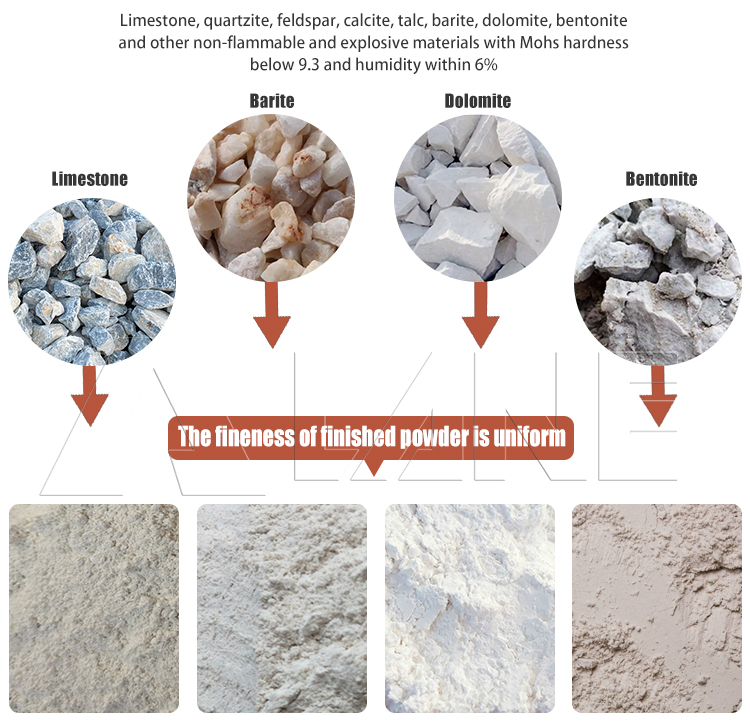
There is no single crusher design that suits every phosphate deposit. Jaw, hammer, and cage crushers perform different duties, and they should not be treated as interchangeable products.
Jaw Crusher for Primary Crushing
A jaw crusher is commonly used when the feed contains large, irregular phosphate rock lumps. Its crushing action is based on compression between a fixed jaw plate and a moving jaw plate.
For a primary crushing section, the main advantages are:
- Handles relatively large feed lumps.
- Provides a robust first-stage reduction.
- Has a straightforward mechanical structure.
- Can feed a secondary crusher or grinding mill through a conveyor system.
A jaw crusher is generally the more sensible starting point when the mine delivers coarse rock with a wide range of lump sizes. It is not normally selected to produce the final fine powder required for acidulation. That is the job of the downstream grinding equipment.
Hammer Crusher for Secondary Size Reduction
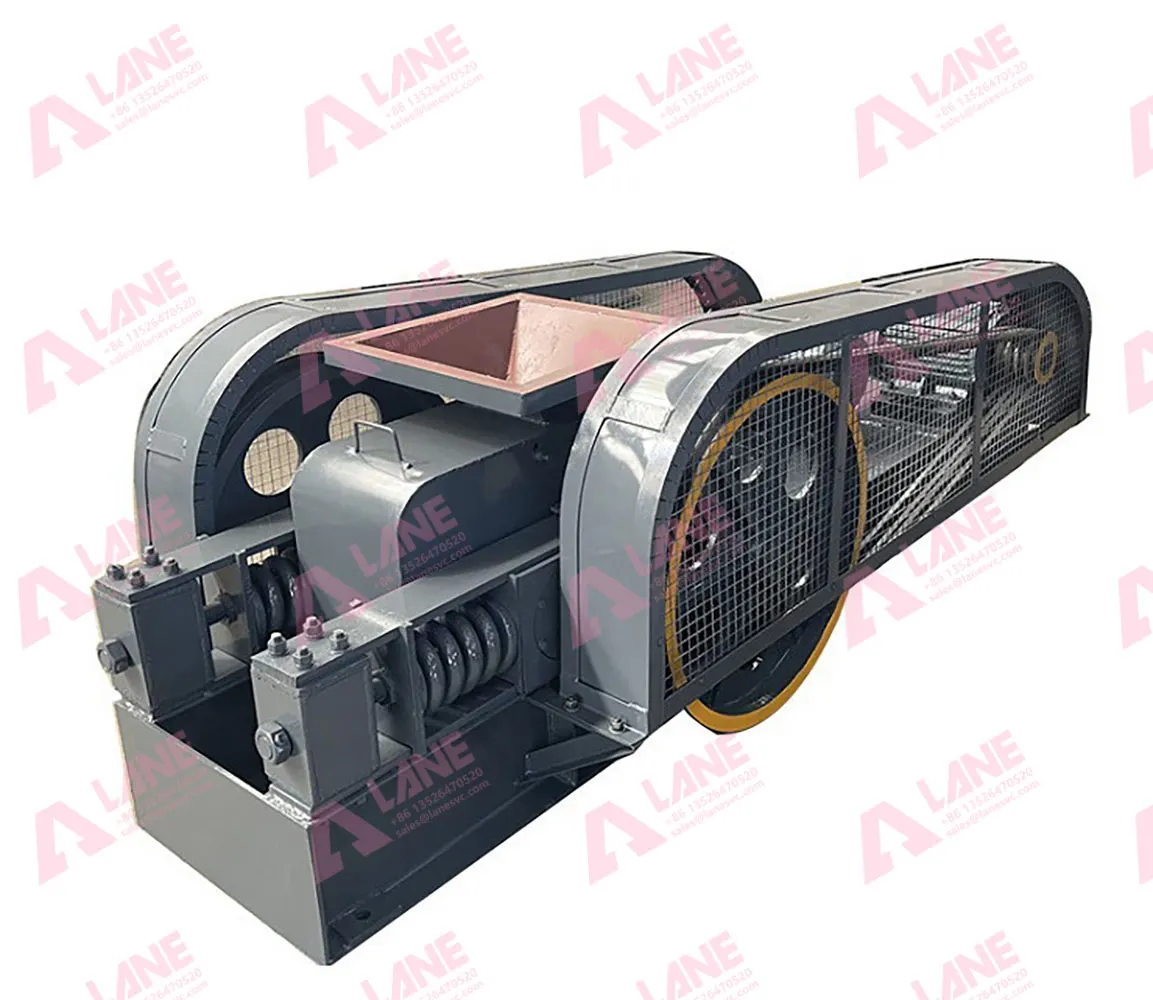
A hammer crusher uses high-speed rotating hammers to break material through impact. It can be considered when the phosphate rock is suitable for impact crushing and the required discharge size is smaller than the primary crusher output.
The actual performance depends heavily on ore abrasiveness and feed conditions. Hard, silica-rich phosphate rock can accelerate hammer and liner wear. Buyers should request the hammer material, liner specification, replacement cost, and expected service life under comparable ore conditions.
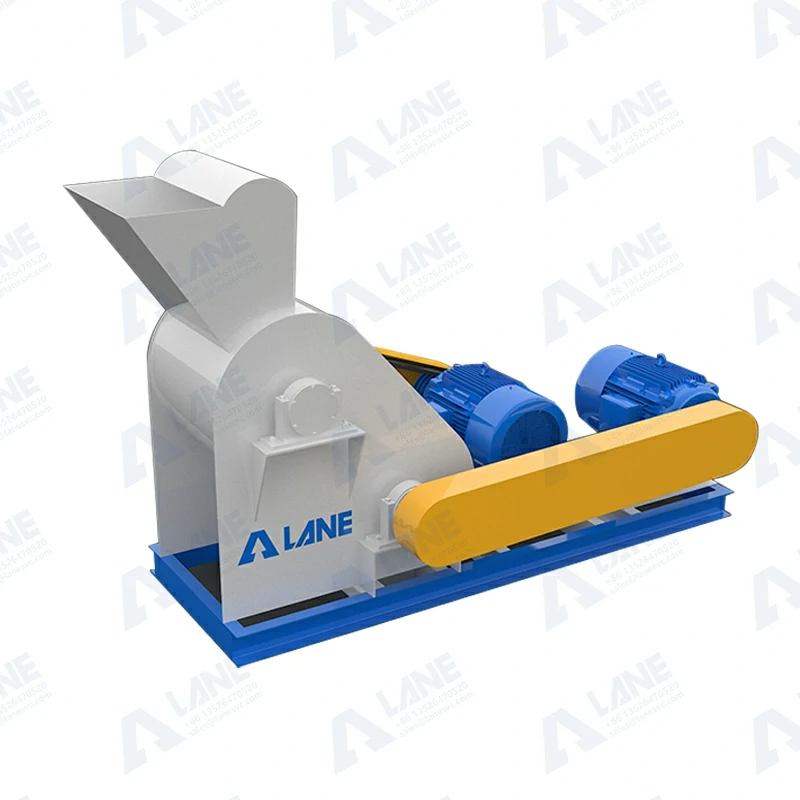
LANE publishes a Hammer Crusher with a double-rotor arrangement and adjustable hammer clearance. Its product description also mentions high-alloy wear-resistant hammer heads. However, the published application information emphasizes wet slag and organic fertilizer materials. A phosphate rock project should therefore confirm suitability through an ore test rather than assume that the same configuration is appropriate for every phosphate deposit.
Cage Crusher for Brittle Phosphate Materials
A cage crusher uses two rotating cages fitted with steel bars or rods. Material is reduced by impact as it passes through the rotating cage assembly.
LANE’s Cage Crusher specifically lists phosphate, gypsum, coal, and fertilizer materials among its applications. Its product description explains that particle size can be adjusted through the cage gap or rotational speed.
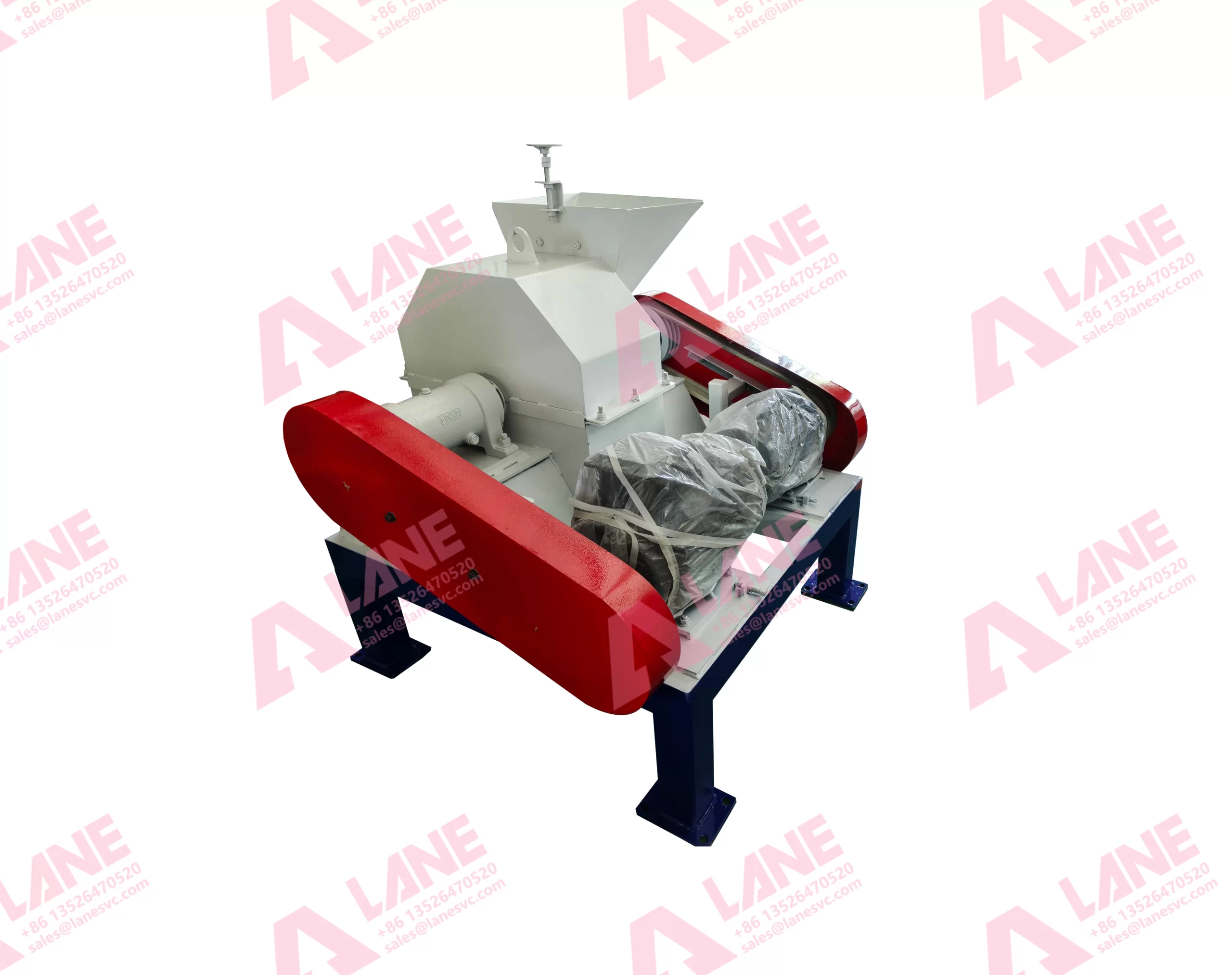
This makes the cage crusher worth evaluating when the feed is brittle and the process requires a relatively fine, uniform crushed product. It should not automatically replace a jaw crusher for large run-of-mine lumps. Buyers need to confirm the maximum feed size and wear performance for their actual ore.
How Should You Match the Crusher to the Crushing Stage?
A practical phosphate rock preparation system often uses more than one size-reduction step. The first machine handles large lumps; the next machine reduces the material further; the grinding mill then produces the required fine powder.
| Processing Stage | Suitable Equipment | Main Duty | Key Selection Point |
|---|---|---|---|
| Primary crushing | Jaw crusher | Reduce large run-of-mine rock | Maximum feed lump size and capacity |
| Secondary crushing | Hammer crusher or suitable impact crusher | Reduce primary crusher discharge | Ore hardness, abrasiveness and target discharge |
| Fine crushing | Cage crusher or suitable fine crusher | Produce smaller, more uniform particles | Feed size, product distribution and wear cost |
| Fine grinding | Ball mill or other suitable grinding mill | Produce powder for downstream processing | Required fineness and energy consumption |
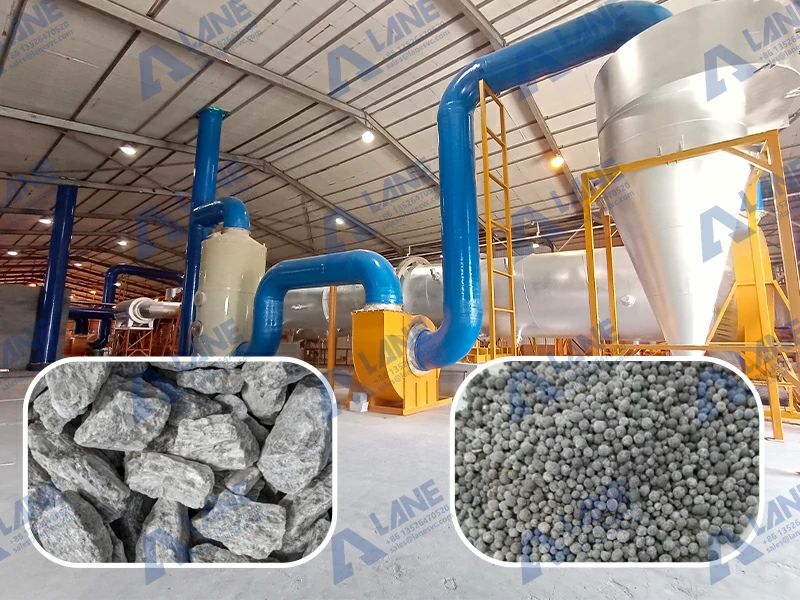
The important distinction is between crushing and grinding. A crusher prepares the ore for the next stage; a grinding mill controls the fine particle-size distribution. For an SSP project, LANE’s phosphate rock grinding mill is a relevant downstream equipment reference. The crusher and mill should be sized as one connected system rather than purchased independently.
What Is the Role of a Raymond Mill in Phosphate Rock Processing?
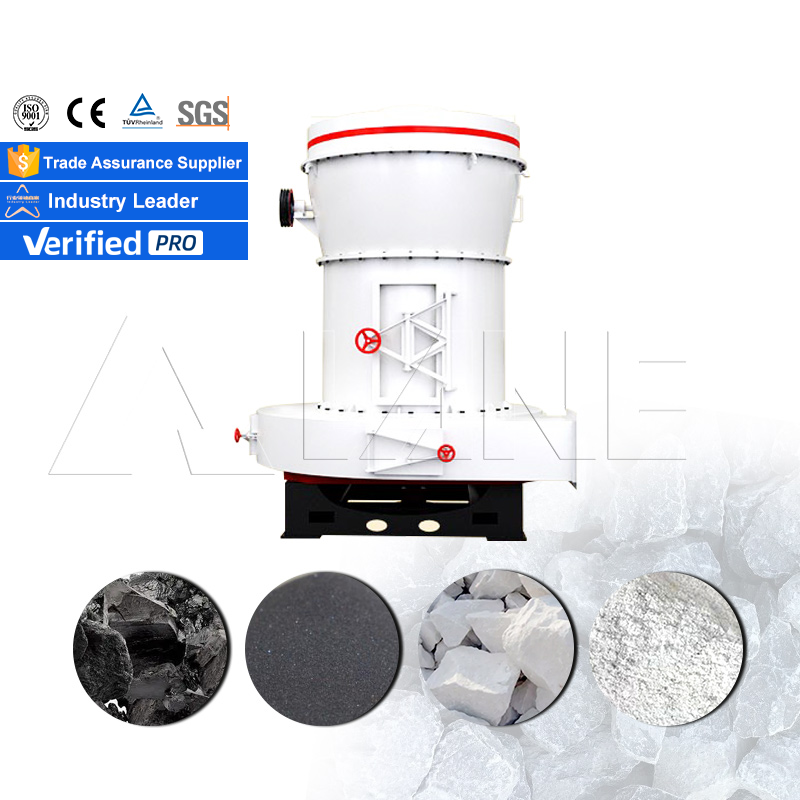
A Raymond mill is a grinding machine rather than a primary crusher. In an SSP fertilizer production line, it is used to grind crushed phosphate rock into fine powder before the acidulation stage. The fineness of the ground rock affects its contact area with sulfuric acid and therefore influences the reaction process.
For buyers planning an SSP project, the Raymond mill should be selected according to the required grinding fineness, hourly capacity, and the hardness of the phosphate rock. A mill that meets the capacity target but cannot maintain the required particle size may affect the stability of the acidulation process.
LANE’s SSP equipment information lists the Raymond mill as one of the options for phosphate rock grinding. Buyers can also compare it with a phosphate rock ball mill when evaluating the grinding section.
What Capacity and Technical Parameters Should Buyers Check?
Capacity figures are useful for screening suppliers, but they only make sense when the feed and discharge conditions are stated. A machine rated at a certain tonnage with soft, dry material may not achieve the same throughput with harder or more abrasive phosphate rock.
LANE’s published SSP production line information gives the following crusher reference figures:
- Capacity: 5–50 TPH
- Feed size: up to 300 mm
- Output size: up to 20 mm
- Installed power: 15–110 kW
- Described duty: primary crushing of phosphate rock
A separate phosphate fertilizer equipment guide on the company’s main website lists a PE-series jaw crusher with a stated capacity of 50–300 t/h and a discharge size of up to 100 mm. These figures come from different published equipment references and should not be combined as though they describe one machine or one guaranteed operating range.
Published Crusher Reference Data
| Reference | Capacity | Feed Size | Discharge Size | Power |
|---|---|---|---|---|
| LANE SSP line crusher | 5–50 TPH | ≤300 mm | ≤20 mm | 15–110 kW |
| PE-series jaw crusher in phosphate equipment guide | 50–300 t/h | Not specified | ≤100 mm | Not specified |
Source note: The first row is published on LANE’s SSP Fertilizer Production Line page. The second row comes from the Phosphate Fertilizer Production Line Core Equipment Selection Guide. These are reference figures, not a substitute for a project-specific technical offer or a guaranteed performance test.
Before approving a quotation, ask the supplier to state the rated capacity at your actual feed size, ore hardness, moisture, and target discharge size. Also request the motor power, rotor or jaw configuration, liner material, machine dimensions, and foundation load.
How Does Phosphate Rock Quality Affect Crusher Performance?
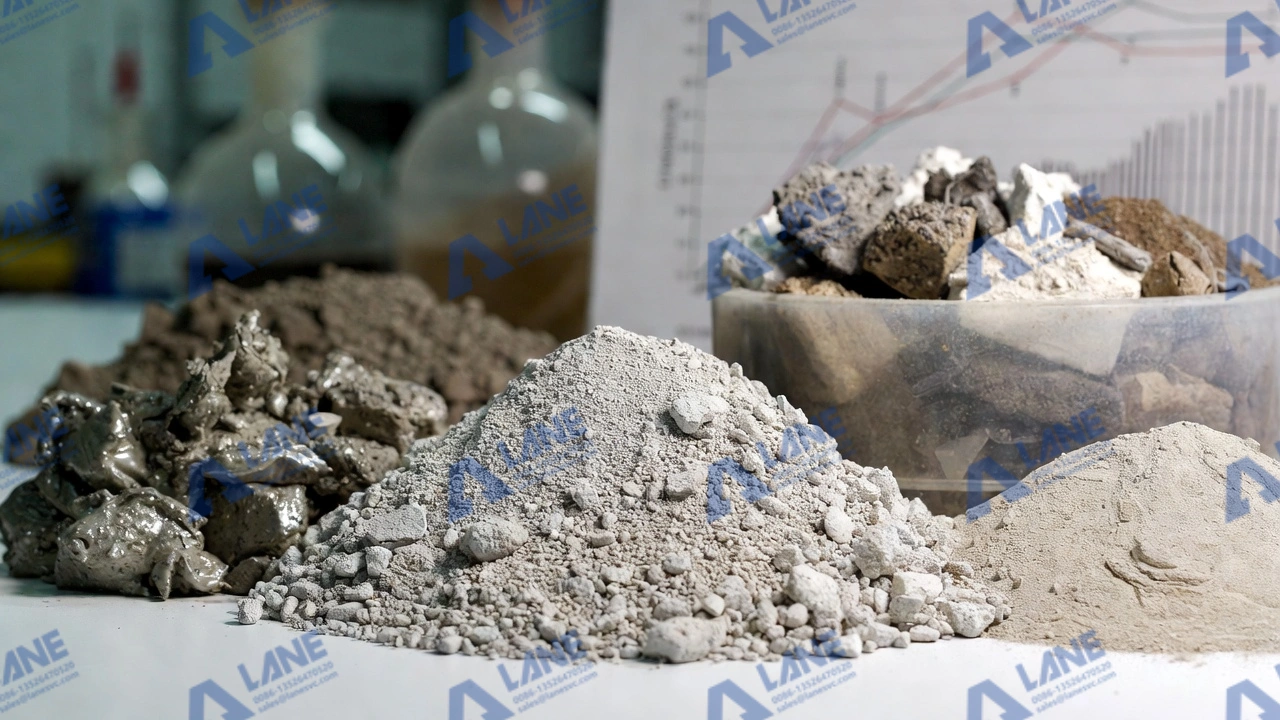
Phosphate rock is not mechanically uniform. Two deposits with similar P₂O₅ grades can behave very differently in a crusher because their mineral composition, hardness, silica content, and moisture are not the same.
Silica-bearing material can increase abrasive wear on hammer heads, liners, and other contact surfaces. Harder ore may require a more robust primary crushing arrangement and can reduce the throughput of a machine selected using softer-rock data.
Moisture also deserves attention. Damp fines can accumulate around the feed chute or discharge area, while wet and sticky material may not flow consistently. A crusher designed for dry, brittle ore should not be assumed suitable for wet feed without confirmation.
For a reliable selection, prepare a representative ore sample and provide:
- Ore source and mineral composition, if available.
- Maximum feed lump size and normal feed-size distribution.
- Moisture content under normal operating conditions.
- Approximate hardness or available crushing test results.
- Silica and other abrasive mineral content.
- Required discharge size and downstream mill feed specification.
- Average and peak hourly throughput.
A material test is more useful than a general statement that the machine is suitable for phosphate. It gives both sides a basis for discussing throughput, wear, and the required crushing configuration.
How Can You Control Wear Parts and Operating Costs?
The purchase price is only one part of the cost of a phosphate rock crushing system. Wear-part consumption, electricity, downtime, and maintenance access can have a greater effect on operating cost over the equipment’s service life.
For a crusher for phosphate rock, the first item to review is the material used for hammers, jaw plates, liners, and other components exposed to impact or abrasion. Ask the manufacturer for the material grade and hardness specification rather than accepting a general description such as heavy-duty or wear-resistant.
The second issue is replacement time. A crusher that requires long disassembly for routine hammer or liner replacement can create unnecessary production losses. Check whether wear parts are modular, whether lifting access is available, and whether the supplier can provide a recommended spare-parts list.
The third issue is power consumption under the actual duty. A larger motor does not automatically mean better performance. Compare the expected tonnes per hour at the specified discharge size, and request operating power data where available.
A useful quotation should separate the main machine, motor, wear-part package, feed and discharge conveyors, electrical control system, and commissioning support. This makes supplier quotations easier to compare on an equivalent scope.
What Should Be Included in the Installation and Acceptance Test?
A crushing machine cannot be accepted properly through an empty-running test alone. No-load operation can confirm basic rotation and drive condition, but it cannot demonstrate that the machine will handle the customer’s ore at the required throughput.
Before shipment, confirm the equipment dimensions, motor voltage and frequency, foundation drawing, lifting points, inlet and outlet dimensions, and access space for maintenance. If the crusher is connected to a ball mill, check the conveyor transfer point and ensure the mill feed system can accept the crusher discharge.
During commissioning, record:
- Actual feed material and maximum feed size.
- Feed rate and operating duration.
- Discharge particle-size distribution.
- Motor current and operating stability.
- Abnormal noise, vibration, or temperature.
- Dust leakage and material accumulation.
- Wear condition after the agreed test period.
For machinery risk assessment and protective measures, buyers can also refer to ISO 12100:2010. This standard provides general principles for machinery safety; it is not a crusher capacity or performance standard. Guards, emergency stops, inspection doors, and safe maintenance access should be checked as part of the equipment review.
FAQ: What Do Buyers Ask About a Crusher for Phosphate Rock?
1. Which crusher is suitable for large phosphate rock lumps?
A jaw crusher is generally a suitable choice for primary crushing of large phosphate rock lumps. It reduces coarse feed to a manageable size before secondary crushing or grinding. The required model depends on the maximum lump size, hardness, and plant throughput.
2. Can a hammer crusher process phosphate rock?
Yes, a hammer crusher can be considered for suitable phosphate rock, but ore abrasiveness must be checked first. Silica-rich or highly abrasive feed can increase hammer and liner consumption. Buyers should request a material test and wear-part specification before confirming the machine.
3. What is the difference between a crusher and a phosphate rock grinding mill?
A crusher reduces large rock into smaller pieces, while a grinding mill produces the fine powder required by the process. In an SSP line, the crusher normally prepares the feed for the mill; the mill then controls the final grinding fineness for acidulation.
4. How long do crusher hammers and liners last?
There is no universal service-life figure for phosphate rock crushing. Wear depends on ore hardness, silica content, operating hours, feed size, and the selected wear material. Ask the supplier for comparable operating references and the cost of a complete replacement set.
5. Can the crusher be customized and shipped with installation support?
Yes, equipment configuration and project support can be discussed according to the plant layout and operating requirements. Confirm the manufacturing lead time, packing dimensions, shipping terms, spare-parts package, and whether installation support is remote or on-site. The actual delivery schedule should be stated in the formal quotation rather than assumed from a standard catalogue.
Final Checklist: How Do You Buy the Right Phosphate Rock Crusher?
Before ordering a crusher for phosphate rock, confirm three things.
First, define the feed and discharge conditions. Maximum lump size, ore hardness, moisture, and required discharge size should all be stated in the technical specification.
Second, evaluate the complete crushing circuit. A primary crusher, secondary crusher, and grinding mill must work together. Selecting a high-capacity crusher without checking the downstream mill can simply move the bottleneck to the next machine.
Third, make performance measurable. The purchase agreement should identify the test material, feed rate, discharge-size requirement, operating conditions, and acceptance procedure.
LANE provides phosphate fertilizer processing equipment, including crushing and grinding equipment for SSP-related projects. For a complete configuration, review the SSP fertilizer production line and the phosphate fertilizer manufacturing machinery guide. The crushing section should be designed around the ore and the downstream process, not selected as an isolated machine.
Planning a phosphate fertilizer project? Contact LANE’s engineering team to discuss ore characteristics, target capacity, crushing stages, and the connection to the grinding system.
For more details, please feel free to contact us.
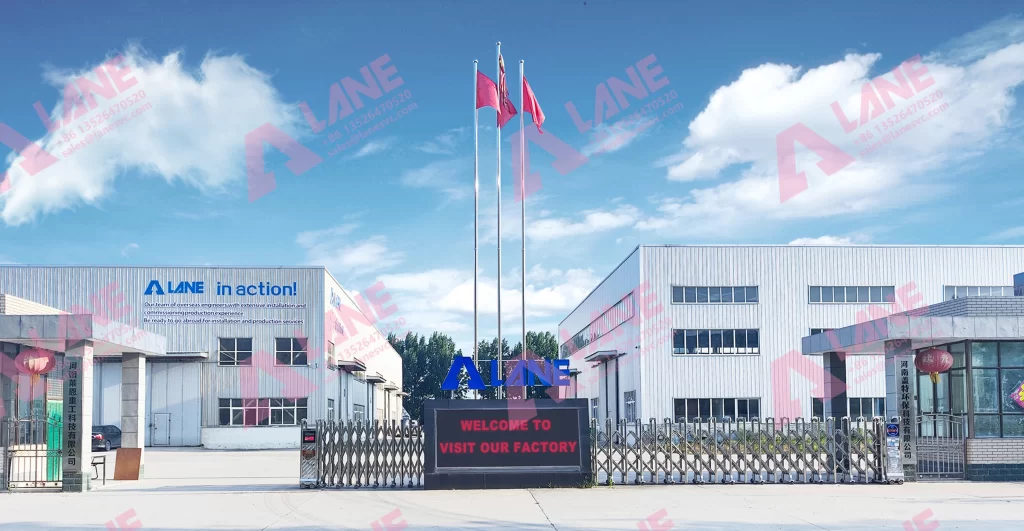
Henan Lane Heavy Industry Machinery Technology Co., Ltd.
Email: sales@lanesvc.com
Contact number: +86 13526470520
Whatsapp: +86 13526470520