How to Select the Right SSP Fertilizer Manufacturing Equipment
- 2026-06-04
Choosing the wrong equipment for your SSP fertilizer plant doesn’t just slow production — it costs you money, time, and market credibility. I’ve seen it happen. A producer in West Africa invested heavily in a granulation line only to realize their acidulation capacity couldn’t keep up. The entire downstream process stalled within three months. That kind of mistake is avoidable, but only if you know what you’re actually evaluating before you sign a purchase order.
This guide walks through the real decision points: what SSP fertilizer manufacturing equipment you need, how each unit affects your overall output, and what separates a well-matched system from one that creates bottlenecks at scale.
Understanding the SSP Production Process First
Before equipment selection, fully master the complete production process: single superphosphate (SSP) is produced via the acidulation reaction of ground phosphate rock and sulfuric acid. The resulting sticky wet semi-finished product has to go through curing, drying, granulation, screening and cooling in sequence before bagging for warehousing or bulk delivery.
Each of those stages has specific equipment requirements. And here’s what most buyers underestimate: the throughput of your weakest unit determines your entire SSP fertilizer plant’s capacity. Investing in a high-capacity rotary drum granulator means nothing if your acidulation reactor can’t produce enough reacted slurry to feed it.
Get the mass balance right first. Equipment selection comes after.
Core Equipment in a Complete SSP Fertilizer Manufacturing Line
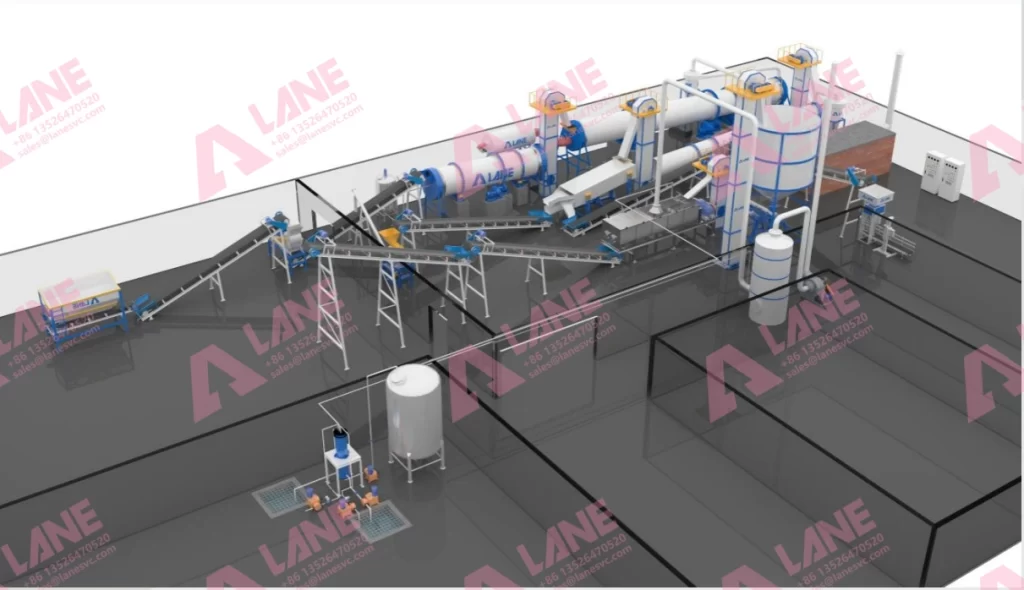
A reliable SSP fertilizer manufacturing equipment lineup typically includes the following units, each playing a non-negotiable role in the process:
- Acidulation Reactor— The starting point. Phosphate rock flour and sulfuric acid are mixed here to initiate the chemical reaction. Reactor design directly affects reaction efficiency and emission control. Don’t cut corners on this one.
- Double Shaft Mixer— Blends the reacted slurry to homogenize moisture content and particle consistency before granulation. Critical for product uniformity downstream.
- Rotary Drum Granulator— Converts the conditioned material into pellets. Drum diameter, inclination angle, and rotation speed must be matched to your target granule size and production volume.
- Rotary Drum Dryer— Removes excess moisture from wet granules. Operating temperature and retention time must be carefully calibrated — too aggressive and you damage the granule structure; too gentle and moisture specs won’t be met.
- Rotary Drum Cooler— Brings product temperature down before screening. Skipping this step or under sizing it leads to caking during storage, which is a serious quality issue.
- Vibrating Screen— Separates on-spec granules from oversized and undersized fractions. Mesh size selection and vibration frequency directly impact yield efficiency.
- Raymond Mill— Used for grinding raw phosphate rock to the required fineness. Particle size of the input material heavily influences acid reactivity.
- Belt Conveyor System— Connects all the above units. Often overlooked during planning, but conveyor layout and capacity must be designed to handle peak throughput without becoming a chokepoint.
What to Evaluate When Comparing Equipment Suppliers
Let me be direct: the spec sheet doesn’t tell you everything. Here’s what actually matters when you’re comparing offers from different SSP fertilizer manufacturing equipment suppliers.
Capacity Matching Every unit in your line should be sized to the same hourly throughput — or slightly above it, to allow for process variation. Ask suppliers for mass balance diagrams, not just equipment specs in isolation.
Material Compatibility Phosphate rock quality varies significantly by origin. Equipment designed for high-fluorine rock from North Africa behaves differently than equipment optimized for lower-reactivity sources. Make sure your supplier has reference cases with rock similar to yours.
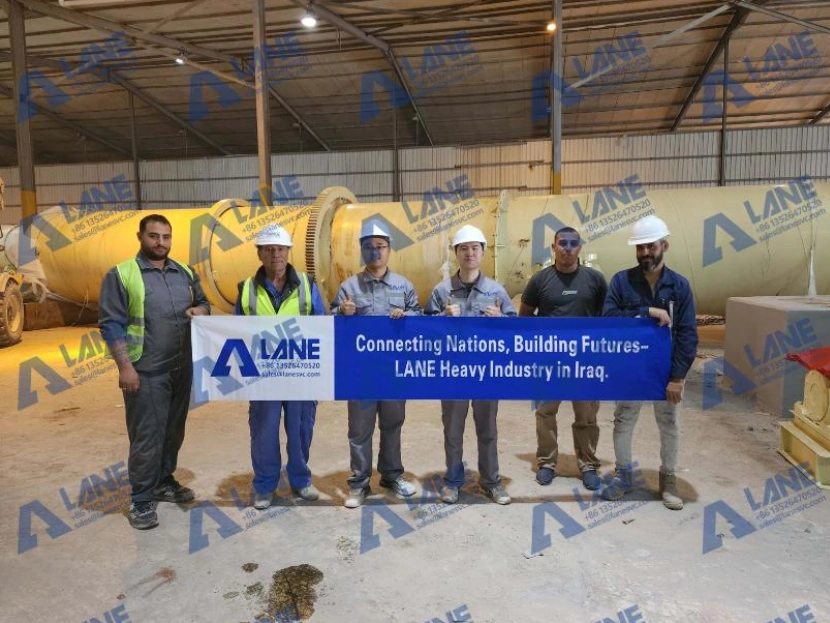
After-Sales Support From what I’ve seen in the field, this is where projects succeed or fail post-installation. Spare parts availability, commissioning support, and operator training matter enormously — especially for buyers setting up their first SSP fertilizer plant in a new market.
Automation and Control Modern SSP fertilizer manufacturing equipment increasingly integrates PLC-based control systems. This isn’t just about convenience — automated process control improves consistency, reduces operator error, and makes it easier to scale production when demand increases.
A Note on Scale: Small Plants vs. Large-Scale Lines
There’s no universal answer on capacity. A 10 TPH SSP fertilizer plant and a 50 TPH operation have fundamentally different equipment architectures. For smaller operations, skid-mounted or modular configurations can reduce civil construction costs and speed up deployment. Larger lines typically require custom-engineered layouts, more robust dust handling systems, and dedicated cooling infrastructure.
Manufacturers like LANE, which specializes in large-scale fertilizer production equipment, offer both standardized equipment lines and fully customized systems depending on project scale and local regulatory requirements. When evaluating suppliers, it’s worth asking whether they’ve successfully commissioned plants at your target capacity — not just built equipment to spec.
Industry Experience: What Field Work Actually Teaches You
In my years working directly with fertilizer producers across Sub-Saharan Africa and Southeast Asia, one thing becomes clear very quickly: the biggest issues rarely come from the SSP fertilizer manufacturing equipment itself. They come from mismatched component sizing, inadequate site preparation, or compressed commissioning timelines that leave operators unprepared.
The producers who get it right spend more time in pre-project engineering than most people expect. They visit reference plants. They ask hard questions about failure rates and maintenance intervals. They build relationships with suppliers who will actually pick up the phone when something goes wrong at 2 AM during a production run.
That’s not glamorous advice. But it’s real.
Final Thoughts and Next Steps
Selecting the right SSP fertilizer manufacturing equipment is ultimately about system thinking — understanding how each unit interacts with the others, how your raw material inputs influence equipment requirements, and how your long-term production ambitions should shape your procurement decisions today.
Don’t buy equipment in isolation. Build a production line.
If you’re currently in the planning stage for a new SSP fertilizer plant or looking to upgrade an existing line, connect with a qualified equipment supplier who can provide a full process design package — not just individual machine quotes. Request reference projects, review their commissioning track records, and insist on a mass balance review before any final commitments.
The right equipment partner will welcome those questions. The wrong ones will avoid them.
Frequently Asked Questions
- What is the minimum capital investment required to set up a basic SSP fertilizer manufacturing equipment line?
It varies significantly by capacity and region, but a functional small-scale line (5–10 TPH) typically requires investment starting from USD 200,000–500,000, depending on equipment configuration and civil construction requirements.
- How long does it take to commission a new SSP fertilizer plant?
From equipment delivery to stable commercial production, most projects require 3–6 months. This includes installation, test runs, process calibration, and operator training. Compressed timelines are a common source of post-commissioning problems.
- What phosphate rock quality is needed for SSP production?
Phosphate rock with a P₂O₅ content of at least 28–32% is generally suitable for SSP production. Lower-grade rock reduces product quality and increases acid consumption per ton of output.
- Can SSP fertilizer manufacturing equipment be used to produce other phosphate fertilizers?
Some equipment — particularly the rotary drum granulator, dryer, cooler, and screening systems — can be adapted for TSP or granular organic-mineral blends. However, the acidulation reactor and mixing systems are typically SSP-specific and would require modification.
- What environmental compliance systems are required for an SSP fertilizer plant?
Fluoride gas scrubbers, bag filters, and acid mist containment systems are standard requirements. Specific standards vary by country, but any responsible supplier should be designing these into the plant from the start — not as an afterthought.
- How do I evaluate whether an equipment supplier has genuine SSP experience?
Ask for a list of commissioned SSP fertilizer plants with contact references. Request process flow diagrams and mass balance sheets from comparable projects. A supplier with real experience will have these readily available and will be comfortable with detailed technical questions.
For more details, please feel free to contact us.
Henan Lane Heavy Industry Machinery Technology Co., Ltd.
Email: sales@lanesvc.com
Contact number: +86 13526470520
Whatsapp: +86 13526470520