How Is Single Superphosphate Fertilizer Produced? A Complete Manufacturing Guide for Industrial Buyers
- 2026-05-09
If you’ve spent any time sourcing phosphate fertilizers at scale, you already know SSP isn’t the flashiest product on the shelf. But it works. And for buyers setting up production in cost-sensitive markets — Sub-Saharan Africa, South Asia, parts of Latin America — understanding how is single superphosphate fertilizer produced and the full SSP manufacturing process can make or break your procurement and investment decisions.
Let me walk you through the complete picture.
What Is Single Superphosphate, and Why Does the SSP Manufacturing Process Matter?
Single superphosphate (SSP) is prepared by reacting phosphate ore with sulfuric acid. The final product typically contains about 16–20% available phosphorus (P₂O₅), along with the formation of a by-product, calcium sulfate (gypsum).
From a chemical point of view, it’s actually not complicated – but what really determines the success or failure of production is often the actual manufacturing process and execution level, which is also the key to widening the gap for most factories.
The SSP manufacturing process is highly sensitive to raw material quality, reaction time, acid concentration, and curing conditions. Get one of those wrong and you’re looking at substandard P₂O₅ availability, handling problems, or product that won’t granulate properly downstream. It’s one of those areas were knowing this process in detail genuinely separates informed buyers from everyone else.
The Core Production Steps
Step 1: Phosphate Rock Preparation
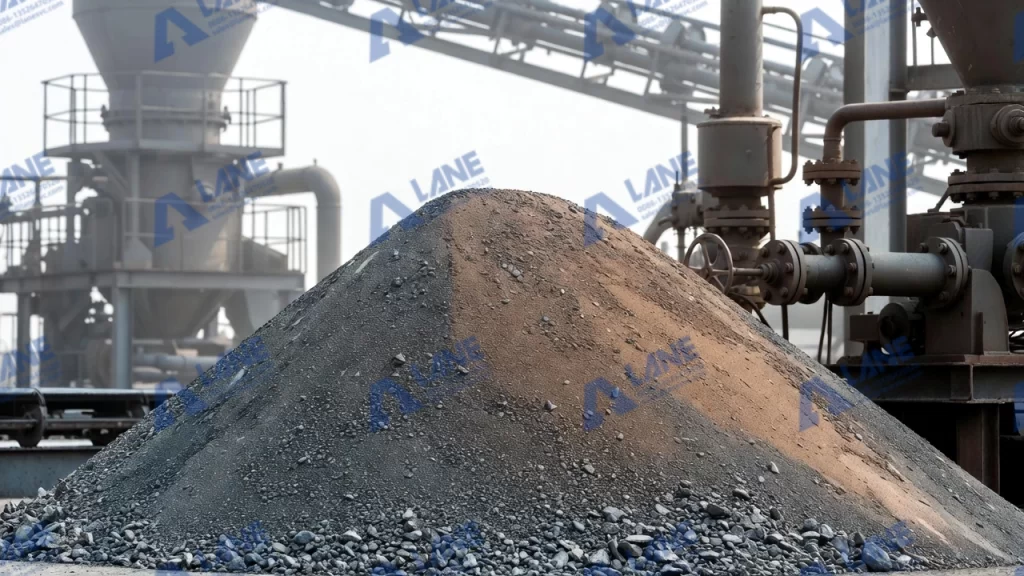
It all started with this “stone”. Phosphate ore is first crushed and ground into a fine powder, usually below 150 microns, to maximize the contact area with the acid. Simply put, the finer the grinding, the more sufficient and efficient the subsequent acidification reaction.
If this pre-treatment stage is not done well, the entire process will be affected, so it is actually the basic link of the entire production line.
Equipment at this stage includes:
- crusher— primary size reduction of raw ore
- Raymond mill— fine grinding to target particle size
- Vibrating screen— classification and quality control of ground material
- Belt conveyor— continuous material transfer between units
Raw material BPL (bone phosphate of lime) content matters enormously here. In my experience working with producers across East Africa and the Middle East, operations that cut corners on ore quality almost always face conversion rate problems that compound throughout the line.
Step 2: Acidulation — The Core Reaction
Ground phosphate rock is fed into a den or reactor vessel where it contacts sulfuric acid (typically 68–72% concentration). The reaction is exothermic and generates fluoride gases, which must be captured and scrubbed.
The chemical reaction — Ca₃(PO₄) ₂ + 2H₂SO₄ → Ca(H₂PO₄) ₂ + 2CaSO₄ — looks clean on paper. In practice, managing the heat, controlling the acid-to-rock ratio, and handling the semi-solid reaction mass requires well-engineered equipment and experienced operators. The SSP manufacturing process at this point is less about chemistry and more about precision engineering — and this is, honestly, the most technically demanding stage.
Key equipment:
- Den reactor— primary reaction vessel, often fitted with a rotating cutter to manage solidification
- Fume scrubbing system— captures HF and Siff₄ gases for environmental compliance
- Acid dosing pump and metering system— precise acid feed control
Step 3: Curing
After the initial reaction is completed, the mixture forms a semi-finished product, often referred to as “green SSP”. Next, the materials are sent to the curing warehouse or curing conveyor belt for maturation, a process that typically takes 2 to 6 weeks, depending on the process and recipe.
During this time, the residual free acid will continue to react with the unreacted phosphate ore, making the transformation more thorough and gradually stabilizing the P₂O₅ content.
This is the step most new producer’s underestimate. Adequate curing space and time are non-negotiable for consistent product quality. Any shortcut here directly compromises the SSP manufacturing process outcome — and no amount of downstream adjustment fixes under-cured material.
Step 4: Granulation and Drying
Once cured, powdered SSP is granulated to produce a more uniform, free-flowing product. The SSP manufacturing process at this stage typically uses:
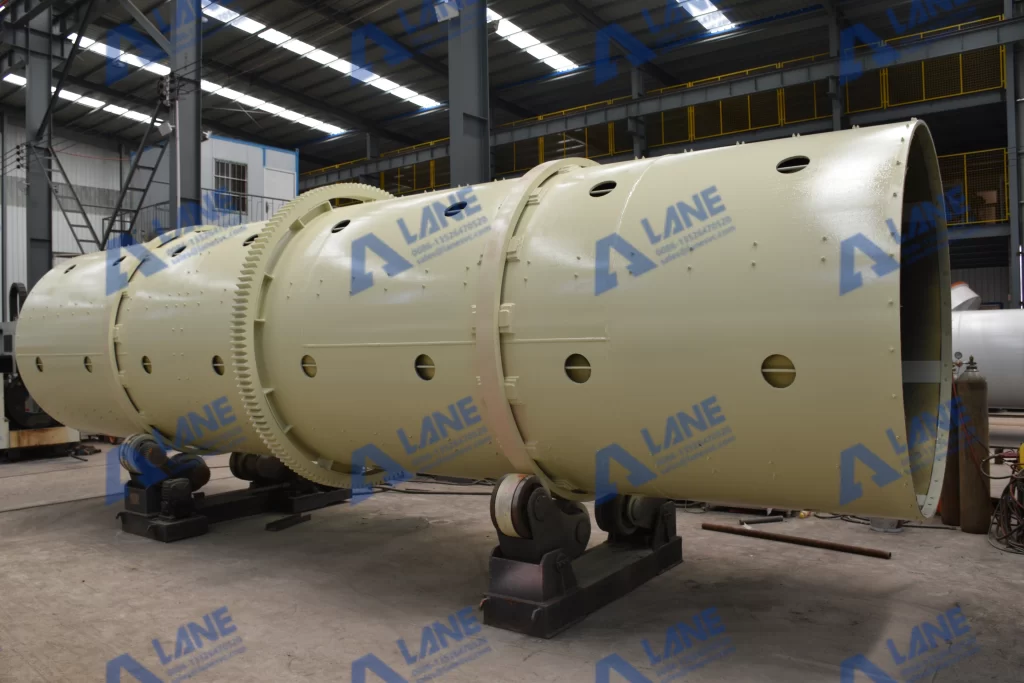
- Rotary drum granulator— agglomeration of fine material into pellets using moisture and rolling motion
- Rotary drum dryer cooler— Reduces moisture to below 12% for stability and cools the product down for safe bagging and storage.
- Bucket elevator— vertical transfer between granulation and drying circuits
- Vibrating screen— separates on-spec granules from oversize and undersize fractions
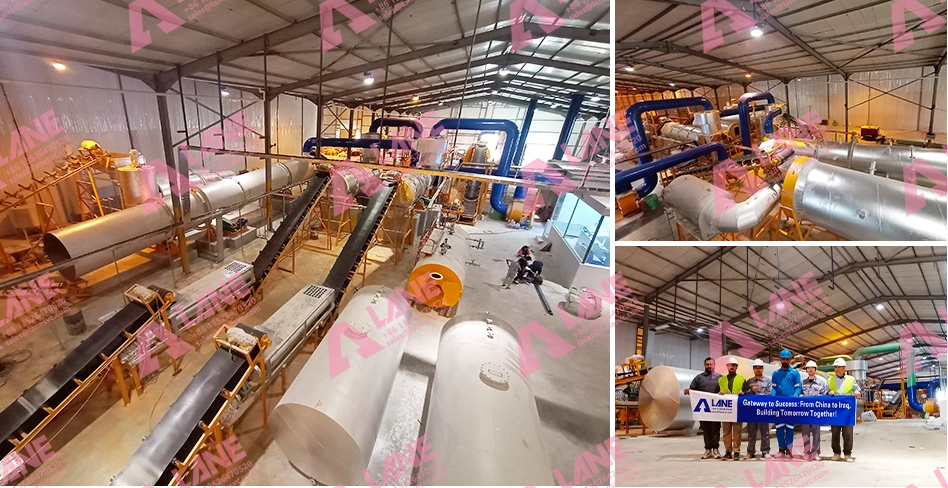
A manufacturer like LANE can offer a complete SSP pellet line with integrated drying, cooling, and screening systems. This not only reduces the equipment footprint, but also makes the entire process control simpler and more stable. If you’re evaluating a turnkey solution, this is a great point to consider.
Step 5: Screening, Bagging, and Storage
Qualified pellets will enter the bagging or bulk process according to specifications, while non-compliant pellets will be recycled and sent back to the granulation system for return use. The storage link is also very important, and it must be kept in a dry environment, because SSP is hygroscopic and can easily absorb water and agglome when the humidity is not well controlled.
Therefore, the production does not end in the granulator, and the perfect storage and moisture-proof system is actually a part that cannot be ignored in the whole investment and process design.
What Buyers Should Actually Look For
From what I’ve seen in the field, the difference between a profitable SSP line and a money-losing one comes down to three factors: acid supply reliability, ore quality consistency, and downstream granulation design.
A line that handles variable ore quality — which is common in most emerging-market supply chains — needs flexibility in the acidulation and curing stages. The SSP manufacturing process rewards careful engineering upfront; it punishes shortcuts during commissioning. Don’t underestimate this when evaluating equipment proposals.
LANE’s engineering team includes feed variability analysis as part of standard line configuration, which can save considerable rework later. That kind of experience-backed configuration detail is what separates a plant that runs reliably from one that constantly underperforms.
FAQ
Q1: What is the typical P₂O₅ content in commercially produced SSP?
Standard SSP contains 16–20% water-soluble P₂O₅. The exact figure depends on phosphate rock grade and the efficiency of the acidulation step. Higher BPL rock generally yields higher P₂O₅ content.
Q2: How is single superphosphate fertilizer produced differently from triple superphosphate (TSP)?
TSP uses phosphoric acid instead of sulfuric acid, which eliminates the gypsum co-product and yields a higher P₂O₅ content (44–48%). The SSP manufacturing process is simpler and lower-cost, making it more accessible for smaller-scale or emerging-market operations.
Q3: How long does the SSP manufacturing process curing stage typically take?
Curing typically takes 2 to 6 weeks. Temperature, humidity, and initial rock reactivity all affect curing time. Forced-air curing systems can accelerate the process in some configurations.
Q4: What sulfuric acid concentration does the SSP manufacturing process require?
Most SSP plants use sulfuric acid at 68–72% concentration. Higher concentrations can accelerate the reaction but increase equipment corrosion risk and require more robust materials of construction.
Q5: Is SSP production environmentally regulated?
Yes. The acidulation step generates fluoride-bearing gases (HF and Siff₄), which are subject to air emission standards in most jurisdictions. A properly designed fume scrubbing system is mandatory, not optional.
Q6: What capacity range is typical for an industrial SSP production line?
Commercial SSP lines range from around 5 tons per hour for smaller regional plants up to 50+ tons per hour for large integrated facilities. Capacity choice should be matched to local phosphate rock supply and market demand, not just capital budget.
Ready to Build or Upgrade Your SSP Line?
So — how is single superphosphate fertilizer produced efficiently, at scale, and profitably? The answer starts with understanding every stage of the SSP manufacturing process, from ore grinding and acidulation through curing, granulation, and storage. How is single superphosphate fertilizer produced at your target output level? That depends on your feedstock, your site, and the equipment partner you choose.
Work with an engineering team that has real hands-on commissioning experience — not just theoretical design capability. The SSP manufacturing process looks straightforward on a flowchart. Real-world execution is where the details matter most.
For more details, please feel free to contact us.
Henan Lane Heavy Industry Machinery Technology Co., Ltd.
Email: sales@lanesvc.com
Contact number: +86 13526470520
Whatsapp: +86 13526470520