High Efficiency Phosphate Fertilizer Options: A Buyer’s Guide
- 2026-05-25
Choosing the right phosphate fertilizer isn’t as straightforward as it sounds. The market is crowded, specifications vary wildly, and the gap between a mediocre product and a genuinely high-performing one can mean the difference between a profitable season and a costly disappointment. For operations at any scale, identifying the most effective high efficiency phosphate fertilizer options is the first step toward building a reliable, productive nutrient program. This guide gives buyers — whether you’re sourcing for a commercial farm or evaluating production equipment — a practical, experience-backed breakdown of what’s available and what actually works.
Why Phosphate Efficiency Actually Matters
Phosphorus is hard to manage. Improper application causes most nutrients to bind with calcium, iron and aluminum in soil, failing to be absorbed by crops and resulting in unnecessary economic losses.
From what I’ve seen in the field, the difference between standard phosphate products and genuinely high efficiency phosphate fertilizer options often comes down to three factors: particle size consistency, coating technology, and solubility profile. These aren’t marketing terms. They directly affect nutrient release timing, root uptake rates, and ultimately, yield outcomes across different soil types and climates.
Main Types of High Efficiency Phosphate Fertilizers
1. Single Super Phosphate (SSP)
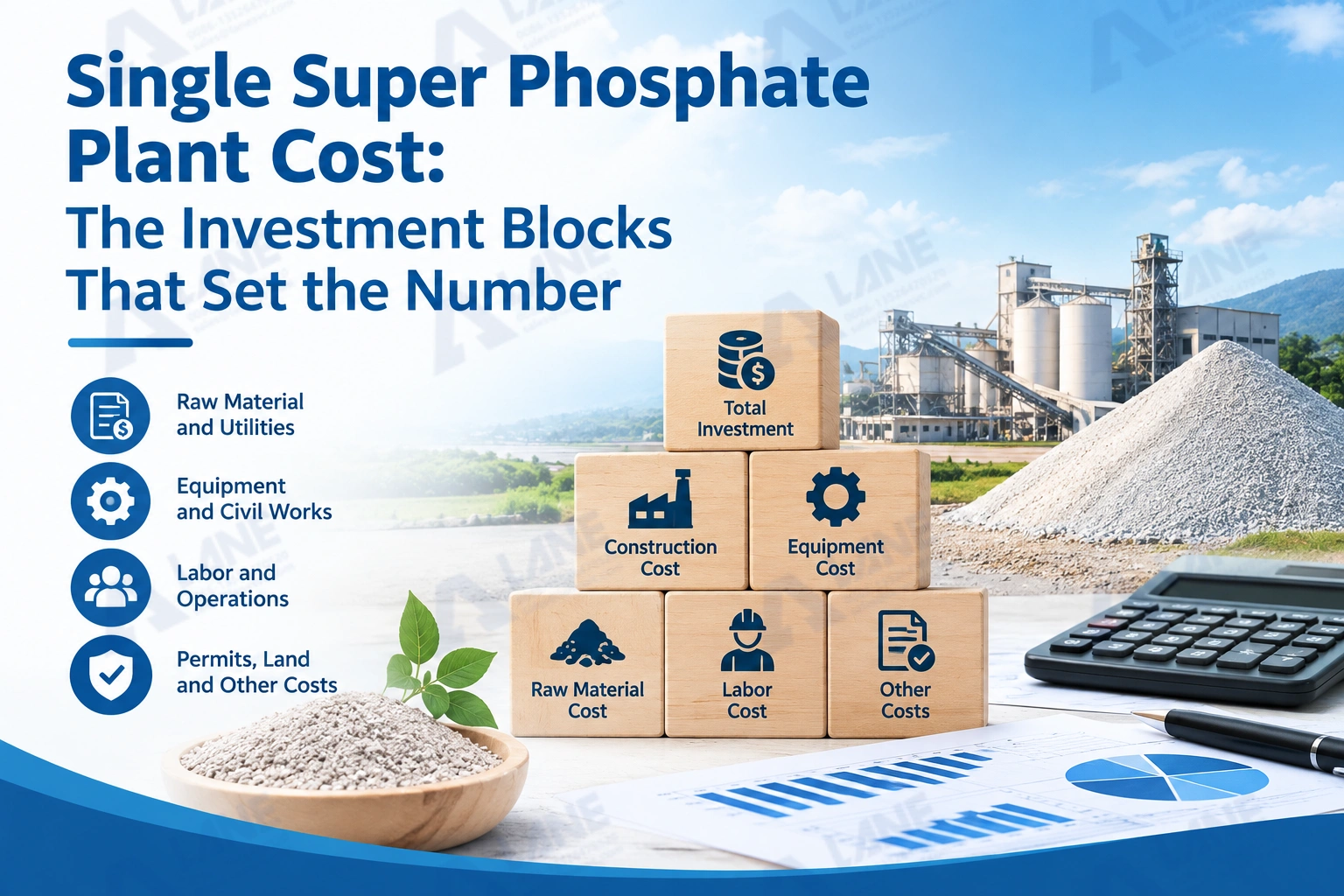
SSP remains one of the most cost-effective phosphate sources globally. It contains roughly 16–20% P₂O₅ alongside sulfur and calcium — a combination that benefits sulfur-deficient soils considerably. It’s not the flashiest product on the market, but for bulk agricultural use, properly produced SSP consistently ranks among the most dependable high efficiency phosphate fertilizer options in developing markets.
2. Triple Super Phosphate (TSP)
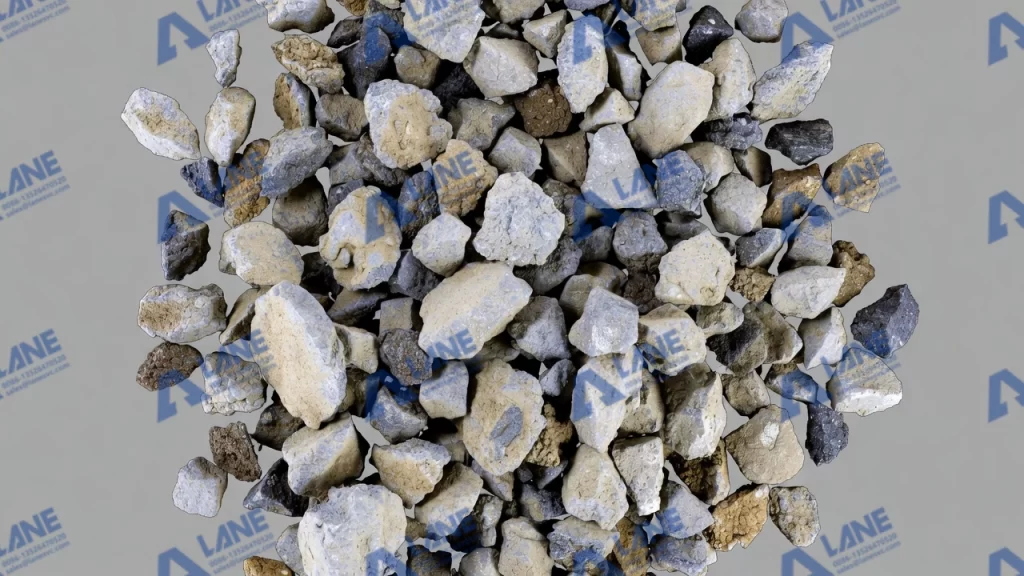
TSP contains 44%-48% available phosphorus pentoxide, boasting superior cost efficiency in transportation and storage. With 15 years of experience serving manufacturers across Asia, Africa and the Middle East, this high-concentration phosphate fertilizer is the preferred choice for large-scale farming sites amid high logistics costs.
3. Monoammonium Phosphate (MAP) and Diammonium Phosphate (DAP)
These are arguably the most widely used high efficiency phosphate fertilizer options in modern agriculture. MAP (11-52-0) and DAP (18-46-0) offer excellent water solubility, fast availability, and compatibility with blending systems. They perform exceptionally well in starter fertilizer applications and are standard in most NPK compound programs worldwide.
4. Granular Phosphate Fertilizer
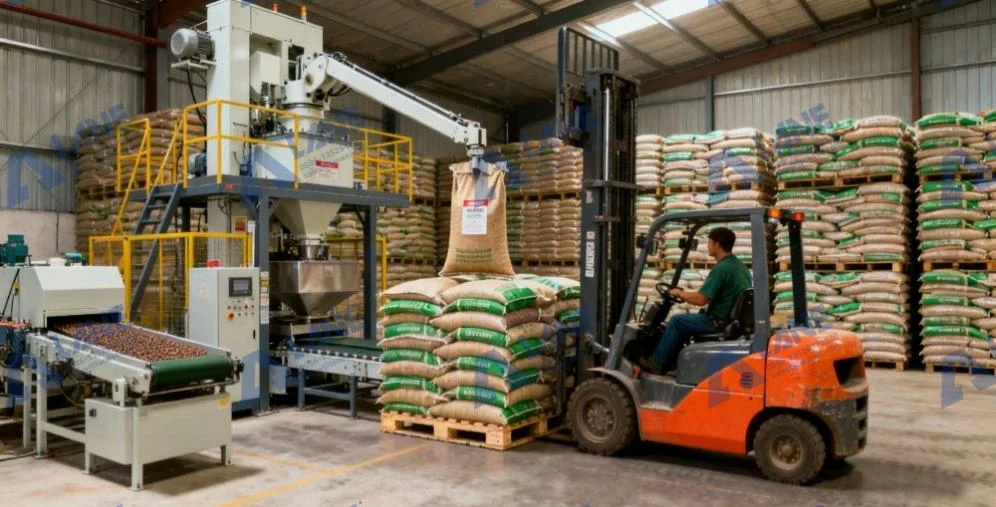
Granular phosphate fertilizer deserves special attention here. Granulation transforms fine powder into uniform, dust-free particles that are easier to handle, apply, and blend. Honestly, the granular format has become the preferred commercial standard — not just for agronomic reasons, but because it dramatically reduces handling losses and application inconsistency.
Well-produced granular phosphate fertilizer exhibits more predictable dissolution rates in soil, which is exactly what precision farming operations demand. When buyers evaluate high efficiency phosphate fertilizer options, granular form should always be a primary consideration for mechanized application systems.
Core Equipment in Phosphate Fertilizer Production
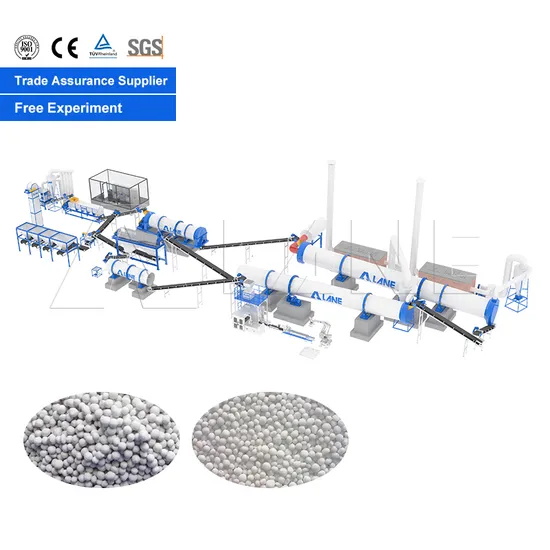
Familiarity with production processes helps buyers verify product quality. Granular and compound phosphate fertilizers require dedicated complete processing equipment.
- Rotary drum granulator— the workhorse of large-scale granulation; handles high throughput with consistent particle sizing
- Double roller granulator— ideal for dry granulation of materials sensitive to moisture or heat; widely used for SSP and TSP processing
- Disc granulator— provides excellent control over granule diameter; common in smaller batch operations
- Rotary dryer— removes post-granulation moisture to achieve target product humidity and extend shelf life
- Rotary cooler— brings product temperature down before screening and packaging to prevent caking
- Vibrating screen— separates on-spec granules from oversized and undersized fractions; critical for uniform product quality
- Crusher— returns off-spec material back into the granulation loop
- Coating machine— applies anti-caking agents or slow-release coatings to finished granules
Equipment quality directly determines finished product stability. LANE Heavy Industry specializes in manufacturing large-scale fertilizer equipment. Customized based on phosphate material properties, the machines adapt to acidic raw materials with outstanding wear and corrosion resistance.
What Buyers Should Evaluate Before Purchasing
Let me tell you — most procurement mistakes I’ve encountered stem from buyers focusing exclusively on price per ton and ignoring production process quality. Here’s what actually matters when comparing high efficiency phosphate fertilizer options:
Solubility and availability data. Ask for water-soluble P₂O₅ percentages, not just total P₂O₅. The difference can be significant, especially with lower-grade SSP products.
Granule hardness and moisture content. These directly affect shelf life and flowability during application. A granule that crumbles in the bag has already lost part of its value.
Batch consistency. Request multiple test reports across production batches, not just a single sample. Reputable producers provide this without hesitation.
Source material traceability. Phosphate rock quality varies dramatically by origin. Moroccan, Chinese, and Russian sources each carry different impurity profiles that affect end-product performance.
Regional Demand and Application Context
The global shift toward precision agriculture has pushed demand for high efficiency phosphate fertilizer options significantly upward. Markets in Southeast Asia, Sub-Saharan Africa, and the Middle East are expanding production capacity rapidly — particularly for granular phosphate fertilizer formats that support mechanized spreading equipment.
Environmental regulations are tightening in mature European and American markets, fueling the growing popularity of slow-release coated phosphate fertilizers. Fertilizer value is evaluated not only by yield improvement, but also by the environmental impact of phosphorus application.
Summary and CTA
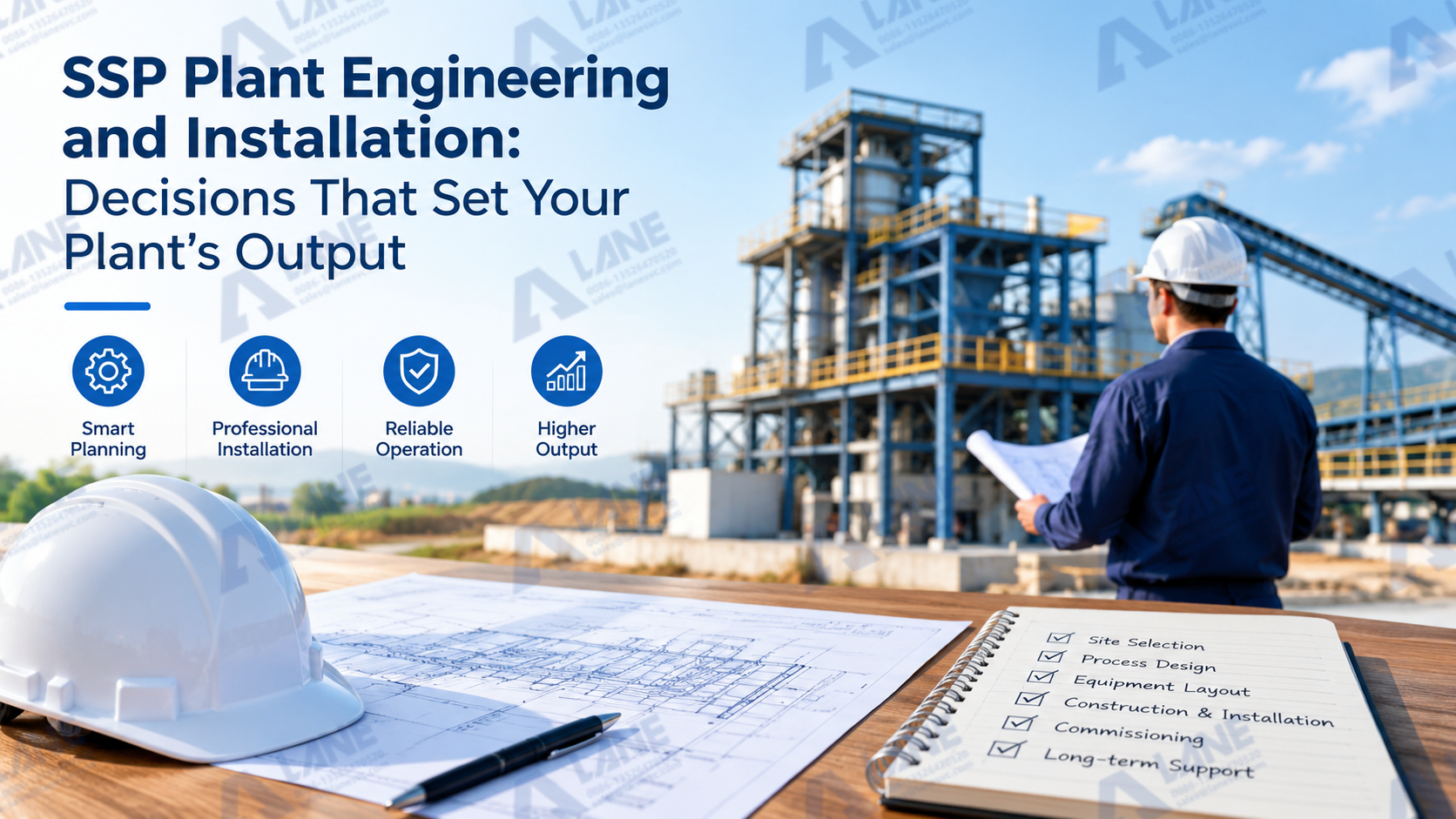
Phosphate fertilizer selection isn’t a one-size-fits-all decision. The best high efficiency phosphate fertilizer options for your operation depend on crop type, soil conditions, logistics constraints, and production scale. What’s consistent across every successful program I’ve observed is this: product quality starts at the equipment level.
If you’re evaluating production lines, expanding capacity, or sourcing equipment for phosphate fertilizer manufacturing, working with a specialist manufacturer makes a measurable difference. LANE’s engineering team offers customized equipment configurations for SSP, TSP, MAP, DAP, and compound granular lines — built for scale and built for durability.
Frequently Asked Questions
Q1: What are the most common high efficiency phosphate fertilizer options for large-scale agriculture?
MAP, DAP, TSP, and granular SSP are the most widely used at commercial scale. DAP and MAP lead in global trade volume due to their high P₂O₅ concentration and water solubility.
Q2: What is granular phosphate fertilizer and why is it preferred over powder?
Granular phosphate fertilizer features uniform particle sizes ranging from 2 to 5 millimeters. It generates less dust, enables precise dosing, and boasts better handling and blending performance than powdered fertilizer.
Q3: How does granulation equipment affect fertilizer quality?
Granular phosphate fertilizer features uniform particle sizes ranging from 2 to 5 millimeters. It generates less dust, enables precise dosing, and boasts better handling and blending performance than powdered fertilizer.
Q4: What’s the difference between water-soluble P₂O₅ and total P₂O₅?
Total P₂O₅ measures all phosphorus in the product, while water-soluble P₂O₅ measures only the fraction immediately available to plants. High-quality granular phosphate fertilizer products typically show a high ratio of water-soluble to total P₂O₅.
Q5: Can phosphate fertilizers be blended with nitrogen and potassium sources?
Yes. MAP and DAP are specifically formulated for blending compatibility and are standard base materials in NPK compound fertilizer production. Granular formats are essential for achieving homogeneous blend distribution.
Q6: What should buyers ask manufacturers when evaluating phosphate fertilizer equipment?
Be sure to check material anti-corrosion adaptability, production capacity, particle size range, unit energy consumption and after-sales technical service. Phosphate-dedicated equipment boasts far longer service life and better finished product stability than general machinery.
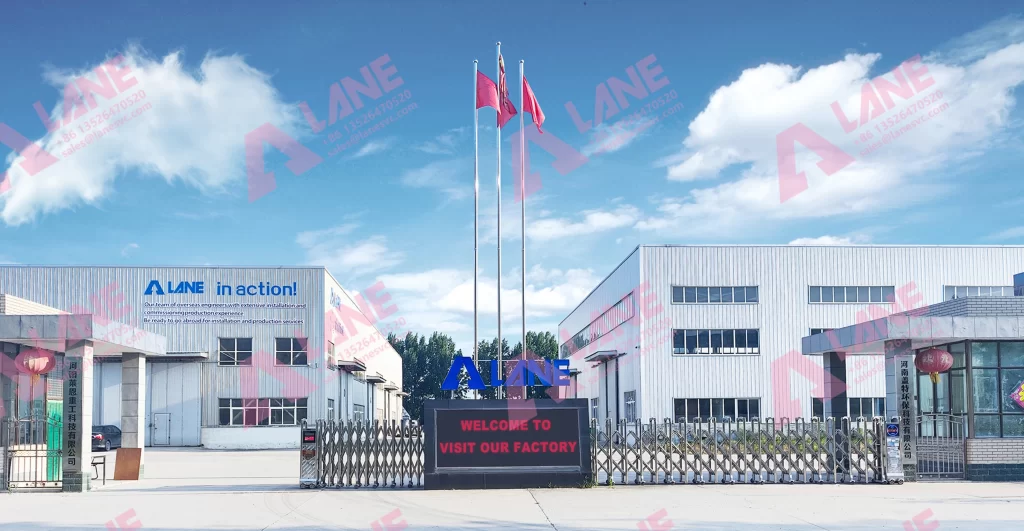
For more details, please feel free to contact us.
Henan Lane Heavy Industry Machinery Technology Co., Ltd.
Email: sales@lanesvc.com
Contact number: +86 13526470520
Whatsapp: +86 13526470520