SSP Screener Machine: Selection and Buying Guide
- 2026-11-19
What Does an SSP Screener Machine Do in a Fertilizer Plant?
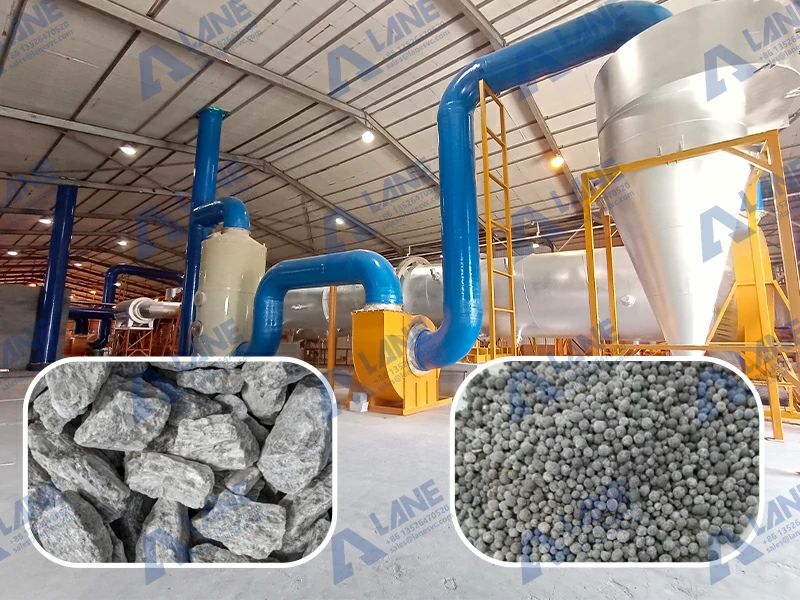
An SSP screener machine separates finished single superphosphate granules by particle size after drying and cooling. Its job is straightforward, but its effect on saleable output is significant. If the screen allows too many fines or oversized particles into the finished-product stream, the plant may struggle to maintain a consistent product size and may need additional reprocessing.
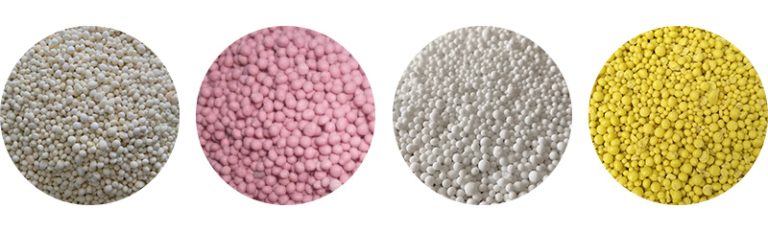
In a granular SSP production line, screening is normally positioned after drying and cooling. The screen separates material into three practical fractions: qualified granules, undersize particles and oversize material. Qualified granules move toward coating, storage or packaging. Fines can return to the granulation circuit, while oversized granules are crushed before being recycled.
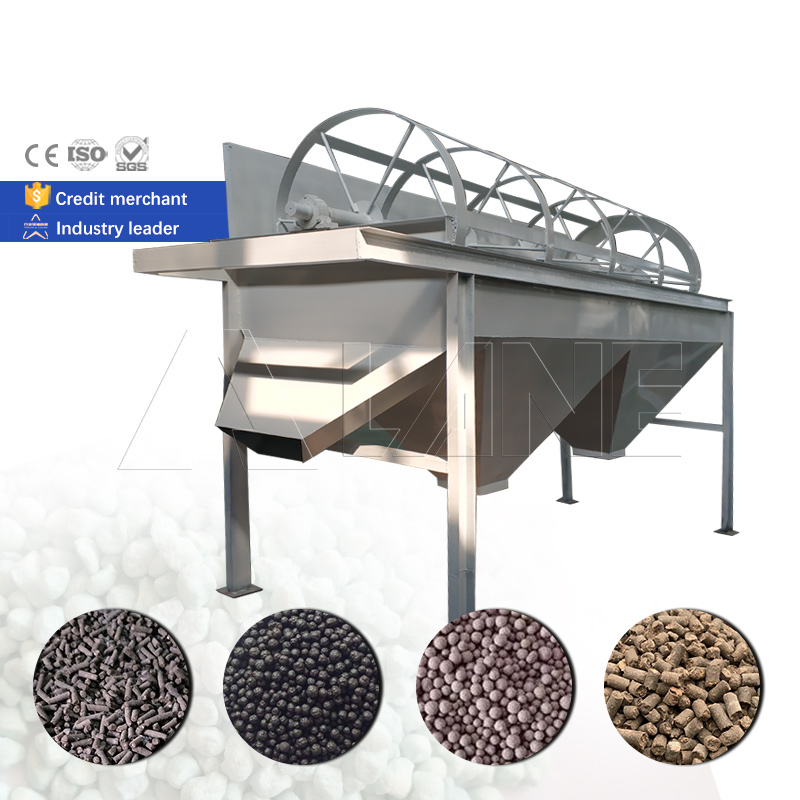
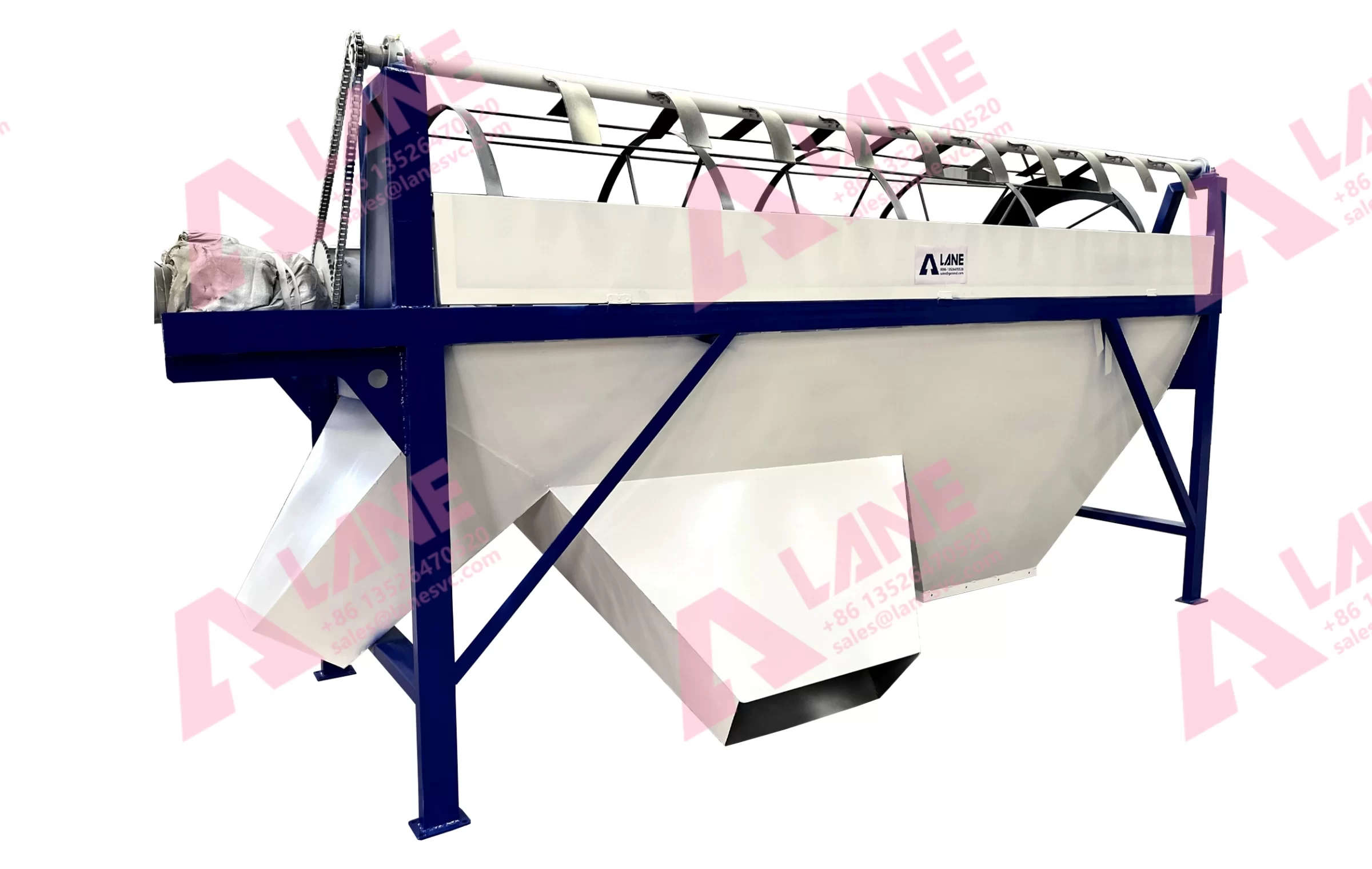
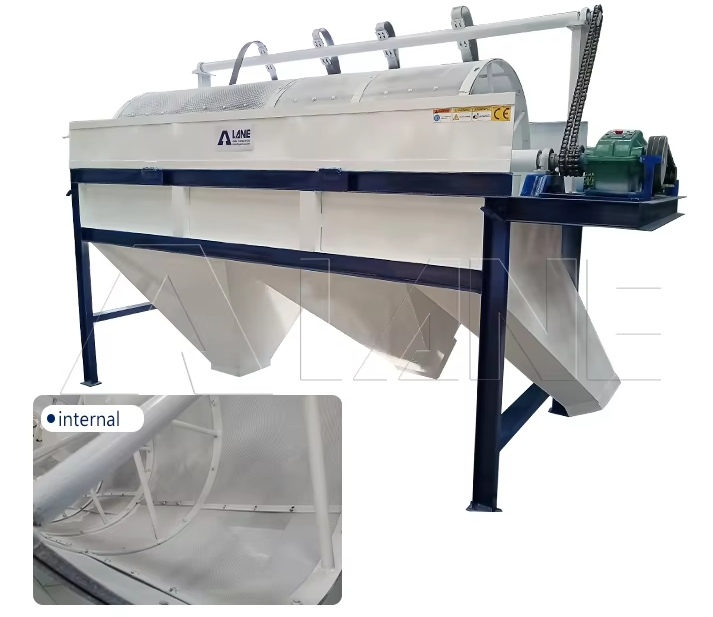
LANE’s Drum Screening Machine uses a rotating drum and screen openings to classify material by particle size. The product page identifies finished-product separation, return-material separation and product grading as its main duties.
For plant owners and purchasing managers, the key question is not simply whether the machine can screen fertilizer. It is whether the screen can maintain the required product-size distribution at the actual feed rate, moisture condition and recycle load.
Why Is Screening Important After SSP Granulation?
Screening determines which material can be sold and which material must return to the process.
A granulator does not produce particles of exactly the same size. Even when operating conditions are stable, the discharge contains a range of particle sizes. The screening section separates this mixed stream so that the finished product meets the buyer’s size specification.
An SSP screener machine therefore has two connected responsibilities:
- Recover granules within the specified product-size range.
- Separate fines and oversized particles for appropriate reprocessing.
The screen does not correct poor granulation by itself. If the granulator produces excessive fines, the screening system can separate them, but the material still has to be recycled. That increases the circulating load and may reduce the amount of fresh material the granulator can process.
This is why screening efficiency should be evaluated together with granulator performance, dryer operation and recycle-conveyor capacity.
How Does a Rotary Drum Screener Work?
The rotary drum design uses a rotating cylindrical screening surface. Material enters through the feed inlet and moves along the inclined drum as it rotates. Particles smaller than the screen openings pass through the mesh, while larger particles continue toward the discharge end.
LANE’s SSP product page describes the main components as:
- Screen drum: The central screening component, consisting of cylindrical screen sections.
- Drive device: The motor and reducer provide rotational power.
- Support structure: Supports the drum and maintains stable operation.
- Feed and discharge ports: Direct material into and out of the screening section.
The Rotary Screener page on Fertilizer Industry Leader also describes a drum assembled from circular steel rings and screen sections. It explains that fine material passes through the screen while coarse material travels toward the lower discharge end.

One useful feature described on that page is a plate-type automatic screen-cleaning mechanism. It moves relative to the screen surface to help prevent openings from becoming blocked. Buyers should confirm whether this cleaning arrangement is included in the specific model being quoted, because it is not detailed as a standard feature on the SSP product page.
Planning a Fertilizer Project?
Contact LANE engineering team to get a free 3D plant layout drawing, motor power calculation, and factory-direct quote within 4 hours.
Request 3D Layout & Budget Estimate →
What Specifications Should Buyers Check Before Ordering?
The most important specification is the required screening duty, not the drum diameter alone.
Before selecting an SSP screener machine, buyers should provide the target product-size range, feed rate, material moisture, bulk density and expected proportion of fines and oversize. These details affect the required screening area, mesh arrangement and material residence time.
The SSP product page does not publish a dedicated model-and-capacity table. However, LANE’s main corporate website publishes the following rotary screener model data. These figures are useful for preliminary comparison, but buyers should ask the supplier to confirm the exact configuration and guaranteed capacity for their SSP material.
Published Rotary Screener Model Data
| Model | Capacity (t/h) | Drum Diameter (m) | Drum Length (m) | Inclination (°) | Speed (r/min) | Power (kW) |
|---|---|---|---|---|---|---|
| LAS-0.8×2M | 1–2.5 | 0.8 | 2 | 2–3 | 22 | 3 |
| LAS-0.8×3M | 1.5–3 | 0.8 | 3 | 2–3 | 22 | 3 |
| LAS-1×3M | 2–4 | 1.0 | 3 | 2–3 | 22 | 3 |
| LAS-1.2×4M | 3–5 | 1.2 | 4 | 2–3 | 17 | 4 |
| LAS-1.5×4M | 4–8 | 1.5 | 4 | 2–3 | 17 | 4 |
| LAS-1.5×5M | 5–10 | 1.5 | 5 | 2–3 | 14 | 5.5 |
| LAS-1.5×6M | 5–10 | 1.5 | 6 | 2–3 | 14 | 7.5 |
| LAS-1.8×7M | 10–12 | 1.8 | 7 | 2–3 | 14 | 7.5 |
| LAS-2×6M | 12–15 | 2.0 | 6 | 2–3 | 14 | 15 |
Source note: These are the published specifications on LANE’s Rotary Screener page, not a separate guaranteed capacity schedule for every SSP project. Actual throughput must be confirmed against the material and required screening result.
When comparing models, do not assume that a larger drum automatically guarantees better product recovery. Screen aperture, material loading, residence time and the condition of the feed all influence the result. Ask the supplier to state the design basis behind the quoted capacity.
How Should You Choose the Screen Mesh for SSP Granules?
Screen mesh selection should start with the required saleable particle-size range.
If the mesh openings are too large, undersized particles may enter the finished-product stream. If they are too small, acceptable granules may be rejected and returned unnecessarily. Both situations reduce the efficiency of the screening circuit.
Before ordering, confirm:
- Required minimum and maximum product particle size.
- Number of screening fractions required.
- Screen aperture for each fraction.
- Whether the screen sections can be replaced individually.
- Whether a screen-cleaning mechanism is included.
- Expected material moisture and tendency to form deposits.
LANE’s Rotary Screen Machine page describes customizable mesh sizes for different fertilizer screening requirements. The exact aperture should still be selected from the customer’s product specification and confirmed through a material test where necessary.
A buyer should also request details about screen replacement time. A screen that is technically efficient but difficult to access can create unnecessary maintenance downtime.
What Causes Poor Screening Performance in an SSP Plant?
Poor screening is not always caused by the screen itself. The upstream process can create conditions that make classification difficult.
Excessive moisture: Damp material may adhere to the screen surface or form lumps, reducing the effective open area.
Unstable feed rate: Overloading the drum reduces the time available for particles to contact the screening surface. Material may leave the machine before classification is complete.
Blocked or worn screen openings: Deposits and damaged mesh sections change the effective aperture and can cause inconsistent separation.
Incorrect recycle arrangement: If fines and oversize material are not returned to the correct process points, the recycle circuit can become inefficient.
For an SSP screener machine, these issues should be investigated together. Increasing drum speed or replacing the mesh without checking feed moisture and loading may not solve the underlying problem.
The operating team should record feed rate, product-size distribution, recycle quantity and screen condition during commissioning. Those records make it easier to identify whether a performance problem comes from the screen, the granulator or the upstream drying process.
What Should Be Included in the Purchase and Acceptance Specification?
A proper purchase specification should define the machine’s duty and the results expected from it.
Ask the supplier to document:
- Model and drum dimensions.
- Rated capacity and the material conditions used for sizing.
- Screen aperture and number of screening sections.
- Motor and reducer specifications.
- Screen material and replacement arrangement.
- Feed and discharge connection dimensions.
- Cleaning mechanism, if included.
- Guards and access points for inspection.
- Recommended spare parts.
- Installation and commissioning responsibilities.
During acceptance, inspect drum rotation, drive operation, abnormal noise, vibration, screen installation and discharge flow. More importantly, test the machine with representative SSP material rather than relying only on an empty-running test.
The acceptance test should record actual throughput and the size distribution of the screened product. The agreed test conditions should include feed rate, moisture condition and the required product-size range.
For machinery safety, buyers can refer to ISO 12100:2010, which sets out general principles for machinery risk assessment and risk reduction. It is a general machinery-safety standard, not a product-specific screening performance standard. Guards, access doors and maintenance arrangements should be reviewed as part of the machine’s overall risk assessment.
FAQ: What Do Buyers Ask About an SSP Screener Machine?
1. Can a rotary drum screener separate SSP granules by size?
Yes. A rotary drum screener separates material through screen openings as the drum rotates. The selected mesh arrangement determines which particle sizes pass through and which continue to the discharge end.
2. What capacity can the equipment handle?
LANE’s published rotary screener models list capacities from 1 to 15 t/h. These figures come from the company’s general rotary screener specification table. The capacity of a specific SSP installation must be confirmed against feed characteristics, screen configuration and required separation results.
3. Can the screen mesh be customized?
Yes, LANE’s rotary screen product information describes customizable mesh sizes. Buyers should provide the target SSP particle-size range and confirm the aperture, screen material and replacement arrangement before production.
4. How often does the screen need maintenance?
There is no reliable universal maintenance interval for every SSP screening duty. Operators should inspect screen openings, drum supports, drive components and fasteners according to operating hours and actual material conditions. The supplier should provide a maintenance schedule for the selected model.
5. Does LANE provide installation support?
LANE should confirm the installation and commissioning scope in the project quotation. Buyers should specify whether they require remote guidance, on-site supervision, operator training and assistance with the initial screening tests.
Final Buying Checklist: How Do You Select the Right SSP Screening Equipment?
Before approving an SSP screener machine, confirm three points.
First, define the product-size specification. The supplier needs the required particle-size range and the number of fractions to be separated.
Second, verify the capacity against actual material. Do not select a model from nominal tonnage alone. Moisture, feed distribution, screen aperture and recycle load all affect operating performance.
Third, make screening performance measurable. Include throughput, product-size distribution, drive operation and maintenance access in the acceptance requirements.
The screening section is not an isolated finishing machine. It controls the separation of saleable granules from material that must return to the process. Its capacity and classification performance should therefore match the granulator, dryer, cooler and recycle conveyors.
For a complete project, review the SSP fertilizer production process and discuss the screen together with the upstream and downstream equipment. You can also visit Fertilizer Industry Leader or LANE Machinery for the company’s broader fertilizer equipment range.
For more details, please feel free to contact us.
Henan Lane Heavy Industry Machinery Technology Co., Ltd.
Email: sales@lanesvc.com
Contact number: +86 13526470520
Whatsapp: +86 13526470520