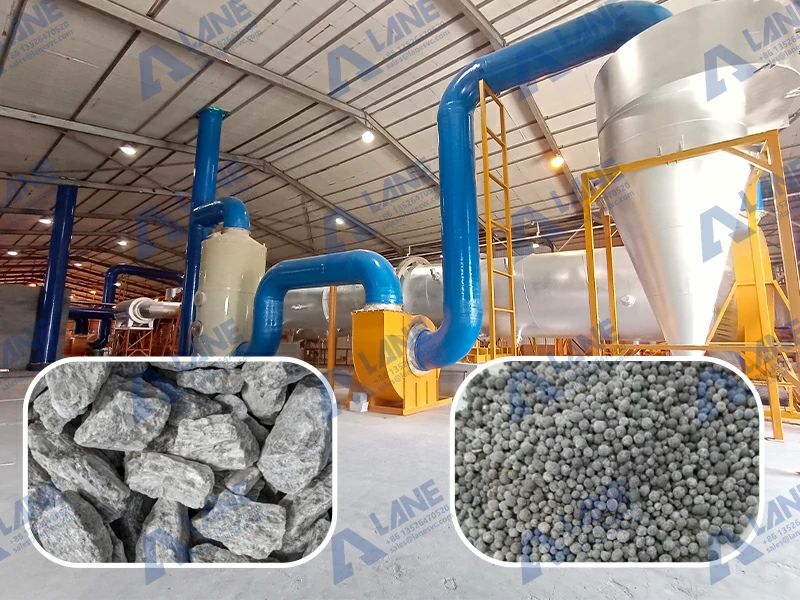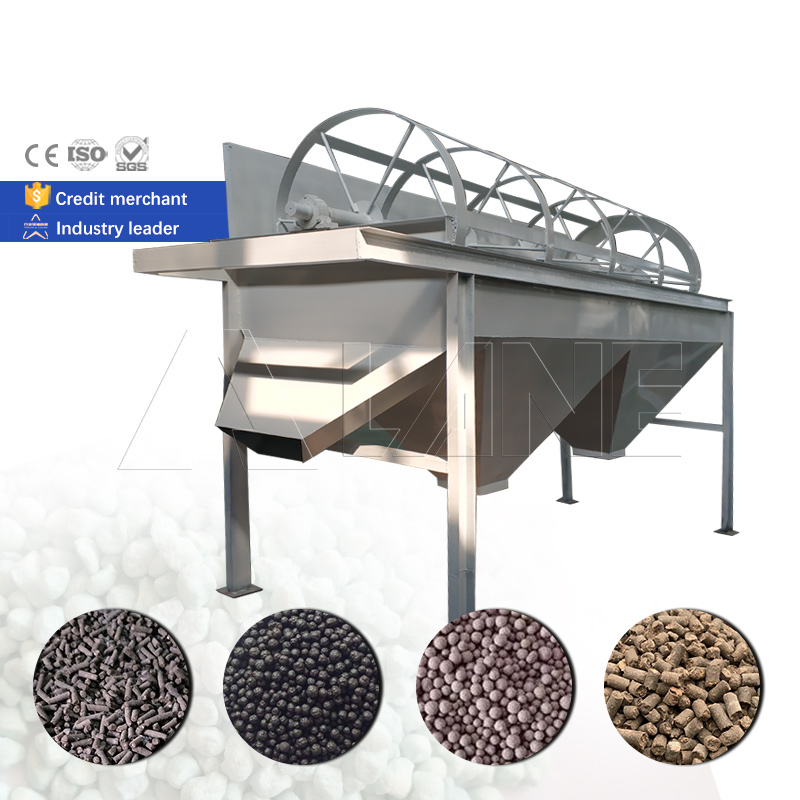
Sulphuric Acid SSP Production Process: Where Quality Is Decided
- 2026-11-19
Single superphosphate has a reputation as the simplest fertilizer in the catalog. Grind rock, add acid, let it set, cure the pile. That simplicity is exactly why so many plants get the acid side wrong: it looks like a pump and a tank, so it gets bought like a pump and a tank.
The sulphuric acid SSP production process is a chemical plant wrapped around a fertilizer line. Acid strength, dose, mixing intensity, residence time, and gas removal all decide whether the product hits its P2O5 guarantee or drifts into a free acid complaint six weeks after shipment.
This guide follows the single superphosphate manufacturing process from acid unloading to cured product, and flags the decisions that change the quotation.
Inside the sulphuric acid SSP production process
The reaction is straightforward once it is balanced:
2 Ca₅(PO₄)₃F + 7 H₂SO₄ + 3 H₂O → 3 Ca(H₂PO₄)₂·H₂O + 7 CaSO₄ + 2 HF
Two moles of fluorapatite consume seven moles of sulphuric acid. The products are monocalcium phosphate, which carries the available P2O5, gypsum, which is most of the mass, and hydrogen fluoride, which has to be captured.
That stoichiometry sets the floor for acid consumption. For a rock at 30 percent P2O5, the theoretical requirement is roughly 0.48 tonnes of 100 percent acid per tonne of rock. Real plants run above that floor because they target a small excess to drive conversion and control free acid.
That is the core of the single superphosphate manufacturing process: one reaction, two products, and one gas to capture.
If a supplier quotes an acid rate without asking for your rock analysis, the number is a guess.
Acid specification and dilution
Sulphuric acid arrives at 93 to 98 percent and is diluted to roughly 68 to 72 percent before it meets the rock.
In the single superphosphate manufacturing process, dilution is the step most often treated as plumbing. It is exothermic and violent if it is done badly. The skid needs a controlled water addition rate, cooling, a temperature interlock, and a vent. Acid must go into water, never water into acid, and the control system should enforce that sequence rather than trusting the operator.
Water quality matters more than most buyers expect. Hard water scales the cooler and the dilution loop, and chlorides attack stainless parts. A simple water analysis before the skid is specified prevents a maintenance problem that shows up in month three.
The diluted acid is then held at a stable concentration. A sulphuric acid dilution loop that swings five points will produce a mix that sets in the mixer on Monday and stays plastic on Thursday.
Storage and unloading
Acid storage is a licensed chemical facility in most jurisdictions. It is not a tank on a plinth.
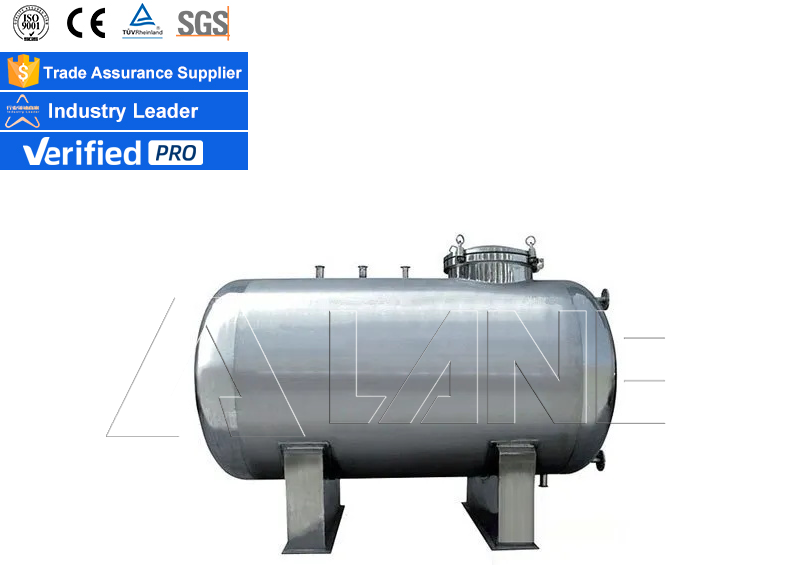
The package includes the tank, the bund, the unloading bay, the vent, and usually a scrubber for the displaced vapors. Carbon steel is normal for concentrated acid; dilute acid needs lined or alloyed wetted parts. The sulfuric acid storage tank and its bund are sized on delivery volume, not on daily consumption, because the risk is in the unloading event.
Instrumentation belongs in this package: level, temperature, and a magnetic flow meter on the transfer line. A plant that measures acid by tank dip is a plant that cannot close its mass balance.
Dosing and ratio control
Phosphate rock acidulation is ratio-driven, not recipe-driven. This is where product quality is won or lost.
The acid dose has to track the rock feed within a couple of percent, and the ratio is not fixed. It moves with rock grade, rock reactivity, and the free acid target. That is why the metering pump should be slaved to the weigh feeder on the rock belt, with a ratio controller and a flow meter in the loop.
Gravity feed through a manual valve does not hold that ratio. Neither does a pump with a fixed stroke and no feedback. The failure mode is quiet: the product passes on Monday, fails on Thursday, and the certificate of analysis is the only thing the buyer reads.
Phosphate rock acidulation: the reaction step
In phosphate rock acidulation, the den is the residence-time vessel. The reaction itself happens fast. Ground rock and diluted acid meet in a mixer, usually a twin-shaft pug mill or a high-intensity reactor, for a residence time measured in seconds to a couple of minutes.
The mixer has two jobs: distribute the acid evenly and start the reaction without letting the mass set inside the trough. Mixing intensity, wear liners, and the discharge design all matter, and a mixer sized on tonnage alone will plug when the rock gets coarser or the acid gets weaker.
From the mixer, the slurry drops into the den, where it stays for one to two hours and sets into a solid cake at roughly 100 to 110 degrees Celsius. The den is not a box. Retention time, insulation, and the cutter design decide whether the cake leaves workable or as a concrete block.
Batch dens and continuous dens suit different capacities. A continuous den quoted for a three tonne per hour plant is often a scaled-down copy of a large design that will not hold residence time.
Fluoride and the scrubber
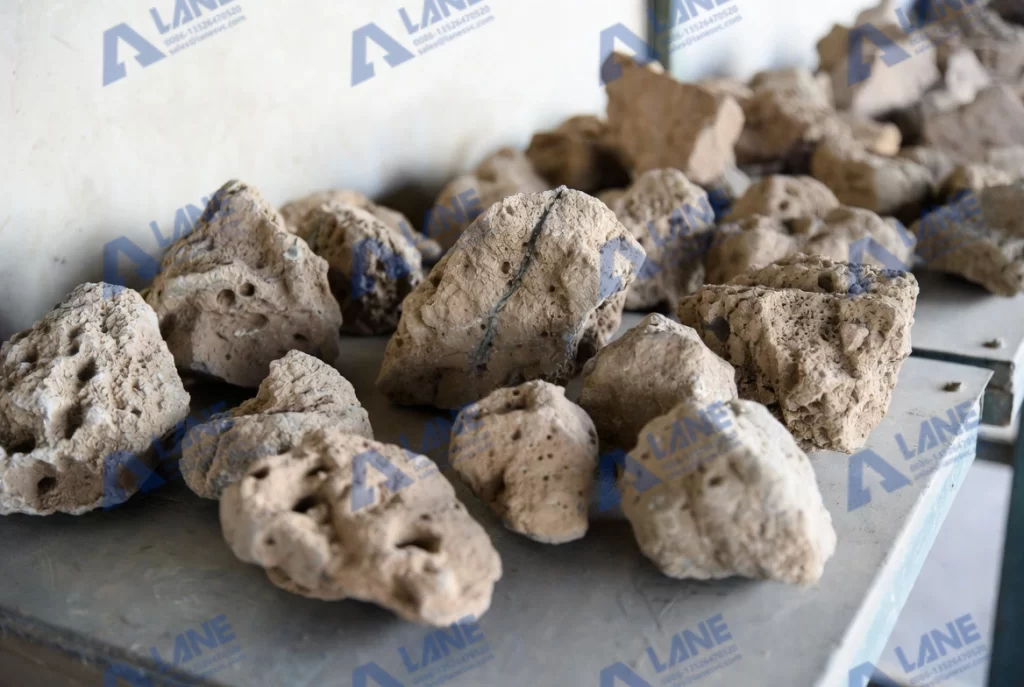
The reaction releases hydrogen fluoride and silicon tetrafluoride. Both are captured in a wet scrubber with a recirculating liquor loop.
The scrubber is not optional anywhere with an environmental regulator, and it is not a small line item. Its size follows the acid rate and the rock’s fluorine content, and its liquor becomes a saleable or disposable stream depending on local rules.
The World Bank Group’s Environmental, Health, and Safety Guidelines for Fertilizer Production are a reasonable baseline for what a permit will ask on fluoride, particulate, and acid handling.
Dust is the other emission. Grinding, curing, crushing, and bagging all generate it. Bag filters at each transfer point cost less than the fines they recover.
Curing, free acid, and neutralization
Curing is the slowest step in the single superphosphate manufacturing process, and the easiest to compress. It is a process step, not storage. The cake is cut, stacked, and left for two to six weeks while the reaction finishes and free acid drops.
Cutting curing short is the most common way to hit a shipment date and lose a customer. The product that leaves the gate at 2 percent free acid may test at 4 percent three weeks later in the buyer’s warehouse.
Neutralization closes the loop. Ground limestone brings residual free acid down to the target, and the limestone fineness and dosing accuracy decide how much acid survives. A hammer mill and a gravimetric feeder are cheaper than a rework batch.
Materials, corrosion, and maintenance
The wear list on an SSP plant is predictable: mill liners and rollers, mixer paddles, den cutter blades, crusher hammers, screen mesh, and every pump seal in the acid circuit.
Acid handling dictates materials. Rubber-lined or alloy wetted parts in the dilution and dosing system cost more and last; mild steel lasts one season and contaminates the product.
The scrubber needs a weekly check, not an annual one. A fouled scrubber shows up as fluoride at the fence line before it shows up on any gauge.
FAQ
What equipment does the sulphuric acid SSP production process need?
An acid storage and dilution skid, metering pumps and a flow meter, a weigh feeder on the rock belt, a pug mill or high-intensity mixer, a den with a cutter, a curing bay, a limestone mill, a scrubber, and the usual crushing, screening, and bagging equipment.
What is the reaction between sulphuric acid and phosphate rock?
Fluorapatite reacts with sulphuric acid to form monocalcium phosphate, gypsum, and hydrogen fluoride. The balanced equation is 2 Ca5(PO4)3F + 7 H2SO4 + 3 H2O → 3 Ca(H2PO4)2·H2O + 7 CaSO4 + 2 HF.
Why is sulphuric acid diluted before acidulation?
Concentrated acid reacts too violently and can scorch the mix. Diluting to roughly 68 to 72 percent gives a controllable reaction and the right consistency in the den.
How long does the single superphosphate manufacturing process take?
Acidulation takes minutes, den residence one to two hours, and curing two to six weeks. The chemistry does not compress to fit a shipment date.
What happens during phosphate rock acidulation?
Ground rock and diluted acid form a slurry that sets into a cake in the den. The reaction releases fluoride, which the scrubber captures, and leaves free acid that curing and neutralization bring down.
How long does SSP need to cure?
Two to six weeks, depending on rock reactivity and ambient conditions. Curing cannot be compressed without risking the available P2O5 guarantee.
Why is my SSP free acid too high?
Usually an acid to rock ratio running rich, or curing cut short. Check dosing calibration and rock feed rate before changing the phosphate rock acidulation recipe.
Do I need a scrubber for an SSP plant?
Yes, anywhere with an environmental regulator. The reaction releases fluoride, and a wet scrubber with a recirculating liquor loop is the standard control.
Next step
Send the rock analysis, the target product analysis, the planned tonnes per hour, the acid supply arrangement, and the site location. With those five inputs, LANE can size the acid storage and dilution package, set the acidulation and den design, and quote the sulphuric acid SSP production process as a scope you can compare line by line.