Best Phosphate Fertilizer for Crop Growth: Types, Application Rates, and ROI Breakdown
- 2026-05-22
Phosphorus deficiency is quietly killing yields on more farms than most agronomists want to admit. Crops stall. Root systems stay shallow. Harvests disappoint. And the fix, more often than not, comes down to one decision: selecting the best phosphate fertilizer for crop growth that actually matches your soil chemistry, crop type, and budget reality.
I’ve spent years working alongside fertilizer producers and equipment manufacturers and let me tell you — the gap between choosing the right phosphate product and just grabbing whatever’s cheapest at the co-op can mean a 20 to 35 percent swing in yield returns. That’s not a small number. Understanding the long-term phosphate fertilizer benefits is one of the biggest advantages commercial farms can have in modern agriculture.
Why the Best Phosphate Fertilizer for Crop Growth Matters
Phosphorus drives energy transfer inside plant cells. Without adequate phosphorus, crops can’t effectively photosynthesize, develop root mass, or move nutrients where they’re needed. The phosphate fertilizer benefits go beyond raw yield — you’re also looking at stronger disease resistance, faster maturity, and better seed formation. These aren’t abstract claims. They show up consistently in field data across wheat, corn, soybean, and vegetable crops globally.
The catch? Phosphorus is notoriously immobile in soil. It binds tightly to soil particles, which means application timing and placement matter enormously. Getting these wrong wastes product and money. Choosing the best phosphate fertilizer for crop growth helps farmers improve phosphorus uptake efficiency while reducing unnecessary fertilizer losses.
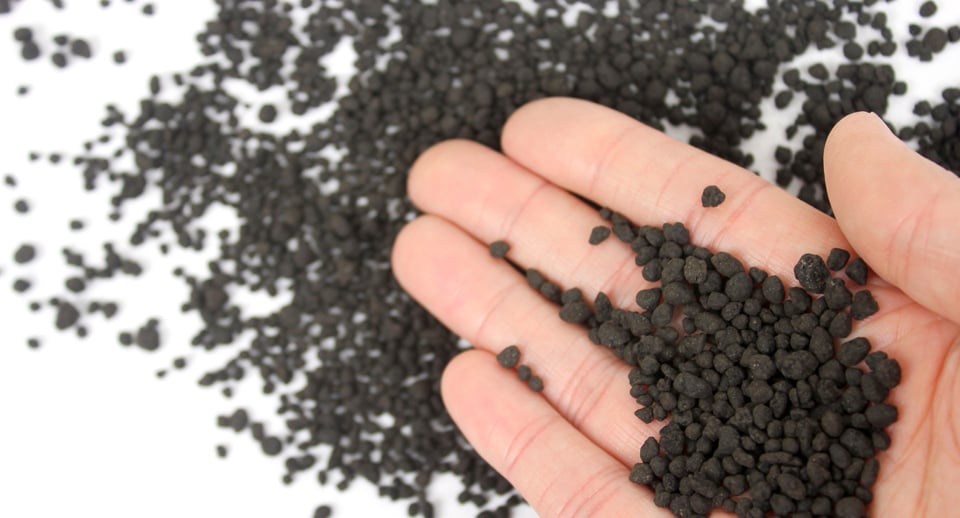
Main Types of the Best Phosphate Fertilizer for Crop Growth
Not all phosphate fertilizers behave the same way. The chemistry, solubility, and release rate differ significantly between product types — and that directly affects which crops benefit most.
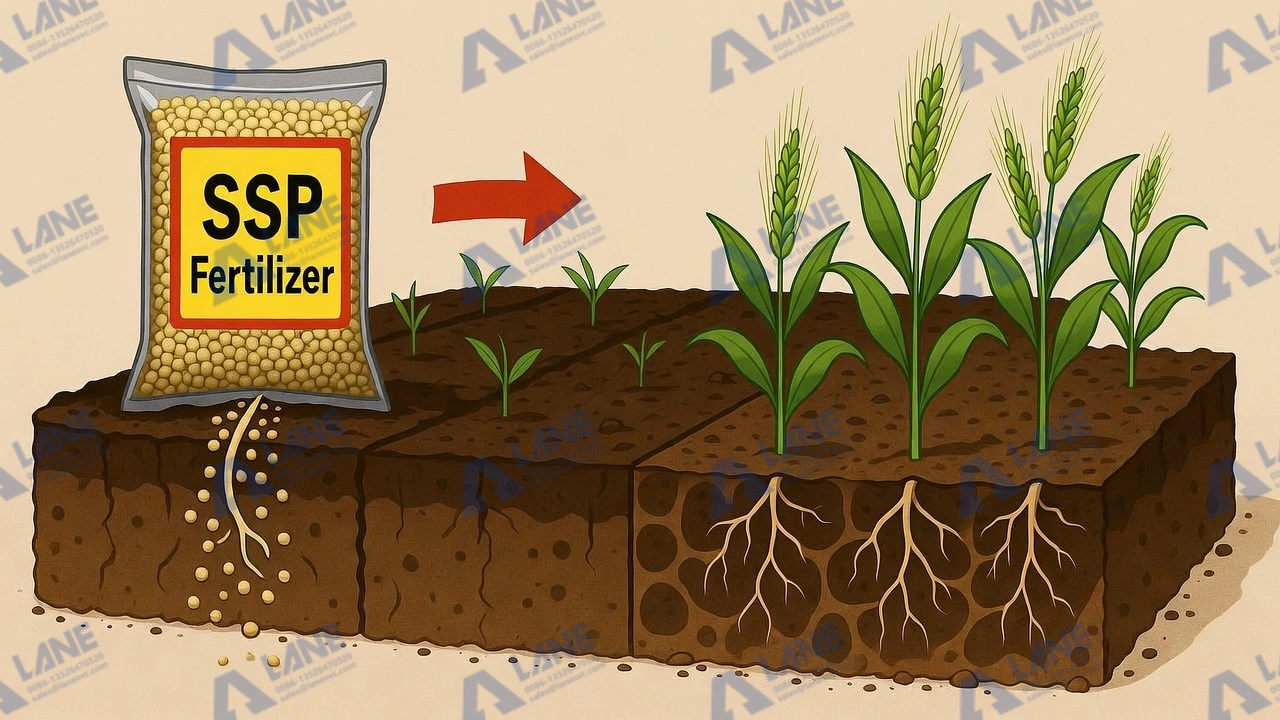
Single Superphosphate (SSP)
Single Superphosphate contains around 16–20% P₂O₅ alongside sulfur and calcium. It’s one of the most cost-effective options for sulfur-deficient soils and is widely used in developing agricultural regions. In my experience, SSP tends to perform exceptionally well for legumes and oilseeds. Many growers still consider SSP the best phosphate fertilizer for crop growth when sulfur supplementation is also required.
Triple Superphosphate (TSP)
Triple Superphosphate delivers 44–46% P₂O₅ with no sulfur content. Higher phosphorus concentration means lower transportation costs per unit of nutrient — an important factor for large-scale operations managing input logistics. One of the major phosphate fertilizer benefits of TSP is its high nutrient density.
Diammonium Phosphate (DAP)
Diammonium Phosphate combines phosphorus with nitrogen, making it a dual-action product popular in base fertilizer applications before planting. The phosphate fertilizer benefits here include rapid initial root stimulation combined with early nitrogen availability. For cereal systems, DAP is often viewed as the best phosphate fertilizer for crop growth because it supports early vegetative development efficiently.
Monoammonium Phosphate (MAP)
Monoammonium Phosphate has a lower pH, which makes it more suitable for alkaline or calcareous soils where phosphorus fixation is a common problem. Slightly more expensive, but often the smarter choice in those conditions. In alkaline environments, MAP may become the best phosphate fertilizer for crop growth due to its superior phosphorus availability.
Organic Phosphate Fertilizers
Organic phosphate fertilizers — derived from bone meal, rock phosphate, or composted poultry manure — release phosphorus slowly and are increasingly popular in regenerative and certified organic systems, even if their phosphorus content is considerably lower. The long-term soil improvement is one of the most valuable phosphate fertilizer benefits associated with organic nutrient management.
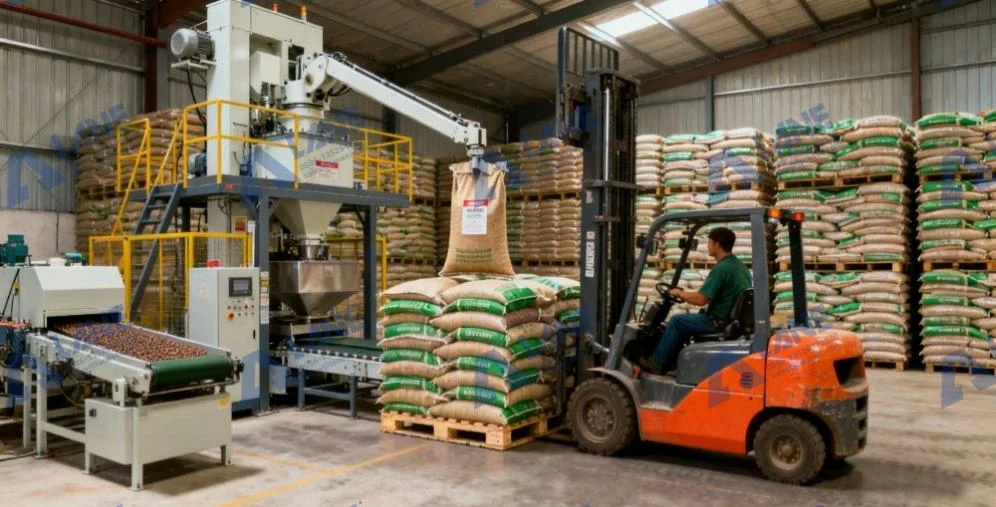
Equipment Used to Produce the Best Phosphate Fertilizer for Crop Growth
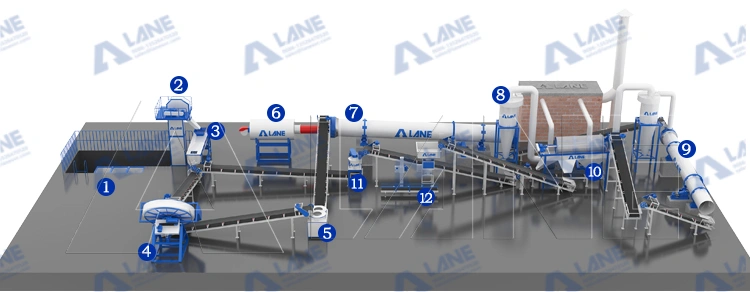
For operations involved in producing granular phosphate fertilizers at scale, the manufacturing line typically includes several critical machines. Understanding this helps procurement teams evaluate supplier capabilities properly.
- Rotary drum granulator— the backbone of most large-scale phosphate granulation lines; handles high-volume wet granulation efficiently
- Disc granulator— preferred for smaller batch production and flexible formulation adjustments
- Rotary drum dryer cooler— Lowers moisture below 2% and quickly cools granules before screening to preserve their integrity.
- Drum Screening Machine— separates on-spec granules from oversized and undersized fractions for reprocessing
- Coating machine— applies anti-caking agents or slow-release coatings to finished granules
- Belt conveyor system— connects production stages with minimal product degradation
Manufacturers like LANE Heavy Industry Machinery design integrated production lines around these core units, configuring capacity and automation levels to match client output requirements from 5 to 100+ tons per hour. Advanced granulation systems help manufacturers create the best phosphate fertilizer for crop growth while improving granule uniformity and nutrient stability.
Application Rates for the Best Phosphate Fertilizer for Crop Growth
Blanket recommendations don’t work here. Application rates depend on soil test results, crop nutrient demand, and the specific phosphate product being used. That said, some general benchmarks hold up well in practice:
- Corn/maize: 60–100 kg P₂O₅ per hectare annually
- Wheat: 40–80 kg P₂O₅ per hectare
- Soybeans: 30–60 kg P₂O₅ per hectare
- Vegetables: 80–120 kg P₂O₅ per hectare depending on intensity
Placement matters as much as rate. Banding phosphate fertilizer near the root zone consistently outperforms broadcast application in terms of uptake efficiency, sometimes by 30 to 40 percent. This is one area where many farms fail to maximize the phosphate fertilizer benefits available from modern phosphorus products.
Farmers using the best phosphate fertilizer for crop growth typically combine accurate soil testing with precision placement technology to improve phosphorus use efficiency.
ROI Breakdown and Phosphate Fertilizer Benefits
Here’s where it gets interesting. The best phosphate fertilizer for crop growth isn’t always the most expensive — it’s the one delivering the highest phosphorus use efficiency for your specific conditions. DAP at USD 580 per ton might outperform rock phosphate at USD 180 per ton if the rock phosphate sits largely unavailable in a high-pH soil profile.
A simplified ROI framework worth running calculate cost per kilogram of available P₂O₅, factor in expected yield response per unit of phosphorus applied and compare against your crop price per ton. Even modest yield improvements — say 8 to 12 percent — often justify premium phosphate product costs within a single season.
LANE’s engineering team regularly advises clients that optimizing the granulation and coating process can meaningfully improve nutrient release profiles, which directly affects the phosphate fertilizer benefits realized at the farm level. For many commercial growers, selecting the best phosphate fertilizer for crop growth is directly tied to improving overall farm profitability.
Final Thoughts on the Best Phosphate Fertilizer for Crop Growth
Selecting the best phosphate fertilizer for crop growth requires moving past generic recommendations. Soil pH, crop type, application method, and production scale all interact. The producers consistently seeing the strongest returns are the ones combining accurate soil testing with the right product chemistry and disciplined application timing.
Understanding the full range of phosphate fertilizer benefits also helps growers improve fertilizer efficiency while reducing nutrient waste and environmental pressure. Ready to optimize your phosphate fertilizer supply chain or production line? Contact our team today for a customized equipment consultation.
FAQ
What is the best phosphate fertilizer for crop growth on acidic soils?
Rock phosphate and SSP both perform reasonably well in acidic conditions, but DAP and MAP are generally more versatile across a wider pH range. For strongly acidic soils below pH 5.5, MAP is typically the best phosphate fertilizer for crop growth due to its compatibility with lower-pH environments.
How do phosphate fertilizer benefits differ between organic and synthetic products?
Synthetic phosphate fertilizers provide faster, more predictable nutrient availability and are easier to rate-control precisely. Organic sources like bone meal release phosphorus more slowly, improving long-term soil health but requiring higher application volumes to match the short-term nutrient delivery of synthetic options.
Can over-application of phosphate fertilizer damage crops or soil?
Yes. Excessive phosphorus can interfere with zinc and iron uptake, leading to micronutrient deficiencies. Phosphorus runoff also creates serious eutrophication risks in nearby water systems. Always base application rates on current soil test data rather than historical averages.
What equipment is essential for granular phosphate fertilizer production?
A commercial-grade production line requires a minimum a rotary drum granulator or disc granulator, rotary dryer, rotary cooler, vibrating screen, and bulk bagging system. Coating machines are increasingly standard for export-grade product.
Is TSP or DAP better for cereal crops?
DAP is generally preferred for cereals as a starter fertilizer because the combined nitrogen and phosphorus availability supports early root and shoot development simultaneously. TSP is the better choice when nitrogen is already being supplied separately, and a high-analysis phosphate source is needed.
How often should phosphate fertilizer be applied?
In most annual cropping systems, phosphate is applied once per growing season, typically at or before planting. In perennial systems, soil testing every two to three years guides application frequency. Sandy soils with low phosphorus retention may benefit from split applications.
For more details, please feel free to contact us.
Henan Lane Heavy Industry Machinery Technology Co., Ltd.
Email: sales@lanesvc.com
Contact number: +86 13526470520
Whatsapp: +86 13526470520