Best Machinery for SSP Fertilizer Manufacturing: A Complete Buyer’s Guide for Industrial Producers
- 2026-04-25
If you’ve spent any real time in the fertilizer industry, you already know that single superphosphate production isn’t forgiving of bad equipment choices. One undersized grinder, one poorly calibrated dryer — and the whole line suffers. I’ve watched producers in Africa and South Asia lose months of output chasing problems that started with procurement shortcuts. Choosing the best machinery for SSP fertilizer manufacturing isn’t just a capital decision — it’s a production strategy. So let’s get into what actually matters when you’re building or upgrading an SSP fertilizer production line.
Why Equipment Selection Defines Your SSP Line’s Success
SSP manufacturing is, at its core, a chemical-mechanical process. Phosphate rock reacts with sulfuric acid to form single superphosphate — but that reaction only performs consistently when the upstream and downstream equipment is properly matched. Particle size, moisture control, reaction time, and granule uniformity all depend on having the right machines working in sequence.
The stakes are higher for industrial producers. You’re not running a pilot batch. You’re running 10, 20, sometimes 50 tonnes per hour, and every bottleneck compounds across shifts. This is exactly where investing in the best machinery for SSP fertilizer manufacturing pays for itself — not just in output, but in product consistency and regulatory compliance for export markets. A well-configured SSP fertilizer production line doesn’t just produce more; it produces better.
Core Machinery in an SSP Fertilizer Production Line
Let me walk you through the essential equipment categories. Every serious SSP fertilizer production line — regardless of capacity — relies on the same fundamental machine groups working in sequence. These aren’t theoretical; these are the units that show up in every real plant I’ve come across.
Phosphate Rock Processing Equipment
Before anything else, the rock has to be prepared. Getting this stage right is the foundation of any reliable SSP fertilizer production line.
- Jaw Crusher: Primary size reduction of raw phosphate rock. Durable, straightforward, built for high-volume continuous feed.
- Raymond Mill: Fine grinding to achieve the target particle size (typically below 180 mesh for optimal acid reactivity). The ball mill is preferred for large-scale operations with consistent throughput demands.
- Vibrating Screen: Separates oversized particles for regrinding. Don’t skip this step — uneven particle size is one of the most common root causes of incomplete acidulation reactions.
Acidulation and Curing Equipment
This is where the SSP reaction actually happens. The best machinery for SSP fertilizer manufacturing at this stage centers on reactor design and controlled curing conditions.
- Acidulation Reactor / Den: The mixing chamber where ground phosphate rock and sulfuric acid combine. Reactor design — specifically residence time and mixing intensity — directly determines P₂O₅ availability in the final product.
- Belt Conveyor (for curing): Post-reaction material is conveyed to enclosed curing bays where the exothermic reaction completes over 4–6 weeks. Proper curing is non-negotiable if you want compliant, high-quality SSP.
Granulation and Sizing Equipment
Raw SSP coming out of curing is powdery and difficult to handle. Granulation changes that. For any SSP fertilizer production line targeting export-grade output, this section defines your final product quality.
- Rotary Drum Granulator: The industry workhorse for SSP granulation. It produces uniform, round granules with low dust, and it handles the relatively high moisture content that SSP materials often carry. Robust, low-maintenance, and scalable.
- Disc Granulator: A viable alternative for smaller-scale operations or where tighter granule size control is needed. Lower throughput than a drum, but more flexible for product specification adjustments.
- Rotary Drum Screener: Post-granulation sizing. Oversized material is crushed and recycled; undersized fines go back to the granulator. This closed loop is what keeps your product on spec.
Drying and Cooling Equipment
- Rotary Drum Dryer: Reduces moisture content to the 1–3% range required for stable storage and transport. Temperature control here matters — excessive heat degrades phosphate availability.
- Rotary Drum Cooler: Brings granule temperature down from 60–80°C to near ambient before bagging. This isn’t optional. Hot product going into bags causes caking and moisture condensation — two things that will get your shipment rejected at port.
Coating and Packaging Equipment
- Rotary Drum Coating Machine: Applies anti-caking agents or micronutrient coatings. Increasingly expected by international buyers.
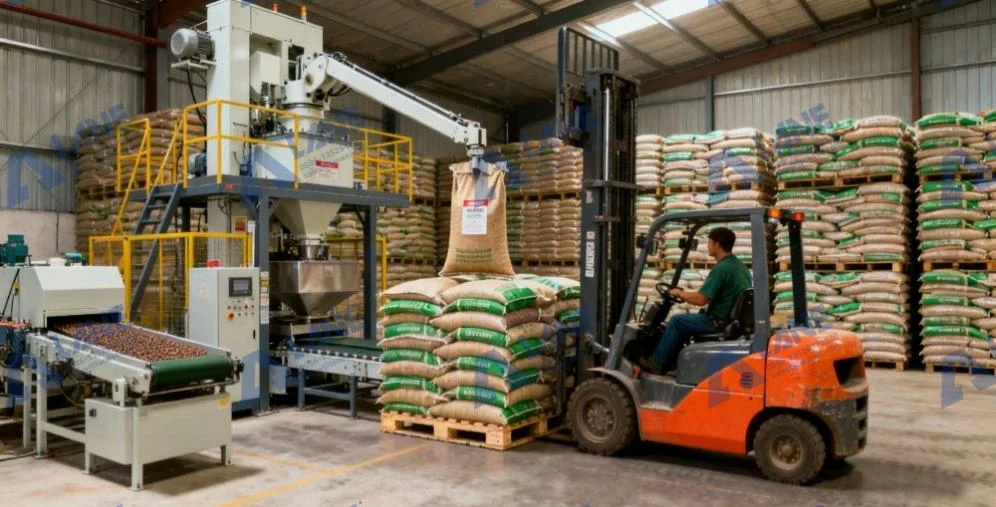
- Automatic Packaging Machine: For large-scale production, automated packaging is the only way to maintain throughput without labor bottlenecks.
What I’ve Seen Work in the Field
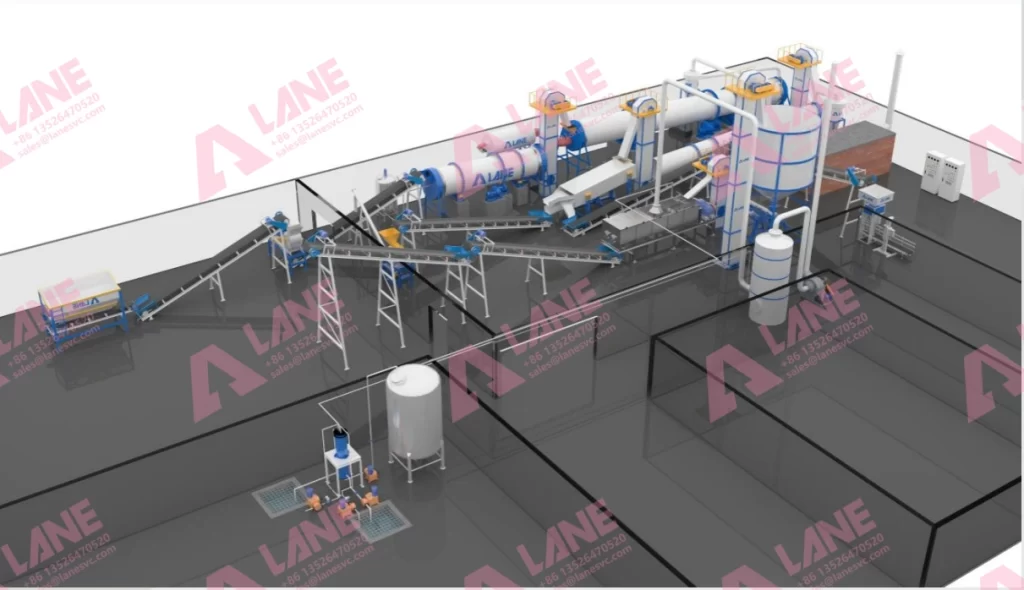
From what I’ve seen across multiple continents, the producers who consistently deliver high-quality output share one thing: they don’t treat the best machinery for SSP fertilizer manufacturing as a list of individual purchases. They treat the SSP fertilizer production line as a system. The grinder’s output spec feeds the reactor’s performance requirements. The granulator’s moisture tolerance determines what the dryer needs to handle. It’s all connected.
Suppliers like LANE — who specialize in large-scale fertilizer production equipment — configure these lines as integrated systems rather than selling standalone units. That matters enormously when you’re troubleshooting or scaling up. You need a supplier who understands how the machines interact, not just what each one does in isolation. In my experience, the best machinery for SSP fertilizer manufacturing always comes from suppliers who think in production lines, not individual units.
Evaluating Suppliers: A Practical Checklist
Not all equipment suppliers serving the SSP market are equal. A few things worth verifying before you commit:
- Turnkey capability: Can they engineer, supply, and commission the full SSP fertilizer production line, or are they piecemeal?
- After-sales support: What’s the response time for spare parts and technical support in your region?
- Reference installations: Have they delivered comparable projects — similar capacity, similar raw materials — in your target geography?
- Process design input: Do they review your phosphate rock specifications before recommending equipment? If not, walk away.
Summary and CTA
Selecting the best machinery for SSP fertilizer manufacturing isn’t about finding the cheapest supplier or the most powerful individual machine. It’s about building an SSP fertilizer production line where every unit is matched to the others — where the grinder feeds the reactor, the reactor feeds the granulator, and the finished product meets your export specs reliably, batch after batch.
Frequently Asked Questions
Q1: What is the minimum capacity for a commercially viable SSP fertilizer production line?
Most industrial producers operate at a minimum of 5–10 tonnes per hour to achieve cost efficiency. Below that threshold, the capital cost per tonne of output becomes difficult to justify. Smaller pilot lines exist, but they’re typically used for product development, not sustained commercial production. For serious market entry, the SSP fertilizer production line should be sized from the start with future expansion in mind.
Q2: How long does the SSP curing process take, and can it be accelerated?
Standard curing takes 4–6 weeks under ambient conditions. Some producers use forced-air curing sheds to reduce this to 2–3 weeks, but shortcuts here directly impact P₂O₅ availability. To be honest, most quality-focused producers stick to the full curing window rather than risk product non-compliance.
Q3: What particle size is required for phosphate rock before it enters the acidulation reactor?
Typically, below 180 mesh (approximately 80 microns) for optimal reactivity. Coarser feed increases the likelihood of incomplete reaction, resulting in lower available P₂O₅ content and potential product quality failures. This is why selecting the best machinery for SSP fertilizer manufacturing at the grinding stage is just as critical as the reactor itself.
Q4: Is a rotary drum granulator always the best choice for SSP granulation?
For most large-scale operations, yes — the rotary drum granulator handles SSP’s moisture characteristics better than competing options and scales efficiently. However, disc granulators can outperform in applications requiring very tight granule size distribution or smaller batch sizes.
Q5: What are the main causes of caking in bagged SSP fertilizer?
The three most common causes are: (1) insufficient drying — moisture content above 3%; (2) inadequate cooling — product temperature above 35°C at bagging; and (3) absence of anti-caking coating. All three are addressable with proper equipment selection and process control within the SSP fertilizer production line.
Q6: How do I evaluate whether an SSP equipment supplier can support my specific phosphate rock source?
Ask them directly for references from plants using similar rock — same origin region, comparable P₂O₅ grade and impurity profile. A credible supplier will have process data from comparable feedstocks. If they can’t provide it, that’s a significant red flag. Rock variability affects grinder selection, acid dosing ratios, and curing time — it touches every major piece of equipment in the line.

For more details, please feel free to contact us.
Henan Lane Heavy Industry Machinery Technology Co., Ltd.
Email: sales@lanesvc.com
Contact number: +86 13526470520
Whatsapp: +86 13526470520