Turnkey SSP Fertilizer Plant Solution: What Buyers Need Before They Sign
- 2026-08-18
The most expensive mistake in an SSP project is buying machines before defining the scope. Buyers see a reactor, a granulator, and a packaging line, compare prices, and sign a contract that does not say who owns the foundations, the acid system, the scrubber, or the first month of production. The result is a budget that looks good on paper and fails during commissioning.
A turnkey SSP fertilizer plant solution should remove that ambiguity. It puts engineering, equipment, installation, commissioning, training, and handover under one accountable scope. It does not remove the buyer’s responsibility for raw material, permits, financing, or the market. It simply makes the project possible to manage.
This guide is written for fertilizer manufacturers, plant investors, engineers, procurement managers, and project contractors. It follows the decision from market and process route to equipment, cost, contractor selection, and operations.
Why SSP still earns a place in fertilizer strategy
Single superphosphate has been a commercial phosphate fertilizer for more than a century, and the market case has not disappeared. SSP supplies phosphorus and sulfur in one product, which makes it valuable in sulfur-deficient soils across South Asia, Sub-Saharan Africa, Latin America, and parts of the Middle East. It is less capital intensive than DAP, MAP, or phosphoric acid routes, which makes it a practical entry point for regional fertilizer production.
The market signals are current, not historical. ICL still markets granular SSP for crops with high sulfur requirements, and Casale was awarded a Process Design Package contract for a 350,000 tons per year granular SSP facility in Turkmenistan, with Daewoo Engineering and Construction as the EPC contractor. These projects show that SSP is a proven commercial route, not an experimental process.
For a buyer, the strategic question is whether a turnkey SSP fertilizer plant solution matches the phosphate rock, the sulfuric acid supply, and the sales channel that the project can realistically reach.
What a turnkey SSP fertilizer plant solution includes
The phrase “turnkey” means different things to different suppliers, so the scope definition matters more than the label. A well-defined turnkey SSP fertilizer plant solution separates the project into named work packages:
- Process design, material balance, and plant layout.
- Phosphate rock handling, grinding, and dosing.
- Sulfuric acid storage, dilution, and dosing.
- Acidulation and curing systems.
- Crushing, conditioning, granulation, drying, and cooling for granular routes.
- Screening, coating, and automatic packaging.
- Dust collection, acid mist scrubbing, and wastewater handling.
- Electrical, automation, and PLC control.
- Installation, commissioning, performance testing, and operator training.
- Spare parts, documentation, and warranty terms.
When the scope is vague, the turnkey SSP fertilizer plant solution becomes a list of machines. When it is written clearly, the buyer can compare proposals against the same process and delivery basis.
Powder or granular: the product route changes the plant
SSP is sold in two forms, and the product form changes the equipment and the budget.
Powder SSP is the direct product of acidulation and curing. It is dusty, compacts in storage, and is harder to blend with other granules. A powder line is simpler and cheaper to build, and it can serve local bulk markets.
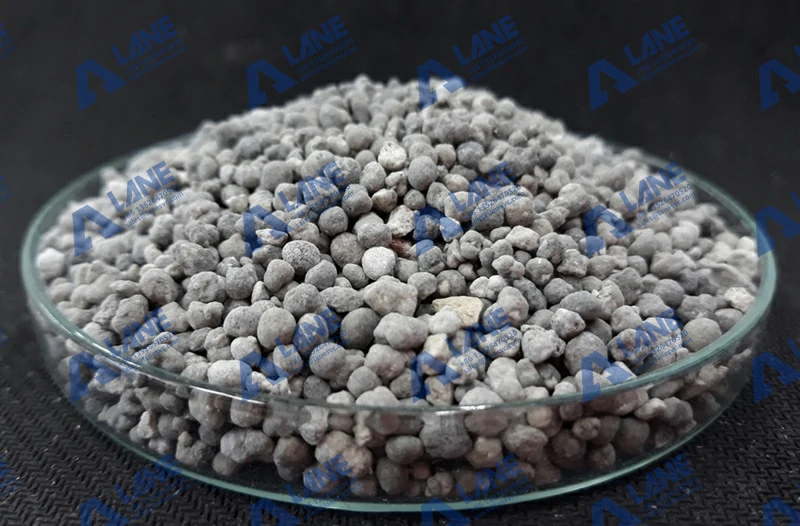
A granular single superphosphate plant adds granulation, drying, cooling, screening, and usually coating. The extra equipment raises capital and operating cost, but it also improves handling, storage, and spreading behavior. Granular product opens retail, bulk blending, and export markets that powder cannot reach.
Buyers often discover that a granular single superphosphate plant is the right route only after studying the sales channel. The question is not which form is better in theory. It is which form the customer will pay for at the volume the plant needs to run.
The extra equipment in a granular single superphosphate plant also changes the risk profile. Dryers and coolers consume a large share of the energy budget, and granulation adds a recycle stream that must be balanced. A turnkey scope has to size these systems against the real moisture and particle-size behavior of the rock, not against a generic design.
Single superphosphate plant EPC contractor: how to evaluate the project leader
The single superphosphate plant EPC contractor holds the schedule together. Engineering, procurement, construction, commissioning, and start-up can be delivered by one contractor, or the equipment supplier can act as the integrator while local firms handle civil works and installation. The structure matters less than the accountability.
A reliable single superphosphate plant EPC contractor should be able to answer specific questions before contract signature:
- Which party owns the process design and performance guarantees?
- Who supplies the phosphate rock and acid testing data?
- What is the equipment delivery schedule, including long-lead items?
- Who manages permits, customs, and local approvals?
- What commissioning and performance tests are included?
- What happens if the plant does not meet capacity or product quality?
- Who trains the operators and supports the first production season?
Ask the single superphosphate plant EPC contractor to show a material balance, a P&ID, and a plant layout before requesting a final price. A supplier that cannot explain the process is selling equipment, not a solution.
The right single superphosphate plant EPC contractor will also ask hard questions about the buyer’s raw material. Phosphate rock grade, moisture, and impurities change the acid dose, curing time, and granulation behavior. If the contractor only asks about capacity, the design will not fit the rock.
Production process and process flow
A turnkey SSP fertilizer plant solution turns raw rock into finished fertilizer through a sequence that is well documented in industry and technical literature. The steps are:
- Phosphate rock crushing and grinding. Fineness affects reaction rate and conversion, so the mill size and screen analysis matter.
- Sulfuric acid preparation and dilution. Acid concentration and temperature must stay controlled for consistent conversion.
- Acidulation. Ground rock reacts with sulfuric acid in a mixer or reactor to form SSP and release heat.
- Curing. Reacted SSP is stored so the reaction can finish and free acid can be reduced.
- Crushing and conditioning. Cured SSP is broken up and prepared for the next stage.
- Granulation. Rotary drum, pan, or extrusion equipment shapes the product.
- Drying and cooling. Granular routes remove moisture and stabilize the granules.
- Screening, coating, and packaging. On-spec product is packed, oversize is crushed, and fines return to the granulator.
In a granular single superphosphate plant, the process flow also includes the recycle system around the granulator, the dryer and cooler, and the final screen. Each transfer point has a moisture and particle-size target.
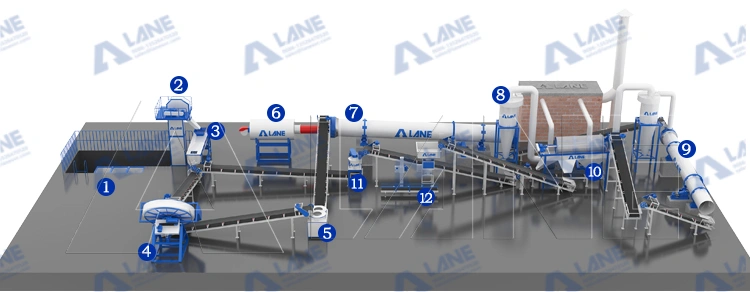
Equipment composition of a turnkey SSP plant
The equipment list in a turnkey SSP fertilizer plant solution is built around the process, not around a favorite granulator. The main systems are:
| System | Typical equipment | Main job |
|---|---|---|
| Rock preparation | Crusher, ball mill or Raymond mill, bucket elevator | Reduce rock to reaction fineness |
| Acid system | Acid storage, dilution tank, dosing pump | Deliver controlled sulfuric acid |
| Reaction | Acid mixer or reactor with acid-resistant lining | Convert rock and acid to SSP |
| Curing | Curing building or silo with airflow control | Finish the reaction and reduce free acid |
| Conditioning | Lump breaker, crusher, mixer | Prepare cured material for granulation |
| Granulation | Rotary drum, pan, or extruder | Form uniform granules |
| Drying and cooling | Rotary dryer, rotary cooler | Remove moisture and stabilize product |
| Screening and coating | Rotary screen, coater, conveyor | Sort and condition granules |
| Packaging | Automatic bagging scale, sewing machine | Produce saleable bags |
| Environmental | Dust collector, acid mist scrubber, wastewater treatment | Protect workers and the environment |
A granular single superphosphate plant needs a dryer and cooler that powder plants do not require. The same scope should include acid-resistant flooring, ventilation, and containment because concentrated sulfuric acid is a daily part of the process.
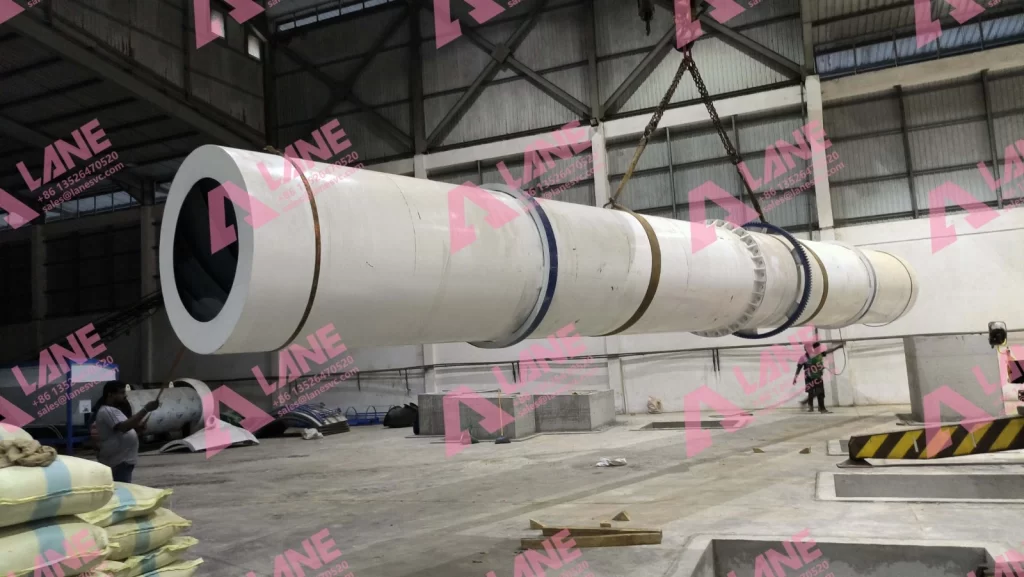
Working principles and technical advantages
The chemistry is the same whether the buyer chooses a powder line or a granular single superphosphate plant. Ground phosphate rock reacts with sulfuric acid to form monocalcium phosphate and gypsum. The reaction releases heat, and the material must be cured so the conversion can finish and the free acid can fall to a safe level.
Granulation then converts the conditioned powder into uniform particles. Wet agglomeration uses moisture and binder to build granules, while extrusion compresses drier material into a fixed shape. The correct route depends on the moisture profile of the cured SSP and the product specification the market expects.
The technical advantage of a turnkey SSP fertilizer plant solution is integration. When the acid system, curing capacity, granulator, dryer, and screens are designed together, the plant can hold moisture and recycle ratios within a narrow range. When each machine is bought separately, the same variables become daily emergencies.
The single superphosphate plant EPC contractor also coordinates the environmental systems. Acid mist scrubbing, dust collection, and wastewater handling are part of a modern SSP plant, not add-ons. Retrofitting them after commissioning is more expensive than designing them into the original scope.
Application scope and market fit
Application scope should be fixed before the turnkey SSP fertilizer plant solution is finalized, because it drives product form and packaging.
SSP is used for:
- Direct application on phosphorus-deficient and sulfur-deficient soils.
- Base fertilizer for cereals, oilseeds, legumes, and plantation crops.
- Bulk blending with other granular fertilizers.
- Fertilizer programs on acidic and low-calcium soils.
- Export programs where P2O5 and sulfur content are documented.
A granular single superphosphate plant serves retail, blending, and export programs that require uniform granules. A powder line can still serve local bulk markets, but it cannot easily reach the same retail shelf or blending facility.
Investment factors and cost planning
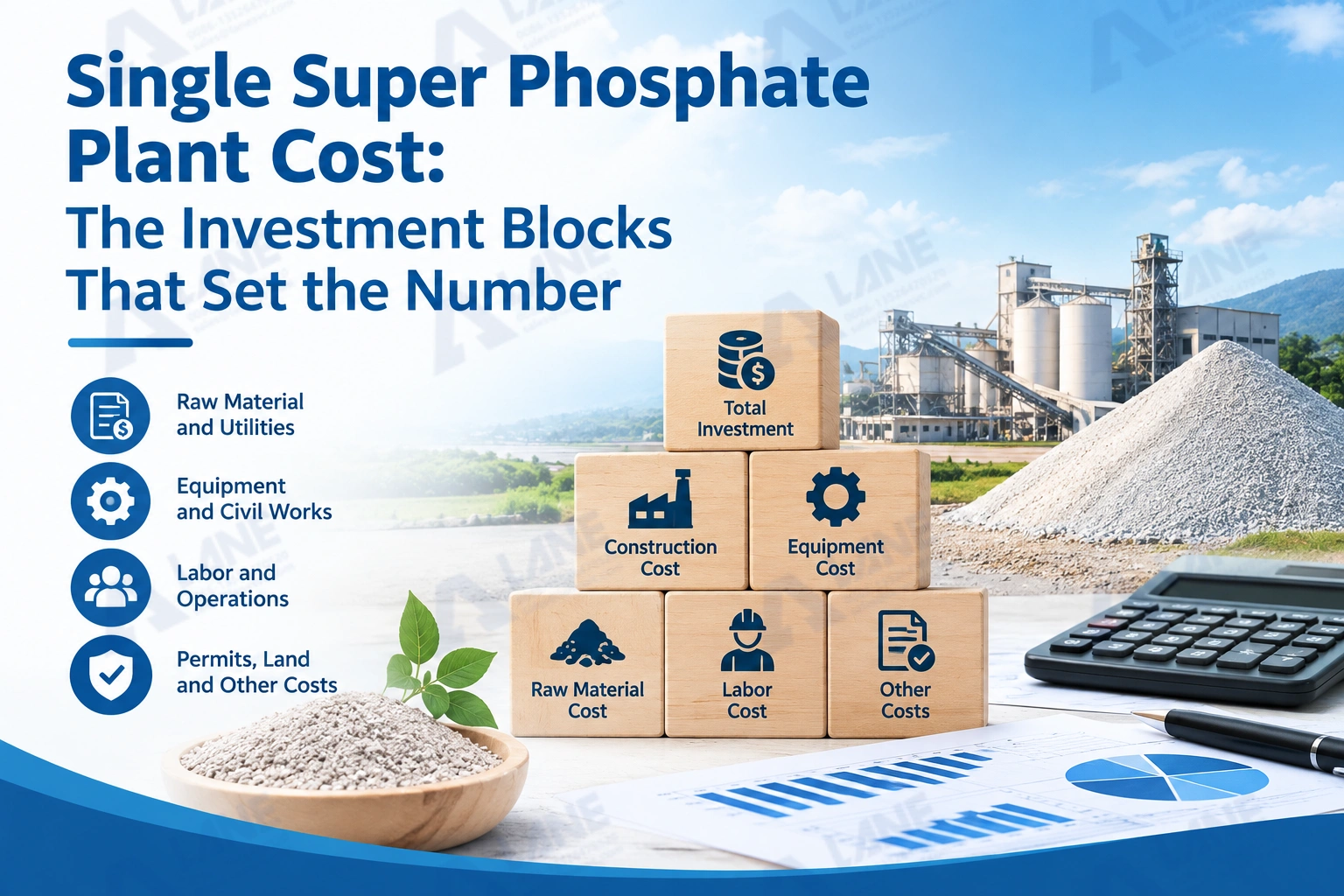
Cost ranges for complete SSP fertilizer plant turnkey solutions are for reference only and do not constitute formal quotations. According to public project reference data, small‑scale plants with an annual output of 10,000‑30,000 tpy require a total investment of USD 800,000‑3,500,000, medium‑scale plants of 50,000‑80,000 tpy need around USD 4,000,000‑9,000,000, while large‑size industrial plants demand investment above USD 15,000,000.
Equipment-only ranges are different. Small semi-mechanized lines can start around USD 80,000 to 350,000 depending on capacity and scope. Standard 8 to 12 tons per hour configurations are commonly quoted in the USD 400,000 to 800,000 range. Fully automated industrial lines with PLC control, fume scrubbing, and integrated packaging can exceed USD 1.2 million for equipment alone.
A realistic budget separates the turnkey SSP fertilizer plant solution equipment from the total project. Civil works and buildings typically represent 15 to 25 percent of project cost. Installation and commissioning add another 8 to 12 percent on top of equipment. Permits and pre-operating costs commonly run 3 to 8 percent. Working capital for rock, acid, packaging, labor, and finished goods usually covers 60 to 90 days of operating cost.
The single superphosphate plant EPC contractor’s scope determines which of these layers sits inside the quoted price. A buyer who compares equipment-only numbers against a competitor’s total project price is comparing different products.
For a granular single superphosphate plant, drying and cooling add a meaningful share of the energy budget. Published operating guidance for SSP places phosphate rock and sulfuric acid at 55 to 65 percent of production cost, energy at 10 to 15 percent, direct labor at 8 to 12 percent, and maintenance and consumables at 5 to 8 percent. Utilization is the second most important variable after raw material cost. A plant running at 60 percent utilization will not recover capital on schedule.
Project execution, schedule, and risk management
Project execution is where a turnkey SSP fertilizer plant solution succeeds or fails. Published LANE project guidance ranges from 8 to 18 months from design finalization to commissioning, depending on equipment lead times, civil works, and site complexity.
The main schedule risks are concentrated in a few places:
- Phosphate rock and sulfuric acid supply agreements.
- Long-lead items such as mills, acid pumps, scrubbers, and PLC systems.
- Permits for acid storage, emissions, and waste handling.
- Civil works that depend on local contractors and weather.
- Commissioning problems caused by feed material that differs from the design basis.
The single superphosphate plant EPC contractor should provide a project schedule with milestones for engineering, manufacturing, shipment, civil works, installation, and performance tests. The buyer should verify progress against physical deliverables, not just invoices.
Performance tests should be written into the contract before equipment is ordered. Agreed reference conditions for rock grade, acid concentration, ambient temperature, and product moisture prevent disputes during start-up.
Operations, maintenance, and safety
Handover is where a turnkey contract is finally tested. The owner’s team should receive the process design basis, P&IDs, equipment data sheets, spare parts lists, operating procedures, and training records. The plant should demonstrate sustained production at guaranteed capacity, not a single short run.
Maintenance planning starts during procurement. Acid pipelines, reactor linings, mixer seals, scrubbers, and curing airflow need scheduled inspection because corrosion and fume handling are daily realities. On the granulation side, spray nozzles, dosing lines, and drum internals need cleaning and wear checks.
The handover package from the single superphosphate plant EPC contractor should include a maintenance checklist and a spare parts list. Screens, dryers, coolers, conveyors, and packaging machines should follow manufacturer intervals, with high-wear spares stocked before a breakdown.
Track energy per ton, conversion efficiency, granulation pass rate, moisture, and downtime. Remote diagnostics help when the plant is far from the supplier’s engineering team.
Supplier selection and procurement checklist
Supplier selection should start with process fit, not machine price, when comparing a turnkey SSP fertilizer plant solution. Ask each candidate for:
- A process flow diagram, material balance, and plant layout.
- A granulation test using the buyer’s phosphate rock.
- A clear scope split between equipment, engineering, civil works, installation, freight, and commissioning.
- Comparable references with contactable owners.
- Commissioning support, operator training, and trial production terms.
- ISO 9001 and CE documentation, plus material certificates where required.
- A spare parts policy and delivery time to the site.
Ask suppliers whether they have built a granular single superphosphate plant at similar scale. Red flags include vague process guarantees, no in-house engineering, and pricing that ignores local site conditions.
A qualified single superphosphate plant EPC contractor will treat the project as a site-specific problem. They should ask about rock quality, acid source, water, climate, port logistics, and local labor before they quote. If the supplier only asks about capacity, the quote will not survive the first engineering review.
The final decision is whether the turnkey SSP fertilizer plant solution matches the raw material, the market, and the operating team the buyer can actually assemble.
Project cases and market signals
Public cases show what a turnkey SSP fertilizer plant solution looks like at different scales.
Casale’s 350,000 tons per year granular single superphosphate plant in Turkmenistan is a large-scale example. The Process Design Package was awarded with Daewoo Engineering and Construction, which means the single superphosphate plant EPC contractor and the technology licensor are separate but coordinated roles.
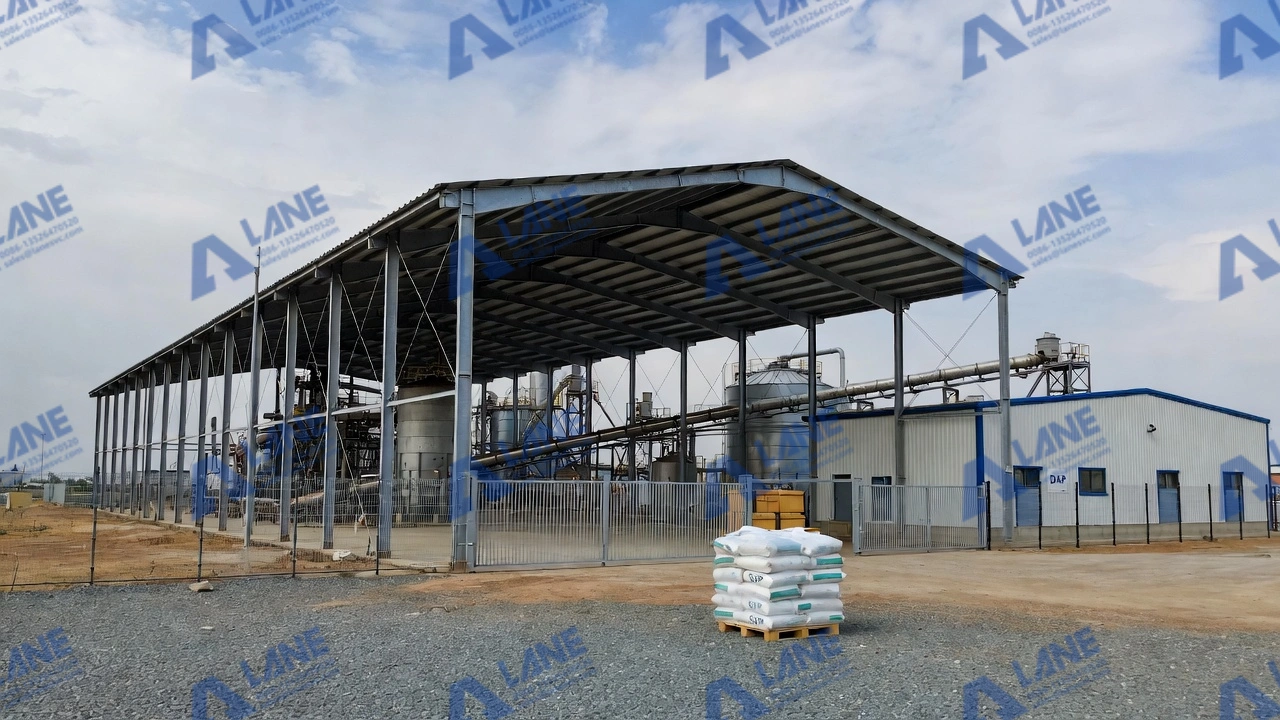
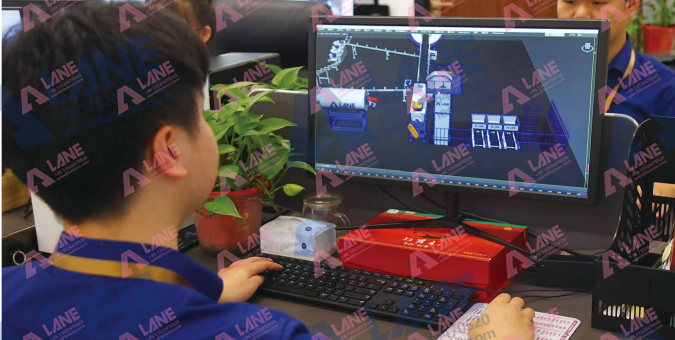
LANE’s published Moroccan project case describes a complete turnkey SSP production solution covering engineering design, equipment manufacturing, logistics, on-site installation, and commissioning. The project was customized for local phosphate characteristics and environmental requirements, and the delivery included PLC control, dust collection, and operator training.
Another published case describes a 1,000 tons per day SSP and TSP phosphate line in Indonesia, engineered as a fully automated granular fertilizer production line. These projects differ in scale, but they share the same structure: raw material analysis, process design, equipment integration, commissioning, and operator support.
For a buyer, the lesson is to compare the process logic of the case, not the headline capacity. A case that shows how the supplier handled rock variability, acid handling, and granulation is more useful than a case with a large number and no engineering detail.
Frequently Asked Questions
What is a turnkey SSP fertilizer plant solution?
A turnkey SSP fertilizer plant solution is a complete project scope covering process design, equipment supply, installation, commissioning, performance testing, training, and handover under one accountable contract. The owner still manages raw material, permits, financing, and product sales.
What does a single superphosphate plant EPC contractor do?
The single superphosphate plant EPC contractor manages engineering, procurement, construction, commissioning, and start-up, and coordinates technology licensors, equipment suppliers, and local construction teams. The contractor owns the schedule and the delivery of a working plant.
What is the difference between powder SSP and a granular single superphosphate plant?
A powder line ends after curing, crushing, mixing, and packaging. A granular single superphosphate plant adds granulation, drying, cooling, screening, and usually coating. Granular product costs more to produce but handles, stores, blends, and spreads more predictably.
How long does it take to build an SSP plant?
Published LANE project guidance ranges from 8 to 18 months from design finalization to commissioning, depending on equipment lead times, civil works, and site complexity.
What equipment is needed for a complete SSP plant?
The core set includes rock crushing and grinding, acid storage and dosing, acidulation, curing, crushing and conditioning, granulation, drying and cooling, screening, dust collection, acid mist scrubbing, and automatic packaging.
Can a turnkey solution handle local phosphate rock?
Yes, if the supplier designs the process around the actual rock. Rock grade, moisture, and impurities affect acid dose, curing time, and granulation. A serious supplier should ask for a rock sample and run a test before finalizing the design.
What standards apply to SSP equipment and product?
LANE manufactures under ISO 9001 and can supply CE-certified equipment. For product and export compliance, buyers should review the standards for their target market, including Regulation (EU) 2019/1009 for fertilizing products and GB/T 20413-2017 where applicable.