Single super phosphate manufacturing process: a buyer’s guide to SSP plant design
- 2026-09-01
For a fertilizer investor, the Single Super Phosphate manufacturing process is not a single reaction followed by a shopping list of machines. It is an operating system that must match local rock phosphate, sulfuric acid supply, product specification, environmental permits, logistics, and the way customers apply fertilizer. A line that looks inexpensive on a quotation can become costly if it produces wet product, loses conversion because of poor rock preparation, or cannot keep fumes contained around the mixer and den.
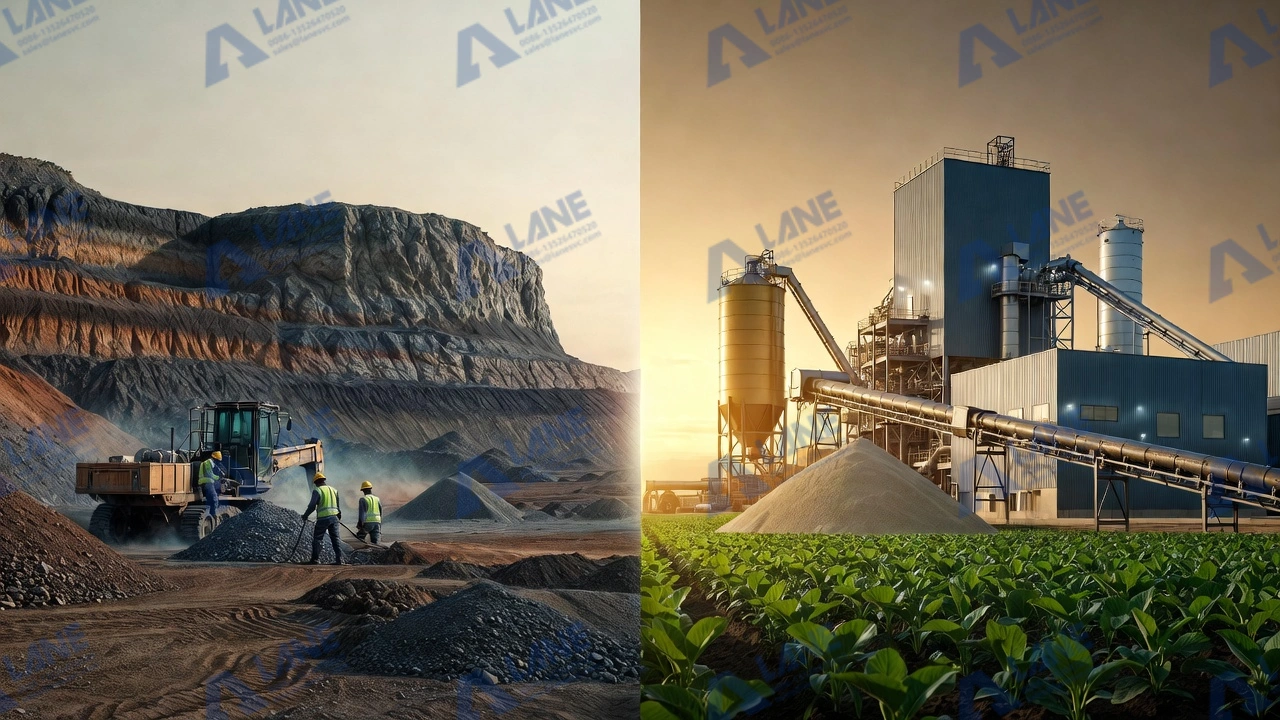
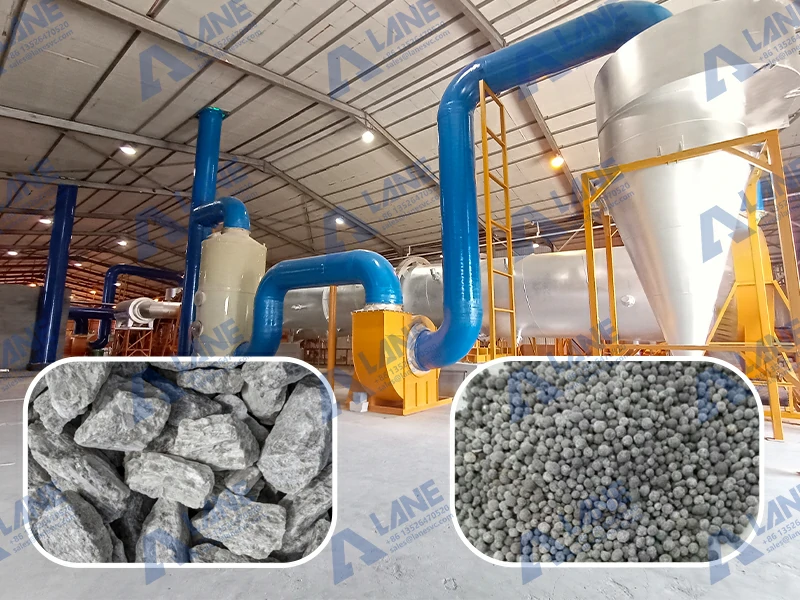
Single superphosphate, commonly called SSP, is made by acidulating finely ground phosphate rock with sulfuric acid. The useful product contains monocalcium phosphate and calcium sulfate. It remains important in markets that value a phosphorus source with sulfur and calcium, and in projects where a simpler phosphate route is more appropriate than a phosphoric-acid-based complex fertilizer plant. FAO describes SSP as a mixture of monocalcium phosphate and gypsum, and lists typical SSP phosphorus grades in the 16 to 18 percent P2O5 range. FAO plant nutrition reference
This guide explains the Single Super Phosphate manufacturing process from the buyer’s side. It focuses on the decisions that determine whether an SSP fertilizer manufacturing plant is buildable, operable, and commercially useful after handover.
Why SSP still deserves a place in a fertilizer portfolio
The case for SSP is usually local, not universal. It is a straight phosphate fertilizer, but its gypsum content also supplies sulfur and calcium. That can suit crop programs and soil conditions where sulfur is part of the nutrient requirement. It can also give a distributor a lower-analysis phosphate option alongside concentrated products such as TSP, DAP, MAP, and NPK.
An SSP fertilizer manufacturing plant has a different commercial logic from a high-analysis phosphate project. It normally relies on phosphate rock and sulfuric acid rather than purchased phosphoric acid. That can reduce process complexity, but it transfers more importance to rock quality, acid availability, acid-resistant construction, curing space, and emissions handling. Buyers should compare delivered nutrient value, not only product tonnes or nameplate capacity.
The current operating trend is toward better physical quality rather than simply more capacity. Granular grades improve handling, blending, storage, and mechanical spreading. At the same time, buyers are asking for tighter moisture control, lower dust, reliable bag weights, and evidence that the air-pollution system was sized for the actual rock and process ventilation load. FAO procurement specifications distinguish powdered and granular SSP and show why the physical product specification matters: granular product is commonly specified with tighter moisture and particle-size requirements. FAO fertilizer specifications
In commercial reviews, an SSP fertilizer manufacturing plant should be benchmarked against the customer’s preferred delivery and application method, not against a competitor’s headline capacity. That keeps the project discussion tied to sellable product.
The chemistry and process choices behind an SSP project
The Single Super Phosphate manufacturing process converts relatively insoluble phosphate minerals into plant-available phosphate by contact with sulfuric acid. The simplified reaction is commonly represented as phosphate rock plus sulfuric acid and water producing monocalcium phosphate, calcium sulfate, and fluoride-bearing gases or liquids where fluorapatite is present. Actual reaction behavior depends on the mineralogy of the rock, acid strength, particle size, moisture, impurities, temperature, and mixing intensity.
That last point is where feasibility studies often need more discipline. Two rocks with similar total P2O5 can behave very differently in acidulation. Carbonates consume acid. Silica, iron, aluminum, fluorine, and moisture can influence slurry behavior, conversion, gas loading, and downstream product quality. Do not accept a guaranteed consumption figure before the supplier has reviewed a representative rock analysis and, for a major project, completed laboratory or pilot acidulation work.
Powder SSP or granular SSP?
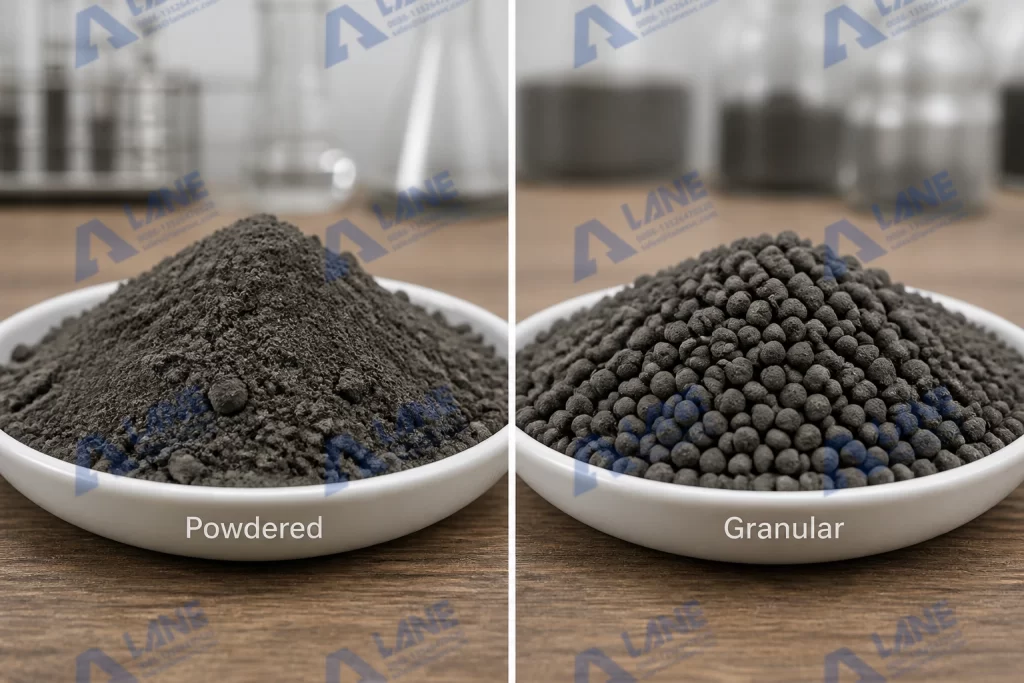
Powder SSP is the shorter route. After acidulation, denning, cutting, curing, and any required conditioning, the product can be stored and packaged as powder. It reduces the equipment count and fuel demand of a granulation section. It also requires a market that can handle a dusty, fine product and a plant layout that can manage storage and transfer dust.
Granular SSP adds a granulator, dryer, cooler, screens, crushers or recycle handling, and a larger dust-control scope. The reward is a product with better flow and more consistent spreading behavior. The penalty is higher capital, utility use, and process-control requirements. The single super phosphate production process should therefore be selected backwards from the sales specification: target particle size, moisture, bagging method, bulk storage period, and customer application equipment.
Continuous denning versus batch-style operation
Most industrial projects favor a continuous mixer and den conveyor arrangement because it supports stable feed and a defined residence time. The reacting mass leaves the mixer, sets in the den, and is cut or disintegrated at discharge. The JICA pre-feasibility process description shows this familiar sequence: rock and sulfuric acid enter the mixer, the mass proceeds through a den, then granular product can move into granulation, drying, screening, and storage. JICA SSP plant process description
The right choice still depends on capacity, local operating experience, shutdown philosophy, and the operator’s ability to control feeds. A continuous design is not automatically forgiving. If acid flow, rock feed, or recycle quality varies, the instability follows the material through the den and into product storage.
Step-by-step Single Super Phosphate manufacturing process
1. Receive, test, and prepare raw materials
The first control point is the incoming material specification. The phosphate rock should be sampled for P2O5, moisture, particle-size distribution, carbonate content, silica, fluorine, iron, aluminum, and other constituents relevant to the plant design. Sulfuric acid should be checked for concentration, contaminants, and temperature. A buyer should require a raw-material acceptance plan, not merely a nominal design basis printed in a proposal.
Rock is usually crushed when received in coarse form and then ground to a defined fine size. Fine grinding increases the surface available for acidulation. A common industrial reference describes rock ground so that 90 percent passes 100 mesh, but the target must follow reactivity tests and guaranteed conversion, not a copied number. Feeders, elevators, conveyors, a mill, dust collection, and ground-rock storage must be sized as one system. A mill that meets hourly capacity but cannot maintain stable feed rate will undermine the reaction section.
2. Meter acid and rock into the reactor or mixer
In the core reaction stage, controlled streams of ground rock, sulfuric acid, dilution liquid, and, where used, recycle liquor enter a corrosion-resistant mixer. The mixer must distribute acid quickly enough to avoid local over-acidulation and unreacted pockets while still delivering a material that can travel through the den. Acid concentration, flow ratio, feed temperature, and mixing energy should be recorded continuously and tied to the product quality program.
This is the point at which the SSP fertilizer manufacturing plant earns or loses its promised output. A vendor should explain the feed-control logic, the isolation and drain arrangement, wetted material selection, emergency shutdown sequence, and how operators will verify the actual acid-to-rock ratio. Avoid treating instrumentation as an optional package. The chemistry is too sensitive for that approach.
3. Denning, setting, cutting, and curing
The fresh reaction mass is semi-solid and exothermic. It moves through a den or reaction conveyor while the reaction continues and the material sets. At the discharge end, a cutter or disintegrator breaks the hardened mass for onward conveying. The product then needs curing time so residual reaction can progress and moisture and free acidity can reach the target range.
Curing is often the missing item in early layouts. The single super phosphate production process needs sufficient covered area, residence time, reclaim capacity, and ventilation for the actual production schedule. If the cure pile becomes a bottleneck, a plant may make green SSP faster than it can release acceptable product. If it is poorly ventilated or managed, housekeeping and corrosive fume problems become operating problems rather than civil-work details.
Document the curing residence-time assumptions in the contract. They are a material part of the single super phosphate production process and a frequent source of disagreement when daily output is assessed too early.
4. Granulate when the market requires a granular grade
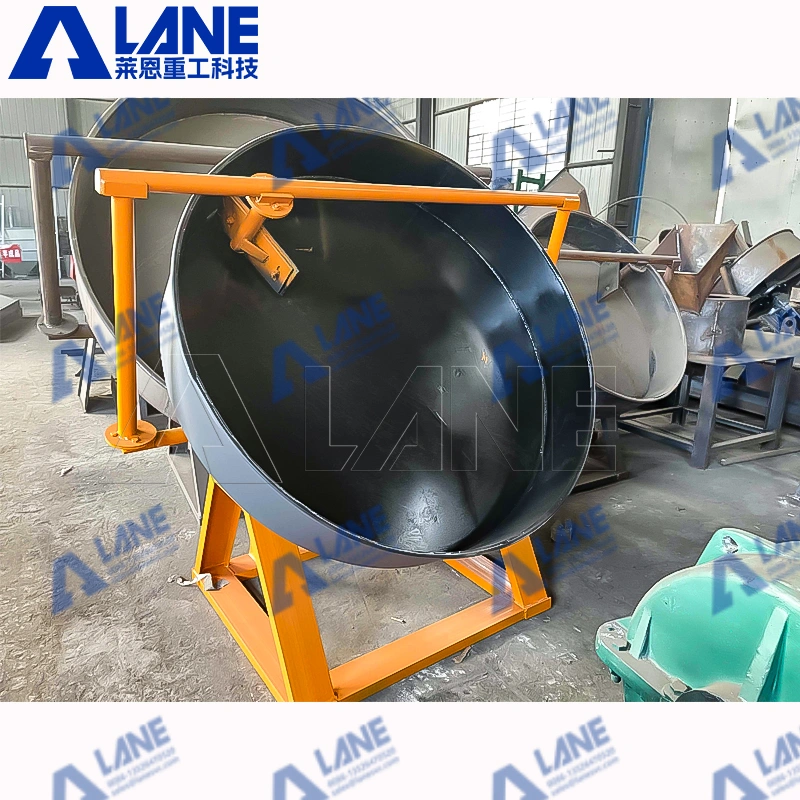
For granular product, cured or conditioned SSP is combined with water, recycle fines, and sometimes steam in a pugmill, drum, or other suitable granulation system. Nuclei grow as material rolls and fines return to the granulator. Granulation is a balance between liquid addition, recycle ratio, retention time, and feed consistency. It is not a stand-alone machine decision.
Ask the supplier to state the guaranteed product-size distribution, recycle load, expected oversize and undersize handling, and how the line responds when feed moisture changes. The best granulator cannot compensate for inconsistent cured material. For this reason, an SSP fertilizer manufacturing plant should be reviewed as an integrated reaction-to-finished-product line rather than as a list of separate equipment capacities.
The same rule applies when a distributor expects seasonal grade changes. The SSP fertilizer manufacturing plant needs enough surge capacity and material separation to change product form without contaminating stocks.
5. Dry, cool, screen, and recycle
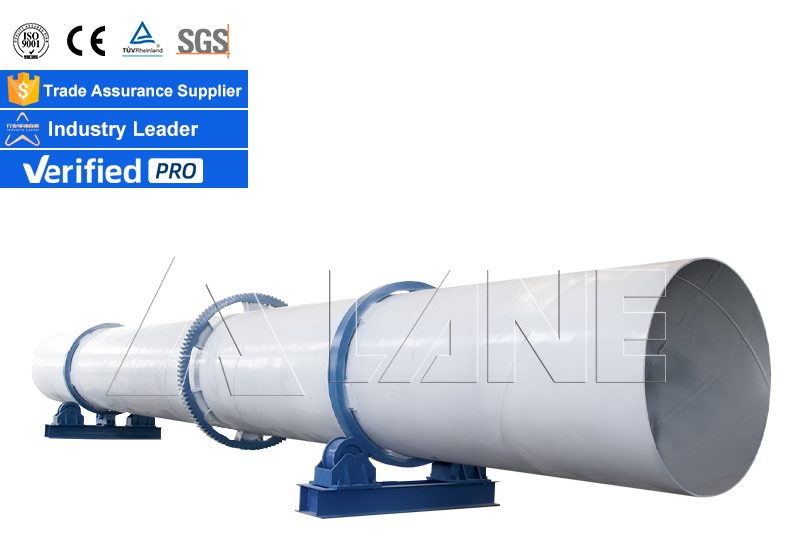
Granules leave the granulation step with moisture that must be reduced for storage and packaging. A rotary dryer removes moisture; a cooler brings product temperature down before screening and bagging. Screens divide acceptable product from oversize and undersize fractions. Oversize material is crushed and returned, while undersize typically returns to the granulation circuit.
Drying is a major operating-cost and product-quality decision. Specify the allowable inlet and outlet moisture, fuel type, burner or heat-source scope, temperature limits, dust load, and product cooling target. Drying too little can cause caking. Drying too aggressively can increase fines, fuel consumption, and handling losses. The Single Super Phosphate manufacturing process should include a mass balance that makes recycle explicit, because recycle directly affects conveying, screening, and granulation capacity.
Treat the dryer and screen loop as one control area in the single super phosphate production process. Separate capacity guarantees can obscure a recycle bottleneck that limits finished-product output.
6. Control dust, acid mist, and fluoride-bearing emissions
Phosphate-rock acidulation can release acidic vapors and fluoride-containing emissions. The collection system needs to cover the mixer, den, cutter, transfer points, curing or storage areas as required by the selected process and permit conditions, plus downstream dryer and screening dust points. The U.S. EPA notes that significant fluoride evolution occurs during acidulation and denning and that uncontrolled transfer and curing emissions can dominate when collection is incomplete. EPA fluoride-emissions control study
This is a procurement issue as much as an environmental one. Define battery limits for hoods, ducts, fans, scrubbers, pumps, stacks, instrumentation, wastewater or scrubber-liquor recirculation, and corrosion-resistant linings. Require the supplier to disclose the assumed ventilation volumes, pollutant basis, pressure balance, and emissions guarantee conditions. Local law controls the final design, so the project must be checked against the jurisdiction’s current permit and monitoring requirements.
Equipment package and what each item must prove
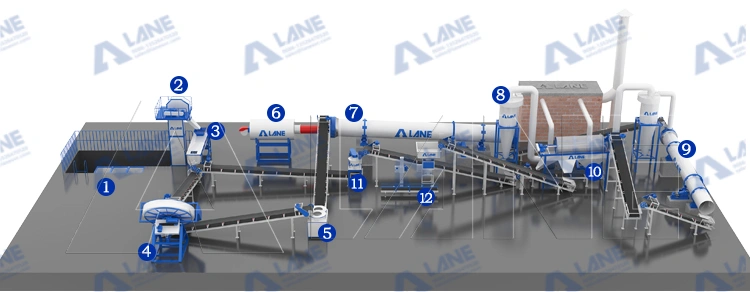
An SSP fertilizer manufacturing plant usually contains the following functional packages:
- Rock receiving, crushing, grinding, storage, weighing, and enclosed transfer equipment.
- Acid storage, unloading, dilution, pumping, metering, containment, and emergency response equipment.
- Acidulation mixer, den conveyor, cutter, green-product conveyors, curing and reclaim equipment.
- Optional granulation, drying, cooling, screening, crushing, and recycle system.
- Dust and fume collection, wet scrubbing, induced-draft fans, ducts, stacks, and liquor handling.
- Finished-product storage, weighing, packaging, palletizing or bulk loading, and warehouse handling.
- Electrical, controls, laboratory, maintenance access, safety interlocks, and utilities.
The purchasing question is not whether every item appears in a general arrangement drawing. It is whether its capacity and material of construction are tied to a stated duty. For example, a scrubber should be offered against an inlet gas basis and pressure drop. A dryer should be offered against specified inlet moisture, outlet moisture, throughput, and fuel condition. A mill should be offered against the actual rock hardness and product fineness. Put those conditions into the technical schedule and the performance-test protocol.
Investment, operating cost, and risk factors
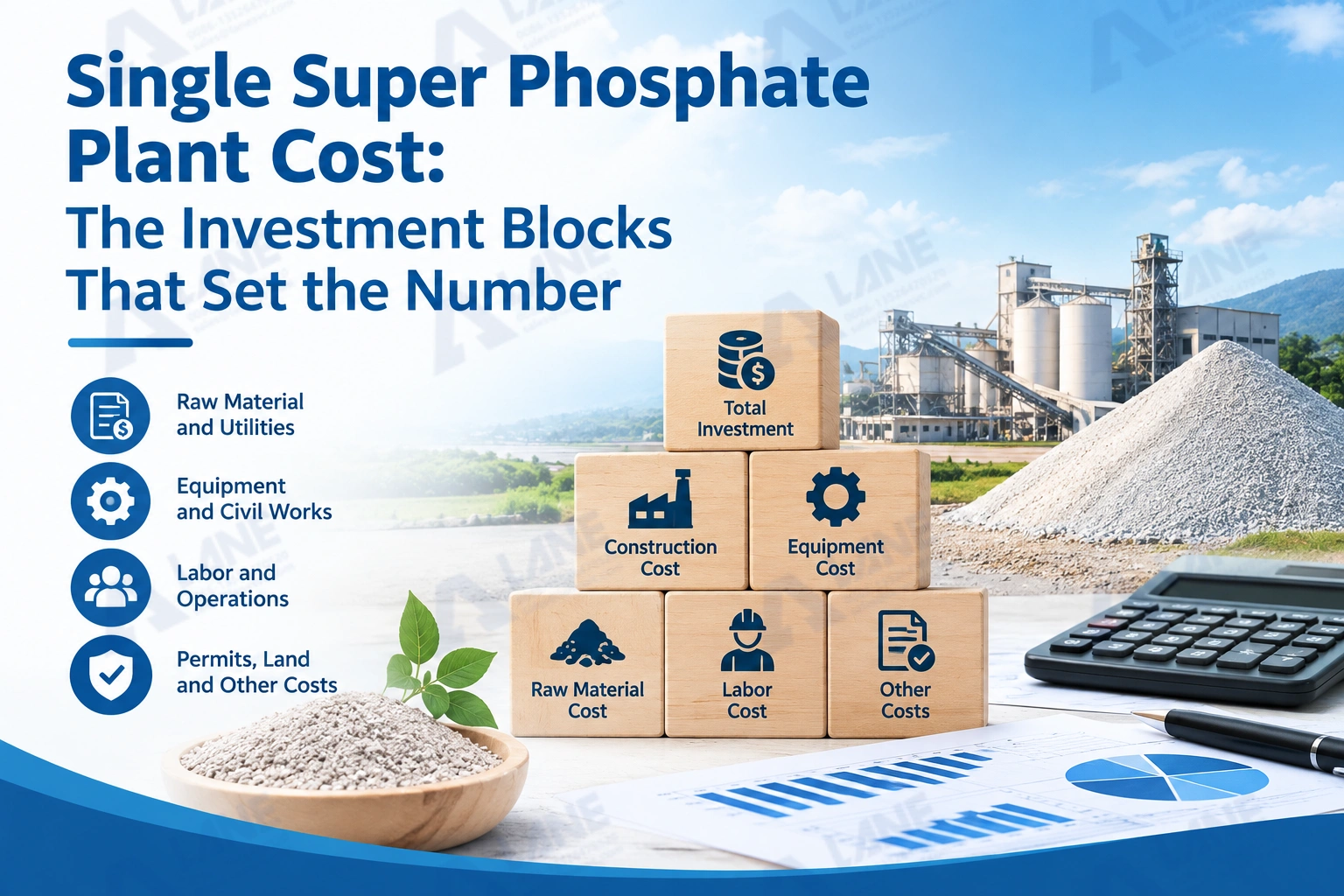
Capital cost depends on annual capacity, product form, raw-material logistics, corrosion allowance, emission-control scope, civil works, automation level, and local construction conditions. A low initial price may omit acid tanks, storage sheds, cure-pile reclaim, spare pumps, corrosion protection, laboratory equipment, or the electrical and utility work needed for commissioning.
Operating cost is driven by phosphate rock, sulfuric acid, energy for grinding and drying, fuel for granulation drying, labor, maintenance, packaging, water, and waste or emissions treatment. Raw-material variability creates another cost line: higher acid consumption, reduced conversion, more recycle, and off-spec product can cost more than a modest equipment upgrade that stabilizes the process.
Use a sensitivity model before award. Test acid price, rock grade, rock moisture, fuel price, product mix, and plant utilization. Separate fixed costs from costs per tonne. A project with adequate margin at 90 percent utilization may not be viable at 55 percent utilization, especially when acid logistics and inventory are constrained.
For this reason, the single super phosphate production process should be evaluated with a cash-flow model that includes seasonal stock build, cure inventory, and working capital for acid and rock.
Practical comparison: SSP, TSP, and NPK routes
SSP is often selected when a sulfur-containing phosphate product fits the market and sulfuric acid plus suitable rock are accessible. TSP gives a more concentrated phosphate product but relies on phosphoric acid. NPK adds flexibility in grade formulation but increases raw-material, reaction, and product-management complexity. FAO summarizes SSP as a sulfuric-acid route and TSP as a phosphoric-acid route, which is a useful starting point for a process decision, not a substitute for a market study. FAO fertilizer production manual
How to specify and buy an SSP production line
Start with a design basis document that both the owner and bidders must use. It should include annual and hourly production targets, operating days, powder and granular mix, product guarantees, rock and acid analyses, ambient conditions, utility availability, emissions limits, plot constraints, packaging requirements, codes, and acceptance-test conditions. Without that document, vendor quotations are difficult to compare.
For the Single Super Phosphate manufacturing process, request a process flow diagram, mass balance, utility balance, equipment list, general arrangement, foundation loads, control narrative, emissions-control design basis, list of wear and corrosion parts, and a commissioning plan. Ask each bidder to separate included equipment from owner-supplied infrastructure. Require named exclusions, not broad phrases such as “civil works by others.”
Evaluate suppliers on process references with comparable rock and acid conditions, not only on total fertilizer machinery sales. A good reference discussion covers start-up duration, actual availability, material-of-construction repairs, dust and fume performance, product quality, spare-parts lead time, and whether the vendor stayed engaged after performance testing.
An SSP fertilizer manufacturing plant should also have a clear owner-operator training plan before cold commissioning, because stable feed control and housekeeping cannot be added after the ramp-up begins.
Questions procurement teams should ask before contract award
- What rock analysis and acid concentration form the guarantee basis?
- What product quality, moisture, particle-size, and capacity values will be tested at site?
- How much curing inventory and floor area are required at the guaranteed operating rate?
- What are the normal and worst-case recycle loads for granular SSP?
- Which emission points are hooded, and what gas flow and scrubbing duty is guaranteed?
- Which components are lined, alloyed, rubber-lined, or otherwise protected from acid and fluoride service?
- What maintenance intervals, critical spares, and local-service commitments apply?
- What happens if rock moisture, carbonate content, or fineness departs from the design basis?
Use those answers to test whether the proposed single super phosphate production process has practical operating margins, rather than a guarantee that works only with ideal inputs.
Operating discipline and maintenance priorities
Stable operation depends on routine checks at the same places where the process can drift: rock fineness, rock-feed rate, acid concentration and flow, reaction temperature, den condition, free acidity, cure time, moisture, granule distribution, recycle rate, fan pressure, scrubber circulation, and bag weight. A plant laboratory should report results quickly enough for operations to correct the process during the same shift.
Those operating records also give an SSP fertilizer manufacturing plant a defensible performance history for lenders, buyers, and future expansion work.
Maintenance needs to reflect corrosive duty. Inspect mixer internals, acid pumps, valves, duct drains, scrubber nozzles, fan impellers, conveyor idlers near wet material, dryer seals, screen media, and lining condition on a planned schedule. Keep critical spares for acid-contact pumps and instruments, particularly where shipping lead times are long. Good housekeeping is also a reliability control: accumulated material attracts moisture, causes corrosion, and creates access problems around transfer equipment.
FAQ
What is the Single Super Phosphate manufacturing process?
It is the industrial conversion of finely ground phosphate rock with sulfuric acid into SSP, followed by setting in a den, curing, and, when required, granulation, drying, screening, and packaging.
What raw materials are needed for an SSP fertilizer manufacturing plant?
The core materials are phosphate rock and sulfuric acid. The plant may also require water, scrubber liquor, recycle fines, fuel for drying, and packaging materials. The rock and acid specifications must be confirmed before equipment is sized.
How is granular SSP different from powdered SSP?
Granular SSP passes through a granulation, drying, cooling, and screening circuit. It is typically easier to handle and spread, while powder SSP uses fewer process steps and may fit markets that accept fine material.
Why is curing necessary in the single super phosphate production process?
Curing gives the reaction time to progress and helps the product reach the required free-acidity and moisture condition. Insufficient curing can reduce quality and create storage or caking problems.
What are the main environmental controls in SSP production?
Projects normally need enclosed collection points, ducting, induced draft, wet scrubbing for acid mist and fluoride-bearing gases, dust collection where appropriate, and compliant handling of scrubber liquor. Final requirements depend on local permits.
How do you choose capacity for an SSP plant?
Choose capacity from verified local demand, product mix, seasonality, raw-material supply, cure inventory, logistics, and realistic operating days. Nameplate tonnes alone do not show the usable sales capacity.
Can one line make both powder and granular SSP?
Yes, a plant can be designed to sell powder after curing and divert suitable material to a granulation circuit. The layout, storage, and controls must be designed for that operating flexibility from the beginning.
What causes poor SSP granule quality?
Common causes include variable cured-feed moisture, unstable recycle ratio, incorrect liquid addition, inadequate drying or cooling, worn screens, and inconsistent particle size before granulation.