SSP Granulation System for Sale: What to Check Before You Sign the Contract
- 2026-07-17
Search “SSP granulation system for sale” and you’ll find plenty of listings — capacity figures, a flowchart, a price, a contact button. What you won’t find is anyone telling you how to judge whether the system behind that listing will actually run your single super phosphate the way the brochure promises.
We build SSP granulation lines, so we’re not a neutral party. But we’d rather you buy well-informed — even from someone else — than buy blind and blame the whole technology when a corner-cut dryer starts reverting your water-soluble P₂O₅. This guide covers the six things that separate a good purchase from an expensive lesson.
Quick Checklist: 6 Things to Evaluate in Any SSP Granulation System
- Granulation route — rotary drum (wet) vs. roller extrusion (dry), matched to your product spec and fuel costs
- Real capacity — rated t/h at your powder’s moisture and curing state, not the catalog number
- Corrosion protection — SSP carries free acid; check what’s actually touching the material
- Drying temperature control — overheated SSP loses available phosphate
- Fluorine and dust handling — scrubbing and recovery, sized for your local emission rules
- Scope of supply — where the supplier’s responsibility starts and, more importantly, where it ends
Print that list. The rest of this article explains how to check each one.
Drum Granulation or Roller Extrusion — Which Should You Buy?
This is the first fork in the road, and it decides half your operating cost.
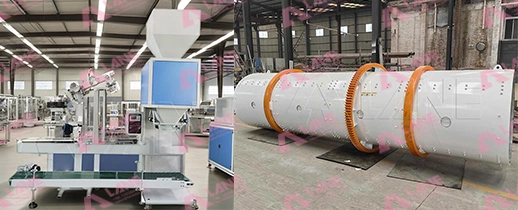
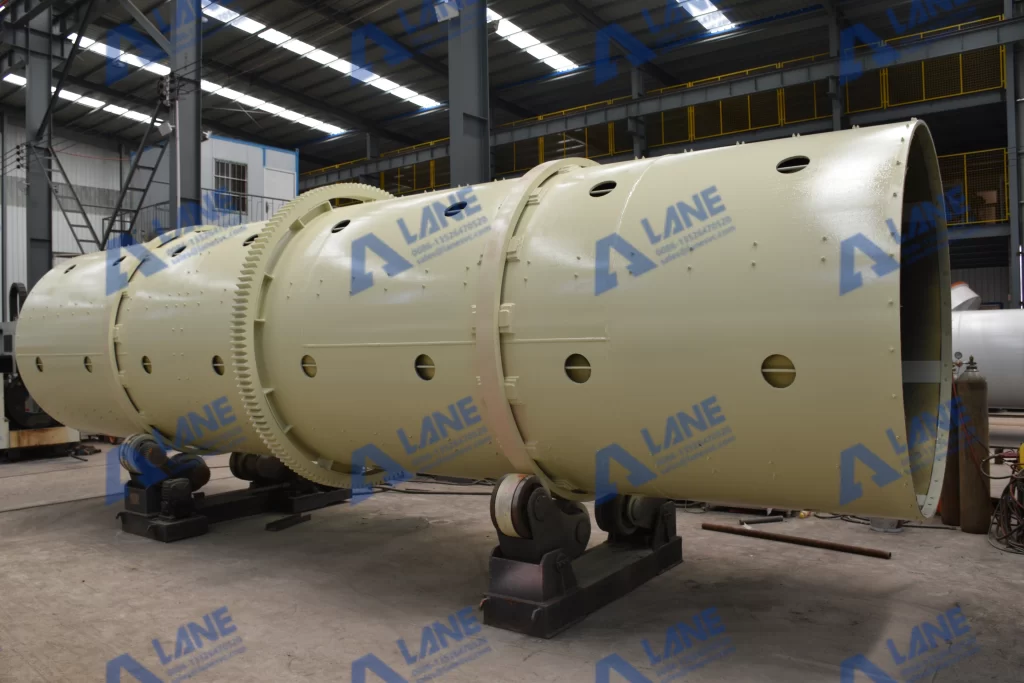
Rotary drum granulation tumbles cured SSP powder with a fine water spray. Particles snowball into round 2–4.75 mm granules, then pass through a dryer, cooler, and screens. It’s the classic GSSP route: round, hard, uniform granules that blend cleanly in bulk fertilizer and flow well through applicator equipment. The trade-off is the thermal section — you’re paying for fuel to dry granules you just deliberately wetted.
Roller extrusion granulation skips the water. Powder is squeezed between two counter-rotating rollers at high pressure, and the compacted sheet is broken into irregular granules. No dryer, no cooler, no fuel bill for the granulation step. Energy use per ton drops sharply. The catch: granules are flatter and less uniform than drum product, and some export markets and blenders specifically want round granules.
So choose by your market, not by the machine:
- Selling GSSP into markets that expect round, premium-looking granules? Drum.
- Selling regionally, cost-sensitive, or where fuel is expensive? Extrusion deserves a hard look.
- Not sure yet? Ask each supplier to granulate a sample of your cured powder and send the product back. A supplier who won’t run a material test is telling you something.
We quote both routes, and roughly speaking the split among our inquiries follows fuel prices — where gas or coal is cheap, buyers lean drum; where it isn’t, extrusion wins the spreadsheet.
What Capacity SSP Granulation System Do You Need?
Catalog capacities for SSP granulation systems typically run from about 3 t/h for a compact single-line setup to 30 t/h for a full-scale GSSP plant. Here’s the mistake we see: buyers size the granulation section off the reactor’s nameplate and forget two realities.
First, curing state changes everything. SSP straight out of the den is plastic, sticky, and still reacting. Properly cured powder (usually two to four weeks in the curing shed) granulates predictably; under-cured powder cakes on the drum walls and sends your recycle ratio through the roof. A system rated 10 t/h on cured powder may deliver a fraction of that on material rushed out of curing. When a supplier quotes capacity, make them state the assumed moisture and free acid range in writing.
Second, recycle load is real capacity. Drum granulation always returns oversize and undersize to the drum — a healthy line might run 1:1 recycle or more. The conveyors, screens, and lump crushers have to be sized for total circulating load, not net output. A quote that looks cheap sometimes got there by sizing everything for net tons.
Rule of thumb: take your target annual GSSP tonnage, divide by realistic running hours (don’t accept 8,000 h/yr on paper — 6,000–7,000 is honest for a well-run plant), and add margin for recycle. Then ask the supplier to show the mass balance. If they can’t produce one, walk.
Corrosion Protection: The Shortcut You Can’t See at Handover
Fresh SSP contains free phosphoric and sulfuric acid plus fluorine compounds. It is, bluntly, equipment-hostile. Every surface that touches the material — drum liners, screw conveyors, elevator buckets, screen decks, dryer internals — either resists that chemistry or gets eaten by it.
This is where low bids hide their margin. Plain carbon steel looks identical to properly protected steel on delivery day. Two years later, one plant is patching holes.
What to check:
- Contact surfaces: ask specifically what material or lining is used on the granulator drum interior, chutes, and screw flights. Rubber lining, stainless cladding, or acid-resistant coatings all work; the answer “Q235 steel” alone does not.
- The dryer’s wet end: hot, humid, acidic gas is the most corrosive spot in the whole line. Ask how the first meters of the dryer shell are protected.
- Dust handling: cyclones and scrubber internals see acidic condensate. Same question.
And get it into the contract as a materials schedule, line by line. “Anti-corrosion treatment included” as a sentence in a quotation protects exactly no one.
Drying: Where Cheap Systems Quietly Destroy Your Product
Here’s the part almost no sales listing mentions. SSP’s value is its water-soluble phosphate — and water-soluble P₂O₅ reverts to less available forms if you overheat it. Push the material temperature too high in the dryer and you ship granules that assay fine on total P₂O₅ but underperform in the field, which is the kind of problem that surfaces a season later, from your customer’s agronomist.
A properly engineered SSP dryer runs controlled, moderate material temperatures with enough retention time to finish the job gently. That costs more than a short, hot dryer. When comparing quotes, ask each supplier two questions:
- What material temperature does the dryer hold, and how is it controlled?
- What’s the guaranteed water-soluble P₂O₅ retention across drying?
One supplier answering with numbers while another answers with adjectives tells you where the engineering lives.
Fluorine, Dust, and the Permit You Haven’t Gotten Yet
SSP production releases fluorine gases at the reactor, and the granulation section adds dust from screens, transfer points, and the dryer exhaust. Regulators in most countries now treat fluorine emissions seriously, and retrofitting scrubbing onto a running line costs multiples of building it in.
Minimum scope worth insisting on:
- Wet scrubbing on fluorine-bearing streams, with the absorption stages sized to your local emission limit (send the supplier the actual regulation, not a summary)
- Cyclone + wet scrubber or bag filter on dryer and cooler exhausts
- Enclosed transfer points with dust extraction on conveyors and screens
Ask what happens to the scrubber liquor too. Fluosilicic acid recovery can turn a disposal cost into a salable by-product at larger scales — worth a conversation once you’re above roughly 100,000 t/yr.
How Much Does an SSP Granulation System Cost?
Honest answer: quotes vary so widely by scope that a single number would mislead you. What we can give you is the structure of the price:
| Tier | Typical Scope | Indicative Range |
|---|---|---|
| Granulation section only (3–10 t/h, extrusion) | Granulator, screens, crushers, conveyors | Tens of thousands USD |
| Granulation section (10–30 t/h, drum route) | + dryer, cooler, dust system, controls | Low-to-mid hundreds of thousands USD |
| Full GSSP line, large capacity (30–50 t/h) | Complete system incl. environmental package, engineering | Upper hundreds of thousands USD and beyond |
Three cost truths that matter more than the sticker:
- The thermal section dominates drum-route pricing. If two drum quotes differ by 30%, look at the dryer first.
- Freight, installation, and commissioning are often outside the quote. Ask for DDP or at least CIF pricing plus a stated commissioning package before comparing anything.
- Wear parts are the real long-term cost. Ask for a two-year spare parts price list with the quote, while you still have leverage. Suppliers price spares very differently once the machine is on your floor.
5 Common Mistakes When Buying an SSP Granulation Plant
- Comparing quotes with different scopes. One includes the dust system, one doesn’t. Normalize scope before comparing a single dollar.
- Accepting catalog capacity without material assumptions. Get moisture, free acid, and curing state written into the performance guarantee.
- Ignoring the crushing stage. Cured SSP arrives with lumps; oversize granules come back from screening. An undersized chain crusher or cage mill bottlenecks the whole line. It’s a cheap machine — until it’s the reason your expensive ones sit idle.
- Buying round-granule equipment for a market that doesn’t pay for round granules. That dryer fuel bill runs forever.
- No performance acceptance test. Define output rate, granule size distribution, and moisture at handover, measured over an agreed run, with holdback payment tied to it.
Questions That Separate Real Manufacturers from Traders
Email these to every supplier on your shortlist:
- Can you granulate a sample of our cured SSP powder and return the product?
- What’s the assumed recycle ratio in your mass balance? Show the balance.
- What materials protect the drum interior, dryer wet end, and scrubber internals?
- What water-soluble P₂O₅ retention do you guarantee across drying?
- What exactly is excluded from this quote?
A manufacturer answers these from engineering records. A trader forwards your email and hopes.
FAQ
What’s the difference between SSP and GSSP?
SSP is the powdered product of reacting ground phosphate rock with sulfuric acid, typically 16–18% P₂O₅. GSSP is the same product granulated to roughly 2–4.75 mm — easier to store, transport, blend, and spread, and it sells at a premium over powder in most markets.
Can I granulate SSP straight from the reactor?
No — the material needs curing first, normally two to four weeks, so the reaction completes and free acid drops. Granulating under-cured powder causes caking, high recycle loads, and unstable granules.
Does an extrusion system really need no dryer?
Correct — compaction happens dry, so there’s no added water to remove. That’s the main reason extrusion’s operating cost per ton undercuts the drum route where fuel is expensive.
Can an SSP granulation system also granulate other fertilizers?
Within limits, yes. Drum systems adapt to some compound and organic formulations with parameter changes. If multi-product flexibility matters to you, raise it at the design stage, not after commissioning.
For more details, please feel free to contact us.
Henan Lane Heavy Industry Machinery Technology Co., Ltd.
Email: sales@lanesvc.com
Contact number: +86 13526470520
Whatsapp: +86 13526470520