SSP Granulation Process Equipment: The Complete Guide to Single Super Phosphate Production Lines
- 2026-07-14
Every year, fertilizer manufacturers spend 30-40% more than they should on SSP granulation equipment — not because they bought the wrong granulator, but because they bought a granulator without understanding the process that feeds it.
If you’re setting up or upgrading an SSP production line, you’ve probably already noticed the problem: equipment catalogs show you dozens of machines, but nobody walks you through how they actually work together. A drum granulator on its own is a steel cylinder. Connected to the right upstream preparation and downstream handling, it’s a profit center. The gap between those two things is where money gets lost.
This guide covers the complete SSP granulation process — raw material to finished product — and explains how to configure equipment that matches your raw materials, your capacity targets, and your budget. No generic checklists. No “contact sales for details.” Just what you need to make an informed decision.
Table of Contents
- What Is SSP Granulation?
- The Complete SSP Production Process
- Core Equipment Breakdown
- Why the Granulator Isn’t Your Biggest Decision
- How to Choose SSP Granulation Equipment
- Investment and Cost Factors
- Common Mistakes in SSP Line Setup
- Frequently Asked Questions
What Is SSP Granulation?
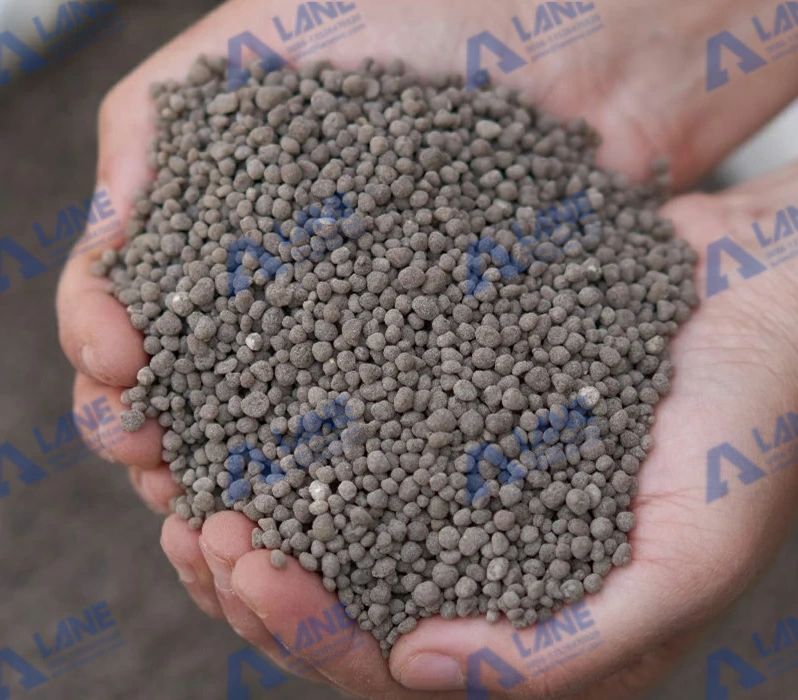
SSP granulation is the process of converting Single Super Phosphate powder — produced by reacting rock phosphate with sulfuric acid — into solid, uniformly sized granules suitable for bulk handling, storage, and field application.
Single Super Phosphate itself is one of the oldest commercial fertilizers. It supplies phosphorus (typically 16-22% P₂O₅), sulfur (11-14%), and calcium — three nutrients that crops need in significant quantities. In its raw powder form, SSP is dusty, difficult to spread evenly, and prone to caking during transport. Granulation solves all three problems.
The granulation step transforms fine SSP powder into particles typically ranging from 1 to 4 mm in diameter. These granules flow freely through spreaders, release nutrients more steadily in soil, and don’t blow away in the wind when you’re trying to apply them.
But here’s what most equipment buyers don’t realize until too late: the granulator is maybe 20% of what determines granule quality. The other 80% is everything that happens before the powder reaches it — and everything that happens after.
The Complete SSP Production Process
An SSP granulation line isn’t a machine. It’s a sequence of interconnected stages. Skip or undersize one, and the whole line underperforms.
Stage 1: Raw Material Preparation
The process starts long before granulation. Rock phosphate — the primary raw material — arrives in lumps that can range from fist-sized to several inches across. Those lumps need to be ground to a fine powder, typically 90% passing through a 100-mesh sieve.
Equipment involved:
- Jaw crusher or hammer crusher for primary size reduction
- Ball mill or vertical roller mill for fine grinding to target mesh
- Bucket elevators and belt conveyors for material transfer between stages
- Ground rock storage hopper with metering feed
The particle size of your ground rock phosphate directly determines the acidulation reaction rate. Coarser powder means incomplete reaction, which means lower P₂O₅ conversion, which means weaker fertilizer. We’ve seen plants where the difference between 80-mesh and 100-mesh grinding translated to a 3-4% drop in available phosphate. On a 50,000-ton-per-year line, that’s real money.
Stage 2: Acidulation and Curing
Ground rock phosphate is mixed with sulfuric acid (typically 65-70% concentration) in a continuous reactor. This is where the chemistry happens: the acid attacks the rock, converting insoluble tricalcium phosphate into monocalcium phosphate — the plant-available form.
Equipment involved:
- Turbine mixer or paddle mixer (continuous type) for acid-rock reaction
- Broad field DEN or belt DEN for extended reaction time
- Scrubber system for acid fumes (hydrogen fluoride and silicon tetrafluoride are released during reaction)
The acidulated material — still a semi-wet, reactive mass — is then conveyed to a curing shed. Curing takes 10-14 days. During this time, the reaction continues, free acid decreases, and the material stabilizes. Rushing the curing step produces SSP that’s sticky, acidic, and difficult to granulate. Every shortcut here shows up later in granule quality.
Stage 3: Granulation
After curing, the hardened SSP is broken up by a cage mill or lump breaker before entering the granulator. This is where the powder becomes product.
There are three main granulation methods, and choosing between them depends on your raw material behavior, not your equipment catalog:
| Method | Equipment | Best For | Watch Out For |
|---|---|---|---|
| Wet granulation | Drum granulator | High-capacity lines (10+ t/h) | Requires steam and water control |
| Pan granulation | Disc granulator | Smaller batches, precise size control | Lower throughput per unit |
| Dry extrusion | Double roller press | Moisture-sensitive materials, no drying needed | Particle shape differs from round granules |
Drum granulators dominate large SSP lines. Powder enters a rotating drum, steam and water spray nozzles add controlled moisture, and the tumbling action builds granules layer by layer. The drum’s angle, rotation speed, and internal scraper position all affect granule size distribution. Get any one of these wrong, and you’ll produce more oversize and fines than on-spec product.
Disc pan granulators offer finer control — the pan’s tilt and rotation speed let operators dial in granule size more precisely. They’re common in lines under 10 t/h where product consistency matters more than sheer output.
Double roller press granulators skip liquid binders entirely. Dry SSP powder is compressed between two counter-rotating rollers at high pressure, forming a compacted sheet that’s then broken into granules. No dryer, no cooler, lower energy consumption. The trade-off: granules come out angular rather than spherical, which some buyers perceive as lower quality even when the chemical performance is identical.
Stage 4: Drying, Cooling, and Screening
Fresh granules from a wet process contain 10-15% moisture. They need to be dried to below 3% — otherwise they’ll cake in the bag and disintegrate in the field.
Equipment involved:
- Rotary dryer — co-current hot air, inlet temperature 500-550°C, typical dimensions 2.0-2.5 m diameter × 16-20 m length
- Rotary cooler — ambient air or forced draft, reduces granule temperature to near-ambient for safe packaging
- Vibrating screens (double-deck) — separate oversize (>4 mm), on-spec product (1-4 mm), and fines (<1 mm)
- Chain mill or cage crusher — crushes oversize granules for recycling
- Recycle conveyors — returns fines and crushed oversize back to the granulator
The screening circuit is the unsung hero of any SSP line. A properly tuned double-deck screen system keeps the granulator feed consistent — and consistent feed is what produces consistent granules. When we audit underperforming lines, the screen deck is where we find problems more often than the granulator itself.
Stage 5: Dust Control and Environmental Systems
SSP production generates dust at multiple points: grinding, material transfer, granulation, drying, screening, and packaging. This isn’t just a compliance issue. Uncontrolled dust represents lost product and creates an unpleasant working environment.
Equipment involved:
- Cyclone separators for primary dust collection at transfer points
- Baghouse filters for fine particulate from grinding and drying
- Wet scrubbers (Venturi or packed bed type) for acid fumes from the reaction stage
- Exhaust stacks with monitoring ports
Stage 6: Packaging and Storage
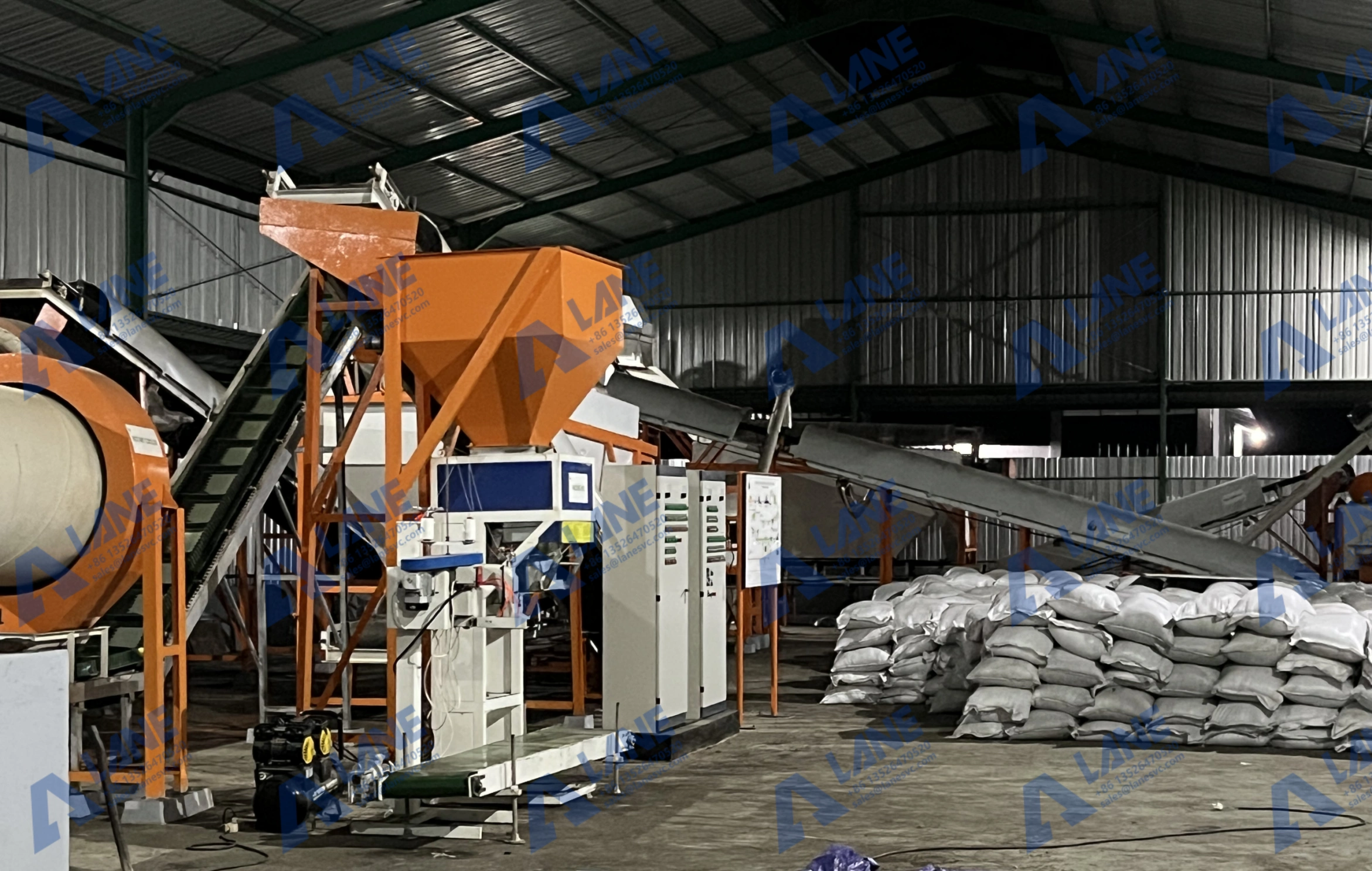
Finished, cooled, screened granules flow into a product hopper and then into the packaging system. For bulk buyers, granules can be loaded directly into trucks or rail cars. For bagged distribution, semi-automatic or fully automatic bagging lines handle 6-12 bags per minute depending on configuration.
Core Equipment Breakdown
Let’s look at the key machines individually — not just what they do, but what to check when you’re evaluating a supplier.
Drum Granulator
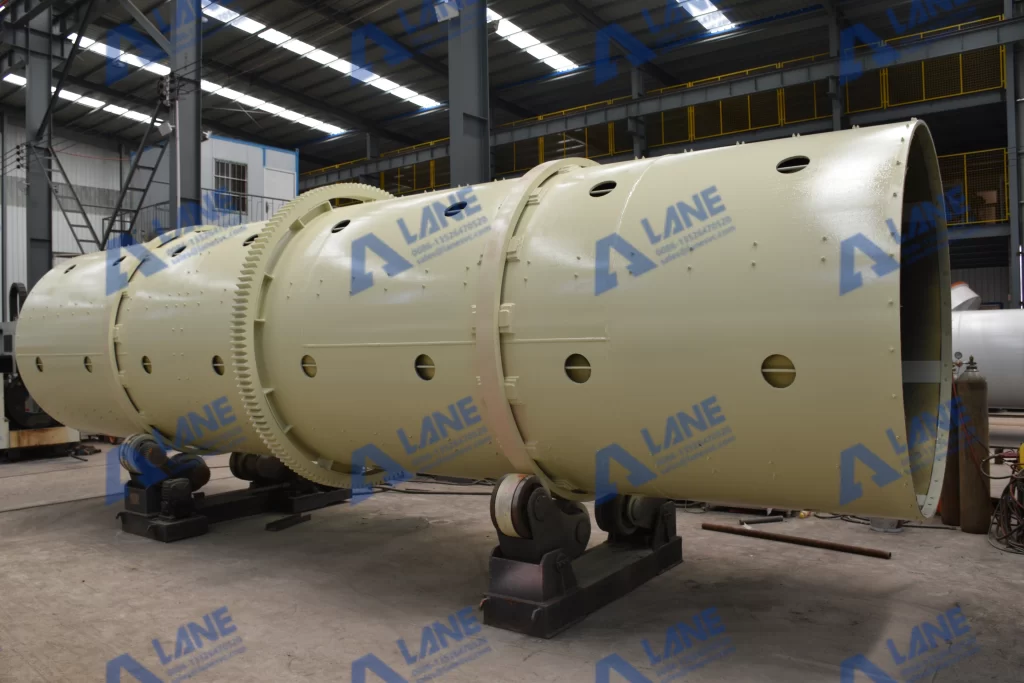
The drum granulator is the heart of most SSP lines. It looks simple — a large rotating cylinder — but the details matter.
What to check:
- Internal liner material. SSP is acidic (residual free acid from the reaction stage). Standard carbon steel corrodes within months. Rubber-lined or stainless-steel-lined drums cost more up front but don’t need replacement every two years.
- Scraper design. Internal scrapers prevent material buildup on the drum wall. Poor scraper design creates uneven buildup, which causes the drum to run out of balance, which destroys bearings. Look for adjustable, replaceable scraper blades.
- Steam injection system. Steam isn’t just moisture — it’s heat. Cold water on powder produces weak, crumbly granules. A proper steam system delivers consistent temperature at the nozzle. Insist on a dedicated steam boiler sized for your throughput, not a shared line.
Typical specifications for a 10-15 t/h SSP granulation line:
- Drum dimensions: 2.2 m diameter × 6-8 m length
- Rotation speed: 9-14 rpm
- Inclination: 2-4 degrees
- Steam consumption: 40-70 kg per ton of product
Disc Granulator
Better suited for smaller lines (3-8 t/h) or for operations producing multiple fertilizer grades on the same equipment.
What to check:
- Pan tilt adjustment range. Fixed-tilt pans can only produce one granule size effectively. Adjustable tilt (45-55° from horizontal) lets you dial in different product specifications.
- Side wall height. Too shallow, and material spills over. Too deep, and granulation efficiency drops. For SSP, 300-400 mm side walls at a 3-4 m pan diameter works well.
Double Roller Press (Dry Extrusion)
This is gaining traction in SSP lines for a simple reason: no drying step means 30-40% lower energy consumption.
What to check:
- Roller material and hardness. SSP powder is abrasive. Standard cast iron rollers wear out in 1,500-2,000 hours. Hardfaced or tungsten-carbide-coated rollers last 3-5× longer.
- Hydraulic pressure consistency. Fluctuating pressure produces uneven sheet density, which means inconsistent granule strength. Look for accumulator-equipped hydraulic systems that maintain pressure within ±0.5 MPa.
Auxiliary Equipment
Rotary dryer sizing is one of the most common mistakes we see. A dryer that’s too small creates a bottleneck — the granulator has to slow down to match it. A dryer that’s too large wastes fuel heating empty volume. For SSP, budget roughly 1.5-2.0 m³ of dryer volume per ton of hourly throughput.
Vibrating screens need to handle the full production rate plus recycle. On a well-tuned SSP line, the recycle ratio (material returned to the granulator vs. on-spec product) runs 0.5:1 to 1:1. If you’re designing for 10 t/h of finished product, your screens need to handle at least 20 t/h total. Double-deck screens with quick-change mesh panels reduce downtime when switching between product grades.
Why the Granulator Isn’t Your Biggest Decision
This is the part where most equipment guides get it wrong. They lead with the granulator. They show you side-by-side spec comparisons. They imply that picking the right granulator is 80% of the job.
It isn’t.
Here’s what actually determines SSP granule quality, in order of impact:
1. Raw material consistency. Rock phosphate from different mines — even different seams in the same mine — has different reactivity. High-reactivity rock reacts faster and more completely with sulfuric acid. Low-reactivity rock leaves unreacted phosphate in the cured material, which becomes weak spots in granules. If you’re sourcing rock from multiple suppliers, you need a blending system. If you don’t have one, your granulator is being fed a different material every week, and no granulator can fix that.
2. Acidulation control. The sulfuric acid-to-rock ratio, acid concentration, and mixing time determine the degree of phosphate conversion. Too little acid = unconverted rock = weak granules. Too much acid = sticky, corrosive material that gums up the granulator and produces granules that cake in storage. Acidulation is a chemistry problem, not a machinery problem, but it determines whether your machinery works or fights you.
3. Curing time and conditions. Curing isn’t passive waiting. Temperature, humidity, and pile turning frequency all affect how completely the acidulation reaction finishes. Material that’s under-cured before granulation still contains active acid that corrodes equipment and produces inconsistent granules. We’ve measured the difference: SSP cured for 10 days with regular turning produced granules with 22% fewer fines than SSP cured for 7 days without turning.
4. Moisture control at the granulator. This is where the granulator itself finally enters the picture — but even here, it’s about the steam and water delivery system more than the drum dimensions. Granules form best at 12-14% moisture for SSP. Too dry, and they won’t build. Too wet, and you get oversized lumps that kill your screen efficiency. A moisture sensor with real-time feedback to the water injection system costs a few thousand dollars and typically pays for itself in three months through reduced recycle.
5. Screening efficiency. Every granulator produces some oversize and some fines. The question is how well your screens separate them. Worn screen decks, incorrect mesh sizes, and insufficient screen area all send off-spec material back to the granulator — which makes the granulator’s job harder, which produces more off-spec material, and so on.
The granulator matters. But it matters within a system. Buy the best granulator in the world, feed it inconsistent powder with unpredictable moisture, and run it into an undersized screen — and you’ll get the same results as a cheap granulator in the same setup.
How to Choose SSP Granulation Equipment
1. Define Your Production Capacity
Start with your target output, not a round number. “We need 50,000 tons per year” is useful. “We need a 10-ton-per-hour line” is the number you design to. Factor in:
- Operating hours per year. A line running 24/7/330 days gives you 7,920 hours. A line running single shift gives you 2,640. The equipment spec changes dramatically.
- Recycle ratio. If your screening circuit returns 50% of material to the granulator, your granulator needs 50% more capacity than your finished-product target.
- Growth buffer. Equipment rated for exactly your current need has no room. A 15-20% capacity margin costs less than adding a second line later.
2. Match Equipment to Your Raw Material
Test your rock phosphate before you spec equipment. Key parameters:
- Reactivity (solubility in 2% citric acid or formic acid)
- P₂O₅ content
- Moisture content as-received
- Abrasiveness (important for crusher and mill liner selection)
If your rock is highly reactive, you can use a shorter curing time and a simpler acidulation setup. If it’s low-reactivity, you need more grinding capacity, longer curing, and probably a drum granulator with higher residence time.
3. Consider Space and Layout
An SSP line is linear by nature. Material flows from grinding → acidulation → curing → granulation → drying → cooling → screening → packaging. Each stage feeds the next.
Vertical layouts (multi-story) save floor space and use gravity for material transfer between stages — fewer conveyors, lower power consumption. They also cost more to build and are harder to modify later.
Horizontal layouts (single-floor) are cheaper to build and easier to access for maintenance. They need more conveyors and more ground space. In most cases, if you have the land, go horizontal. The maintenance access alone pays for the extra conveyors within a few years.
4. Choose Your Automation Level
SSP lines range from mostly manual to fully automated:
- Basic: Manual raw material feeding, manual moisture adjustment, manual bagging. Lower upfront cost, higher labor, more quality variation.
- Semi-automated: PLC-controlled feeders and moisture dosing, automated screening with manual override, semi-auto bagging. This is the sweet spot for most mid-size operations.
- Fully automated: Centralized PLC/SCADA control, real-time moisture and particle size monitoring, automated bagging and palletizing. Higher upfront cost, 30-40% lower labor, consistent quality.
The ROI math on automation depends on your labor costs. In higher-wage markets, full automation typically pays back in 18-24 months. In lower-wage markets, semi-automation often delivers 80% of the consistency benefit at 40% of the cost.
Investment and Cost Factors
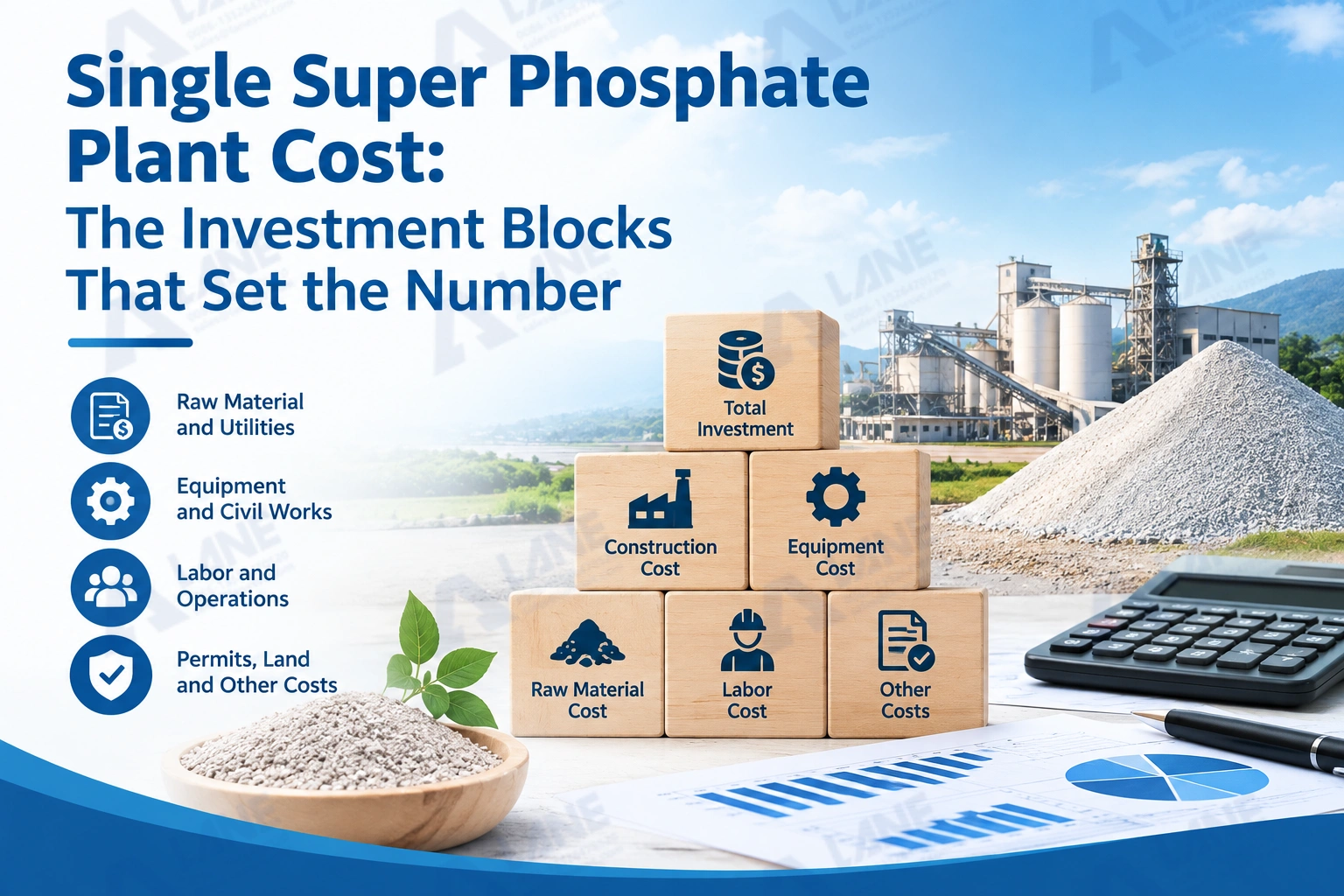
SSP granulation equipment pricing varies widely based on capacity, automation level, and material specifications. A few rough reference points for budget planning:
| Line Capacity | Equipment Scope | Approximate Range (USD) |
|---|---|---|
| 3-5 t/h | Basic configuration, local controls | $150,000 – $350,000 |
| 8-12 t/h | Standard configuration, semi-automated | $400,000 – $800,000 |
| 15-25 t/h | Full configuration, PLC controlled | $900,000 – $1,800,000 |
These numbers cover the core process equipment only — grinding through packaging. They don’t include civil works, building construction, utility connections, installation labor, or commissioning. Budget an additional 40-60% above equipment cost for installation and commissioning, and another 15-25% for civil and structural work.
The costs most buyers forget:
- Spare parts inventory (budget 3-5% of equipment cost for initial spare parts)
- Operator training (2-4 weeks for a new line, longer if your team has no prior granulation experience)
- Ongoing consumables: screen mesh replacements every 4-8 months, crusher hammers every 12-18 months, dryer refractory maintenance annually
- Utility connection costs, which can run $50,000-150,000 depending on site conditions
Common Mistakes in SSP Line Setup
1. Undersizing the dryer. This is the number one bottleneck we fix on underperforming lines. The dryer is the slowest, most energy-intensive stage. If you’re planning to expand capacity later, oversize the dryer now. Retrofitting a larger dryer means cutting into the building structure.
2. Ignoring raw material testing. Three months of production data from your specific rock phosphate source is worth more than any equipment spec sheet. Test grinding fineness, acidulation behavior, and granulation response before finalizing equipment specifications.
3. Skimping on dust collection. A cyclone alone won’t meet emission standards in most jurisdictions. Baghouse filters downstream of the cyclone are standard now. The cost difference between proper dust collection and the fines is about $30,000 — roughly the cost of one regulatory penalty.
4. No recycle surge capacity. When the granulator surges (and it will), the recycle system needs buffer capacity. A small recycle surge hopper between the screen and the granulator feed prevents the entire line from oscillating between overload and starvation.
5. Treating curing as an afterthought. The curing area needs controlled drainage, ventilation, and space for mechanical turning. A concrete pad with a roof isn’t enough if water pools under the pile or if operators can’t access it with a front-end loader for turning.
6. Buying on price alone. Two suppliers quoting the same “10 t/h SSP granulation line” can mean very different things. One includes the steam boiler, dust collection, and electrical control panel. The other doesn’t. Ask for a line-by-line scope-of-supply list before comparing prices.
Frequently Asked Questions
What’s the difference between SSP granulation and NPK granulation?
SSP granulation processes a single-component phosphate fertilizer. NPK granulation blends multiple raw materials (nitrogen, phosphorus, potassium sources) with fillers and binders. SSP lines are simpler in the formulation stage but more demanding in acidulation and curing. NPK lines add a batching and mixing stage that SSP lines don’t need. The granulation equipment itself — drum, pan, or roller press — can often handle both with appropriate adjustments.
Can I use the same granulation line for SSP and other fertilizers?
Yes, with caveats. A drum granulator designed for SSP can granulate other phosphate fertilizers and some NPK formulations. But you’ll need to clean the line thoroughly between product runs — residual SSP acidity can interact with ammonia-based materials in NPK blends. Dedicated lines for each product type produce more consistent quality. Shared lines save capital but cost you in flexibility and quality control.
How long does it take to commission a new SSP granulation line?
From equipment delivery to stable production: typically 8-14 weeks. Mechanical installation: 4-6 weeks. Electrical and controls: 2-3 weeks. Cold commissioning (no material): 1 week. Hot commissioning with material: 2-4 weeks to reach nameplate capacity and consistent product quality. The curing pile needs 10-14 days before you can run material through the granulator for the first time, so factor that into your timeline.
What maintenance does SSP granulation equipment require?
Daily: inspect scraper positions in the drum granulator, check screen mesh condition, verify moisture readings. Weekly: lubricate all bearings, check belt tension on all conveyors, inspect dryer seals. Monthly: measure drum granulator liner wear, check crusher hammer wear, calibrate moisture sensors. Annual: replace worn screen meshes, inspect and repair dryer refractory lining, full bearing replacement on high-load equipment (granulator trunnions, dryer support rollers).
Is dry extrusion better than wet granulation for SSP?
It depends on your priorities. Dry extrusion eliminates the dryer and cooler, cutting energy consumption by roughly a third and capital cost by 15-20%. The trade-off: dry-extruded granules are angular, not spherical, which some buyers in certain markets perceive as lower quality. If your customers prioritize granule shape, wet granulation is the safer choice. If they care about chemical performance and you want to reduce operating costs, dry extrusion is worth evaluating.
Next Steps
Choosing SSP granulation process equipment is a system-level decision. The right answer depends on your raw material, your capacity target, your site constraints, and your market’s quality expectations — not on any single machine’s spec sheet.
If you’re planning a new SSP line or upgrading an existing one, our engineering team can review your specific requirements and provide a configured proposal with detailed equipment specifications, layout drawings, and a transparent scope-of-supply list.
Contact our engineering team for a project-specific quotation →

For more details, please feel free to contact us.
Henan Lane Heavy Industry Machinery Technology Co., Ltd.
Email: sales@lanesvc.com
Contact number: +86 13526470520
Whatsapp: +86 13526470520
Published: July 2026. This guide reflects current SSP granulation technology and market conditions as of mid-2026. Equipment specifications and pricing ranges are provided for reference; actual configurations and costs vary based on site-specific requirements.