Low-Grade Rock Phosphate SSP Process: A Practical Guide for Plant Builders and Buyers
- 2026-09-15
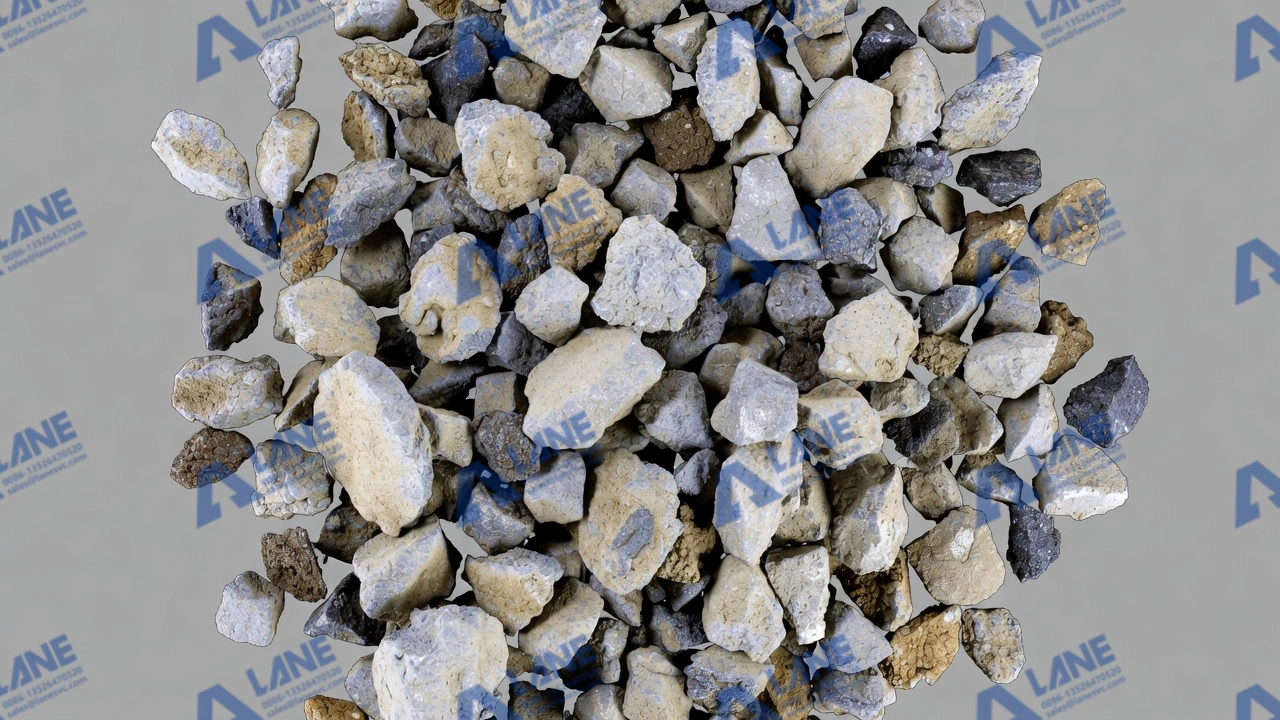
Most phosphate rock on the open market is no longer the clean 30% P2O5 material described in older handbooks. Deposits in many regions now run 22 to 26% P2O5 with elevated iron, aluminum, magnesium, and carbonate content, while higher-grade tonnage stays under long-term contracts. Project owners are left asking whether a low-grade rock phosphate SSP process can be built around the ore they can actually buy, at a cost that works. The answer depends less on SSP chemistry than on how the rock is prepared, how acidulation is controlled, and what analysis the local market accepts. This guide is for the manufacturers, investors, EPC contractors, and procurement managers who make that call.
Why low-grade rock is workable now
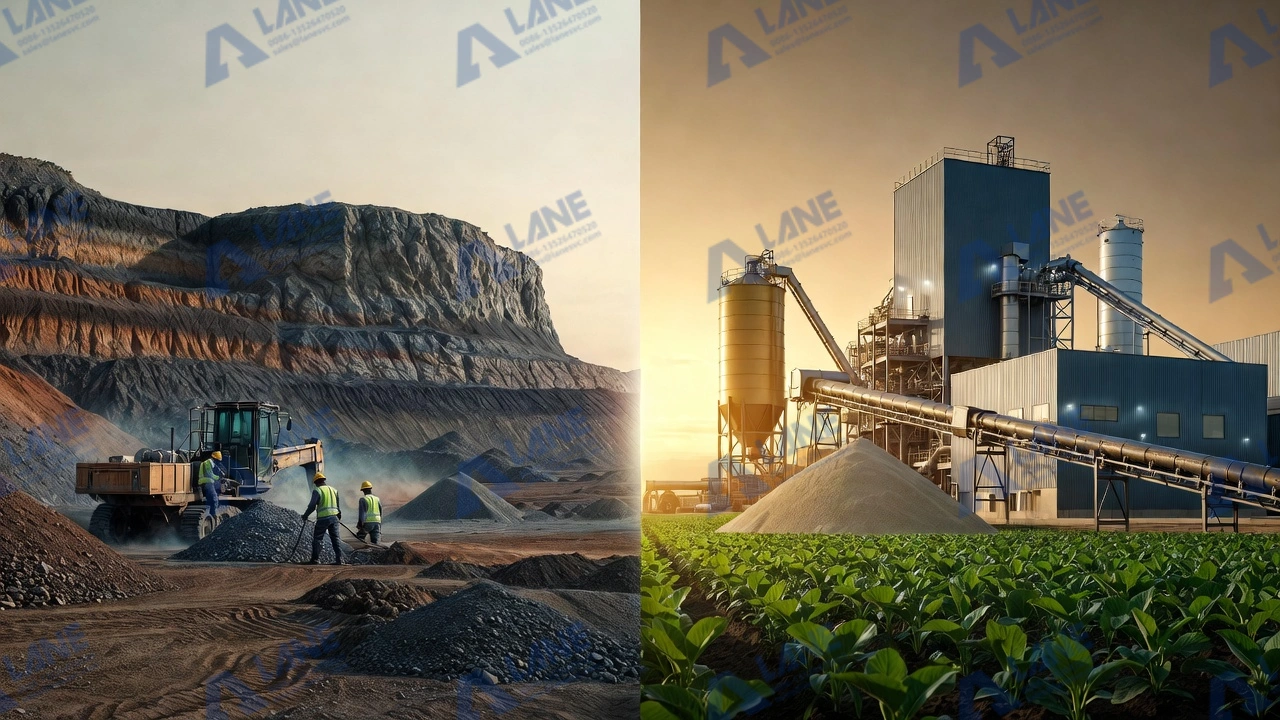
USGS Mineral Commodity Summaries has documented concentrated phosphate rock supply and declining ore grades for years. For buyers in Africa, South Asia, or Latin America, a regional deposit is often cheaper than paying freight on high-analysis rock committed elsewhere.
Single superphosphate fits that reality. The single superphosphate production process reacts ground rock with sulfuric acid and leaves the sulfate in the product instead of discharging it as phosphogypsum: no phosphoric acid plant, no gypsum stack, no acidic effluent to permit. The product supplies roughly 11 to 12% sulfur, which has value in sulfur-deficient soils, and EU Regulation 2019/1009 caps cadmium at 60 mg per kg of P2O5 for phosphate fertilizers sold in that market.
What low grade means for an SSP line
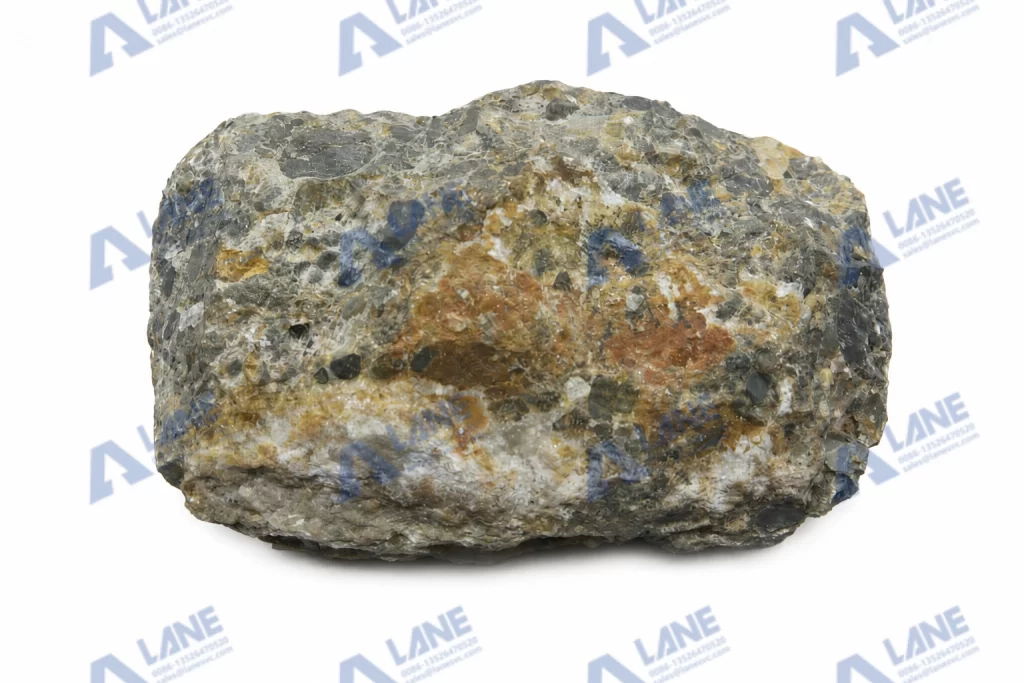
The label usually means rock below roughly 28% P2O5, but what decides feasibility in a low-grade rock phosphate SSP process is acid consumed per unit of P2O5 and how much P2O5 stays plant-available.
| Feed component | Effect on the process | Practical response |
|---|---|---|
| P2O5 below 26 to 28% | More rock, acid, grinding energy, and handling per ton of nutrient, and lower product analysis | Beneficiate, blend with higher-grade rock, or sell a lower-analysis product where rules allow |
| CaO and carbonates | Acid goes to carbonates before phosphate, and CO2 causes foaming and unstable den operation | Set the acid ratio from a bench test and control feed rate |
| Fe2O3, Al2O3, and MgO | Iron and aluminum phosphates pull P2O5 into citrate-insoluble forms, and MgO slows setting while raising acid demand | Grind finer, hold the acid ratio steady, and adjust acid strength for a sticky mix |
| SiO2 | Accelerated wear on mill liners, media, screws, and screens | Specify abrasion-resistant liners and budget for wear parts |
The single superphosphate production process, step by step
Feed rock is crushed and ground so most of it passes a fine screen, typically 80 to 90% below 100 mesh (0.15 mm) for reactive sedimentary rock and finer for dense igneous material. Fineness sets reaction speed and P2O5 availability, and on high-silica feed the grinding circuit is the plant’s main wear item.
Acid dilution and metering
Sulfuric acid is diluted to the strength the rock requires, often 60 to 70% H2SO4, with controlled mixing or cooling and metering that holds the acid-to-rock ratio steady. That ratio shifts from one stockpile to the next as carbonate and MgO content varies, and a plant on a fixed setpoint swings between under-acidulated product and excess free acid.
Acidulation in the mixer and den
Rock and diluted acid meet in a pug mill or paddle mixer and discharge as a plastic slurry into a continuous den, where the reaction sets the mass into a slab within minutes before a cutter breaks it up. This stage fixes P2O5 availability and the fluoride load in the off-gas.
Curing
Cured single superphosphate rests two to four weeks under cover, and up to six weeks when the rock is less reactive or high in impurities. Storage is often undersized, and a line built for ten days on rock that needs twenty-five produces material that bags badly and cakes.
Granulation, bagging, and gas scrubbing
Powdered SSP sells for direct application or as blend stock. Granular SSP adds a drum or pan granulator with a dryer, cooler, and screening circuit, and handles better in blends and spreaders at the cost of capital and drying fuel. Fluoride gases from acidulation are scrubbed before the gas leaves the stack.
Product grade and quality control
The single superphosphate production process yields a product that analyzes 16 to 20% P2O5, with the balance calcium sulfate and minor nutrients. Available P2O5 is the number that sells the fertilizer: official definitions such as AAPFCO’s count water-soluble plus citrate-soluble phosphorus, and the gap against total P2O5 is largely reversion. On high-iron rock that gap can reach several percentage points, so buyers should confirm whether a supplier guarantees total or available P2O5.
Three routes for low-grade rock
| Route | When it makes sense | Main trade-off |
|---|---|---|
| Direct acidulation | A local market without a minimum P2O5 grade, and cheap, reliable rock | Lower product analysis; higher acid and handling cost per unit of nutrient |
| Beneficiation before acidulation | Deposits where washing, flotation, calcination, or magnetic separation can raise grade at moderate cost | Extra capital, a tailings stream, and permitting |
| Blending in the mill feed | Plants already designed around one feed specification | Exposure to import prices and shipping schedules |
The choice is financial as much as technical. Beneficiation that lifts feed grade by three points cuts acid consumption in the single superphosphate production process and raises throughput per ton of ore, but only if the ore body supports that circuit for the life of the project. Because single superphosphate plant cost is dominated by acid and grinding, the flow sheet for a low-grade rock phosphate SSP process should follow the deposit and the market.
Equipment scope and materials of construction
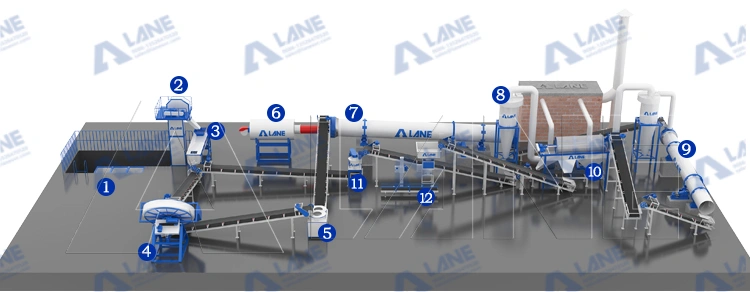
A complete line includes crushers, a grinding mill with classifier or screen, sulfuric acid storage with dilution and metering, a pug mill mixer, a continuous den with cutter, curing bays, and, for granular product, a rotary drum granulator, dryer, cooler, screening machine, coating drum, and packing machine, plus dust collection and scrubbing.
Two points decide whether the line copes with low-grade rock. Acid-wetted surfaces need rubber-lined steel, HDPE, or an acid-resistant alloy, and silica-rich feed calls for wear liners and heavy-duty screw and belt components. Turndown matters too, because the rock arrives in batches with different analyses, so the mixer, acid dosing, and curing logistics must cover a wider range than a plant built for one imported concentrate.
Single superphosphate plant cost: what drives the number
Capital cost drivers
In a powdered line, the biggest items behind single superphosphate plant cost are crushing and grinding, covered curing storage, acid storage and dosing, gas scrubbing, product handling, and civil work. Granular product adds granulation, drying with its fuel system, cooling, screening, and more bagging space. Automation level and spare parts also move the total.
Operating cost drivers
Sulfuric acid is usually the largest operating cost in the single superphosphate production process, ahead of rock in most markets. Compare rock on cost per unit of P2O5 including freight rather than price per ton. Power, drying fuel, labor, wear parts, and maintenance follow, and because SSP is bulky and low analysis, freight limits the market radius.
How to benchmark a quotation
Ask for a mass balance and acid balance built on a sample of your own rock rather than a generic specification, and for written guarantees on available P2O5, acid consumption per ton, moisture after drying, and utilities per ton. Confirm battery limits: who supplies raw material handling, acid storage, hot air generation, effluent treatment, and electrical infrastructure. Compared this way, single superphosphate plant cost becomes a per-ton model you can defend.
Maintenance notes for aggressive feed
- Inspect mill liners, grinding media, and screens on a fixed schedule, and check product fineness daily, since a drifting grind lowers P2O5 availability.
- Calibrate acid pumps and flow meters, and verify acid strength, because a dilution error shifts the whole reaction.
- Watch mixer blades, den walls, and cutters for build-up that changes mixing energy and leaves under-reacted pockets.
- Track curing pile temperature and moisture, and sample before bagging to confirm free acid is inside the product standard.
- Check scrubber pH, circulation rate, and packing condition, and re-verify performance after any change of rock source.
Choosing an SSP equipment supplier
Insist on a bench acidulation test with your own rock, and ask for the acid ratio, mixing conditions, curing time, and resulting available P2O5 from that test. Guarantees should be tied to a defined rock specification with a stated remedy if the line misses them. Require the mass and energy balance, equipment list, utility table, and battery limits in writing before comparing prices.
Reference plants matter, but the question is whether the supplier has commissioned lines on rock like yours. A list built on high-grade imported concentrate says little about performance on high-iron, carbonate-bearing ore. Spare parts lead times for mill liners, den belts, and acid pumps affect availability more than a modest difference in price, and any supplier discussing single superphosphate plant cost should state who commissions the line and runs the acceptance test.

Frequently asked questions
Can low-grade rock phosphate be used to make single superphosphate?
Yes. A low-grade rock phosphate SSP process can work when the acid ratio, grind fineness, and curing time come from tests on that ore instead of a generic formula, and the market accepts the analysis that follows.
What P2O5 content does rock phosphate need for SSP production?
There is no fixed minimum. Rock below roughly 28% P2O5 is treated as low grade, and many deposits in the low twenties can be processed if acid consumption and reversion stay acceptable.
How much sulfuric acid does SSP production consume?
It depends on the rock. Consumption rises with carbonate, MgO, Fe2O3, and Al2O3, so the reliable figure comes from a bench test on the ore you intend to buy.
What is the difference between SSP and TSP?
The single superphosphate production process uses sulfuric acid and leaves calcium sulfate in the product, so SSP analyzes roughly 16 to 20% P2O5 with 11 to 12% sulfur. Triple superphosphate uses phosphoric acid and analyzes around 44 to 46% P2O5 with little sulfur.
How long does SSP need to cure before bagging?
Two to four weeks is typical, and less reactive or high-impurity rock can need up to six weeks. Confirm curing time during testing rather than assuming it at the design stage.
What determines single superphosphate plant cost?
Single superphosphate plant cost follows capacity, product form, and scope. A powdered line needs grinding, acid handling, mixing and den, curing storage, and scrubbing. A granular line adds granulation, drying, cooling, screening, and larger materials handling, and sulfuric acid then dominates the operating side.
Sources and further reading
- USGS Mineral Commodity Summaries, phosphate rock chapters
- FAO fertilizer market and outlook publications and FAOSTAT data
- Regulation (EU) 2019/1009 on fertilising products, cadmium limits
- Association of American Plant Food Control Officials, Official Publication definitions