SSP Plant Layout Design: A Decision-Maker’s Guide to Planning a Profitable Fertilizer Plant
- 2026-09-09
SSP plant layout design determines more of your plant’s lifetime cost than any equipment shortlist. When phosphate rock, sulfuric acid, reacted material, and finished product move in one clean direction—with acid contained, fumes scrubbed, curing space sized properly, and room to add granulation later—the facility runs cheaper, safer, and longer than a layout that merely looks economical on paper. This guide is written for owners, investors, engineers, and procurement teams deciding what to build.
Why SSP Plant Layout Design Is a Capital Decision
The layout is the most permanent part of an SSP project. After foundations are poured, fixing a bad flow direction means moving conveyors, extending curing bays, or reworking drainage—work that usually costs more than the equipment savings. Layout also controls operating cost. Transfer points add dust and maintenance; extra conveying adds motor load and downtime risk. Treat SSP plant layout design as a financial decision from the first meeting, not as a detail the equipment vendor handles alone.
Choose the Product Route First: Powder SSP or Granulated SSP
The fastest way to waste money is to choose equipment before deciding what product you will sell. Powdered SSP and granulated SSP (GSSP) are different businesses with different layouts, and that difference shows up in the plot plan first.
| Decision point | Powder SSP plant | Granulated SSP (GSSP) plant |
|---|---|---|
| Product you deliver | Cured SSP powder, commonly declared in the 16–20% available P2O5 range | Uniform, free-flowing granules with better handling and spreading behavior |
| Core process steps | Rock grinding, acidulation, den reaction, curing, milling, screening, bagging | Powder route plus granulation, drying, cooling, screening, and recycle conveying |
| Building and site impact | Compact building, simpler conveying, lower steelwork | Larger footprint, taller equipment, more access space, more dust and heat control |
| Typical customer base | Direct field application and blending programs | Mechanized spreading, granule blending, retail-friendly packaging |
If the market is uncertain, ask for a plot plan that can start as powder and add granulation later. Reserving that space on day one is cheap; finding it after commissioning is not.
Define the Design Basis Before Any Drawing Is Started
A layout is only as useful as the assumptions behind it. Before any SSP plant layout design begins, the project needs answers to five questions:
- Capacity and product specification. Daily output in tonnes of finished SSP at a declared P2O5 level, and powder or granulated product?
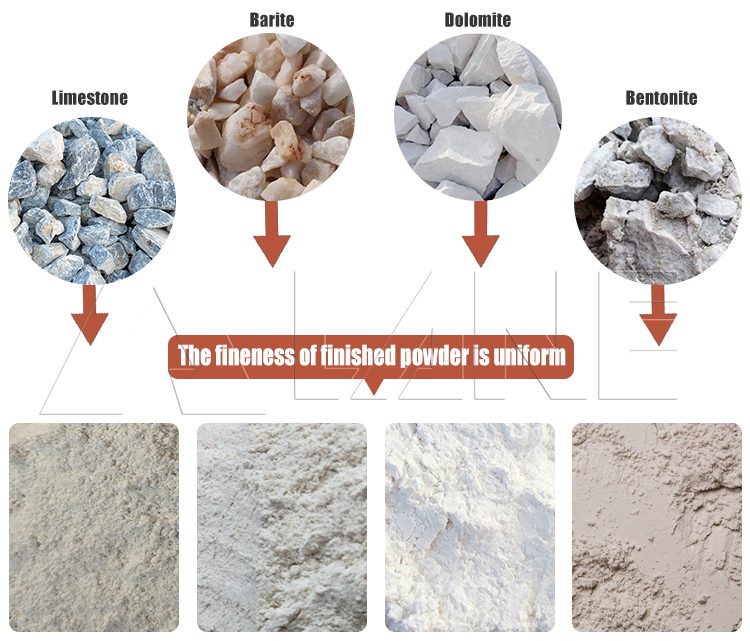
- Raw material reality. Rock grade and fineness, and whether sulfuric acid is purchased or produced on site.
- Storage strategy. How many days of rock, acid, curing stock, and finished product must be held without stopping production?
- Site and utility constraints. Land, power, water, road access, and local climate.
- Expansion plan. Will capacity, granulation, or a second line be added in five years?
Those answers become the input data for single superphosphate plant design. A supplier that asks these questions before drawing is doing engineering; one that quotes a fixed tons-per-day figure without them is selling machinery.
How the SSP Manufacturing Process Sets the Layout Rules
Single superphosphate is a chemical process wrapped in mechanical handling. Sulfuric acid reacts with ground phosphate rock to form water-soluble monocalcium phosphate and gypsum; hydrogen fluoride gas is released and must be captured. Because the chemistry is fixed, the layout rules are fixed too:
- Acid must reach the mixer through short, corrosion-resistant routes with no open handling.
- The reaction and den zone must be isolated, ventilated, and drained separately from powder areas.
- Cured SSP needs covered, ventilated space because reaction heat and moisture must escape.
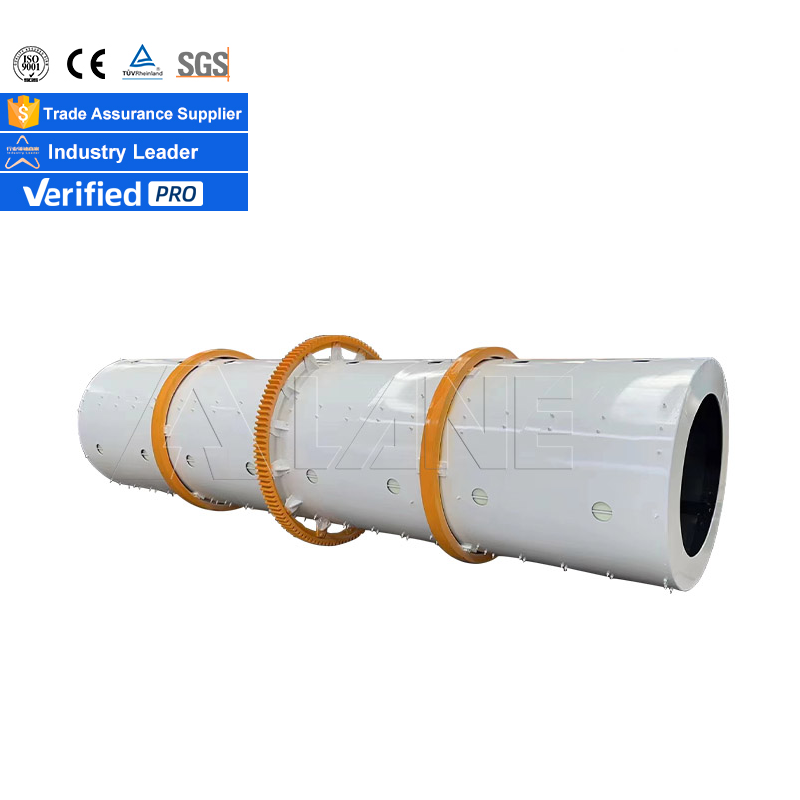
- Granulation adds a dryer, cooler, screen, and recycle loop—thermal equipment, more conveying, and more dust control.
Understanding the SSP manufacturing process is not academic; it is the fastest way to judge whether a plot plan reflects a real process or a generic drawing.
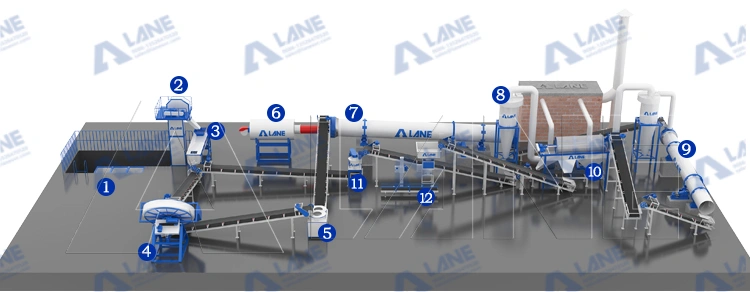
Zone by Zone: What a Sound SSP Plant Layout Includes
A workable SSP plant layout makes the SSP manufacturing process physical: material moves forward and hazards stay contained through these zones:
- Rock receiving and covered storage. Locate tipping near the entrance, keep rain off the rock, and collect dust at unloading and transfer points.
- Acid offloading and tank farm. Bund the tanks, protect them from impact, and route acid to the mixer without crossing drains or public areas.
- Grinding and milling. Enclose the circuit, connect it to dust collection, and keep ground rock dry until it reaches the mixer.
- Acidulation and den. The hazard heart of the plant needs dedicated ventilation, scrubber access, washdown drainage, and corrosion-resistant floors and walls.
- Curing bay. Give cured product enough covered, ventilated floor area for the full curing period, plus room for forklifts or a pile turner.
- Finishing, granulation, and bagging. Keep dry powder work and any granulation loop separate from wet reaction areas.
- Utilities and maintenance corridor. Utilities and a clear service route should not fight production flow for space.
Maintenance Access
Every machine needs safe working space. Squeezing a layout to cut building cost usually sacrifices maintenance access—and downtime is how the plant pays.
Use a straight-line or U-shaped flow so material never doubles back, and keep the wet, corrosive side separate from dry powder work. A shared corridor between acid handling and bagging causes contamination and safety problems for years.
Budget Reality: Where Layout Decisions Show Up in Cost
Most first-time investors underestimate how much of an SSP budget sit outside the process machines. The layout decides the size of those costs:
- Corrosion-resistant construction. Acid-resistant floors, drainage, and tank containment are structural and cannot be value-engineered away later.
- Curing capacity. The curing bay is often the largest covered area in a powder plant; undersizing it caps output no matter what the mixer can do.
- Fume and dust control. Scrubbers, cyclones, ducting, and bag filters are capital items with defined space needs; treating them as add-ons creates permit and safety risk.
- Conveyor and transfer length. Every extra meter adds motors, belts, dust points, and spares; a compact flow saves cost every shift.
- Automation and control. Control rooms, panels, and cable trays need space in the original design; retrofitting them is expensive.
That is where the value of single superphosphate plant design shows up: minimize these items and the layout is worth far more than a small discount on equipment.
Safety, Emissions, and Compliance Shape the Plot Plan
SSP plants handle concentrated sulfuric acid and release fluoride-bearing gas and dust. Good international practice treats those as layout drivers, not afterthoughts. The World Bank Group EHS Guidelines for phosphate fertilizer manufacturing describe the expected fluoride and wastewater controls, and the International Fertilizer Association publishes guidance on safe fertilizer storage and handling. When a supplier presents a plot plan, the environmental equipment should be visible on it—bunded acid storage, scrubber location, dust collection, and a washdown water route.
Permit limits vary by country and belong in the design basis. Ignoring them in the layout makes a plant cheap to build and expensive to operate.
Choosing an Engineering and Equipment Partner for Single Superphosphate Plant Design
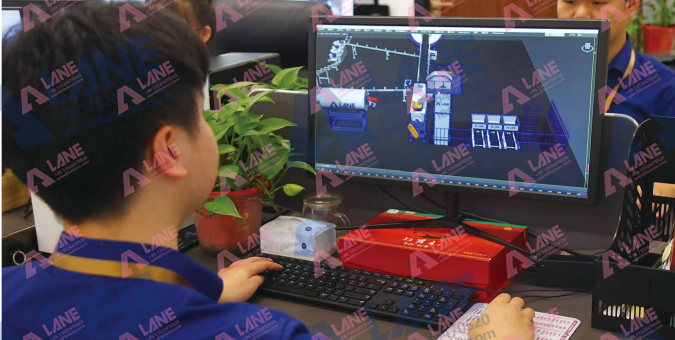
The supplier you choose should act as a process engineering partner, because layout errors are expensive to discover after order placement. A serious proposal includes a process flow diagram, P&ID, mass and energy balance, equipment list with capacities, foundation loads, and a plot plan that shows operation, not just machine positions.
Watch for these warning signs during evaluation:
- A supplier who quotes capacity without a mass balance or defined curing time.
- A supplier who cannot explain how the SSP manufacturing process shaped the layout.
- A plot plan with no curing bay, no scrubber location, or no acid containment.
- Conveyor routes that cross back through process zones or through the acid area.
- No named process engineer or commissioning plan.
- A price far below comparable proposals with no explanation of what was removed.
LANE Machinery engineers lines around each client’s land, rock quality, and product targets, and has supplied machinery for projects from small lines up to a national 100,000 t/y fertilizer program in Africa. Ask a prospective supplier how they handled curing space, emissions control, and expansion in their last three projects—the answers will tell you more than any brochure.
Implementation Sequence and Realistic Timelines
Plan the project in stages rather than treating the layout as a one-time drawing:
- Feasibility and design basis: capacity, product form, budget, land, permits.
- Basic engineering: process design, layout concept, budget.
- Detailed engineering: general arrangement, foundation loads, utilities.
- Fabrication and civil works: equipment manufacturing runs parallel with site construction.
- Erection, commissioning, and ramp-up: mechanical completion, trial runs, operator training.
A standard powder line typically takes six to twelve months from contract to commissioning; granulation, on-site acid production, or large civil works add time. Freeze the layout early: in single superphosphate plant design, every change after steel fabrication starts multiplies cost.
FAQ
1. What is SSP plant layout design?
SSP plant layout design arranges raw-material storage, acid handling, grinding, reaction, curing, finishing, and utilities so material flows forward safely and future capacity can be added without rebuilding. It controls capital cost, operating cost, and compliance for the plant’s life.
2. How much land is needed for an SSP fertilizer plant?
There is no universal plot size. A powder line around 10,000 t/y can fit in a compact building of a few thousand square meters; granulated plants with covered curing and dispatch normally need a hectare or more. Because SSP plant layout design must fit the land you can buy, require a mass balance and storage calculation behind every land figure.
3. What is the difference between powder SSP and granulated SSP plant layouts?
Both routes share the SSP manufacturing process through curing. A powder plant then mills, screens, and bags; a granulated plant adds a granulator, dryer, cooler, screen, and recycle conveying, which need more floor area, taller steelwork, thermal utilities, and dust control.
4. What equipment does a complete SSP plant include?
A complete line includes rock crushing and grinding, sulfuric acid storage and dosing, an acidulation mixer and den, curing facilities, milling and screening, conveying, bagging, dust collection, and fume scrubbing. Granulated SSP adds a granulator, dryer, cooler, and recycle system.
5. What are the largest cost drivers in SSP plant layout design?
The largest cost drivers are usually corrosion-resistant civil works, acid storage and containment, the curing building, fume and dust control equipment, and the total length of conveying. Equipment cost is visible in a quotation; layout-driven costs are easy to underestimate and hard to correct after construction.
6. How long does it take to design and build an SSP fertilizer plant?
A standard powder line commonly takes six to twelve months from contract to commissioning, including design, fabrication, erection, and operator training. Granulation, on-site acid production, or difficult sites add time, so do not rush the design phase—changes become expensive once fabrication begins.
7. Which environmental and safety systems should an SSP plant design include?
The design should include bunded acid storage, a fluoride fume scrubber, dust collection at transfer points, washdown drainage to treatment, ventilation in reaction and curing areas, and emergency safety equipment. Local permits and the World Bank Group EHS Guidelines for phosphate fertilizer manufacturing are good references.
8. Can an SSP plant be expanded after it is built?
Yes, when the initial SSP plant layout design reserves utility capacity, curing space, and a service corridor. Many operators add granulation, a second line, or extra storage within five years, so tell the designer your expansion plan before the plot plan is drawn.