How to Produce SSP Fertilizer: From Rock and Acid to Saleable Product
- 2026-08-28
Single superphosphate, SSP, is one of the oldest commercial phosphate fertilizers in the world. It is produced by reacting phosphate rock with sulfuric acid to convert insoluble phosphate into forms that plants can use. The process is relatively simple, but the equipment, the curing time, and the acid handling have to be designed correctly for the product to meet specification.
Understanding how to produce SSP fertilizer starts with the reaction, but the commercial result depends on the equipment sequence around it.
This guide is written for fertilizer manufacturers, plant investors, engineers, procurement managers, and project contractors. It explains how to produce SSP fertilizer from raw material selection through process design, equipment, cost, operations, and supplier selection.
Why producing SSP still makes commercial sense
SSP delivers phosphorus and sulfur in one product, which makes it valuable in sulfur-deficient soils across South Asia, Sub-Saharan Africa, Latin America, and parts of the Middle East. It is less capital intensive than DAP, MAP, or phosphoric acid routes, which makes it a practical entry point for regional fertilizer production.
The industry structure supports the product. IFA material has noted that the number of small phosphate fertilizer plants has remained more stable than nitrogen plants, and UNIDO and IFDC technical literature describe mini fertilizer plants as a route for local phosphate production.
For a buyer, the commercial question is whether local phosphate rock and sulfuric acid can be delivered at a cost that leaves margin after curing, granulation, and packaging.
The answer to how to produce SSP fertilizer is built on that same question: the process has to convert the rock at a cost the market will pay.
Raw materials and chemistry
The two main raw materials are phosphate rock and sulfuric acid.
Before asking how to produce SSP fertilizer at industrial scale, confirm the rock grade and the acid supply, because both determine the reaction and the operating cost.
Phosphate rock should be ground to a fine powder so the reaction surface is large enough. Rock grade, moisture, and impurities affect acid dose, curing time, and product quality. Published material from IPNI describes ground rock being reacted with sulfuric acid to form a semi-solid, which cools in a den and then cures for several weeks.
Sulfuric acid can be purchased or produced on site. Small plants usually buy acid, which lowers capital cost but adds supply risk. Acid concentration and temperature have to be controlled for consistent conversion.
The main chemical reaction forms monocalcium phosphate and gypsum from phosphate rock and sulfuric acid. The reaction releases heat, and the material must be cured so conversion can finish and free acid can fall to a safe level.
SSP fertilizer manufacturing process: powder or granular route
The SSP fertilizer manufacturing process can be designed for powder or granular product, and the product form changes the equipment and the budget.
Powder SSP
A powder line ends after curing, crushing, screening, and packaging. It is simpler, cheaper, and suitable for local bulk markets. Powder SSP is dusty, compacts in storage, and is harder to blend.
Granular SSP
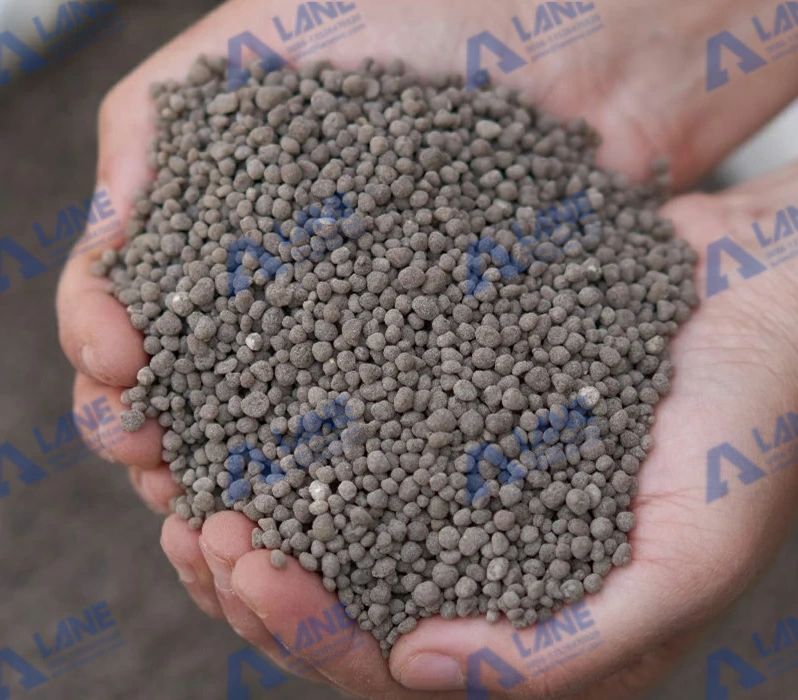
A granular line adds granulation, drying, cooling, and final screening. Granules handle, store, blend, and spread predictably, and they open retail, bulk blending, and export markets.
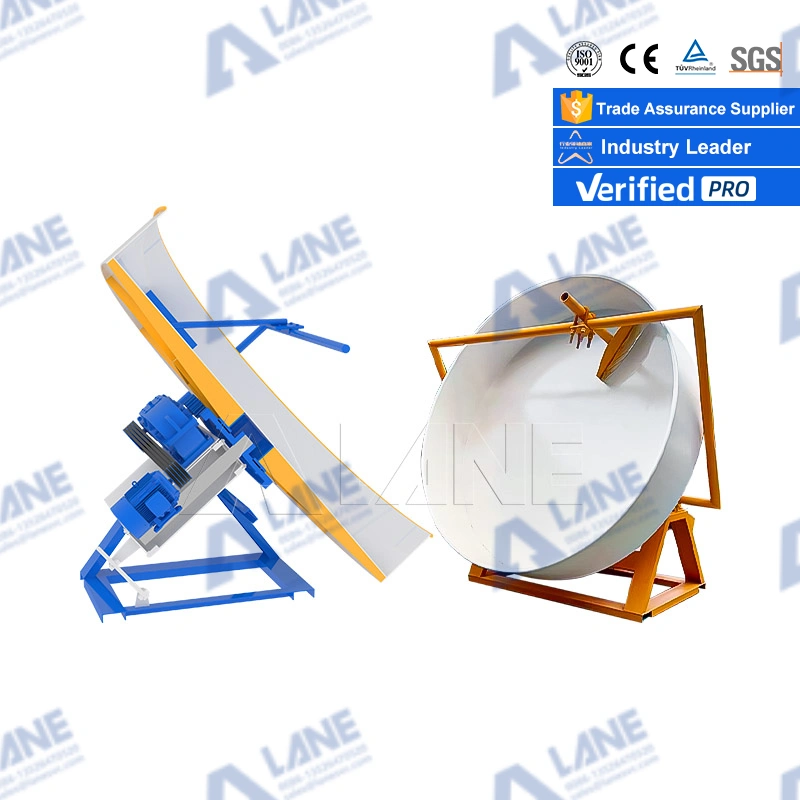
The granulation method matters. A disc granulator gives tight size control at smaller capacity. A rotary drum granulator handles higher volume. Double roller extrusion compresses drier material into granules.
The right SSP fertilizer manufacturing process should be selected from the sales channel, not from the machine price. A regional bulk market may accept powder. A retail or blending program usually needs granules.
Single superphosphate production process step by step
The single superphosphate production process follows a well-documented sequence.
Step 1: Crush and grind the phosphate rock
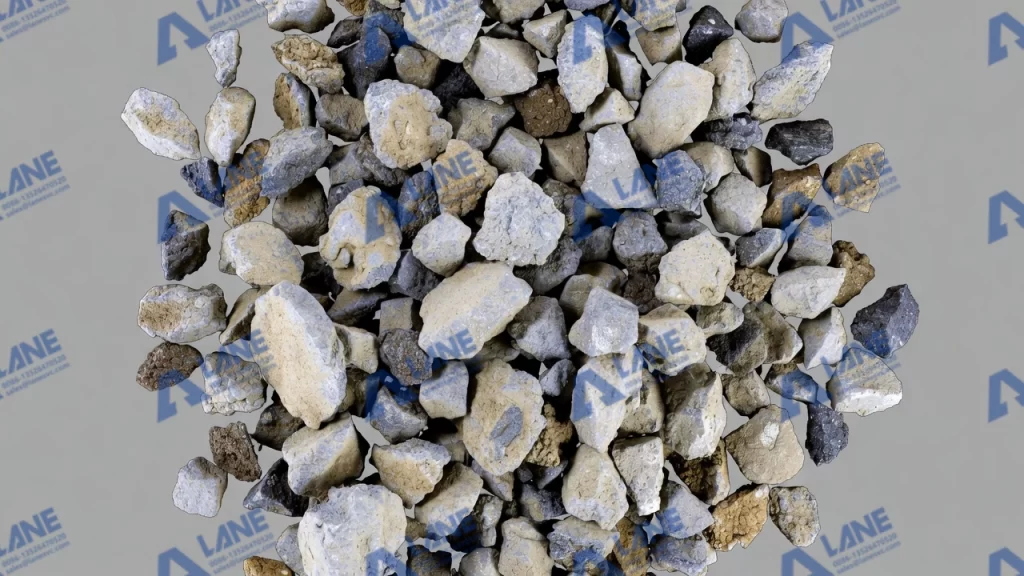
Rock fineness affects reaction rate and conversion. A ball mill or Raymond mill brings the rock to the particle size needed for acidulation. Published guidance commonly describes rock ground to a fine powder before reaction.
Step 2: Prepare and dilute the sulfuric acid
Acid concentration and temperature have to stay controlled. Water is added to reach the dilution that matches the rock and the process. The acid system needs corrosion-resistant storage, dosing pumps, and ventilation.
Step 3: Acidulate
Ground rock reacts with sulfuric acid in a mixer or reactor to form SSP and release heat. The mixer has to create a uniform paste so every part of the batch reacts at the same rate.
Step 4: Den and cool
The reacted material is discharged into a den, where it cools and begins to harden. IPNI describes the semi-solid cooling in a den for several hours before the next stage.
Step 5: Cure
Curing is the stage where the reaction finishes and free acid is reduced. Published guidance describes curing over several weeks, and LANE material describes roughly two weeks to a month depending on rock and process conditions. Undersizing curing capacity is a common cost-saving mistake.
Step 6: Crush and condition
Cured SSP is broken up and prepared for granulation or direct packaging. A lump breaker, crusher, and screen create a uniform feed.
Step 7: Granulate
For granular product, the conditioned material enters a disc, drum, or extrusion granulator. The choice depends on feed moisture and the product shape the market expects.
Wet granules are dried to a stable moisture level and cooled before packaging. Drying consumes a large share of the plant’s energy.
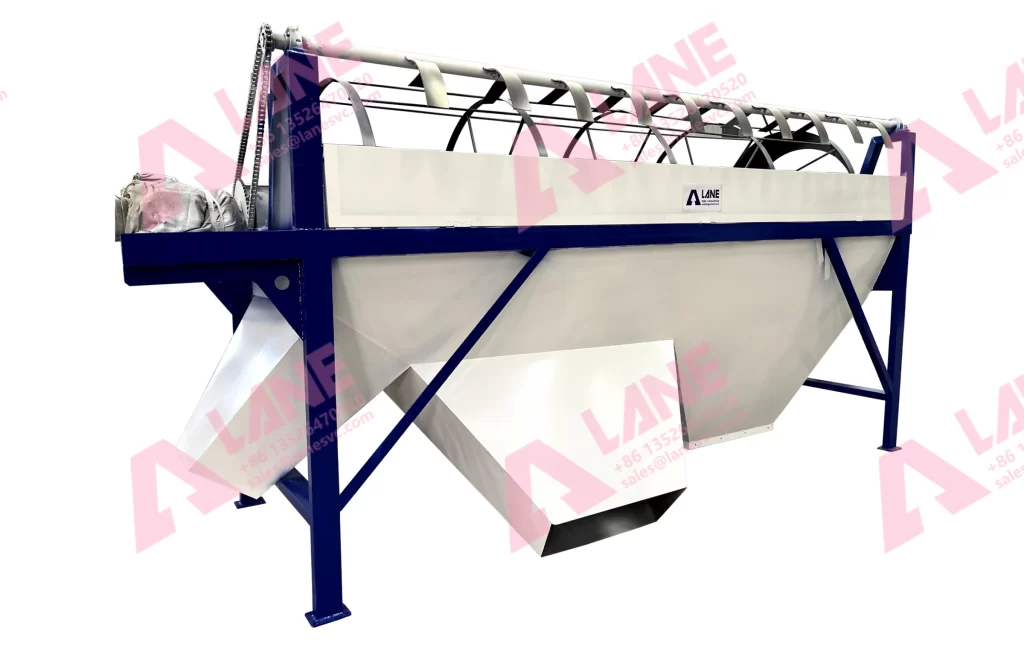
On-spec granules are packed, oversize is crushed, and fines return to the granulator. The packaging machine records bag weight.
Equipment composition
The equipment list for how to produce SSP fertilizer is built around the process:
For buyers planning how to produce SSP fertilizer, the equipment list should be matched to the rock, the acid supply, and the product form, not to the largest machine in the catalog.
| Stage | Core equipment | Main job |
|---|---|---|
| Rock preparation | Crusher, ball mill or Raymond mill, elevator | Reduce rock to reaction fineness |
| Acid system | Acid storage, dilution tank, dosing pump | Deliver controlled sulfuric acid |
| Reaction | Acid mixer or reactor with acid-resistant lining | Convert rock and acid to SSP |
| Den and curing | Den conveyor, curing building or silo | Cool and finish the reaction |
| Conditioning | Lump breaker, crusher, mixer | Prepare cured material for granulation |
| Granulation | Disc, drum, or extrusion granulator | Form uniform granules |
| Drying and cooling | Rotary dryer, rotary cooler | Remove moisture and stabilize product |
| Screening and coating | Rotary screen, coater | Sort and condition granules |
| Packaging | Automatic bagging scale | Produce saleable bags |
| Environmental | Dust collector, acid mist scrubber | Protect workers and the environment |
The plant also needs conveyors, elevators, control cabinets, and instrumentation. A supplier that only quotes the granulator and dryer has not designed the full line.
Working principles and technical advantages
The working principle of SSP production is acidulation of phosphate rock with sulfuric acid.
Ground rock reacts with acid to form monocalcium phosphate and gypsum. The reaction releases heat, and the material must be cured so conversion can finish and free acid can fall to a safe level.
The technical advantages of a well-designed plant include:
- Consistent conversion through controlled acid dose and curing.
- Flexible product forms for powder and granules.
- Lower capital than high-analysis phosphate routes.
- A regional product that supports local agriculture.
- Documented process control for quality and compliance.
The main technical risk is corrosion and acid handling. The plant has to be designed around sulfuric acid, not around a granulator.
SSP fertilizer manufacturing process control and quality
To learn how to produce SSP fertilizer at consistent quality, control the same variables that determine conversion: rock fineness, acid dose, den temperature, curing time, and granulation moisture.
In the SSP fertilizer manufacturing process, the curing area is the most common bottleneck. If curing capacity is too small, the plant cannot hold the material long enough to reduce free acid, and the product misses specification.
The single superphosphate production process should be validated with the buyer’s own rock before the plant is finalized. Rock grade, moisture, and impurities change the acid dose and the curing curve, so a design based on a different rock will not perform the same.
Quality records should include:
- Rock fineness and P2O5 content.
- Acid concentration and dose.
- Den temperature and discharge time.
- Curing time and free acid.
- Granule moisture, size, and hardness.
- Packaged product moisture and P2O5 availability.
The same records support compliance claims for export markets and certification programs.
Investment factors and cost planning
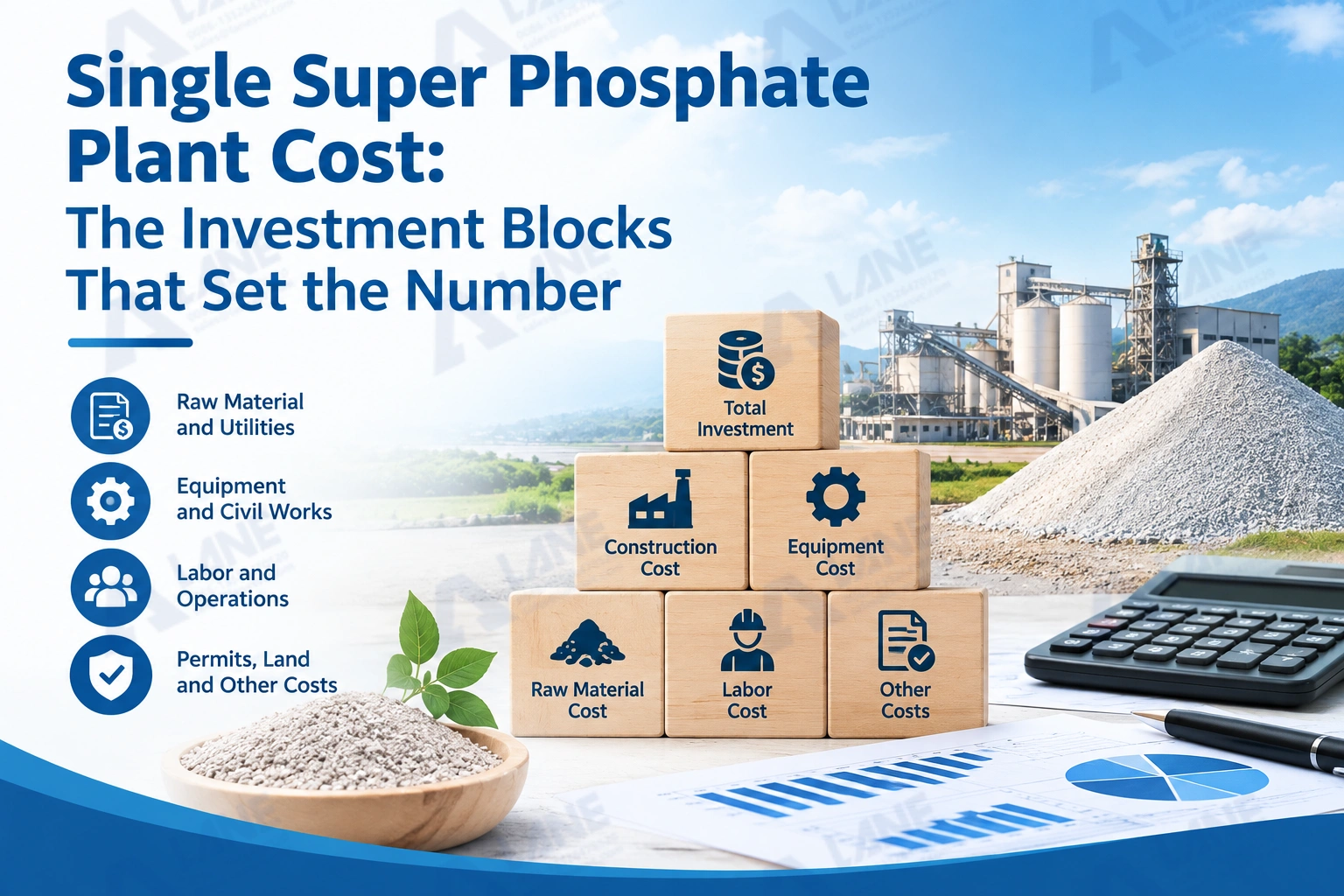
The cost of an SSP plant depends on capacity, process scope, automation, and site conditions.
The SSP fertilizer manufacturing process cost changes with the curing route, the granulation method, and the automation level.
Published industry guidance places small facilities in the 10,000 to 30,000 tons per year range at roughly USD 0.8 million to 3.5 million total investment. Equipment-only numbers are lower. Small semi-mechanized lines can start around USD 80,000 to 350,000 depending on capacity and scope.
Industry data also describes small granular SSP plants at 5 to 8 tons per hour with equipment investment typically between USD 180,000 and 350,000.
Those numbers are planning ranges, not quotes. The full capital budget includes:
- Land and buildings.
- Acid storage and dilution systems.
- Den and curing area.
- Equipment, installation, and commissioning.
- Dust and acid mist controls.
- Permits, testing, and compliance.
- Raw material inventory and working capital.
Civil works and buildings typically represent 15 to 25 percent of project cost. Installation and commissioning add another 8 to 12 percent. Permits and pre-operating costs commonly run 3 to 8 percent.
Operating cost and ROI
Operating cost for an SSP plant is dominated by phosphate rock and sulfuric acid, usually 55 to 65 percent of production cost. Energy is next at 10 to 15 percent, especially when grinding, drying, and cooling are part of the process. Direct labor runs 8 to 12 percent, and maintenance and consumables run 5 to 8 percent.
Utilization matters as much as unit cost. A plant running at 60 percent utilization will not recover capital on schedule. Payback scenarios for mid-scale plants indicate that investment can be recovered within three to six years when demand is strong and utilization remains above 80 percent.
For a small plant, the market radius is short. Model the delivered cost to the nearest customers, not the FOB plant price.
Project execution and commissioning
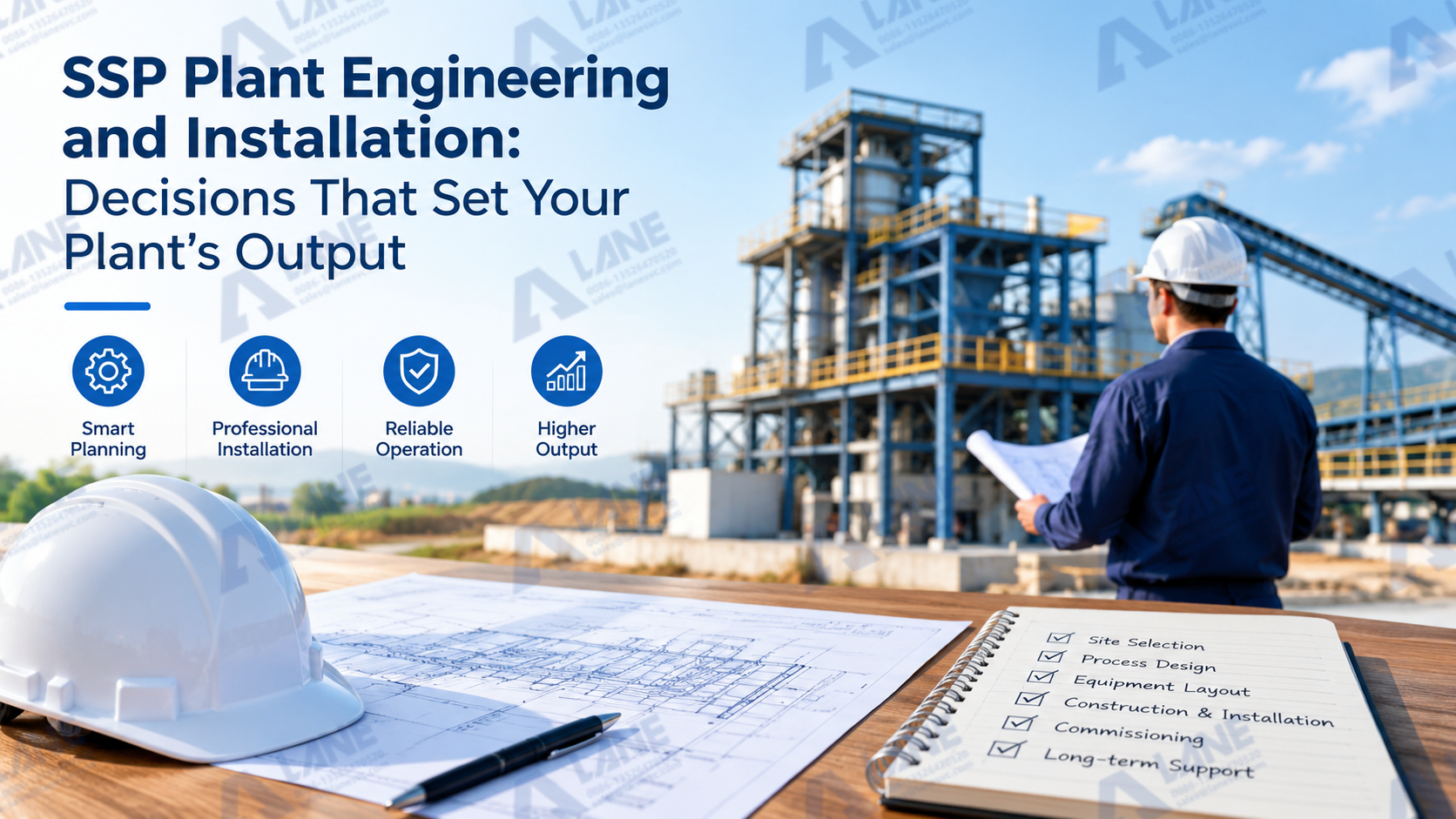
How to produce SSP fertilizer at project level depends on the same sequence as the process: engineering, equipment, installation, commissioning, and trial production.
Published LANE project guidance ranges from 8 to 18 months from design finalization to commissioning, depending on equipment lead times, civil works, and site complexity.
The single superphosphate production process has schedule risks that concentrate in the acid system, the curing area, and the granulation and drying line. The commissioning plan should include a raw material test, line balancing, and a trial production run.
The SSP fertilizer manufacturing process should be tested against agreed reference conditions before the plant is accepted. Rock grade, acid concentration, ambient temperature, and product moisture all affect the performance test.
Performance tests should be written into the contract before equipment is ordered. The buyer should verify progress against physical deliverables, not just invoices.
Operations, maintenance, and safety
Maintenance on an SSP plant is continuous rather than difficult. The highest-wear points are the crusher, mill, granulator lining, dryer flights, screens, and conveyor belts.
Acid handling deserves the same attention as production. Inspect acid pipelines, reactor linings, mixer seals, scrubbers, and curing airflow on a schedule. Keep a daily checklist for material build-up, belt tracking, bearing temperature, and screen condition.
Safety equipment should include acid-resistant PPE, eyewash stations, ventilation, and spill containment. A plant that handles concentrated sulfuric acid cannot operate safely without them.
Quality records for the SSP fertilizer manufacturing process should be kept for every batch, because the same data supports product claims, export compliance, and troubleshooting.
The single superphosphate production process also needs a maintenance schedule for the acid system, because corrosion failures are the most common cause of unplanned downtime.
Track energy per ton, conversion efficiency, granulation pass rate, moisture, and downtime. Remote diagnostics help when the plant is far from the supplier’s engineering team.
Supplier selection and procurement
Supplier selection should start with process fit, not machine price. Ask each candidate for:
- A process flow diagram, material balance, and plant layout.
- A granulation test using your phosphate rock.
- A complete equipment list with capacity and installed power.
- A scope split between equipment, engineering, civil works, installation, freight, and commissioning.
- References at comparable scale with contactable owners.
- Documentation for ISO 9001, CE, material certificates, and compliance support.
- A spare parts policy and delivery time to the site.
Ask whether the supplier has built an SSP production line or only a standard granulation line. The difference is not the granulator. It is the acid system, den, curing area, and environmental controls around it.
A qualified supplier that understands how to produce SSP fertilizer will ask about rock grade, acid source, moisture, climate, and local logistics before quoting. If the supplier only asks about capacity, the quote will not survive the first engineering review.
Ask how the single superphosphate production process will handle your rock, because a generic design will not deliver the same conversion or curing time.
Frequently Asked Questions
How do I produce SSP fertilizer?
How to produce SSP fertilizer in practice means grinding phosphate rock, reacting it with sulfuric acid, denning and curing the material, then crushing, conditioning, granulating, drying, screening, and packaging the product.
What raw materials are needed for SSP fertilizer manufacturing?
The main raw materials are phosphate rock and sulfuric acid. Water is used for acid dilution, and additives may be used for granulation and conditioning.
What is the SSP fertilizer manufacturing process?
The SSP fertilizer manufacturing process includes rock grinding, acid dilution, acidulation, denning, curing, crushing, granulation, drying, cooling, screening, and packaging.
How long does SSP need to cure?
Published guidance describes curing over several weeks. LANE material describes roughly two weeks to a month depending on rock and process conditions. In the single superphosphate production process, curing time is a quality control decision, not a storage convenience.
Can I produce powder and granular SSP on the same line?
Yes, when the line is configured with the right granulation and drying options. Powder is simpler and cheaper, while granular product opens retail, blending, and export markets.
What are the main operating costs?
Phosphate rock and sulfuric acid are the largest costs, typically 55 to 65 percent of production cost. Energy is next at 10 to 15 percent, followed by labor, maintenance, packaging, and logistics.
How do I choose an SSP plant supplier?
Compare process engineering, rock testing, acid handling, granulation method, environmental controls, installation support, spare parts, and references. Ask for a process flow diagram, material balance, and plant layout.