Double Roller Granulator Working Principle: Buyer Guide
- 2026-11-12
1. What Is the Working Principle of a Double Roller Granulator?
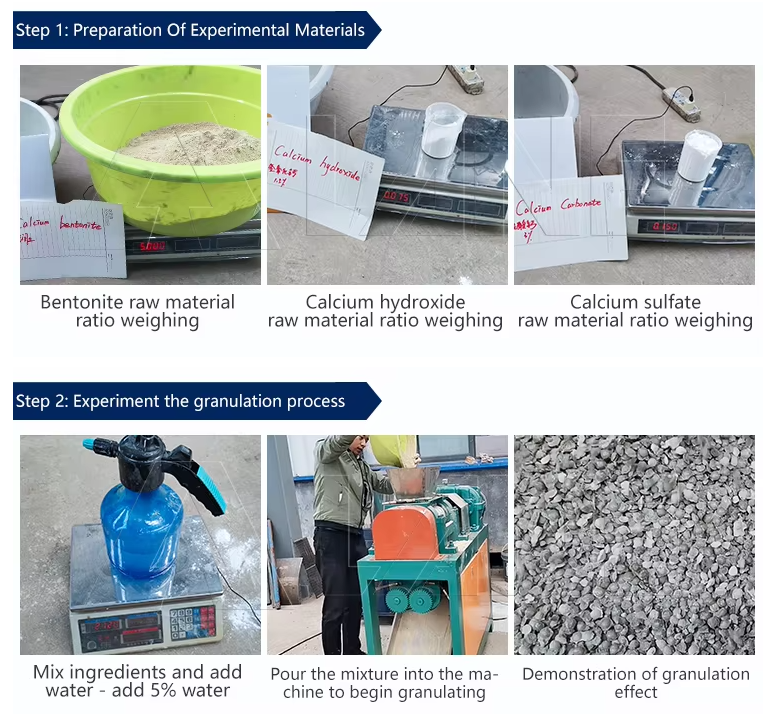
The double roller granulator working principle is based on mechanical compression rather than wet agglomeration. Two counter-rotating rollers draw prepared powder into a narrow gap and compress it under high pressure. The material is formed into compact flakes, sheets, or shaped briquettes, which are then crushed and screened into fertilizer granules.
For fertilizer manufacturers, the main attraction is straightforward: this process can produce granules without adding large amounts of water or sending the material through a conventional wet-granulation drying stage. That can simplify the production line and reduce the need for drying equipment. However, dry extrusion is not automatically suitable for every fertilizer formula. Raw-material properties and feeding stability determine whether the machine can produce a consistent commercial product.
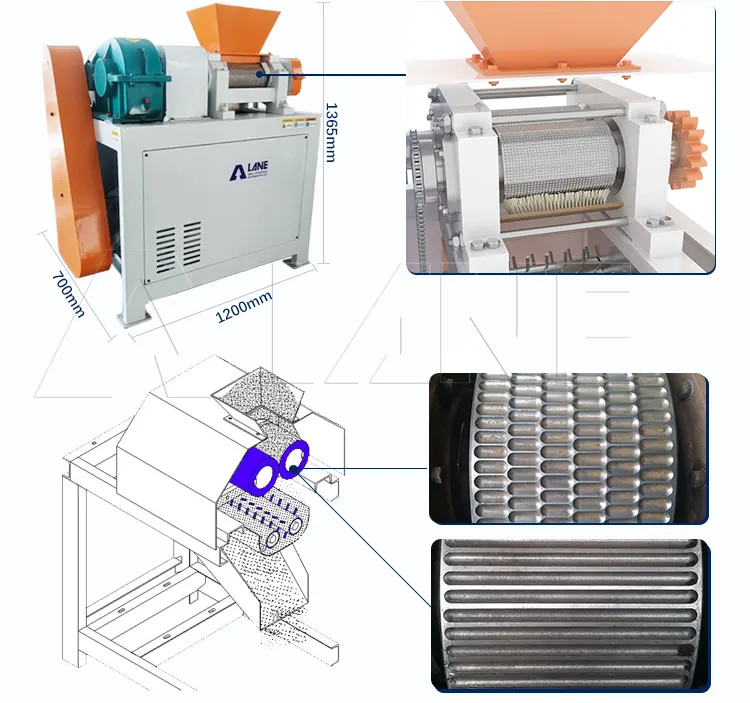
A buyer should therefore evaluate the granulator together with the mixer, feeding system, crushing section, screening equipment, and material-return arrangement—not as an isolated machine.
A clear understanding of the double roller granulator working principle helps fertilizer manufacturers determine whether mechanical compression is suitable for their raw materials and production targets.
2. How Does a Double Roller Granulator Work Step by Step?
The double roller granulator working principle involves several connected operations, from raw material preparation and controlled feeding to roller compression, crushing, and screening.
Step 1: Raw material preparation
Before extrusion, raw materials are crushed, screened, proportioned, and mixed. The aim is to obtain a reasonably uniform powder with a controlled particle-size distribution and moisture level.
This stage is often underestimated. If the mixture contains large particles, hard impurities, or unevenly distributed ingredients, the rollers cannot compensate for poor preparation. The result may be uneven granule density, unstable output, and unnecessary wear.
Step 2: Controlled feeding
The prepared powder enters a feed hopper and is delivered toward the roller gap. Depending on the machine design, a screw feeder or another forced-feeding arrangement helps maintain a steady material supply.
Consistent feeding matters because the amount of material entering the compression zone affects the pressure distribution and the thickness of the compacted material. Uneven feeding can cause one side of the roller surface to carry more load than the other.
Step 3: Compression between two rollers
The two rollers rotate in opposite directions, pulling the powder into the compression zone. As the gap narrows, pressure increases and air between particles is displaced. The powder is compacted into dense material.
The roller surface may contain matched pockets or grooves. These determine the initial shape of the compacted pieces. Different roller profiles can produce different forms, such as pillow-shaped, oval, or other project-specific shapes.
Step 4: Crushing and screening
The compacted material is released from the rollers and sent to a crushing section. Oversized pieces are reduced, while screening separates the target-size granules from fine powder and oversize material.
Step 5: Returning off-size material
Fine powder and oversized fractions can be returned to the process, depending on the production-line design. This recycling loop helps reduce material loss and improves the use of raw materials.
The sequence above describes a common fertilizer roller-extrusion arrangement. Exact feeder, crusher, screen, and return configurations vary by machine model and material formula.
3. Which Parameters Have the Greatest Effect on Granulation Quality?
A machine’s rated capacity is only one part of its performance. Buyers should pay close attention to the factors that determine whether the granulator can maintain stable operation with their actual raw materials.
In practice, the double roller granulator working principle is closely related to feed uniformity, roller pressure, roller speed, and the physical properties of the powder.
| Parameter | Why It Matters | What Buyers Should Confirm |
|---|---|---|
| Feed particle size | Affects material distribution and compression consistency. | Required fineness and maximum particle size for the actual formula. |
| Feed moisture | Influences cohesion, sticking, and compact formation. | Recommended moisture range based on material trials. |
| Roller pressure | Affects compact density and granule strength. | Pressure adjustment method and operating range. |
| Roller speed | Influences feeding, residence time, and throughput. | Variable-speed options and stable operating speed. |
| Roller gap | Affects compression and material throughput. | Gap adjustment range and wear compensation. |
| Roller surface profile | Determines the shape and size of initial compacts. | Pocket dimensions, shape, and replacement options. |
| Screen aperture | Influences final particle-size distribution. | Screen sizes and replacement convenience. |
There is no single moisture percentage or roller-pressure setting that works for all fertilizer materials. Some inorganic powder blends are processed at low moisture levels, while other formulations require different conditioning. A supplier should establish the operating window through material testing rather than promise a universal setting.
Roller compaction references also identify pressure, roller speed, and the gap between rollers as important process variables. Pressure affects compact strength; speed changes the time material spends under compression; and the gap must be coordinated with the feeding rate.
4. What Materials Can a Double Roller Granulator Process?
Double roller granulators are commonly considered for dry or conditioned powder materials used in fertilizer production. Potential applications include:
- NPK compound fertilizer powder blends
- Ammonium sulfate-based fertilizer mixtures
- Potassium sulfate-based formulations
- Certain phosphate fertilizer blends
- Other compatible inorganic fertilizer powders
However, the name of a raw material alone does not establish that it can be granulated successfully. The formula’s particle size, moisture, solubility, hygroscopicity, and compaction behavior all matter.
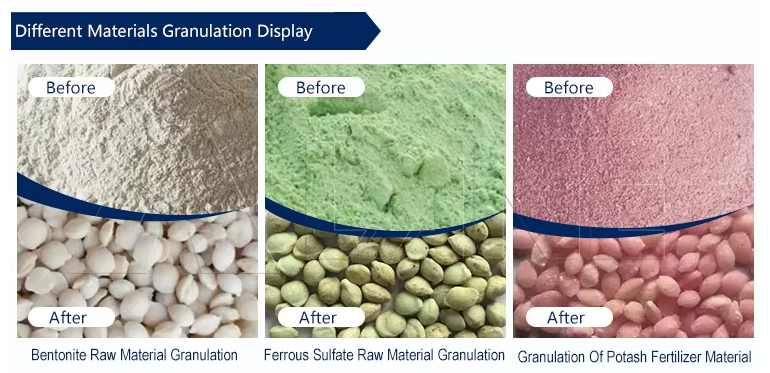
For example, two NPK formulations with the same nutrient ratio may behave differently if their raw-material sources, particle sizes, or moisture levels differ. A supplier should therefore test the actual blend rather than select a machine based only on the product name.
For SSP manufacturers, the granulation stage should also be evaluated in relation to the upstream SSP process and the condition of the material entering the granulator. Explore the SSP fertilizer production line to understand the broader equipment context. The complete configuration should be based on the required product form and process route.
5. Is a Double Roller Granulator Better Than a Rotary Drum Granulator?
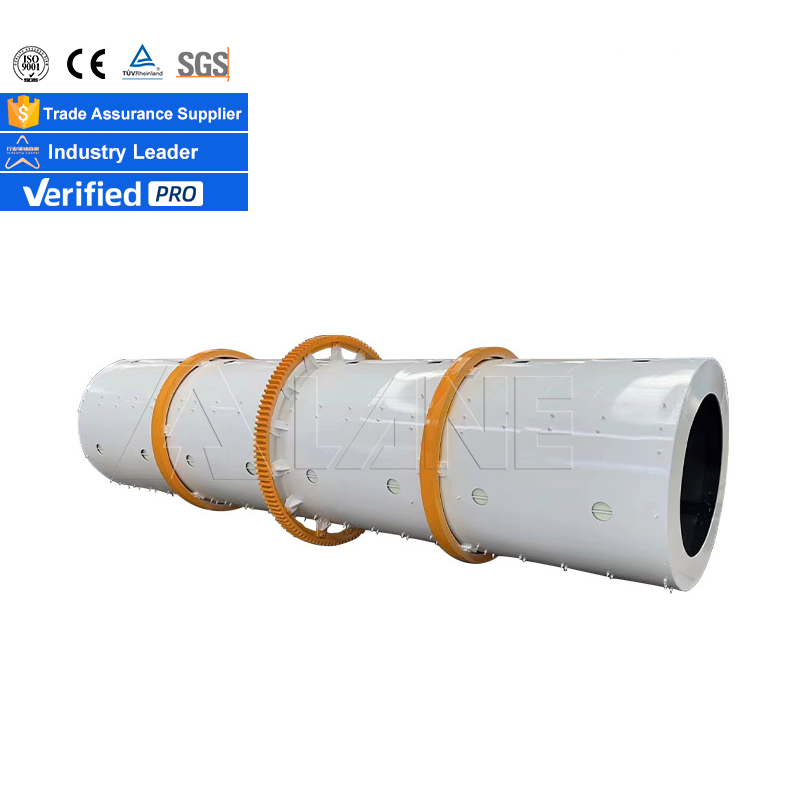
Neither machine is universally better. They use different forming mechanisms and suit different process conditions.
| Comparison | Double Roller Granulator | Rotary Drum Granulator |
|---|---|---|
| Forming method | Mechanical compression between rollers | Rolling and agglomeration inside a rotating drum |
| Typical process | Dry or low-moisture extrusion | Usually wet granulation with liquid addition |
| Output from forming stage | Compacted flakes, pieces, or shaped blanks | Growing rounded granules |
| Drying requirement | Often avoids a conventional wet-granulation drying stage | Commonly requires downstream drying |
| Important operating factors | Feed uniformity, moisture, pressure, and roller gap | Liquid addition, drum speed, inclination, and bed condition |
| Typical selection consideration | Suitable powder that compacts under pressure | Formulations that can agglomerate and grow in a rotating drum |
A double roller granulator is worth evaluating when the feed material can be compacted reliably and the project aims to avoid a conventional wet-granulation route. A rotary drum system may be more appropriate when the formulation and production process rely on wet agglomeration and granule growth.
The decision should be made from the raw-material test results, target granule properties, production capacity, and total process cost—not from the machine’s name or advertised output alone.
6. What Equipment Should Be Included in a Complete Roller Granulation Line?
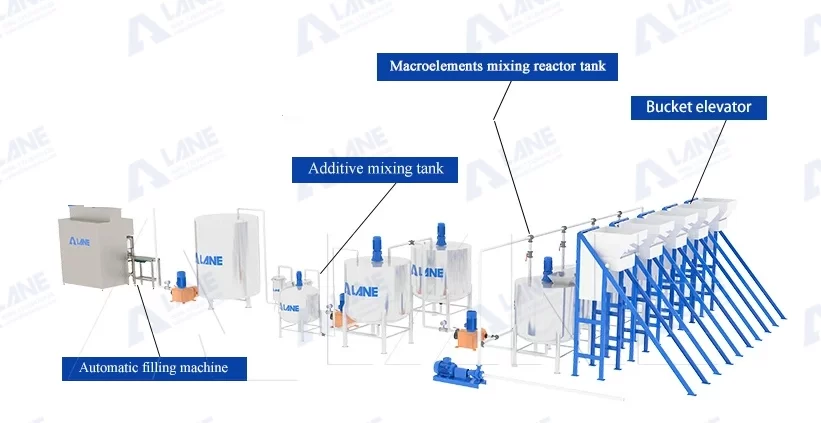
A double roller granulator rarely works as a complete production solution by itself. A practical line may include:
- Crushing and screening equipment: prepares the feed and removes oversized particles or foreign matter.
- Batching and weighing system: controls the proportions of different raw materials.
- Mixer: distributes ingredients evenly before extrusion.
- Feeding system: delivers a stable flow of material into the roller press.
- Double roller granulator: performs the main compression and forming operation.
- Crusher and screening system: adjusts particle size and separates qualified granules.
- Return conveyor: sends off-size material back for reprocessing.
- Finished-product conveying and packing equipment: transfers qualified granules to storage or packaging.
The correct arrangement depends on the required capacity, material characteristics, plant layout, and finished-product specifications. For a broader range of fertilizer machinery and plant solutions, buyers can also visit Fertilizer Industry Leader.
7. What Problems Commonly Affect Roller Granulation?
When a double roller granulator produces too much powder or inconsistent granules, replacing the machine is not necessarily the first solution. The cause may be upstream in material preparation or feeding.
| Operating Problem | Possible Cause | Practical Check |
|---|---|---|
| Excessive fine powder | Insufficient compaction, unsuitable feed properties, or excessive crushing. | Check feed condition, roller pressure, and crusher settings. |
| Granules are too weak | Low compaction or inconsistent material feeding. | Review pressure, feed rate, and material formulation. |
| Material sticks to rollers | Moisture or material characteristics are unsuitable. | Test moisture and inspect the roller surface. |
| Uneven granule size | Unstable feeding or unsuitable screen aperture. | Check feeder consistency and screening configuration. |
| Abnormal vibration | Uneven feed, hard foreign objects, or excessive operating speed. | Inspect the feed system, magnetic separator, rollers, and drive. |
| Low production output | Feed supply, roller speed, or recycling load is limiting capacity. | Measure actual feed rate and check the return-material ratio. |
One point deserves special attention: higher roller pressure does not always mean better production. Excessive pressure may increase compact density, but it can also increase mechanical load and energy consumption. The target is stable granule strength and an acceptable finished-product yield—not the highest possible pressure setting.
Fertilizer compaction reference notes that feed-material fineness and excessive roll speed can contribute to vibration. It also describes reducing feed rate or roll speed as possible operating responses when vibration occurs.
8. What Costs Should Buyers Consider Before Purchasing?
The purchase price of the roller granulator is only one part of the investment. A complete cost assessment should include:
- Main machine and drive system: roller assembly, reducer, motor, frame, and control system.
- Feeding and mixing equipment: stable feeding and homogeneous blending are essential to consistent output.
- Crushing and screening: these sections determine how the compacted material is converted into saleable granules.
- Material recycling: conveyors, return bins, and handling equipment add to the line cost but can reduce material losses.
- Roller maintenance: roller surfaces are wear components. Their material, surface treatment, replacement method, and service life should be discussed.
- Dust collection and conveying: dust control and enclosed transfer points may be necessary depending on the raw materials and plant layout.
- Installation and commissioning: foundations, electrical work, lifting, commissioning, and operator training should be included in the project budget.
Do not compare suppliers only by the price of the main machine. One quotation may include a feeder, crusher, screen, and return conveyor, while another may quote only the roller press. These are not equivalent offers.
9. How Should Buyers Select the Right Double Roller Granulator?
Before requesting a quotation, prepare the information that determines the machine configuration:
- Raw-material details: provide the names, proportions, particle sizes, moisture levels, and relevant physical properties of the ingredients.
- Target capacity: specify whether the requirement refers to feed capacity or qualified finished-product output in tonnes per hour.
- Finished-product requirements: define the target particle-size range, shape, strength, and acceptable fine-powder percentage.
- Operating schedule: clarify daily operating hours and expected annual production.
- Existing plant conditions: provide available floor space, building height, power supply, and the location of upstream and downstream equipment.
- Testing and acceptance: ask whether the supplier can conduct a material test and define how capacity, particle-size distribution, and product strength will be checked during commissioning.
A particularly important question is how the supplier calculates capacity. A machine processing 3 tonnes of material per hour does not necessarily produce 3 tonnes of qualified granules per hour. Crushing, screening, and recycling all affect the final saleable output.
Ask suppliers to state the test conditions and distinguish between total throughput, circulating material, and qualified product. This makes quotations easier to compare and prevents a nominal capacity figure from creating unrealistic expectations.
10. FAQ: What Do Buyers Often Ask About Double Roller Granulators?
1. Does a double roller granulator use water?
Not necessarily. It is commonly used for dry or low-moisture compaction, where powder is compressed mechanically between two rollers. Whether moisture conditioning is required depends on the material formula and its compaction behavior.
2. Does the process require a drying machine?
A conventional wet-granulation drying stage is often unnecessary because the material is formed by mechanical compression rather than liquid-assisted agglomeration. However, the complete process should still be evaluated for the moisture condition of the incoming material and the storage requirements of the finished product.
3. What particle size can a double roller granulator produce?
The final particle-size range depends on roller-pocket design, crushing settings, and screen aperture. Buyers should specify the required finished size before ordering and request a test using their actual formulation.
4. Can one machine process different fertilizer formulas?
Yes, a machine may process different compatible formulas, but each material may require different feeding, pressure, speed, or roller configurations. Formula changes should be tested rather than assumed to work under one fixed setting.
5. Is a double roller granulator suitable for NPK fertilizer?
It can be used for compatible NPK powder blends through dry compaction. The suitability depends on the physical properties of the nutrient carriers, the blend’s uniformity, and the required granule quality.
6. What determines the production capacity?
Capacity is affected by roller dimensions, speed, feeding stability, material characteristics, and the required product specification. The capacity of the complete line also depends on crushing, screening, and recycling performance.
7. How often do the rollers need to be replaced?
There is no universal replacement interval. Roller life depends on material abrasiveness, operating load, roller material, surface treatment, and maintenance. Ask the supplier for the roller material specification and replacement procedure.
8. Can the supplier customize the production line?
Yes. A line can be configured around the raw materials, target capacity, plant layout, and finished-product requirements. Buyers should provide a material analysis and production target so the supplier can recommend an appropriate equipment arrangement.
Conclusion: What Matters Most When Buying a Double Roller Granulator?
The key to selecting a double roller granulator is not simply choosing a model with a high advertised capacity. Buyers should first confirm that their raw materials can be compacted consistently, then evaluate feeding stability, roller pressure adjustment, crushing and screening performance, and the efficiency of the material-return system.
A reliable supplier should be able to explain the complete process, recommend equipment based on the actual formulation, and define measurable acceptance criteria. If you are planning a new fertilizer granulation project or upgrading an existing plant, you can explore LANE Machinery for equipment and project consultation.
For more details, please feel free to contact us.
Henan Lane Heavy Industry Machinery Technology Co., Ltd.
Email: sales@lanesvc.com
Contact number: +86 13526470520
WhatsApp: +86 13526470520