Turnkey SSP production line: a buyer’s guide to process, cost, and supplier selection
- 2026-10-21
Buying a turnkey SSP production line is a capital project, not a catalog purchase. Equipment matters, but most risk sits in raw material fit, product specification, scope, emissions control, and proof of performance after installation.
This guide is for fertilizer manufacturers, plant investors, engineers, procurement managers, and EPC contractors. It covers the decisions that determine whether a plant can be permitted, financed, commissioned, and operated profitably.
What a turnkey SSP production line includes
A turnkey SSP production line normally covers raw material receiving through finished product storage, plus the engineering and services needed to operate the process. Settle the scope matrix before detailed design.
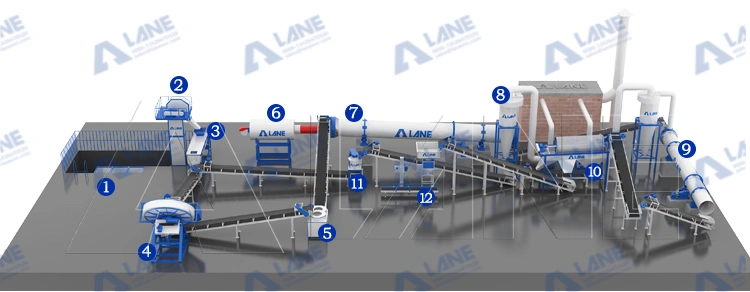
The main train includes rock receiving and grinding, sulfuric acid storage and dosing, acidulation, denning or curing, granulation, drying, cooling, screening, crushing, fines recycle, coating, and packaging. Dust collection, fluoride scrubbing, acid containment, water treatment, compressed air, and electrical systems support it.
Define battery limits and owner scope
Ask whether the offer starts at the battery limit or includes balance-of-plant work. Civil foundations, buildings, raw material storage, incoming power, water supply, effluent treatment, fire protection, and laboratory equipment are often split between buyer and supplier. A low equipment price can hide a large owner cost when these interfaces are vague. Name one owner for permits, utilities, training, and performance testing.
Compare offers at the same rock hardness, acid strength, product grade, climate, and operating pattern. Equipment names may look alike while design margins and utility assumptions differ.
How the single superphosphate production process works
The single superphosphate production process starts with finely ground phosphate rock and sulfuric acid. Acidulation forms monocalcium phosphate and calcium sulfate, while fluoride-bearing gas leaves the reactor and associated equipment. The simplified overall reaction is:
2 Ca₅(PO₄)₃F + 7 H₂SO₄ + 3 H₂O → 3 Ca(H₂PO₄)₂·H₂O + 7 CaSO₄ + 2 HF
Actual plants do not reach a perfect endpoint. Rock composition, fineness, acid strength, mixing, temperature, and residence time determine conversion and free acid. The single superphosphate production process must fit the buyer’s rock.
Control the raw material and acidulation step
Phosphate rock varies in P₂O₅, carbonate, iron, aluminum, silica, hardness, and reactivity. These affect grinding energy, acid demand, reaction rate, product quality, and scrubber load. The same single superphosphate production process may need a different grind, acid ratio, and curing time for each source, so test a representative sample before guaranteeing capacity.
Too little acid leaves unreacted phosphate; too much raises free acidity and corrosion. Control should link rock feed, acid flow, temperature, and product analysis, with interlocks for quality and safety.
Cure, granulate, and test the product
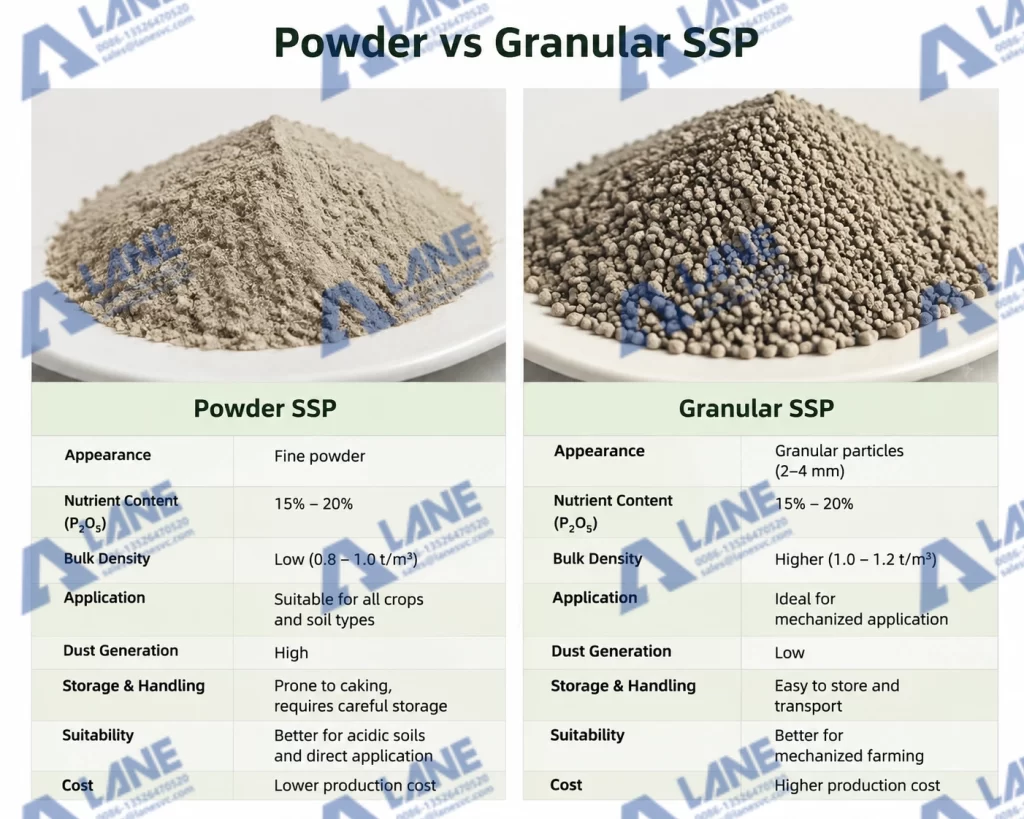
After acidulation, material is held in a den or curing area to complete the reaction and reduce free acid. Ventilation matters because the curing mass releases heat, moisture, and fluoride gas. Granulation changes the equipment train and market position. Powdered SSP suits nearby customers and selected blends. Granular SSP stores and travels more easily, but adds drying, cooling, screening, recycle, and dust control.
Quality control should cover rock, acid concentration, acidulation endpoint, curing, moisture, granule size, crushing strength, coating, and final analysis. The single superphosphate production process should include representative sampling at each shift as well as final product testing. Product P₂O₅, calcium, sulfur, moisture, particle size, and solubility should match the market specification and local labeling rules.
Powder or granular SSP?
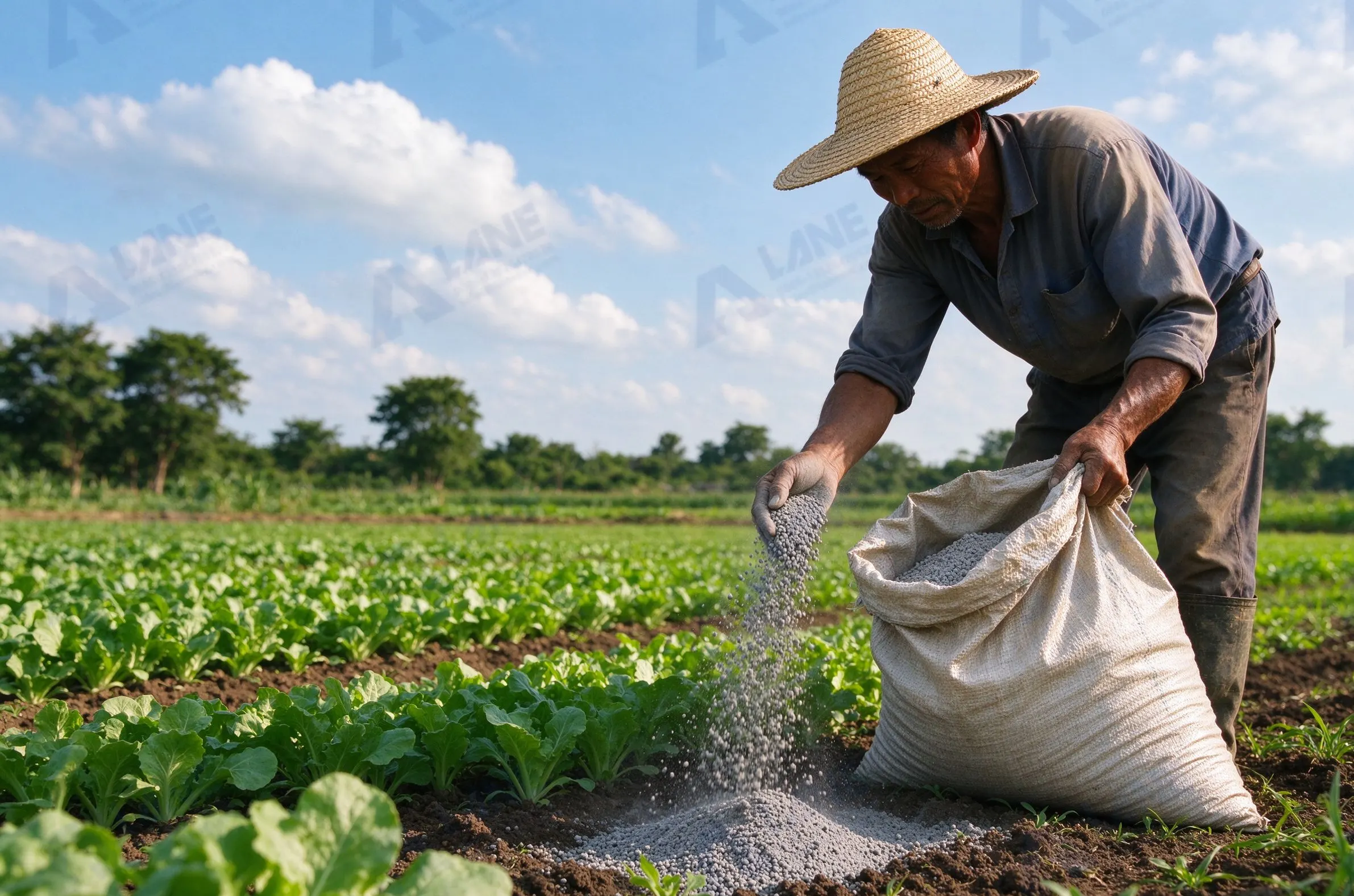
Blend-friendly granules and nutrient-use planning put a premium on consistent product quality. SSP can serve field crops, pastures, and plantations where phosphorus, calcium, and sulfur are needed. Powder has a simpler equipment train and may suit local demand. Granules cost more to produce but flow better, create less dust, and blend more predictably. The choice should follow the customer, bag size, transport distance, and storage humidity.
IFA’s 4R framework connects the right fertilizer source to the right rate, time, and place. A product that sells easily but fits local crop needs poorly will struggle after the first season.
What drives SSP fertilizer plant cost
SSP fertilizer plant cost follows the design basis before it follows the equipment list. Capacity, product form, raw material specifications, automation, environmental controls, site conditions, and division of scope all move the number. A price without these inputs should be treated as a placeholder.
Capital cost includes equipment, steel, piping, electrical systems, scrubbers, acid containment, civil works, erection, commissioning, spares, engineering, and contingency. Operating cost includes rock, acid, energy, labor, maintenance, testing, and working capital.
The usual omissions in an SSP fertilizer plant cost estimate are balance-of-plant work, utility upgrades, acid unloading, difficult civil conditions, emission-control ductwork, and lost production during commissioning. Any change to rock source or target grade can alter the single superphosphate production process and its operating cost.
Build a cost per saleable metric ton
Use a mass and energy balance to estimate:
Cost per saleable metric ton = (rock + acid + energy + labor + maintenance + overhead + capital recovery – byproduct credits) ÷ saleable metric tons
Run the model at several utilization rates and raw material prices. Phosphate rock and sulfuric acid usually dominate variable cost, so a change in either can erase savings from cheaper equipment. USGS publishes current phosphate rock statistics for supply assumptions.
Before comparing SSP fertilizer plant cost, normalize capacity, product specification, utility prices, scope, and operating hours. Then compare installed cost and guaranteed consumption.
Include compliance and working capital
Environmental controls, permits, monitoring, training, and working capital for rock, acid, spares, and finished inventory belong in the project cost. A plant that passes a mechanical test but cannot obtain a permit or finance its inventory is not a completed investment.
EU buyers should confirm the product function category and conformity route under Regulation (EU) 2019/1009 before fixing the specification.
How to size the line and select equipment
A turnkey SSP production line should be specified in metric tons per hour at a defined product grade and in metric tons per year at a stated operating pattern. Annual output equals hourly output multiplied by operating hours, availability, and saleable yield. A nameplate rate without those assumptions is not a bankable figure.
The sizing basis should include rock analysis, acid strength, product grade, bulk density, granule size, moisture, ambient conditions, and required turndown.
Capacity and equipment choices
One large line usually costs less per metric ton than several small lines, but it concentrates downtime risk. Two smaller lines offer maintenance flexibility at the cost of more equipment. Capacity decisions change SSP fertilizer plant cost more than most equipment choices.
Corrosion and abrasion are normal in an SSP plant. Acid storage, reactors, fans, ductwork, scrubbers, and wet sections need materials selected for the actual concentration, temperature, and chloride level. The supplier should list every wetted material and explain the basis for it.
Request normal and maximum demand for power, water, air, and fuel, plus effluent volume. Automation should trend rock feed, acid flow, reactor temperature, scrubber conditions, product moisture, and key motor currents. Remote support helps, but operators still need authority to stop the line.
Environmental, safety, and compliance planning
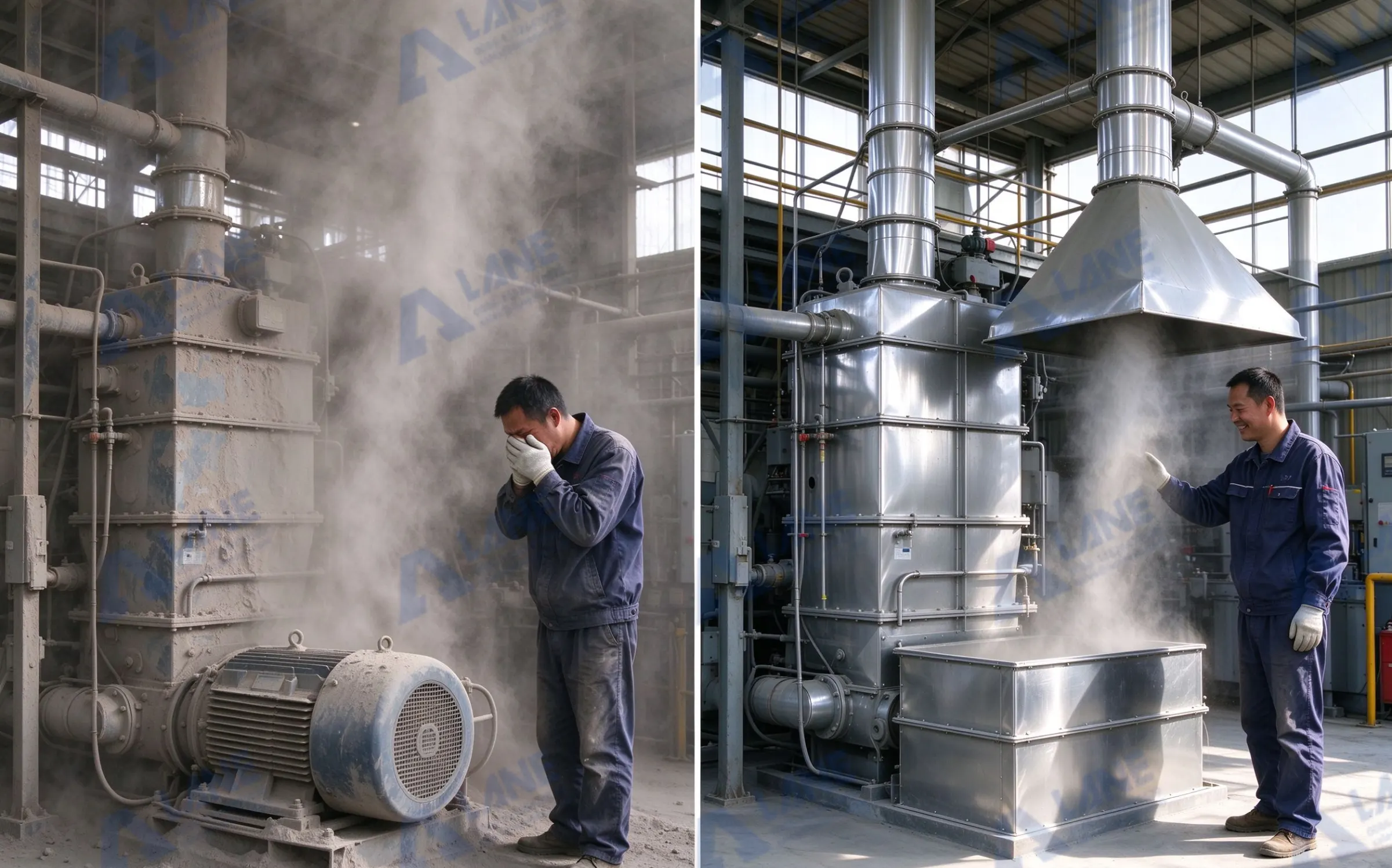
SSP production handles strong acid and generates fluoride-bearing gas, dust, and scrubber effluent. The design should control these streams at the source, contain spills, protect workers, and produce verified performance data. Local permits set the legal limits, but the plant needs margin for normal variation and future tightening.
IFA’s sustainable production priorities include emissions, energy, safety, and nutrient recovery. The European Commission’s BAT reference work for large-volume inorganic chemicals is a useful starting point for control and energy options, even outside Europe.
The environmental package should cover acid unloading, reactor venting, scrubber performance, stack testing, dust collection, spill containment, contaminated stormwater, and scrubber-liquid handling. Safety planning should address acid exposure, confined spaces, rotating equipment, hot surfaces, dust, and emergency shutdown.
Commissioning, operation, and maintenance
Commissioning proves that the line can make the specified product at the specified rate and consumption. It starts with document review, loop checks, interlock testing, cold commissioning, and operator training. Hot commissioning introduces rock and acid, followed by stabilization and a formal performance test.
The test should define duration, sampling, product analysis, capacity calculation, utility metering, emission measurement, and the consequence of failure. A short demonstration is not enough. The buyer needs raw data and a method for repeating the test if conditions change.
Daily checks should cover feed rate, acid dosing, reactor temperature, scrubber performance, dust collectors, dryer temperatures, and leaks. Weekly checks should include vibration, lubrication, screens, crusher wear, and instrument drift. Shutdown inspections should cover reactor and den linings, acid-system corrosion, fan balance, ductwork, bags, and electrical protection.
Keep critical spares for acid pumps, dosing valves, crusher wear parts, screen panels, bearings, filter bags, belts, and key sensors. Catalog recommendations may miss what actually fails with local rock and climate.
How to evaluate a turnkey supplier
A turnkey SSP production line proposal should include a mass balance at the guaranteed rock analysis, a process flow diagram, a scope matrix, a utility summary, an equipment list with materials, and a performance guarantee. Use the same package for each bid.
Check for a comparable plant with similar rock, acid supply, product specification, and climate. Request contactable references and performance data. A useful case record includes product grade, capacity, operating history, and post-startup support.
Documents and guarantees to request
The technical offer should include PFDs, P&IDs, mass and energy balances, equipment datasheets, material selection, load lists, utility consumption, layout, spares, and a commissioning plan. Commercial terms should define delivery, installation, training, warranty, performance-test remedies, and service response.
ISO 9001 defines requirements for a quality management system. Certification can support a supplier review, but it does not replace a plant reference or a performance test. Check the certificate scope and ask how inspection and traceability will apply to this project.
Ask how the supplier will handle rock variability, what happens if the scrubber misses its guarantee, and who owns the civil and utility interfaces. Ask for the commissioning organization chart and the engineer who will lead the performance test.
Project delivery sequence
A disciplined project moves through feasibility, design basis, engineering, procurement, fabrication, construction, mechanical completion, commissioning, performance testing, and handover.
The schedule should show the owner’s obligations as clearly as the supplier’s. Rock samples, site data, utilities, permits, and operator hiring often control the critical path.
Frequently asked questions
What is a turnkey SSP production line?
A turnkey line connects engineering, equipment supply, installation, commissioning, training, and performance testing through defined interfaces. Confirm the civil, utility, storage, and laboratory scope.
How much does an SSP fertilizer plant cost?
There is no defensible universal figure. SSP fertilizer plant cost depends on capacity, product form, raw materials, emission controls, automation, site conditions, and local prices. Build the budget from a mass balance.
What capacity can an SSP line achieve?
Capacity is hourly output at a defined product specification and annual output at a stated operating pattern. Include operating hours, availability, and saleable yield. Compare rates only when assumptions match.
Is SSP production profitable?
It can be profitable when local materials, utilization, product premium, energy, and logistics support the cost structure. Test the case against higher acid prices and lower utilization.
What raw materials does an SSP plant need?
The main inputs are phosphate rock and sulfuric acid. The plant also needs process water, power or fuel for drying, maintenance materials, and packaging. Granulation may need a binder or recycle stream.
What is the difference between SSP and TSP?
SSP is made by acidulating rock with sulfuric acid and contains calcium sulfate. TSP uses phosphoric acid and has more P₂O₅ with much less gypsum. The choice affects freight, blending, soil response, and plant design.
What environmental controls should be planned?
Plan for fluoride scrubbing, dust collection, acid containment, spill control, scrubber-liquid handling, and monitored discharge. Confirm local limits before equipment selection and include performance testing in the contract.