SSP Production Technology Best Practices: Optimizing Efficiency and Yield in Modern Manufacturing
- 2026-03-19
In the fertilizer industry, consistency is everything—but achieving it is rarely straightforward. Modern plants are under constant pressure to improve output, reduce waste, and maintain product quality. That’s where SSP production technology comes into focus. Not as a buzzword, but as a practical framework that—when applied correctly—can significantly improve both efficiency and yield.
Still, let’s be honest. Many facilities claim to use advanced SSP production technology, yet struggle with uneven granulation, fluctuating P₂O₅ levels, or excessive material loss. The gap isn’t in theory. It’s in execution.
Understanding the Core of SSP Production Technology
At its core, this technology is based on a controlled chemical reaction between phosphate rock and sulfuric acid. Simple on paper, yes—but in practice, highly sensitive to raw material quality, reaction conditions, and equipment precision.
A slight deviation in acid concentration, for instance, can disrupt the entire reaction balance. Temperature, too, plays its part—sometimes more than operators expect. This is why optimized SSP production technology is less about isolated steps and more about system-wide coordination.
Raw Material Control: The First Lever of Efficiency
Before equipment, before process flow—there’s raw material.
High-quality phosphate rock with low impurities ensures stable reactions. Sulfuric acid must be consistent in concentration. In advanced operations, raw material variability is not ignored; it’s actively managed.
From experience, I’ve seen plants improve yield by over 5% simply by tightening raw material screening standards. No new machines. Just better control.
Key Equipment in SSP Production Lines
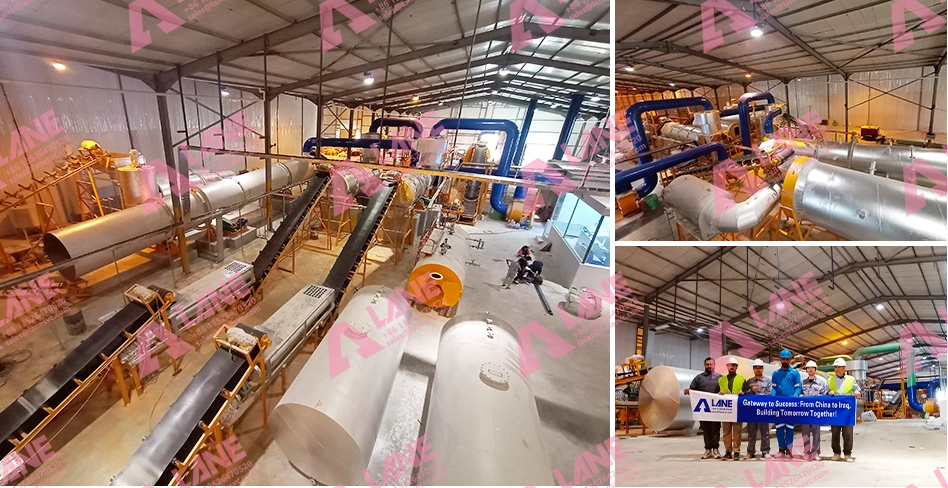
A reliable process depends heavily on the right machinery. In modern manufacturing, equipment selection is not optional—it defines performance.
Phosphate Rock Crusher Machine
Ensures uniform particle size, which directly affects reaction efficiency. Uneven crushing leads to incomplete reactions—something often overlooked.
Sulfuric Acid Dilution System
Maintains precise acid concentration. Inconsistent dilution can destabilize the entire process.
Continuous Mixing Reactor (Den Reactor)
This is the heart of the production line, where the chemical reaction occurs. Proper mixing and retention time are critical.
Converts powder into uniform granules. A well-calibrated granulator improves both product appearance and application efficiency.
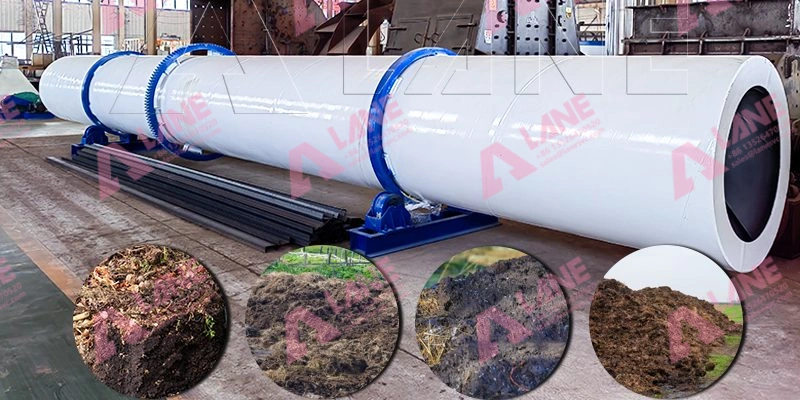
Controls moisture and temperature. Without proper drying, downstream storage becomes problematic—clumping, degradation, you name it.
Separates qualified granules from oversized and undersized materials, ensuring product uniformity.
Facilitates smooth material transfer, reducing manual handling and improving process continuity.
At LANE, we’ve seen how upgrading even one of these components—especially the granulator—can noticeably enhance overall performance.
Process Optimization: Small Adjustments, Big Impact
Efficiency gains often come from subtle refinements rather than major overhauls.
Take curing time. Many operators rush this stage, assuming faster turnover equals higher productivity. In reality, insufficient curing leads to unstable product quality. Extending curing time—just slightly—can stabilize chemical composition and improve final yield.
Another overlooked factor is the recycling ratio. Returning oversized particles back into the system is standard practice, but excessive recycling can overload the system. Balance is key.
Automation and Monitoring
Modern operations increasingly rely on automation. Real-time monitoring of temperature, moisture, and reaction parameters allows for immediate adjustments.
And honestly, this is where many traditional plants fall behind. Manual control introduces delays. Automation reduces them.
From a practical standpoint, integrating sensors and control systems doesn’t just improve efficiency—it reduces operator fatigue. Fewer manual corrections, fewer errors.
Environmental and Cost Considerations
Efficiency isn’t only about output. It’s also about minimizing waste.
Advanced operations incorporate dust collection systems and waste heat recovery. These not only reduce environmental impact but also lower operational costs over time.
Interestingly, some plants resist these upgrades due to initial investment concerns. But the long-term savings—especially in energy consumption—often justify the cost.
Experience from the Field
Working with multiple SSP projects, one pattern keeps repeating. Plants that treat this technology as a fixed formula struggle. Those that treat it as a dynamic system—adjusting, testing, refining—consistently outperform others.
I remember one case where a minor adjustment in granulator speed improved particle uniformity significantly. It wasn’t a major upgrade. Just attention to detail.
That’s the reality of this industry. Precision matters. But so does mindset.
Conclusion
Optimizing SSP production technology is not about chasing perfection. It’s about continuous improvement—step by step, parameter by parameter.
With the right equipment, disciplined raw material control, and a willingness to refine processes, manufacturers can achieve higher efficiency, better yield, and more consistent product quality.
And in today’s competitive fertilizer market, that edge makes all the difference.
FAQ
1. What is SSP production technology?
SSP production technology refers to the process of producing Single Super Phosphate fertilizer through the reaction of phosphate rock with sulfuric acid, followed by granulation, drying, and screening.
2. How can efficiency be improved in SSP production technology?
Efficiency can be improved by optimizing raw material quality, upgrading key equipment, and implementing real-time monitoring systems.
3. Why is granulation important in SSP production technology?
Granulation ensures uniform particle size, which improves fertilizer application efficiency and market acceptance.
4. What role does curing play in SSP production technology?
Curing allows the chemical reaction to complete fully, stabilizing the product and improving nutrient availability.
5. How does automation benefit SSP production technology?
Automation enables precise control of process parameters, reduces human error, and enhances overall production consistency.
For more details, please feel free to contact us.
Henan Lane Heavy Industry Machinery Technology Co., Ltd.
Email: sales@lanesvc.com
Contact number: +86 13526470520
Whatsapp: +86 13526470520