SSP Fertilizer Production Method: Complete Guide to Manufacturing Single Superphosphate
- 2026-03-17
Producing Single Superphosphate (SSP) fertilizer might seem straightforward at first glance, but those of us who have worked in this industry know the reality is far more nuanced. The SSP fertilizer production method demands a careful blend of chemistry, precise handling, and the right equipment. From my experience supervising multiple fertilizer plants, I can tell you that even minor deviations in process control can quickly lead to inconsistent P₂O₅ content or those frustrating caked granules that no one wants to deal with.
Overview of the SSP Fertilizer Production Method
The SSP fertilizer production method starts with phosphate rock as the primary raw material. When sulfuric acid reacts with phosphate rock, it produces water-soluble phosphorus, an essential nutrient for plant growth. Now, here’s the thing: although the basic reaction sounds simple, maintaining the proper acid-to-rock ratio, temperature, and reaction time is absolutely critical. I recall a project where minor fluctuations in acid flow caused uneven granulation; we eventually corrected it by adjusting the dosing system on the Acid-Resistant Reaction Tank, but it taught me a valuable lesson about the importance of every parameter.
Essential Equipment
Reliable equipment forms the backbone of any successful SSP fertilizer production method. The key machinery you’ll need includes:
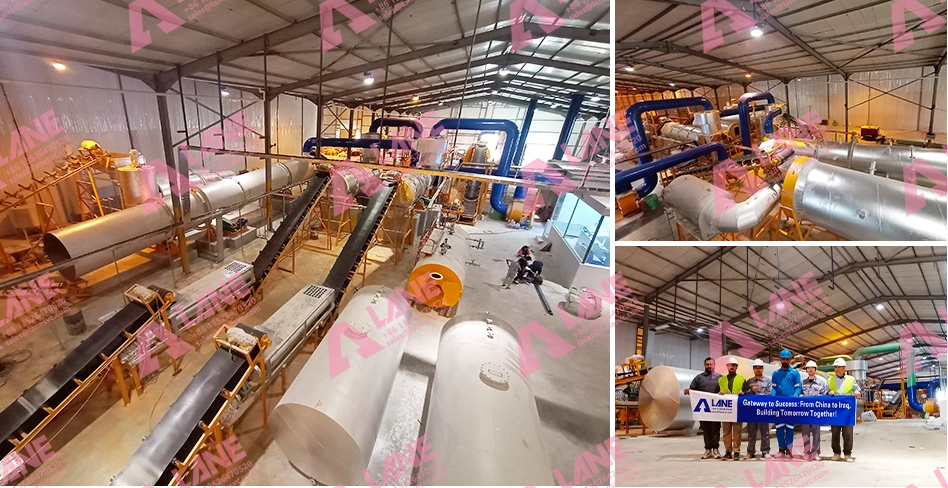
- Phosphate Rock Crusher – ensures uniform particle size for efficient reaction. Getting this right from the start makes everything else easier.
- Acid-Resistant Reaction Tank – this is where the magic happens, controlling the acidulation process with precise agitation and temperature monitoring. It’s the heart of the operation.
- Rotary Drum Dryer – reduces moisture in wet SSP granules to prevent caking during storage. Proper drying can save you headaches down the line.
- Rotary Screening Machine – separates finished granules from fines, allowing recycling of undersized material. It’s all about maximizing your yield.
- Conveyor Systems – automates material transport and significantly reduces manual handling errors. In today’s operations, this isn’t optional—it’s essential.
At LANE, we found that integrating automated monitoring into these machines greatly improved consistency. For instance, real-time pH and temperature sensors help operators make quick adjustments—something that would be nearly impossible to do manually with the same precision.
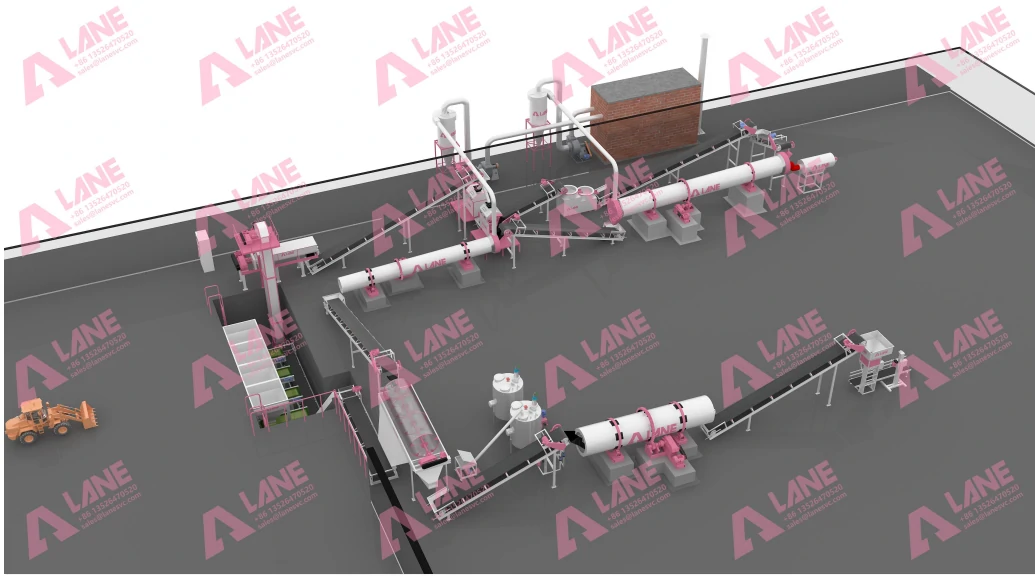
Step-by-Step SSP Fertilizer Production Method
1. Raw Material Preparation
Crush phosphate rock to an appropriate size and prepare sulfuric acid. Uniform particle size is absolutely critical for reaction efficiency—skip this step properly, and you’ll feel the consequences throughout the entire process.
2. Acidulation
Combine crushed rock and sulfuric acid in the reaction tank. Continuous monitoring is essential here to avoid under- or over-acidulation. Both extremes will cost you in product quality.
3. Granulation
Wet SSP forms granules during this stage. Here’s what I’ve learned: excess moisture causes clumping, while insufficient moisture results in fines. More often than not, adjusting the drum rotation speed solves this problem. It’s a simple tweak that makes a surprising difference.
4. Drying
Use the rotary drum dryer to remove residual moisture. In my experience, granules that are cooled properly before screening have far fewer caking issues—it’s one of those details that separates good operators from great ones.
5. Screening and Packaging
Separate qualified granules from oversized and undersized particles. Recycling fines maintain product uniformity and keep your yield high.
Even with high-quality equipment, operator experience remains crucial. Small tweaks—adjusting drum rotation or moisture input—often improve product consistency more than major mechanical changes ever could.
Challenges in the SSP Fertilizer Production Method
Several factors can throw a wrench into the SSP fertilizer production method. Phosphate quality variability can disrupt the reaction and make your life difficult. Environmental factors, such as humidity, may cause granules to stick together when you least expect them to. In our installations, adding real-time moisture sensors and automated alarms helped prevent these issues before they escalated into major problems. An ounce of prevention, as they say.
FAQ About SSP Fertilizer Production Method
Q1: What is the ideal water-soluble P₂O₅ content in SSP fertilizer?
A: Typically, high-quality SSP should have 16–18% water-soluble P₂O₅, which requires precise control of the acidulation process. Get this right, and your customers will keep coming back.
Q2: Can different grades of phosphate rock be used?
A: Yes, but lower-grade rock may need longer reaction times or additional acid to reach the desired P₂O₅ content. It’s always a trade-off, and you need to adjust accordingly.
Q3: Is automation necessary for this SSP fertilizer production method?
A: Not strictly necessary, but automation ensures consistent granule size, reduces errors, and allows operators to monitor critical parameters in real-time. In my view, it’s becoming increasingly hard to compete without it.
Q4: Which LANE equipment is recommended for small plants?
A: For smaller operations, we often suggest the Phosphate Rock Crusher, Acid-Resistant Reaction Tank, and Rotary Drum Dryer. This combination ensures efficient production without high cost, enough to get started without breaking the bank.
Final Thoughts
The SSP fertilizer production method is more than just machinery—it’s about understanding the interplay of materials, chemical reactions, and operational adjustments. In my experience, subtle changes in moisture, drum speed, or acid flow make a significant difference. While LANE provides reliable equipment, success ultimately depends on combining technology with skilled operation.
Mastering the SSP fertilizer production method requires careful monitoring, a well-organized process, and attention to detail. When these elements align, producing consistent, high-quality Single Superphosphate becomes a reliable, repeatable operation—one you can actually build a business around.
For more details, please feel free to contact us.
Henan Lane Heavy Industry Machinery Technology Co., Ltd.
Email: sales@lanesvc.com
Contact number: +86 13526470520
Whatsapp: +86 13526470520