Custom SSP Fertilizer Solutions: Plant Design & Cost Guide
- 2026-09-22
Single super phosphate sits in an unusual corner of the phosphate fertilizer market. Building a plant for it costs a fraction of a phosphoric acid route, the product carries sulfur and calcium alongside phosphorus, and in many markets buyers still ask for it by name. The difficulty is that no two projects look alike. Rock chemistry, target granule size, acid supply, and site power push the design in different directions.
That is where custom SSP fertilizer solutions earn their place. This guide covers the process, the equipment, and the commercial decisions that come with them.
What Custom SSP Fertilizer Solutions Should Cover
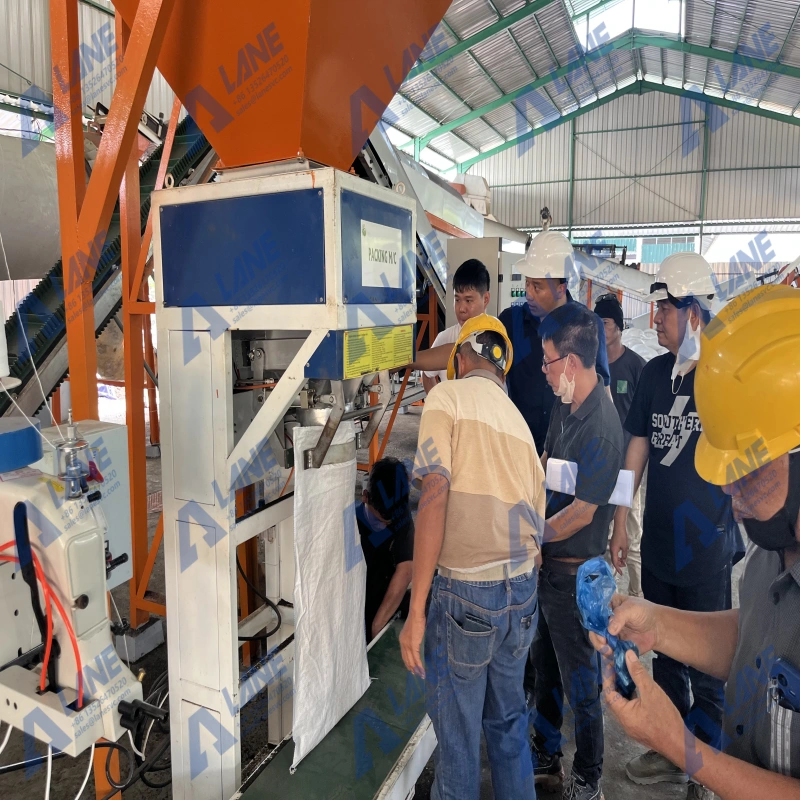
Catalogs describe an SSP fertilizer production line as a fixed package: grinder, mixer, den, granulator, dryer, cooler, screen, packing machine. The list is accurate and incomplete, because every project changes how the units are sized and how they connect.
- Grinding sized for real rock feed, not a nominal tonnage
- Acidulation matched to the acid strength the rock demands
- Curing arranged around your storage and free-acid target
- Granulation and drying set for the granule size your market buys
- Recycle loops sized so nothing upstream starves
- Fluoride scrubbing, dust collection, and gypsum handling that pass permitting
Projects usually fail at those interfaces. A granulator sized correctly on paper still chokes when the dryer cannot hold moisture or curing cannot feed it fast enough.
Industry Trends That Shape SSP Investment Decisions
Rock supply stays concentrated among a few producing countries. The U.S. Geological Survey’s Mineral Commodity Summaries is the public reference most teams use when modeling rock availability, and the International Fertilizer Association’s medium-term outlook covers supply and demand. Buyers dependent on imported rock have reason to look at regional production, one reason demand for custom SSP fertilizer solutions holds up outside the traditional producing regions.
Demand has also moved toward granulated product. Granulated single super phosphate blends better, spreads more evenly, and throws less dust than powder, so producers selling into bulk blend markets now build granulation into the original scope.
Compliance now applies at both ends of the process. Fluoride emissions from acidulation are regulated in most jurisdictions, and the U.S. Environmental Protection Agency sets national emission standards for phosphate fertilizer production under 40 CFR Part 63. In Europe, the EU Fertilising Products Regulation (EU) 2019/1009 sets contaminant limits, including cadmium limits.
The Single Super Phosphate Manufacturing Process, Step by Step
Understanding the single super phosphate manufacturing process is what makes equipment selection possible. The chemistry is simple. Holding it steady at plant scale is not.
Step 1: Rock preparation
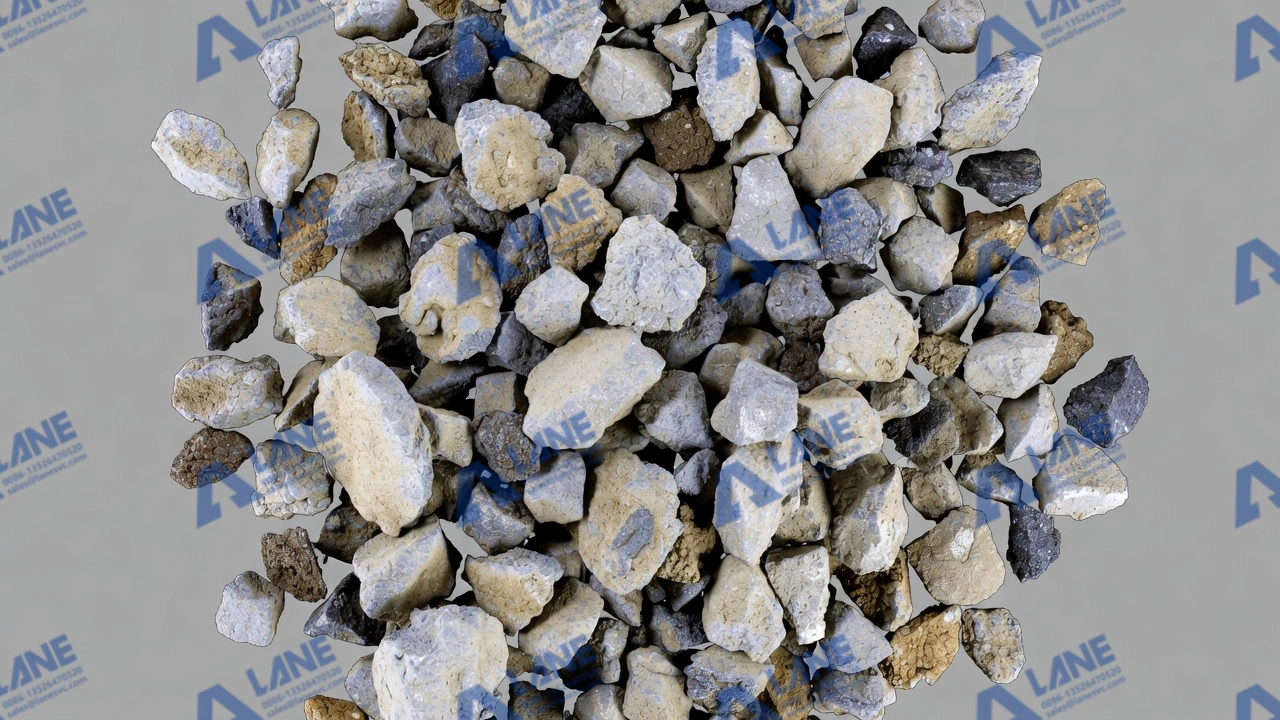
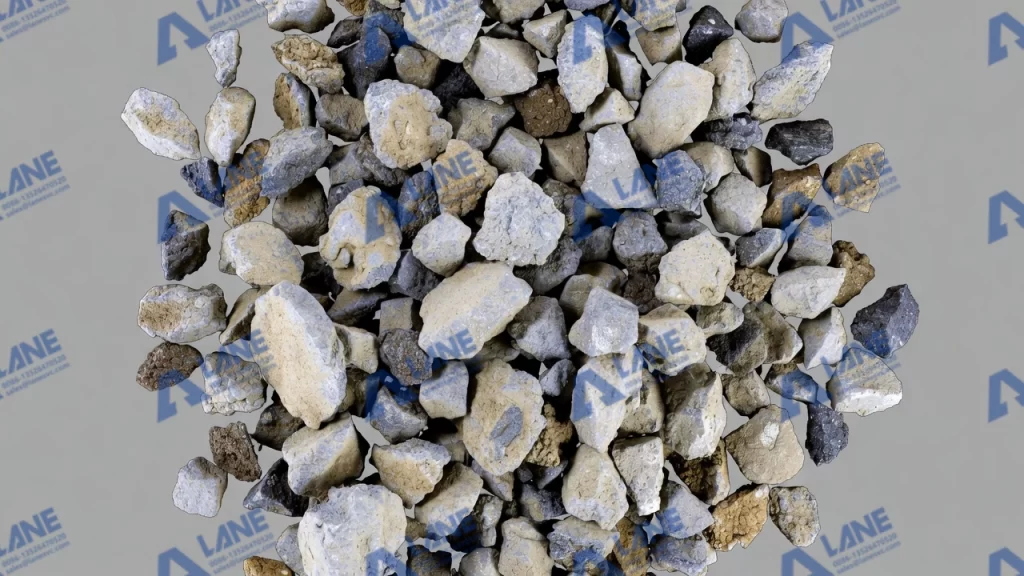
Rock arrives with variable P2O5, carbonate, and moisture. It is crushed, then ground to a fine powder with most material passing a 100-mesh screen. Acid attacks particle surfaces, so coarse rock leaves unreacted phosphate behind and pulls down available P2O5.
Step 2: Acidulation
Ground rock meets sulfuric acid at a controlled ratio:
2 Ca5(PO4)3F + 7 H2SO4 + 3 H2O → 3 Ca(H2PO4)2·H2O + 7 CaSO4 + 2 HF
The reaction produces monocalcium phosphate, calcium sulfate, and hydrogen fluoride. The acid-to-rock ratio is fixed by rock grade. High carbonate consumes acid in a side reaction that yields no useful phosphate, raising acid cost per tonne and diluting the grade. Run a rock test before you accept a quote.
Step 3: Curing
Material leaving the mixer is not finished fertilizer. It is hot, acidic, and still reacting, so it spends two to four weeks in a den or curing area while the reaction completes and free acid falls. The single super phosphate manufacturing process depends on that wait, so shortening it to free up storage tends to cost more in customer complaints than it saves.
Step 4: Granulation and finishing
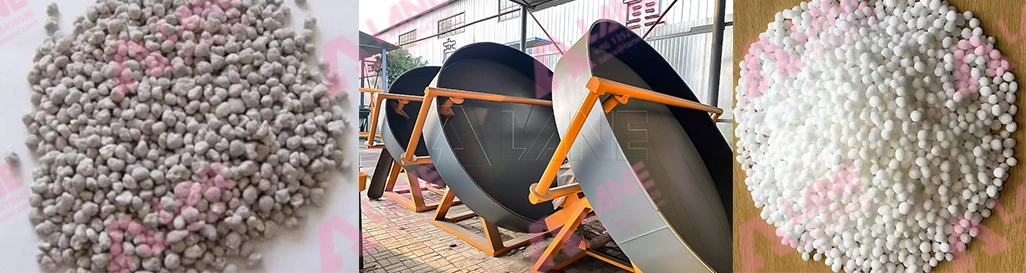
Cured material enters a granulator, where water and sometimes steam drive agglomeration. Wet granules pass through a rotary dryer, a cooler, and a screening deck. Oversize is crushed and returned, fines go back to the granulator, and product in the 1 to 4 mm range is coated, cooled, and packed.
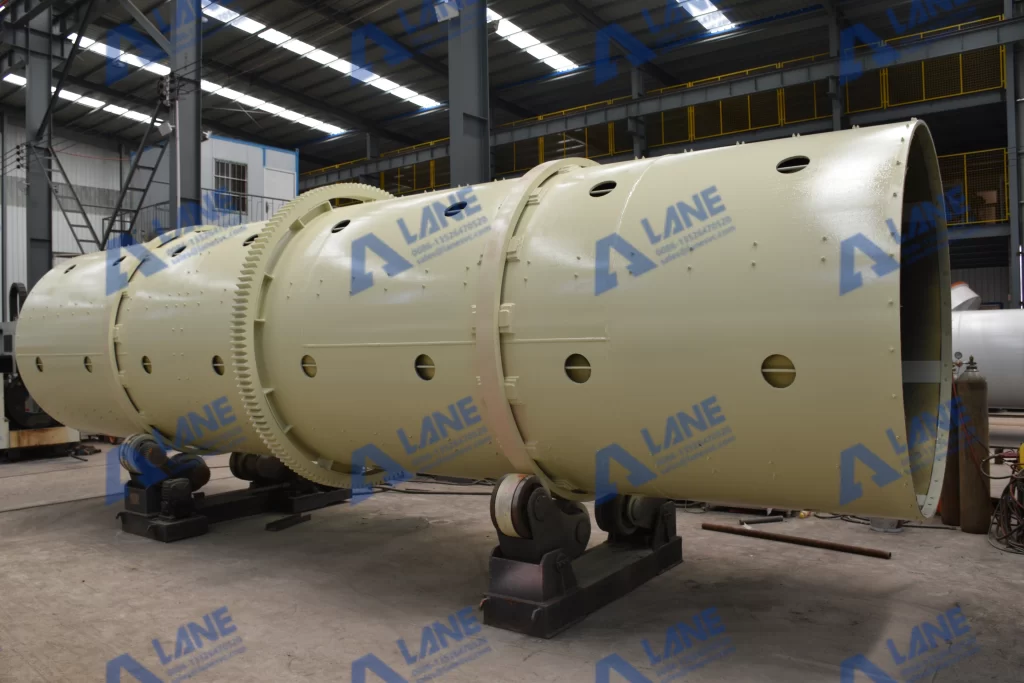
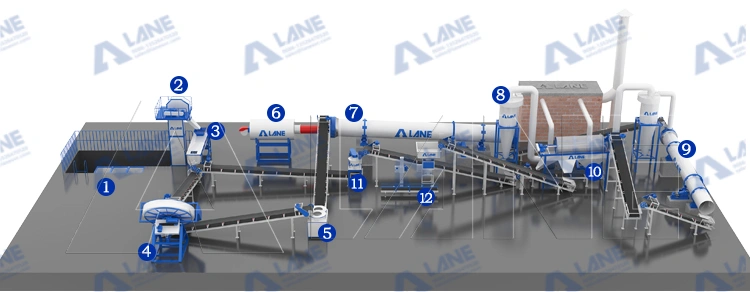
Equipment Composition of an SSP Fertilizer Production Line
An SSP fertilizer production line splits into nine areas, including the ones that never appear in a product photograph.
| Process stage | Main equipment | Function |
|---|---|---|
| Rock preparation | Jaw crusher, hammer mill or ball mill, air classifier | Grind rock fine enough for acid attack |
| Acidulation | Pug mill or continuous mixer, den, acid dosing skid | Mix rock and acid at the design ratio |
| Curing | Curing bays, reclaiming conveyor, or curing drum | Finish the reaction, cut free acidity |
| Granulation | Rotary drum granulator or paddle mixer, steam injection | Build granules in the target range |
| Thermal | Combustion chamber, rotary dryer, fluid bed cooler | Dry and cool granules for storage |
| Sizing | Trommel or vibrating screen, chain crusher, conveyors | Hold size distribution, recycle oversize |
| Finishing | Coating drum, product bin, bagging machine | Improve flowability, prepare finished bags |
| Environmental | Cyclones, bag filters, fluoride scrubber, gypsum handling | Meet permit limits, handle byproduct |
| Control | PLC or DCS, belt scales, moisture and temperature instruments | Keep the line inside its operating window |
Technical Choices That Affect Payback
Three decisions shape what custom SSP fertilizer solutions cost to build and cost to run: product form, acidulation mode, and off-gas handling.
Powder or granulated SSP
Powder costs less to build because it skips granulation, drying, cooling, and coating, but it sells for less and limits you to customers who can handle dusty material. Granulated product costs more per tonne and reaches bulk blending and mechanical spreading. Granulated grades also serve markets where sulfur and calcium carry agronomic value alongside phosphorus, such as oilseeds, pulses, and sugarcane. Settle that choice before equipment sizing begins.
Batch or continuous acidulation
Batch suits smaller plants and variable rock supply, since each batch can be adjusted. Continuous suits steady feed at higher capacity and produces more uniform material for granulation, but it needs better instrumentation and tighter operator discipline.
Fluoride recovery and gas cleaning
Hydrogen fluoride leaves acidulation in the off-gas. Water or alkaline scrubbing removes it, and some plants recover the fluoride as a manageable byproduct. Scrubber capacity has to match the acidulation rate, since undersized gas handling caps how hard the line can run.
What Drives the Cost of a Custom SSP Plant
Equipment price is only part of what an SSP fertilizer production line costs, and rarely the part that causes overruns.
| Cost driver | Why it moves the total | How to control it |
|---|---|---|
| Capacity and product form | Sets every equipment size; granulation adds thermal stages | Confirm tonnes per day at design grade |
| Rock chemistry | Carbonate and moisture drive acid use and curing time | Run rock tests and a mass balance first |
| Scope boundary | Process island and full turnkey differ in engineering and erection | Write the scope into the contract |
| Site and civil works | Foundation loads, acid bunding, and layout vary by location | Share soil and layout data early |
| Utilities | Power, water, steam, and air scale with drying and granulation | Ask for a utility schedule in the offer |
| Environmental systems | Scrubbers, filters, and gypsum handling are permit-driven | Involve your consultant during design |
| Erection and commissioning | Labor rates, duties, and site conditions differ by country | Request a manning and commissioning plan |
Rock chemistry governs the single super phosphate manufacturing process, so two plants of the same capacity can carry different capital costs. Normalize every quote for custom SSP fertilizer solutions to one scope, rock specification, and performance guarantee.
Equipment Selection Criteria for Procurement Teams
Procurement teams comparing custom SSP fertilizer solutions should ask for a mass and energy balance, process flow diagram, P&ID, general arrangement drawings, and a utility schedule before price enters the conversation. Then check:
- Guaranteed output in tonnes per day at a defined rock grade and product spec
- Materials of construction matched to each stream, with corrosion allowance for acid contact
- Motors, gearboxes, and bearings with regional spare parts
- Wear parts listed as line items with price and service life
- Electrical standards matched to your site (IEC or NEMA)
- Factory acceptance test, performance test procedure, and written acceptance criteria
- Spare parts list, O&M manuals, drawings, and training in the contract
- Payment tied to milestones, with retention until performance sign-off
A supplier who can hand over that document set for a complete SSP fertilizer production line before you sign is usually the one who can also make it run.
Maintenance and Operating Discipline
Running an SSP fertilizer production line rewards routine attention. Acid circuits corrode, abrasive rock wears mixer blades and granulator scrapers, and screens blind over. The parts that stop production most often are also the cheapest: wear parts, dryer flights, screen panels, and crusher hammers.
Track a short list weekly: tonnes per operating hour, acid per tonne of product, available P2O5 against specification, and granule size distribution.
How to Choose an SSP Fertilizer Equipment Manufacturer
The market includes engineering companies that design and build full lines, fabricators that build to someone else’s drawings, and traders that broker equipment. The difference appears when a line will not hold rated capacity.
Look for a supplier who runs or commissions rock testing, issues a mass balance, and puts the capacity guarantee in writing. Visit a plant of similar capacity and talk to the operators. ISO 9001, ISO 45001, and CE marking under the Machinery Directive 2006/42/EC are useful baseline signals, though they describe a management system rather than a specific design.
The strongest signal is a supplier who has already solved your rock. Choosing a partner for custom SSP fertilizer solutions means asking how many SSP fertilizer production lines they have built on similar chemistry, and what changed as a result.
FAQ
What is the difference between SSP and TSP?
SSP comes from reacting rock with sulfuric acid, so it carries sulfur and calcium along with roughly 14 to 16 percent available P2O5. Triple super phosphate uses phosphoric acid and reaches about 46 percent P2O5.
How much does a custom SSP fertilizer production line cost?
No standard price exists. Capacity, product form, scope boundary, and site conditions move the total. Ask a supplier of custom SSP fertilizer solutions what the quote includes: tonnes per day at a defined rock grade, equipment scope, and a performance guarantee.
What capacity should a new SSP plant be designed for?
Match capacity to what you can sell within a reasonable radius, then confirm the size is a standard equipment size. Merchant plants commonly start at 30 to 100 tonnes per day.
What phosphate rock grade does SSP need?
Higher P2O5 and lower carbonate is better, because carbonate consumes acid without producing phosphate. Rock around 28 to 32 percent P2O5 is typical, but reactivity and grindability testing on your source decides how the single super phosphate manufacturing process is configured.
Can SSP be granulated for bulk blending?
Yes. Granulated single super phosphate is made in the 1 to 4 mm range and blends with most granular fertilizers. Check compatibility with your blend materials, particularly urea.
How long does SSP need to cure before it can be sold?
Curing commonly runs two to four weeks, depending on rock reactivity, acid ratio, and ambient conditions. Selling before free acidity drops and available P2O5 stabilizes invites caking.
What environmental controls does an SSP plant need?
Acidulation releases fluoride-bearing gas that needs scrubbing, and material handling needs dust collection. Phosphogypsum requires managed storage or reuse. Confirm local limits and size gas cleaning to the acidulation rate.
Next Steps
The fastest route to a defensible number is rock test data plus a target product specification. With those two inputs, the size and scope of an SSP fertilizer production line narrow without guesswork. LANE Machinery engineers SSP and granulation lines, and every custom SSP fertilizer solutions project starts with a review of your rock data.