Complete Guide to the Single Super Phosphate Production Process and Equipment Selection
- 2026-03-30
Single super phosphate (SSP) has been a cornerstone of global fertilizer supply for more than a century — and when you look at the numbers, it’s easy to understand why. It’s cost-effective, sulfur-inclusive, and relatively uncomplicated to produce at scale. That combination is hard to beat. Still, getting consistently high-quality output doesn’t happen by accident. A thorough understanding of the single super phosphate production process is what separates well-run operations from those that waste raw materials and consistently miss product specifications.
With that foundation, let’s move methodically through the production stages, examine critical equipment, and touch on a few practical observations gained from the field.
What Is Single Super Phosphate?
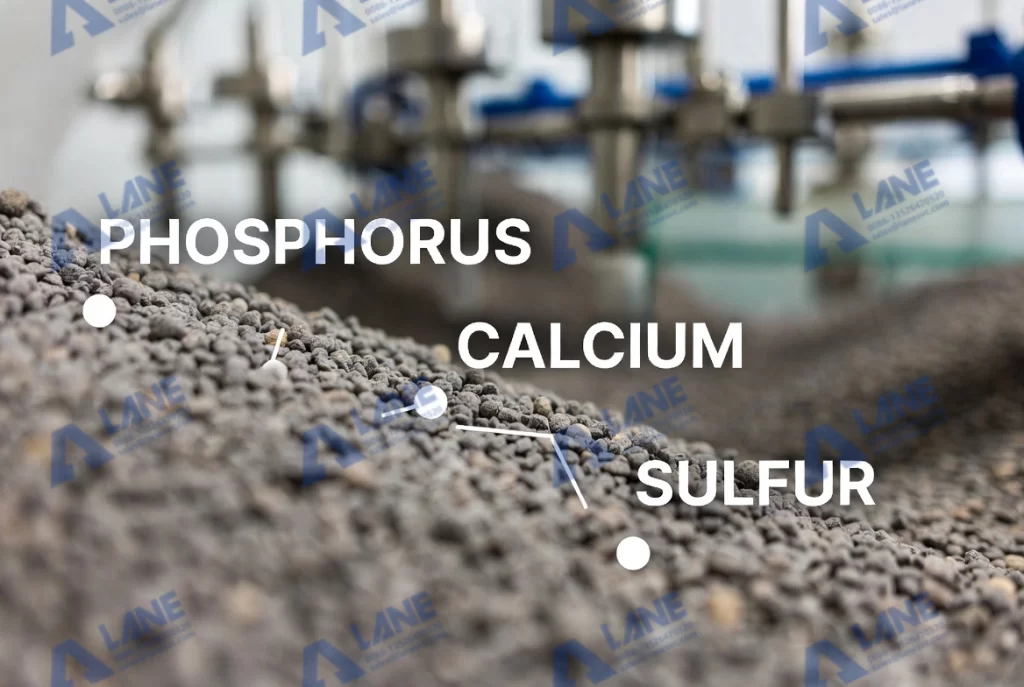
SSP is made by reacting ground phosphate rock with sulfuric acid. This reaction yields a granular or powdered fertilizer with about 16–20% available P₂O₅. Calcium sulfate (gypsum) remains as a byproduct. What sets SSP apart from alternatives like TSP or DAP is its retained sulfur content. For sulfur-deficient soils, this is a meaningful agronomic advantage.
The underlying chemistry isn’t complex: Ca₃(PO₄)₂ + 2H₂SO₄ → Ca(H₂PO₄)₂ + 2CaSO₄. At the bench level, it is clean and predictable. Scaling the single super phosphate production process to industrial throughput, though, introduces a series of control challenges — and the tolerance for error at each stage is tighter than it looks on a process flow diagram.
Step-by-Step: The Single Super Phosphate Production Process
1. Phosphate Rock Preparation
Raw material quality sets the ceiling for everything that follows. Phosphate rock is first crushed, then milled down to a fine particle size — typically 75–90% passing a 150-mesh screen. A finer grind exposes more reactive surface area and drives more complete acidulation downstream. Simple principle, significant impact.
In my years working alongside fertilizer plant engineers, I’ve seen inadequate milling get deprioritized — only to surface later as unreacted rock particles in finished product. It’s a correctable problem, but a frustrating and expensive one. Worth getting right from the start.
2. Acidulation (Reaction with Sulfuric Acid)
Acidulation is the core of the single super phosphate production process. Milled rock and sulfuric acid — usually at 68–70% concentration — are fed continuously into a Den reactor or Broadfield-type mixer. The reaction is exothermic and moves quickly; most acidulation is complete within 30 minutes, leaving a semi-solid den cake or slurry.
The acid-to-rock ratio is where operators need to pay close attention. Under-acid the feed, and you’re left with unreacted phosphate. Over-acid it, and the material becomes tacky and difficult to handle. Most modern plants target a ratio of around 0.6–0.65 kg H₂SO₄ per kg of rock — a fairly narrow window in practice.
3. Curing
Once the initial reaction is done, the material enters a curing phase — usually 4–6 weeks in a covered pile or dedicated curing shed. Residual free acid keeps reacting during this time. Moisture redistributes. The mass consolidates into a more uniform, workable matrix. Operators who compress this stage to save time almost always regret it. Shortened curing is one of the most reliable predictors of inconsistent SSP production quality.
4. Size Reduction and Granulation (Optional)
Cured SSP can go to market as a powder or be granulated — the choice depends on end-use requirements. Granulation, typically done via a rotary drum granulator or pan granulator, involves introducing steam or water to bind fine particles into larger agglomerates. The material then passes through a rotary dryer to bring the moisture content below 5%.
Some producers bypass granulation entirely, supplying powdered product directly to blenders. That’s a perfectly legitimate route, depending on what the market demands and what premium, if any, granular product commands in a given region.
5. Screening and Packaging
The final stage of SSP production involves screening to classify the output — on-spec granules (typically 2–4 mm) get separated from oversize and fines. Overs go back through a crusher; fines recirculate to the granulator feed. The finished product is then either bagged in 25 kg or 50 kg woven polypropylene sacks or bulk-loaded for direct dispatch.
Key Equipment in the Single Super Phosphate Production Process
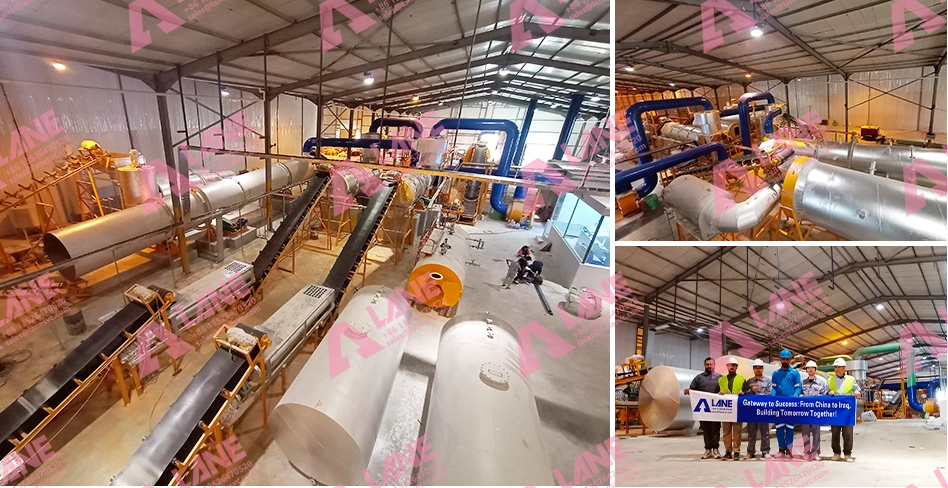
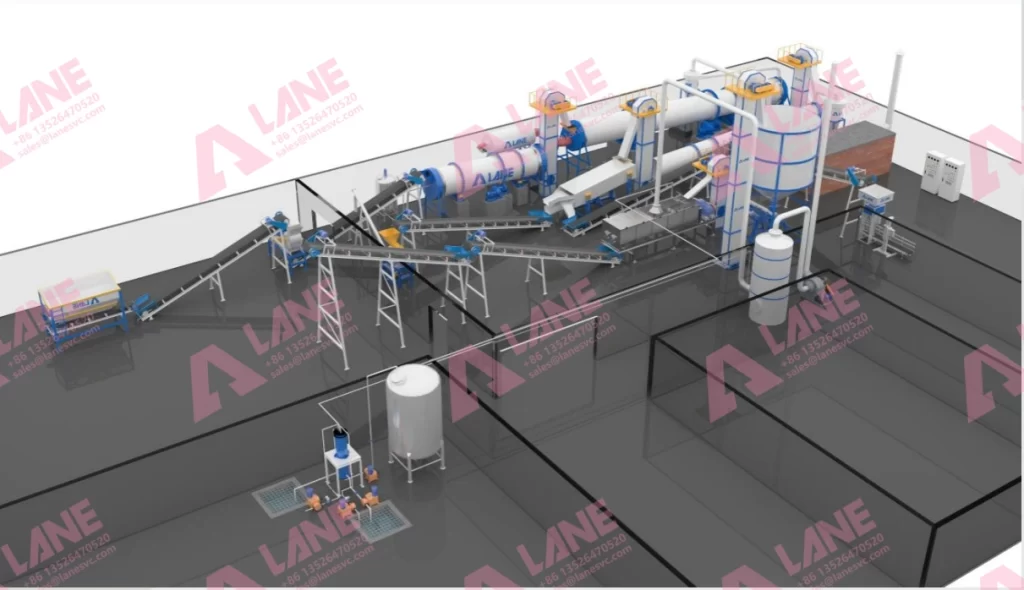
Equipment selection is where engineering decisions translate directly into operating costs and product consistency. Below are the primary units involved in a complete single super phosphate production process line:
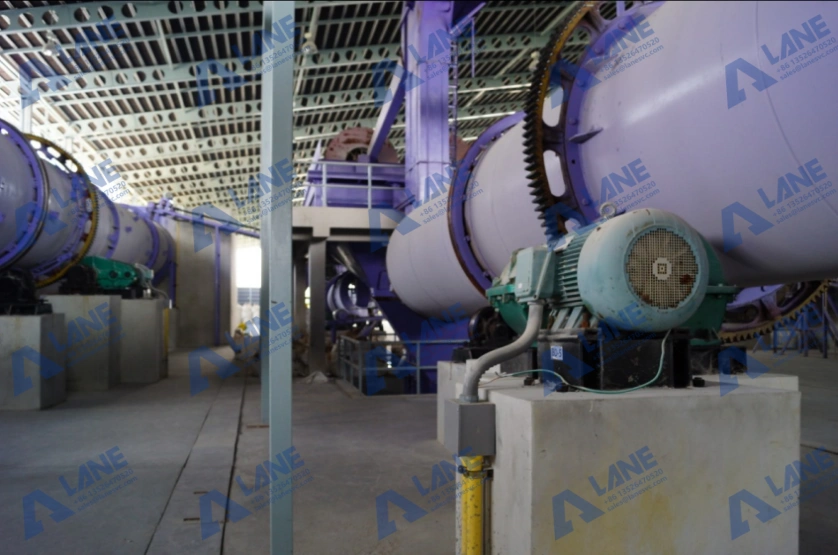
Phosphate Rock Ball Mill — Delivers the particle fineness required for efficient acidulation. Liner selection matters more than most buyers expect; chrome-alloy liners outlast standard options significantly in abrasive rock environments.
Sulfuric Acid Storage Tank — Acid-resistant lined tanks paired with precision dosing pumps. Even a 2–3% dosing deviation moves P₂O₅ content off-spec, so this is not a place to compromise on equipment quality.
Reactor— The primary acidulation vessel. Designs range from simple batch units to high-capacity continuous twin-shaft paddle mixers, with throughput scaling from around 5 to over 200 tonnes per hour.
Rotary Drum Granulator — The standard equipment choice for granular SSP. Drum diameter and retention time are the primary variables controlling granule size distribution.
Rotary Dryer — Handles post-granulation moisture removal. Direct-fired units are common and cost-effective; indirect steam-tube dryers are the preference when product contamination risk needs to be minimized.
Vibrating Screen — Classifies output into on-spec product, oversize, and fines in a single pass. Straightforward, but essential for maintaining product grade.
Dust Scrubber — The acidulation reaction generates fluorine-bearing gases (HF, SiF₄) that require capture before discharge. A wet scrubber or absorption tower isn’t optional — it’s a regulatory baseline in virtually every operating jurisdiction.
LANE, a large-scale fertilizer plant equipment manufacturer, typically supplies these units as integrated production lines rather than standalone pieces. For operators managing procurement and commissioning, that kind of end-to-end supply simplifies coordination considerably.
FAQ: Single Super Phosphate Production
Q: What phosphate rock grade is needed for SSP production?
A: Rock at 65–70% BPL (Bone Phosphate of Lime) or above is the standard preference. Lower-grade material can work, but expect reduced P₂O₅ output and the need to revisit acid dosing parameters.
Q: How long does the curing stage take?
A: Typically 4–6 weeks under standard conditions. High-reactivity rock in warm, humid climates can complete curing in 2–3 weeks — but that’s the exception, not the rule.
Q: Is granulation necessary?
A: Not universally. Powdered SSP is well-suited for bulk blending operations. Granular product tends to attract a price premium in retail channels, mainly due to better handling characteristics and lower dust generation.
Q: What makes SSP production different from TSP production?
A: The acid is different — TSP uses phosphoric acid rather than sulfuric acid. That yields a higher P₂O₅ content (around 46% versus 16–20% for SSP), but at the cost of the sulfur benefit and with significantly higher input costs. Different product, different economics.
Q: How do I control fluorine emissions during the single super phosphate production process?
A: A wet scrubber system — specifically a packed tower operating with water or dilute alkali as the scrubbing medium — is the standard solution for capturing HF and SiF₄ at the source. Most markets treat this as a non-negotiable regulatory requirement.
Final Thoughts
The single super phosphate production process is deceptively straightforward in outline. In practice, each stage from rock preparation through curing and final screening carries its own set of variables — and getting them wrong compounds quickly. Consistent product quality comes from treating every step with equal seriousness, not just the ones that seem most technically demanding.
For anyone assessing equipment or planning a new SSP production facility, the real value in a supplier isn’t just the individual machines. It’s whether they understand how those machines work together across the full process chain.
For more details, please feel free to contact us.
Henan Lane Heavy Industry Machinery Technology Co., Ltd.
Email: sales@lanesvc.com
Contact number: +86 13526470520
Whatsapp: +86 13526470520