How to Manufacture SSP Fertilizer Step by Step: Beginner-Friendly Guide to Raw Materials, Process & Quality Control
- 2026-03-24
Single superphosphate — SSP — has supported agriculture for over a century. It’s not the flashiest product, but it consistently delivers. If you want to make SSP fertilizer step by step, you’ll find the core process isn’t mysterious. What you need are the right raw materials, correctly matched equipment, and a strong commitment to quality at every stage.
With that context in mind, let’s get into the specific steps involved in making SSP fertilizer.
What Is SSP Fertilizer and Why Does It Matter?
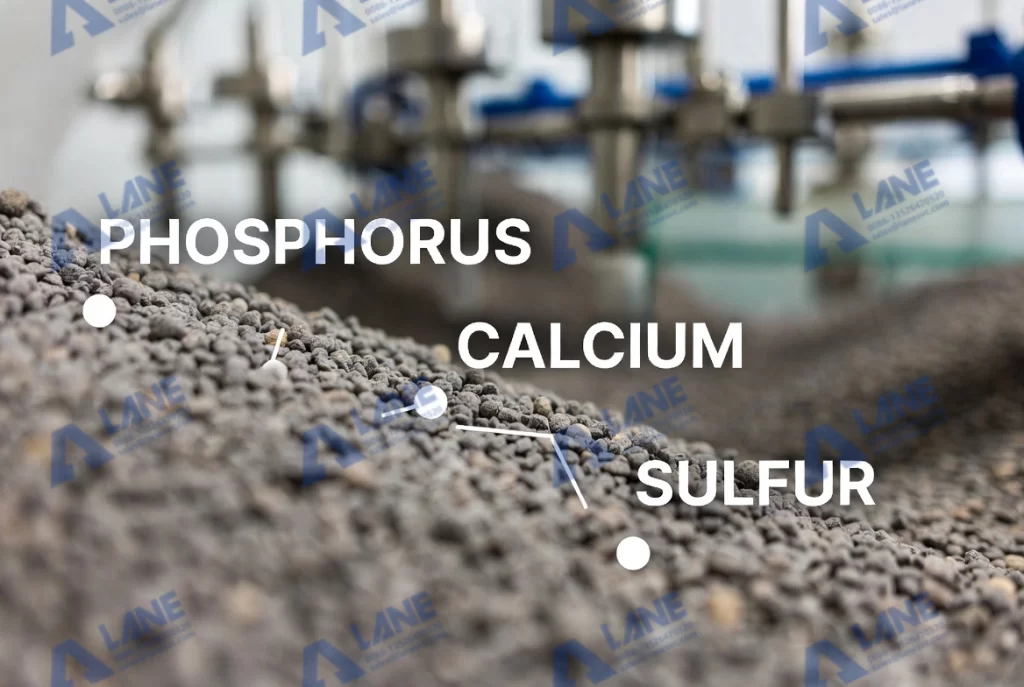
SSP is made by reacting phosphate rock with sulfuric acid. The end product is a granular or powdered fertilizer carrying roughly 16–20% available phosphorus (expressed as P₂O₅), plus calcium sulfate — gypsum — as a byproduct. It’s among the most cost-effective phosphate sources out there, particularly where phosphate rock can be sourced locally and keeps input costs down. Producers who want to learn how to manufacture SSP fertilizer step by step often start here — understanding what the product actually is before worrying about the machinery.
The gypsum isn’t just a waste stream, either. It actively improves soil structure. Farmers managing heavy clay soils tend to notice the benefit fairly quickly. It’s also worth noting that the full process — from rock to bag — is more learnable than most people expect, which is partly why guides on how to manufacture SSP fertilizer step by step remain consistently popular among new producers.
Raw Materials You’ll Need
Before a single piece of equipment is turned on, raw material quality sets the ceiling on everything downstream. Two inputs do the work:
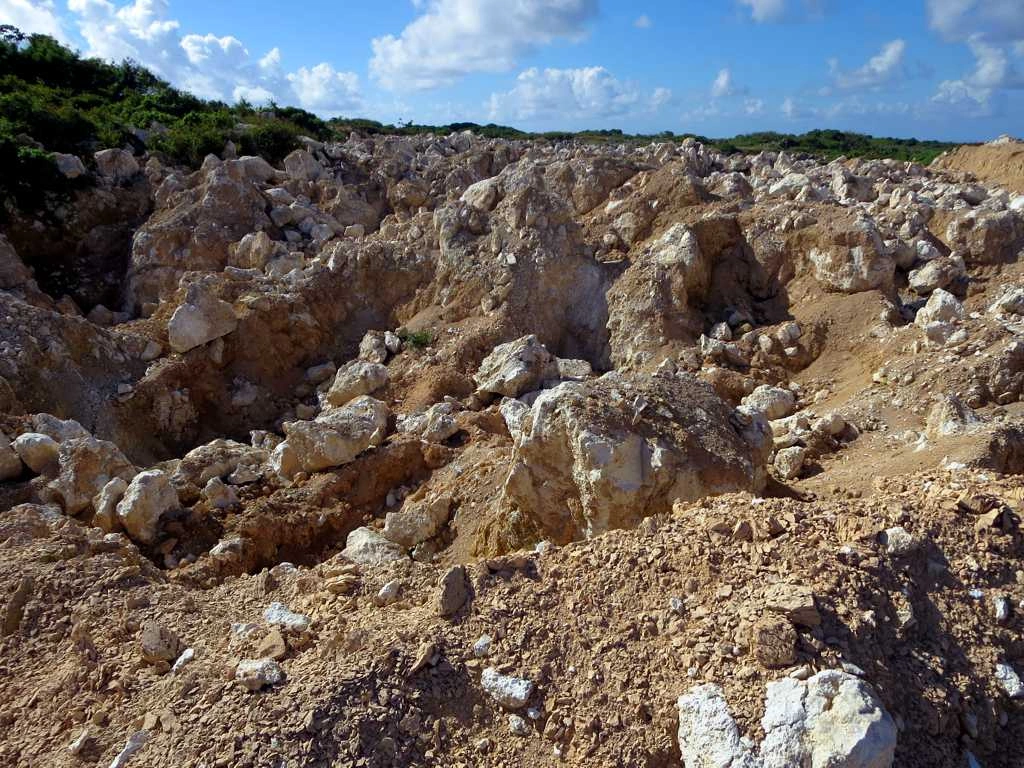
- Phosphate Rock — A BPL (bone phosphate of lime) value above 65% is the practical target. Lower-grade material can run through the process, but conversion efficiency drops and final P₂O₅ content suffers accordingly.
- Fineness matters too — the rock needs to be ground below 150 microns for the acidulation reaction to go to completion.
- Sulfuric Acid — Typically supplied at 68–70% concentration. Too dilute and the reaction stays incomplete; too concentrated and you’re dealing with overheating risks and handling hazards. Concentration control isn’t a detail to gloss over.
Some operations introduce small amounts of conditioner or filler to improve granule flowability, especially in humid climates. That’s situational — not always necessary, but worth factoring in depending on the operating environment. Getting the raw material side right is genuinely the first practical step in how to manufacture SSP fertilizer step by step, and it’s one that experienced producers take seriously from day one.
Core Equipment in the SSP Manufacturing Process
This is where things get specific. And they should be specific — especially for anyone researching how to manufacture SSP fertilizer step by step with actual procurement decisions ahead. The equipment list below covers every major stage of the process, from raw rock to finished bag.
- Phosphate Rock Ball Mill (or Raymond Mill) Grinding comes first. A ball mill handles continuous large-scale throughput; a Raymond mill is a reasonable fit for smaller or batch-style operations. Either way, the fineness achieved here determines how efficiently the acid reacts downstream — it’s not a step to rush or underspec. Anyone mapping out how to manufacture SSP fertilizer step by step should treat the grinding stage as the foundation on which everything else sits.
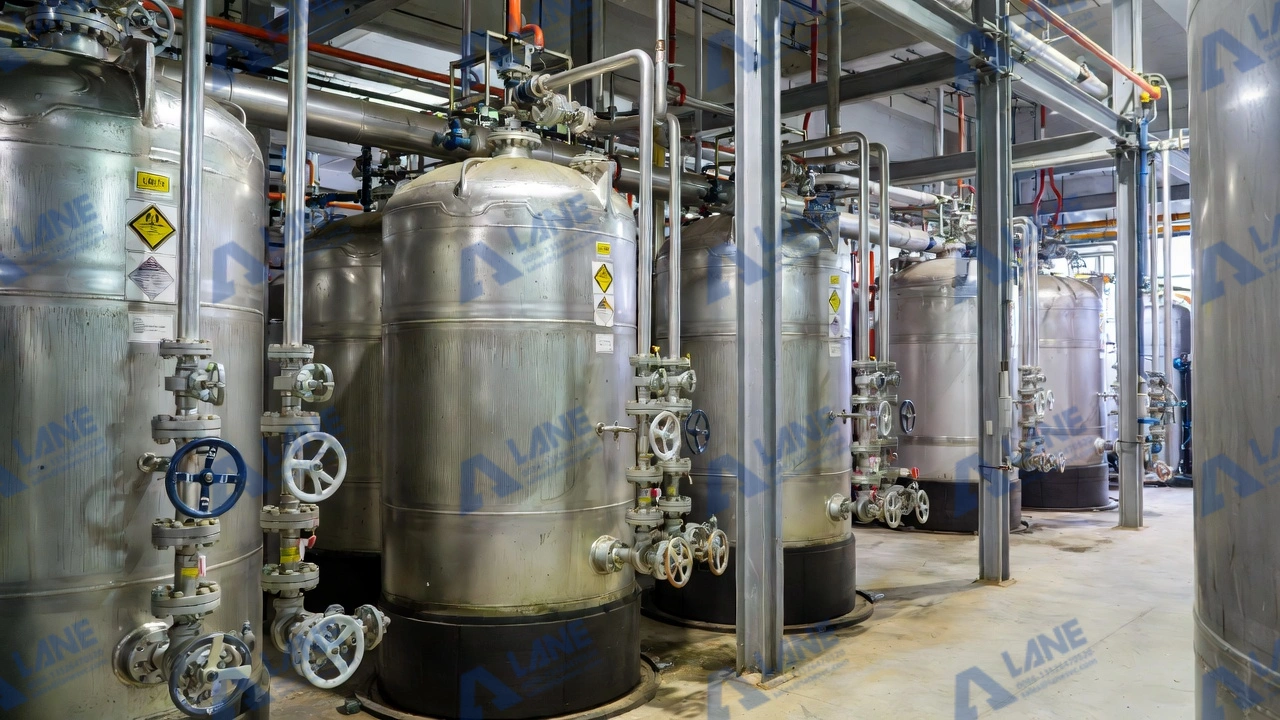
- Sulfuric Acid Storage Tank and Dosing System Acid handling demands dedicated acid-resistant storage tanks paired with a precisely metered dosing pump. The acid-to-rock ratio has to stay within a tight range. Drift from that range and product quality follows. It’s that direct.
- Single Superphosphate Acidulation Reactor (Den Reactor) The den reactor — also called a cone mixer or acidulation chamber, depending on the supplier — is where phosphate rock and sulfuric acid first come into contact. The exothermic reaction kicks off here, producing heat and gas. A well-engineered den reactor handles continuous or batch feed with built-in mixing control and proper gas ventilation. It’s a piece of kit that anyone serious about learning how to manufacture SSP fertilizer step by step needs to understand well.
- SSP Curing Conveyor or Curing Warehouse Once the initial reaction finishes, the material — called den discharge at this point — isn’t done. It needs to cure. Depending on rock quality, that means sitting for three to six weeks while the residual reaction completes and free acid neutralizes. I’ve seen operations try to shorten the curing period to push throughput. It never ends well — it always shows up in the final product. Don’t skip this.
- Double Shaft Paddle Mixer. Before granulation, the cured material goes through a double-shaft paddle mixer. This is where the batch gets homogenized, and any additives are blended in. Uniform mixing at this stage prevents nutrient hotspots and inconsistencies in the finished granule — a detail that separates textbook knowledge from actually knowing how to manufacture SSP fertilizer step by step in practice.
- SSP Granulator (Rotary Drum Granulator or Disc Granulator) Granulation shapes the powdered, cured SSP into consistent, handleable granules. A rotary drum granulator is the standard choice for high-volume continuous lines. A disc granulator — sometimes called a pan granulator — offers tighter size control and suits smaller operations better. Either way, granule uniformity matters when it comes to bagging line compatibility and end-user spreading equipment.
- Rotary Drum Dryer Fresh granules carry moisture from the granulation stage. A rotary drum dryer brings that down to the target level — typically below 5% for SSP. Get the moisture wrong here, and the product cakes in storage, clumps in bags, and causes headaches all the way to the farm gate. Proper drying is one of the more hands-on skills in how to manufacture SSP fertilizer step by step.
- Rotary Drum Cooler Granules exit the dryer hot. Running them straight into bags is asking for condensation and product degradation. A rotary drum cooler handles the temperature drop before the material reaches the screening and packaging stages.
- Vibrating Screen (Rotary Screener) A vibrating screen separates the on-spec granules from oversized and undersized fractions. Over-sized material goes to a crusher; fines cycle back into the granulator. That closed loop is what maintains a consistent size distribution across production runs.
- Automatic Packaging and Sealing Machine. The last step. A weigh-fill bagging machine portions product into bags — 25 kg and 50 kg are both standard — which are then sealed and palletized for dispatch.
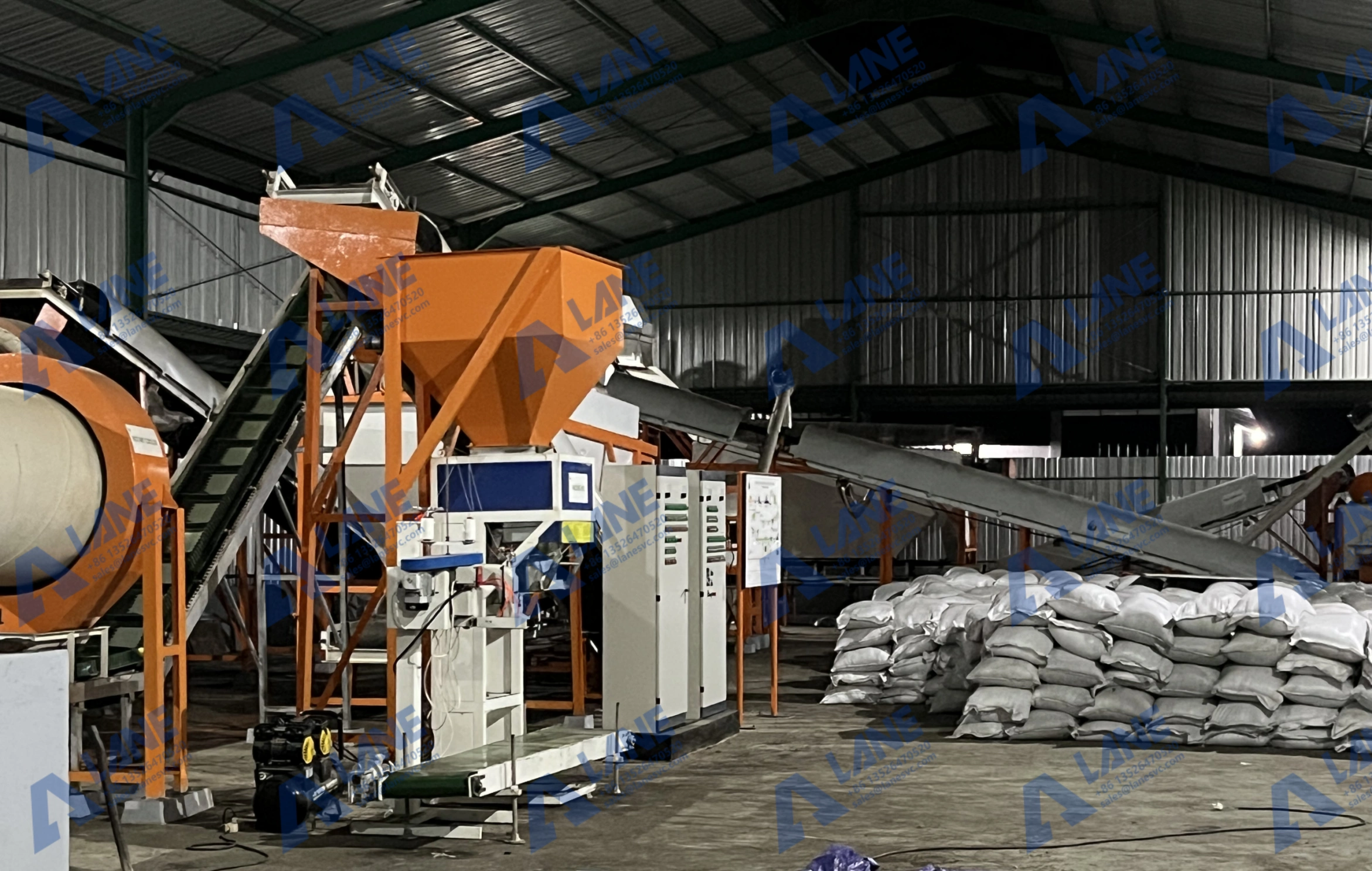
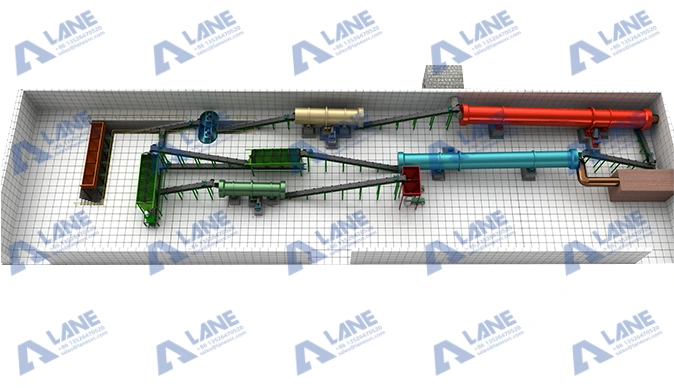
At LANE, complete SSP production lines are engineered to integrate all of these components — from grinding through to final packaging — with particular attention to acid-resistant materials in the acidulation section and automated dosing controls that take human variability out of the ratio equation. Clients who come to us already knowing how to manufacture SSP fertilizer step by step at a basic level tend to get their lines commissioned faster. The goal is always a line that’s straightforward to operate and consistent to run.
Step-by-Step Process Overview
Here’s the full sequence laid out plainly. For anyone still piecing together how to manufacture SSP fertilizer step by step, this is the map:
- Rock grinding — Phosphate rock enters the ball mill and is ground to the target fineness.
- Acid dosing — Sulfuric acid is metered into the den reactor at a controlled ratio, typically 0.55–0.60 parts acid per part rock by weight, adjusted for rock grade.
- Acidulation — Reaction proceeds in the den reactor, producing a semi-solid den cake.
- Curing — The den cake is moved to the curing area and held for 3–6 weeks as the reaction completes.
- Mixing — Cured material passes through the double shaft paddle mixer.
- Granulation — Mixed material feeds into the granulator with controlled moisture addition.
- Drying — Wet granules pass through the rotary drum dryer.
- Cooling — Dried granules are brought down to handling temperature in the rotary drum cooler.
- Screening — On-spec granules are separated; off-spec material recycles back.
- Bagging — Final product is weighed, filled, sealed, and palletized.
Each of these stages connects directly to the next. Skipping or shortcutting any one of them shows up — eventually, and usually at the worst time. That’s a pattern that holds true whether you’re learning how to manufacture SSP fertilizer step by step for the first time or running a line you’ve operated for years. The sequence doesn’t change; the discipline around it is what makes the difference.
Quality Control Checkpoints
Quality control is arguably the most underestimated part of learning how to manufacture SSP fertilizer step by step. Quality in SSP production isn’t something you inspect at the end and hope for the best. It runs through every stage — or it should. Operators who have genuinely mastered how to manufacture SSP fertilizer step by step will tell you the same thing: quality is built in, not tested in.
- Raw material testing: BPL value of incoming rock; acid concentration on each delivery
- Acidulation ratio verification: Confirmed at the dosing system before and during operation
- Curing completion test: Free acid titration of cured material, targeting below 2.5% free P₂O₅
- Moisture content: Post-dryer check, target ≤5%
- Granule size distribution: Screened sample analysis from each production run
- Available P₂O₅ content: Final lab analysis checked against the declared product specification
Documenting all of this isn’t paperwork for its own sake. It’s the difference between a producer with a reliable reputation and one that ships inconsistent product and starts losing buyers.
FAQ
Q: How long does the full SSP manufacturing process take from rock to bagged product?
- A: The curing period is the dominant factor — typically three to six weeks. The active processing steps, grinding, acidulation, granulation, and drying, can be completed within hours in a continuous operation. It’s the waiting, not the running, that sets the timeline. This is one of the most common surprises for people learning how to manufacture SSP fertilizer step by step for the first time.
Q: Can lower-grade phosphate rock be used?
- A: Yes, though below about 60% BPL, acid ratios need adjusting, and the final P₂O₅ content will be lower. Some producers blend higher-grade rock into the feed to compensate and maintain specification. Understanding how rock grade affects yield is a core part of knowing how to manufacture SSP fertilizer step by step at a production level.
Q: What safety precautions are essential when handling sulfuric acid?
- A: Acid-resistant PPE — gloves, face shield, apron — is the baseline. Beyond that: proper secondary containment on all storage tanks, gas scrubbers on the den reactor to capture HF and SiF₄ emissions, and documented staff training on spill response. None of that is optional. Safety protocols are a fixed part of how to manufacture SSP fertilizer step by step responsibly — not an afterthought.
Q: Is SSP production profitable at a small scale?
- A: It can be, particularly where local phosphate rock is available at a competitive cost. The primary economic lever is rock quality — higher BPL means more P₂O₅ recovered per ton of input, and that feeds directly into margin. Understanding how to manufacture SSP fertilizer step by step at smaller volumes often reveals where the real cost efficiencies — and inefficiencies — actually sit.
Q: How does SSP differ from TSP (Triple Superphosphate)?
- A: TSP is produced with phosphoric acid rather than sulfuric acid, which pushes P₂O₅ content up to 44–48% but eliminates the gypsum byproduct. SSP is simpler and less expensive to produce. TSP wins on concentration per kilogram. The right choice depends on what the market and the agronomics call for. For operations where simplicity and lower capital cost matter, knowing how to manufacture SSP fertilizer step by step is the more practical starting point.
Knowing how to manufacture SSP fertilizer step by step is more than process knowledge — it’s the foundation for running a line that produces a consistent, reliable product. The chemistry itself is well-understood. What separates productive operations from struggling ones is execution: the attention to raw material quality, the discipline around curing time, and the systematic approach to quality checkpoints. Get those right, and the rest follows.
For more details, please feel free to contact us.
Henan Lane Heavy Industry Machinery Technology Co., Ltd.
Email: sales@lanesvc.com
Contact number: +86 13526470520
Whatsapp: +86 13526470520