SSP Granulation Process Explained: How Modern Granulation Technology Improves SSP Fertilizer Quality
- 2026-01-04
Single Super Phosphate (SSP) remains one of the most widely used phosphate fertilizers in global agriculture. Its effectiveness, however, depends heavily on how it is produced. Among all production stages, granulation plays a decisive role in determining product quality, handling performance, and market acceptance.
This article explains the SSP granulation process in a practical, engineering-oriented way, and shows how modern granulation technology significantly improves SSP fertilizer quality, consistency, and production efficiency.
Understanding the Role of Granulation in SSP Production
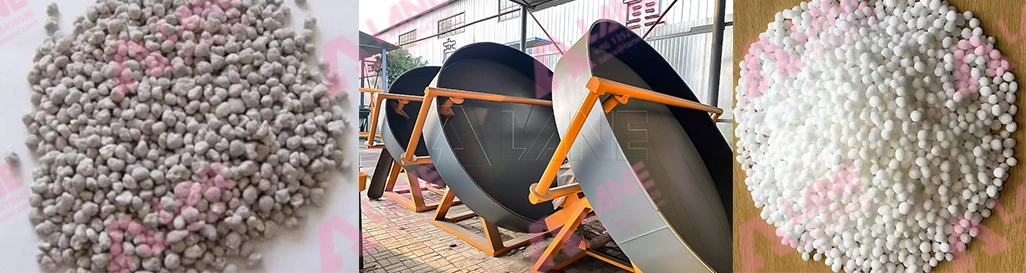
In SSP manufacturing, granulation is not just a shaping step—it is a quality-control process. After the acidulation reaction between phosphate rock and sulfuric acid, the material must be transformed into uniform, durable granules that can withstand storage, transportation, and field application.
A poorly designed Single Superphosphate granulation process often results in excessive fines, uneven particle size, high dust levels, and low mechanical strength. These issues directly affect fertilizer performance and customer satisfaction.
Modern granulation technology focuses on controlling moisture, temperature, particle growth, and curing conditions to ensure that each granule meets agronomic and commercial standards.
Key Stages of the SSP Granulation Process
Although plant configurations vary, a standard Single Superphosphate granulation process typically includes the following stages:
1. Pre-treatment and Material Conditioning
Before granulation begins, reacted SSP slurry or semi-dry material is conditioned to achieve optimal moisture content. This step is critical for stable granule formation and prevents over-agglomeration during granulation.
2. Granulation Formation
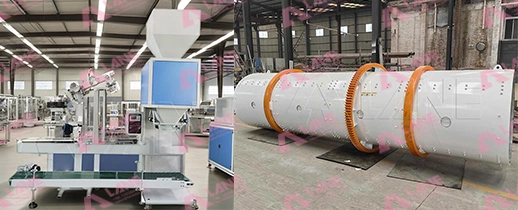
In this stage, material enters the granulator—commonly a rotary drum granulator or pan granulator—where rolling and layering create spherical granules. Advanced control systems allow operators to regulate retention time, spray rate, and rotational speed.
A well-optimized SSP granulation process ensures steady particle growth rather than random agglomeration.
Fresh granules contain residual moisture that must be removed. Controlled drying improves granule hardness, while cooling stabilizes the structure and prevents caking during storage.
4. Screening and Recycling
Oversized and undersized particles are separated and returned to the granulation stage. This closed-loop system improves yield and maintains consistent product size distribution throughout the Single Superphosphate granulation process.
How Modern Granulation Technology Improves SSP Fertilizer Quality
Improved Particle Size Uniformity
Modern granulators use precision control to achieve narrow particle size distribution. Uniform granules ensure even nutrient application in the field and reduce segregation during transport.
Higher Granule Strength
Advanced drying and curing systems significantly increase crushing strength. This reduces dust generation and breakage—two major quality concerns in traditional SSP granulation processes.
Lower Dust and Environmental Impact
With optimized airflow, sealing systems, and dust collection, modern plants minimize emissions. A cleaner SSP granulation process not only meets environmental regulations but also improves workplace safety.
Better Nutrient Availability
Consistent granule structure allows SSP to dissolve more predictably in soil, improving phosphorus availability to crops and enhancing overall fertilizer efficiency.
Common Challenges in Traditional SSP Granulation
Many older SSP plants still struggle with:
- Unstable granulation due to moisture fluctuation
- Excessive recycle load
- High energy consumption
- Frequent equipment wear
These problems usually stem from outdated equipment design rather than raw material quality. Upgrading the Single Superphosphate granulation process with modern technology can often solve multiple issues simultaneously without increasing operating complexity.
Equipment Selection for an Efficient SSP Granulation Process
Choosing the right equipment is critical. Key considerations include:
- Compatibility with raw material characteristics
- Capacity matching with upstream reaction systems
- Ease of maintenance and automation level
A properly integrated Single Superphosphate granulation process balances production capacity with long-term reliability, rather than chasing maximum throughput at the expense of product quality.
Why Modern Plants Prefer Turnkey SSP Granulation Solutions
More fertilizer producers are shifting toward turnkey solutions that integrate granulation, drying, screening, and dust control into a unified system. This approach reduces installation risk, shortens commissioning time, and ensures stable performance from day one.
A turnkey Single Superphosphate granulation process also simplifies operator training and future capacity expansion.
Why Choose LANE for SSP Granulation Technology
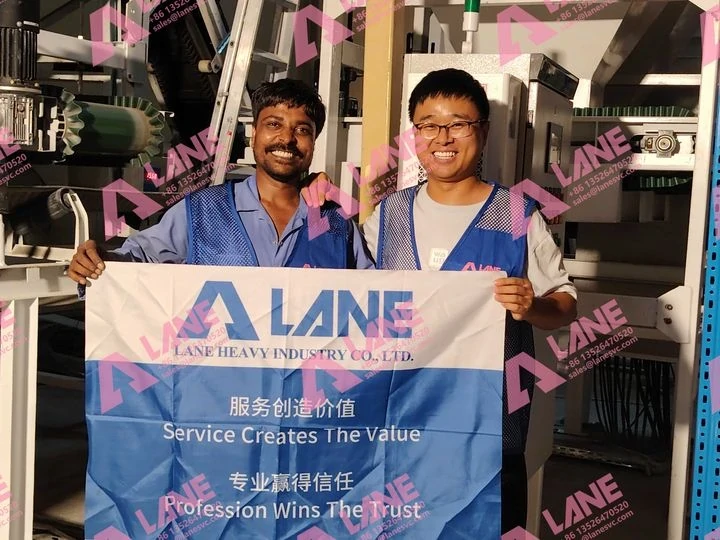
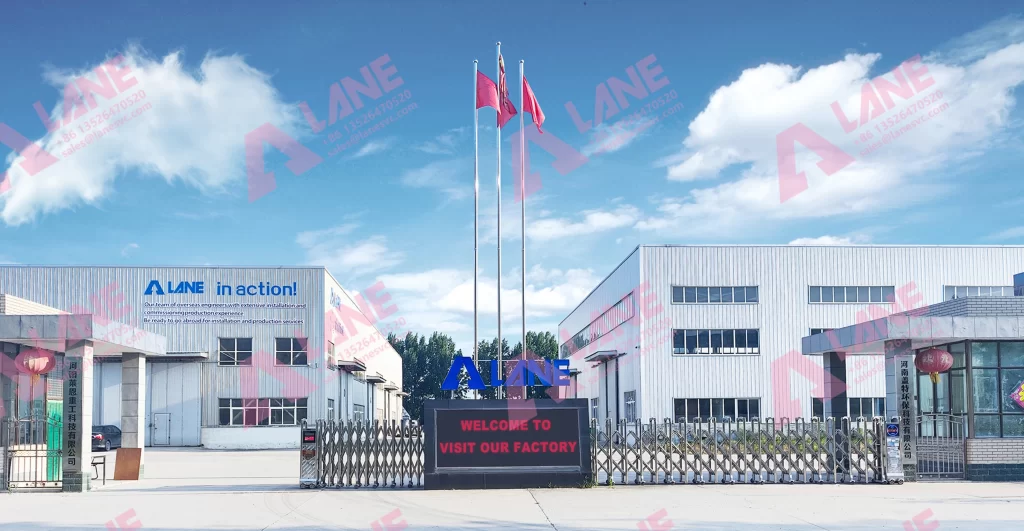
LANE Heavy Industry Machinery Technology Co., Ltd. has extensive experience in designing and manufacturing fertilizer production equipment, including advanced SSP granulation systems.
Why fertilizer producers choose LANE:
- Proven expertise in SSP granulation process design and optimizatio
- Customized solutions based on raw material and capacity requirements
- Reliable granulators, dryers, and screening equipment with long service life
- Full technical support, including installation, commissioning, and operator training
By focusing on both engineering precision and practical operation, LANE helps customers achieve stable production, consistent product quality, and long-term operational efficiency.
FAQ: SSP Granulation Process
Q1: What is the main purpose of the SSP granulation process?
The primary purpose is to convert reacted SSP material into uniform, strong granules that are easy to store, transport, and apply while maintaining nutrient effectiveness.
Q2: Which granulator is best for SSP production?
Rotary drum granulators are commonly preferred for large-scale SSP granulation processes due to their stability and high capacity, while pan granulators are suitable for smaller plants or flexible formulations.
Q3: How does moisture affect the SSP granulation process?
Moisture directly influences granule formation. Too much moisture causes agglomeration; too little leads to excessive fines. Precise control is essential for consistent quality.
Q4: Can an existing SSP plant upgrade its granulation system?
Yes. Many plants improve performance by upgrading key components of the SSP granulation process without rebuilding the entire production line.
Q5: How does granulation quality affect fertilizer performance in the field?
Uniform, strong granules ensure even nutrient distribution, predictable dissolution, and better crop response.
Conclusion
The Single Superphosphate granulation process is the backbone of SSP fertilizer quality. With modern granulation technology, producers can significantly improve particle uniformity, mechanical strength, environmental performance, and overall production efficiency.
Investing in a well-designed SSP granulation process is not just a technical upgrade—it is a strategic move toward higher product value, stronger market competitiveness, and sustainable fertilizer production.
For more details, please feel free to contact us.
Henan Lane Heavy Industry Machinery Technology Co., Ltd.
Email: sales@lanesvc.com
Contact number: +86 13526470520
Whatsapp: +86 13526470520