How Sulfur Reacts with Phosphate Rock in SSP: The Complete Industrial Process Guide for Maximum Efficiency
- 2026-03-23
Let’s be direct: in SSP production, understanding how sulfur reacts with phosphate rock in SSP isn’t a nice-to-have—it’s what separates a stable, high-yield line from one that constantly needs firefighting. Many engineers walk into a new project focused entirely on equipment specifications. Understandable. However, without a solid understanding of the underlying reaction mechanism, even a well-configured plant will underperform in ways that are frustratingly difficult to diagnose.
So, let’s start at the foundation. SSP production is fundamentally about converting phosphate rock into plant-available phosphorus. The entire process hinges on how sulfur reacts with phosphate rock in the SSP process. In industrial practice, sulfur is first combusted to yield sulfur dioxide, which is subsequently oxidized and absorbed to form sulfuric acid. That acid then attacks the calcium phosphate in the ore, producing monocalcium phosphate and calcium sulfate (gypsum).
Straightforward on paper—but reaction rate, temperature, and acid concentration all interact in ways that directly determine your conversion efficiency. Get any one of them wrong, and you’re chasing quality problems rather than preventing them.
That’s the real reason experienced operators focus so hard on reaction control: manage it effectively, and you control the product.
Reaction Mechanism and Process Control
Chemically speaking, how sulfur reacts with phosphate rock in SSP breaks down into two distinct stages. First, sulfur is converted into sulfuric acid. Second, that acid drives the acidolysis of the phosphate ore.
The first stage—combustion and catalytic conversion—is deceptively demanding. Temperature and oxygen supply need to stay tightly managed. If combustion is incomplete, sulfuric acid concentration becomes erratic downstream, and everything built on top of that foundation becomes less predictable.
The second stage is where the core chemistry happens:
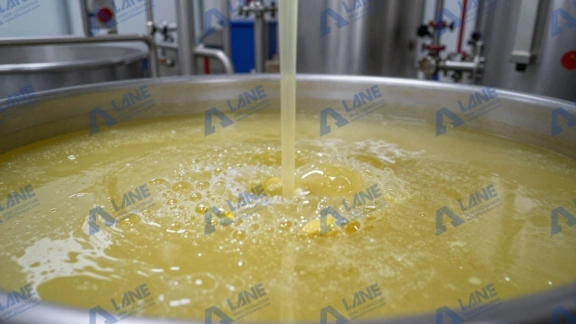
Phosphate rock + sulfuric acid → monocalcium phosphate + gypsum
One variable that deserves more attention than it usually gets: ore particle size. Oversized particles reduce the available contact surface, slowing the reaction. But go too fine, and slurry viscosity climbs, which creates its own mixing headaches. In practice, optimizing how sulfur reacts with phosphate rock in SSP almost always begins upstream—at the raw material preparation stage—precisely because of this.
Core Equipment Configuration (The Foundation of Production Efficiency)
Equipment selection isn’t just a procurement decision. In industrial settings, it determines whether how sulfur reacts with phosphate rock in SSP processes can run stably and at scale. Based on hands-on experience across multiple plant configurations, the following equipment categories are non-negotiable:
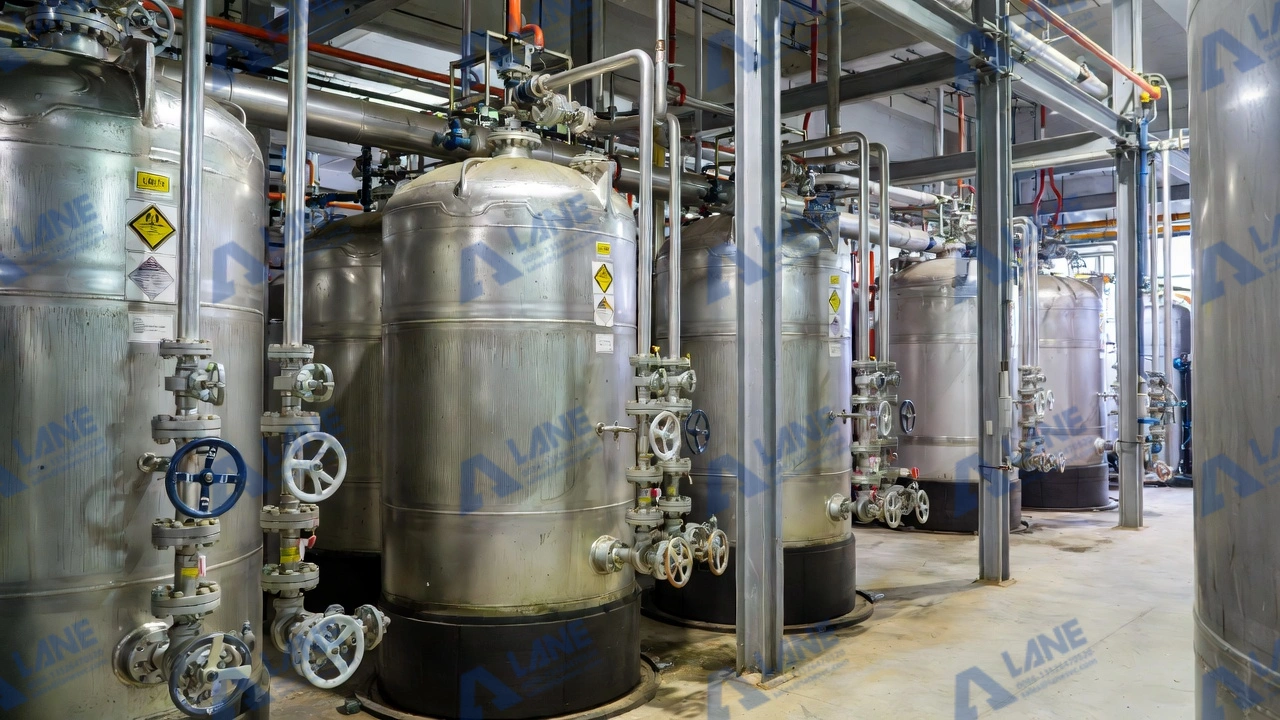
Sulfur Burning Furnace: The starting point of the entire reaction chain. Converts solid sulfur to sulfur dioxide, and its performance directly sets the initial conditions for how sulfur reacts with phosphate rock in SSP.
Contact Process Sulfuric Acid Plant Handles the conversion of SO₂ into high-concentration sulfuric acid. Efficiency here has a direct downstream impact on reaction completeness.
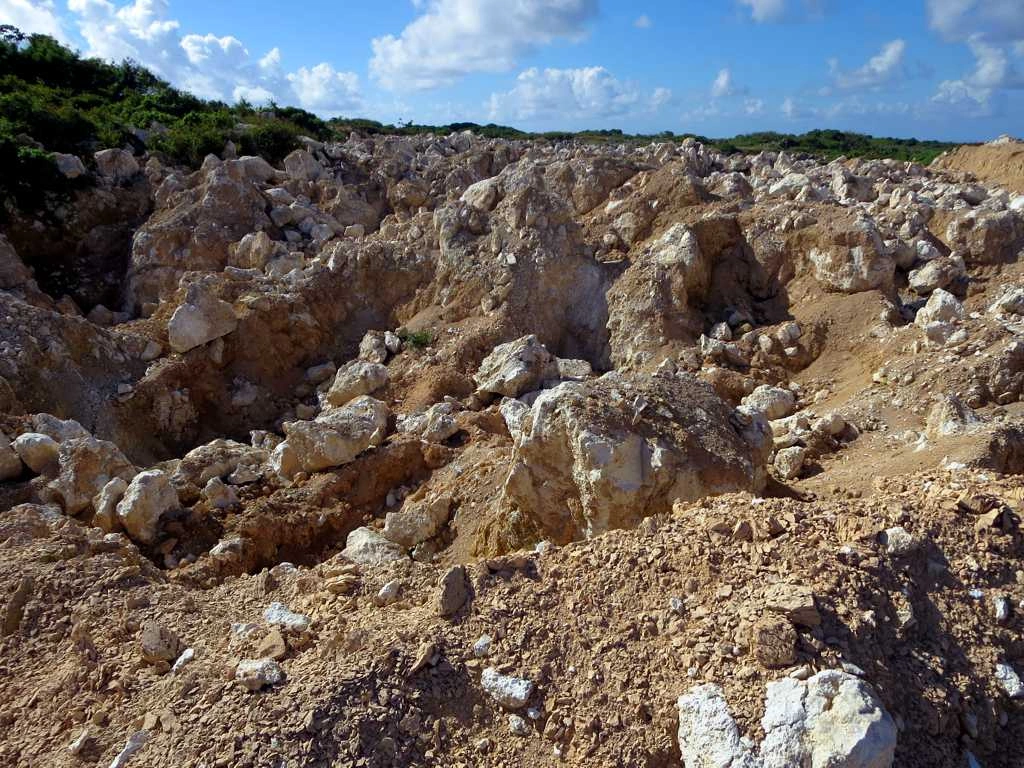
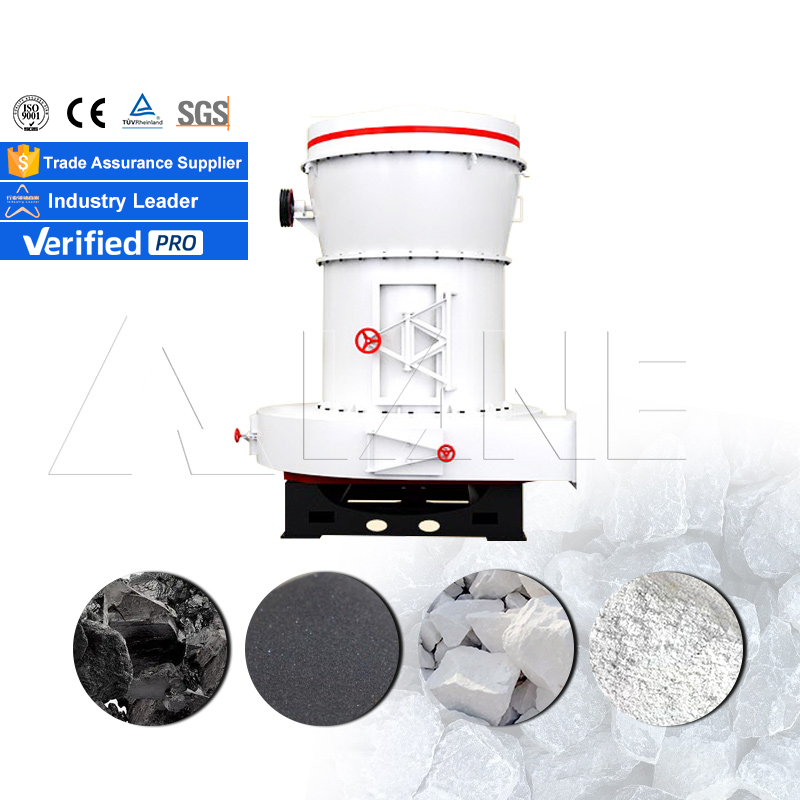
Phosphate Rock Crusher Controls particle size distribution—arguably the most underrated variable in optimizing the contact area available for the reaction.
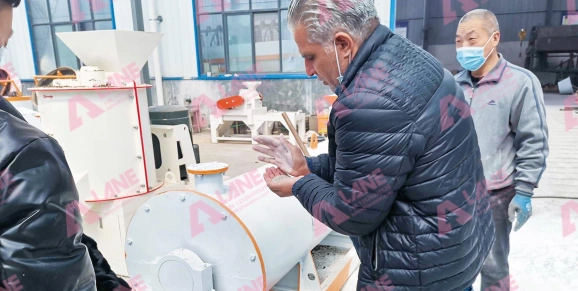
Continuous SSP Reactor: One of the true core pieces. Enables continuous acidulation of phosphate rock with sulfuric acid and is critical for maintaining reaction uniformity.
Curing Storage System Post-reaction maturation isn’t passive. This stage actively shapes the final product quality and shouldn’t be treated as an afterthought.
Manufacturers like LANE typically design these systems around the specific mineralogy of a client’s ore source, which matters more than many buyers initially realize. The same process parameters don’t translate cleanly from one ore to another.
Practical Experience: Those Easily Overlooked Details
Here’s something worth saying plainly, from actual field experience: most production problems don’t come from catastrophic failures in the main process. They come from small parameters drifting outside acceptable ranges.
Take acid concentration fluctuations. In theory, minor swings shouldn’t matter much. In practice, they alter the reaction pathway of how sulfur reacts with phosphate rock in SSP in ways that show up as elevated unreacted ore residue—a cost you feel in both yield and post-processing.
Temperature control is equally unforgiving. Too low, and the reaction stalls short of completion. Too high, and material agglomeration becomes a real problem further down the line. Finding that operating window takes time. Honestly, it takes trial and error that no manual fully captures.
My preference, developed over multiple projects, is to avoid locking in fixed parameters too early. Running systematic small-scale adjustments during initial production is slower, but it produces a much more reliable optimization of how sulfur reacts with phosphate rock in SSP than trying to dial everything in from day one.
How to Achieve Maximum Efficiency
“Maximum efficiency” isn’t something you achieve at a single point in the process. Optimizing how sulfur reacts with phosphate rock in SSP has to be approached as a system—coordinated improvements across raw materials, equipment, and monitoring.
Raw material matching comes first. Phosphate rock reactivity varies significantly between sources. Acid dosing needs to be calibrated to the specific ore, not carried over from a previous project.
Equipment coordination is equally critical. The reactor, conveying system, and maturation chamber have to operate in sync. A bottleneck anywhere in that chain will suppress the performance of everything upstream of it—no matter how well the reaction chemistry is optimized.
Real-time data monitoring ties it together. Continuous tracking of pH, temperature, and conversion rate transforms how sulfur reacts with phosphate rock in SSP from something you hope is working into something you can actually verify and adjust in the moment.
FAQ
1. Why is understanding how sulfur reacts with phosphate rock in SSP so important?
Because it sits at the center of the entire SSP production process. Phosphorus conversion rate and final product quality both trace back directly to reaction control.
2. Can inefficiency in how sulfur reacts with phosphate rock in SSP affect costs?
Absolutely. Incomplete reactions translate to raw material waste and higher post-processing costs—both of which compound quickly at an industrial scale.
3. What factors most influence how sulfur reacts with phosphate rock in SSP?
Sulfuric acid concentration, reaction temperature, ore particle size, and reaction time are the primary variables. They don’t operate independently—each one affects how the others perform.
4. How do modern plants optimize how sulfur reacts with phosphate rock in SSP?
Predominantly through automated control systems and high-efficiency continuous reactors, which together allow reaction conditions to be stabilized and adjusted in real time.
To put it plainly: how sulfur reacts with phosphate rock in SSP is never just a chemistry question. It runs through every layer of production—raw material handling, equipment configuration, process management, and quality control. Understanding it deeply, controlling it precisely, and refining it continuously—that’s what high-efficiency SSP production actually looks like in practice.
For more details, please feel free to contact us.
Henan Lane Heavy Industry Machinery Technology Co., Ltd.
Email: sales@lanesvc.com
Contact number: +86 13526470520
Whatsapp: +86 13526470520