Phosphate Rock Powder SSP Production Process: Turning Low-Grade Rock into Profitable Superphosphate
- 2026-02-25
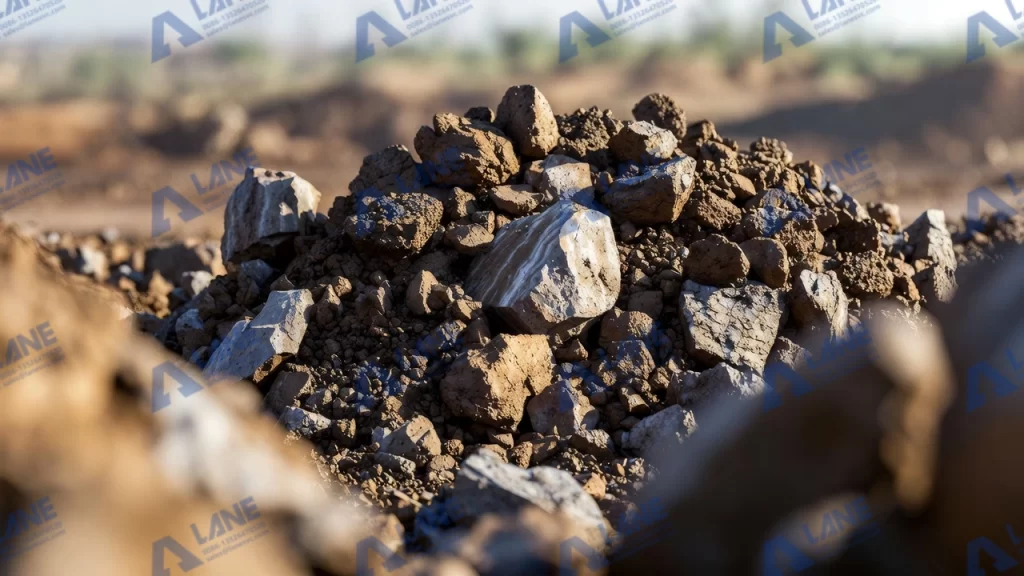
The fertilizer industry is facing increasing pressure to improve raw material utilization while reducing production costs. Many fertilizer manufacturers and investors are now focusing on upgrading low-quality phosphate resources instead of relying solely on imported high-grade rock.
The Phosphate Rock Powder SSP Production Process provides a practical solution for converting low-grade phosphate rock into single superphosphate (SSP), creating commercial value from materials that were previously considered inefficient or waste-grade.
In countries with abundant phosphate deposits, processing raw rock into fertilizer through controlled chemical reaction significantly improves profitability and resource efficiency.
Understanding the Core Principle of Phosphate Rock Powder SSP Production Process
The foundation of the Phosphate Rock Powder SSP Production Process is a chemical reaction between finely ground phosphate rock and concentrated sulfuric acid.
During production:
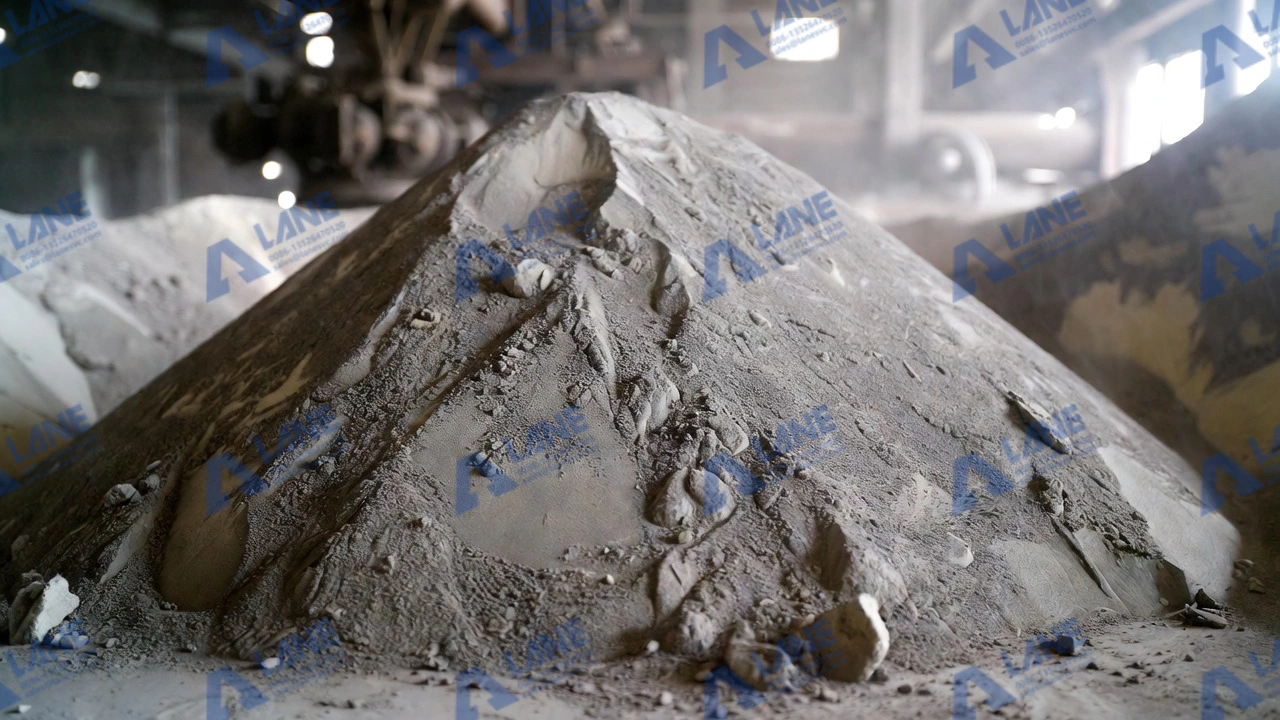
- Phosphate rock powder is finely milled to increase reaction surface area
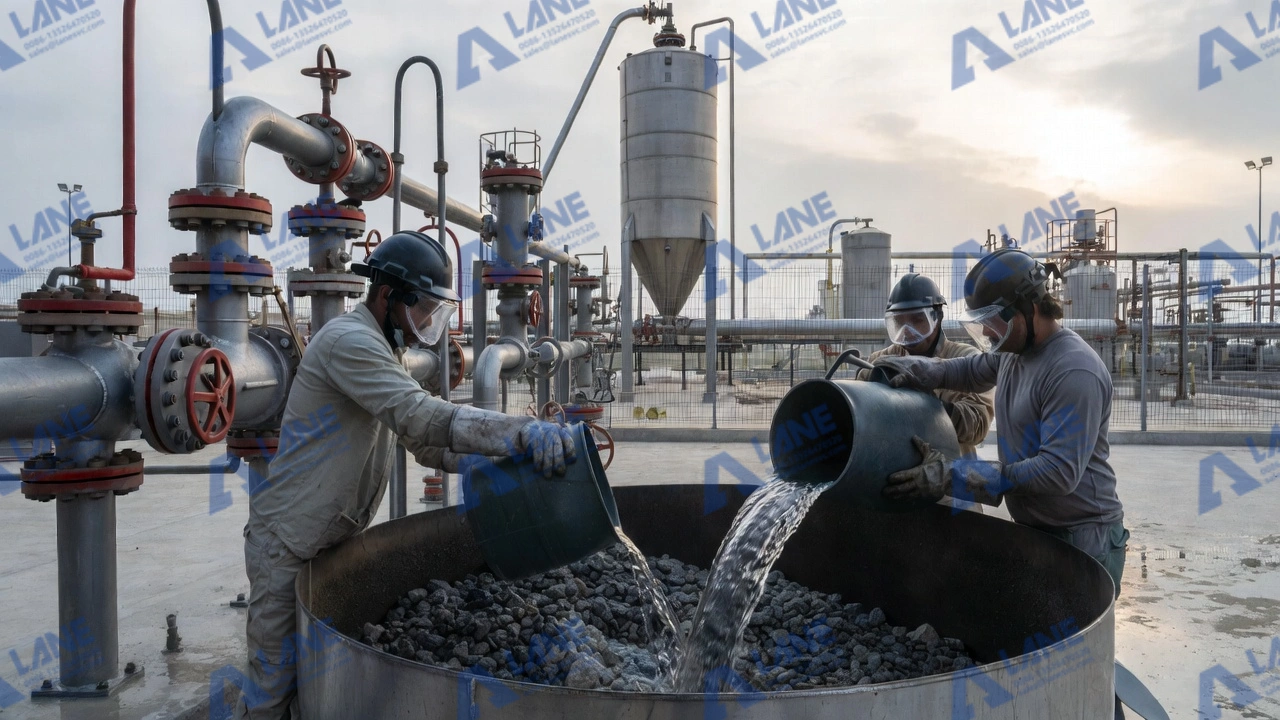
- Sulfuric acid reacts with tricalcium phosphate
- Water-soluble monocalcium phosphate is formed
- The mixture solidifies into superphosphate
This process transforms insoluble phosphorus into plant-available phosphorus.
Low-grade rock, which contains impurities and lower P₂O₅ content, can still be used — as long as proper pretreatment and process control are applied.
Many emerging fertilizer producers underestimate the importance of raw material preparation. However, grinding fineness and acid concentration directly impact final product quality.
Key Equipment Required in the Production Line
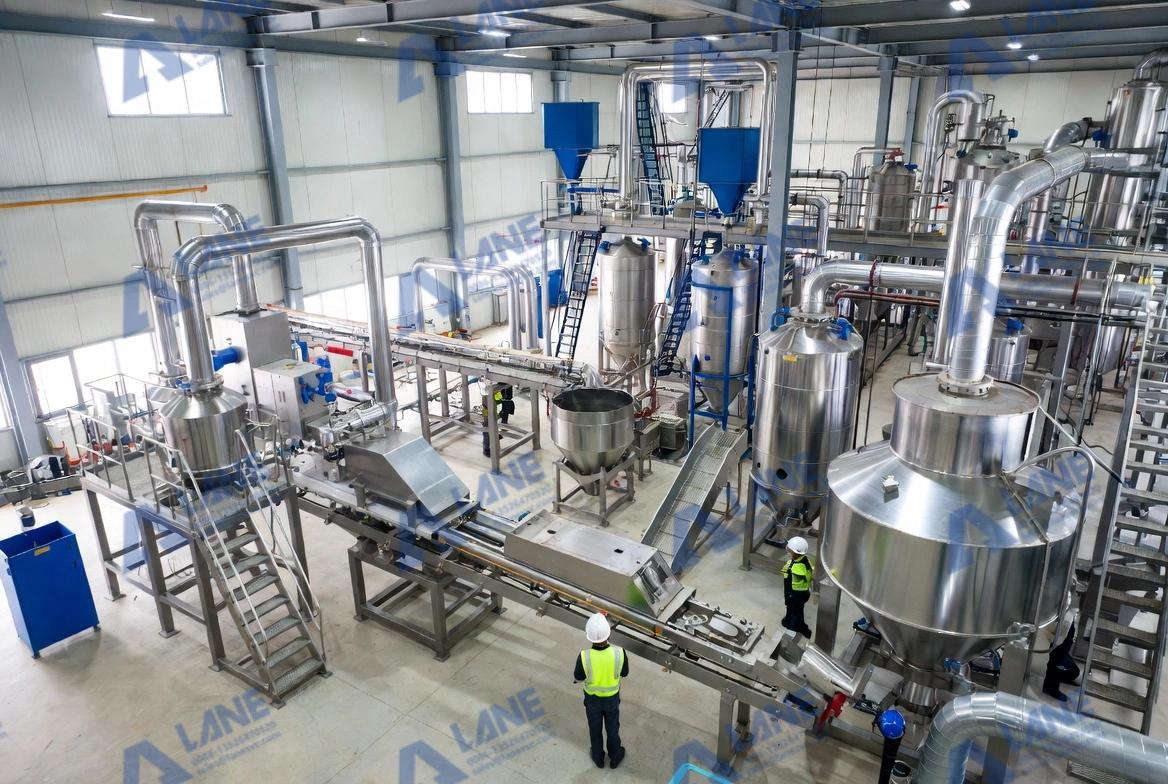
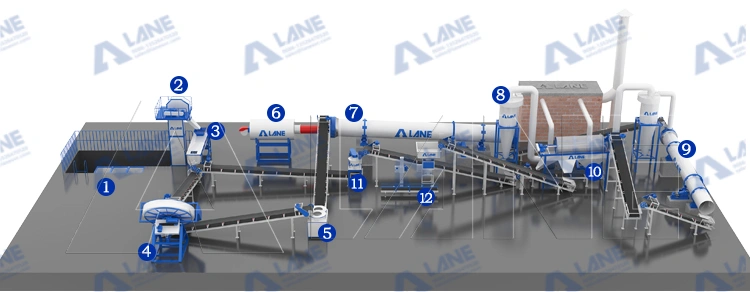
A stable Phosphate Rock Powder SSP Production Process typically includes:
1. Grinding System
Phosphate rock must be crushed and ground into fine powder to improve acid reaction efficiency.
A controlled mixing chamber ensures uniform reaction between rock powder and sulfuric acid.
3. Aging & Curing Warehouse
After mixing, the material needs curing time to complete chemical transformation.
4. Granulation or Crushing System
Depending on market demand, the SSP can be processed into powder fertilizer or further granulated.
5. Drying & Packaging Unit
Final moisture control ensures storage stability and transportation efficiency.
Proper equipment selection determines whether low-grade phosphate rock can truly generate profitable output.
Why Turning Low-Grade Rock into Profitable Superphosphate Makes Business Sense
Many mining regions and developing fertilizer markets struggle with low-quality phosphate resources.
The advantage of using the Phosphate Rock Powder SSP Production Process includes:
- Lower raw material cost
- Better resource utilization
- Reduced dependency on imported fertilizers
- Stable supply for local agriculture
- Faster return on investment
From a commercial perspective, converting locally available rock into SSP reduces production risks and increases competitiveness.
When managed correctly, even medium or low-grade phosphate rock can become a reliable fertilizer source for regional markets.
Process Control Factors That Affect Profitability
Success in the Phosphate Rock Powder SSP Production Process depends heavily on process control.
Critical factors include:
Acid-to-Rock Ratio
Incorrect ratios reduce reaction efficiency and lower phosphorus availability.
Particle Size Distribution
Finer powder improves acid contact and reaction uniformity.
Temperature Control
Reaction heat must be monitored to prevent incomplete curing.
Moisture Management
Excess moisture affects granulation and storage stability.
Many factories fail not because of equipment, but because they ignore scientific process optimization.
Market Applications of SSP Produced from Low-Grade Rock
Superphosphate produced through the Phosphate Rock Powder SSP Production Process is widely used in:
- Grain production
- Potato cultivation
- Vegetable farming
- Industrial crop planting
Farmers prefer SSP because it provides:
- Available phosphorus
- Calcium supplementation
- Improved root development
In regions with phosphorus-deficient soils, SSP remains one of the most economical fertilizers available.
LANE Technical Support for SSP Production Projects
HENAN LANE HEAVY INDUSTRY MACHINERY TECHNOLOGY CO., LTD. provides complete engineering solutions for fertilizer production plants, including SSP manufacturing systems.
Their support includes:
- Customized production line design
- Equipment configuration for phosphate rock processing
- Technical guidance for acid reaction systems
- Capacity planning from small-scale to industrial production
- Installation and commissioning support
For investors planning to implement a stable Phosphate Rock Powder SSP Production Process, professional engineering design significantly reduces operational risk.
LANE focuses on system integration rather than only equipment supply — which is essential for long-term production stability.
Frequently Asked Questions (FAQ)
1. Can low-grade phosphate rock really be used in SSP production?
Yes. As long as the rock contains acceptable P₂O₅ content and is properly ground, it can be used effectively in the Phosphate Rock Powder SSP Production Process.
2. What is the ideal particle size for phosphate rock powder?
Generally, finer than 100 mesh improves reaction efficiency. Particle uniformity strongly influences acid conversion.
3. How long does the curing stage take?
Curing typically takes several days to complete chemical stabilization, depending on factory design and environmental conditions.
4. Is SSP production profitable in developing markets?
Yes — especially where raw phosphate resources are available locally and import costs are high.
5. What capacity range is suitable for new investors?
Production capacity depends on market demand. Small systems can start from a few thousand tons per year and expand gradually.
Final Thoughts
The transformation of mineral resources into agricultural value is at the core of modern fertilizer manufacturing.
The Phosphate Rock Powder SSP Production Process provides a practical pathway for converting low-grade phosphate rock into profitable superphosphate while strengthening local fertilizer supply chains.
With proper technical design, raw material control, and engineering support, producers can build a stable and scalable fertilizer business.
For more details, please feel free to contact us.
Henan Lane Heavy Industry Machinery Technology Co., Ltd.
Email: sales@lanesvc.com
Contact number: +86 13526470520
Whatsapp: +86 13526470520